
Gemini 4 Argon
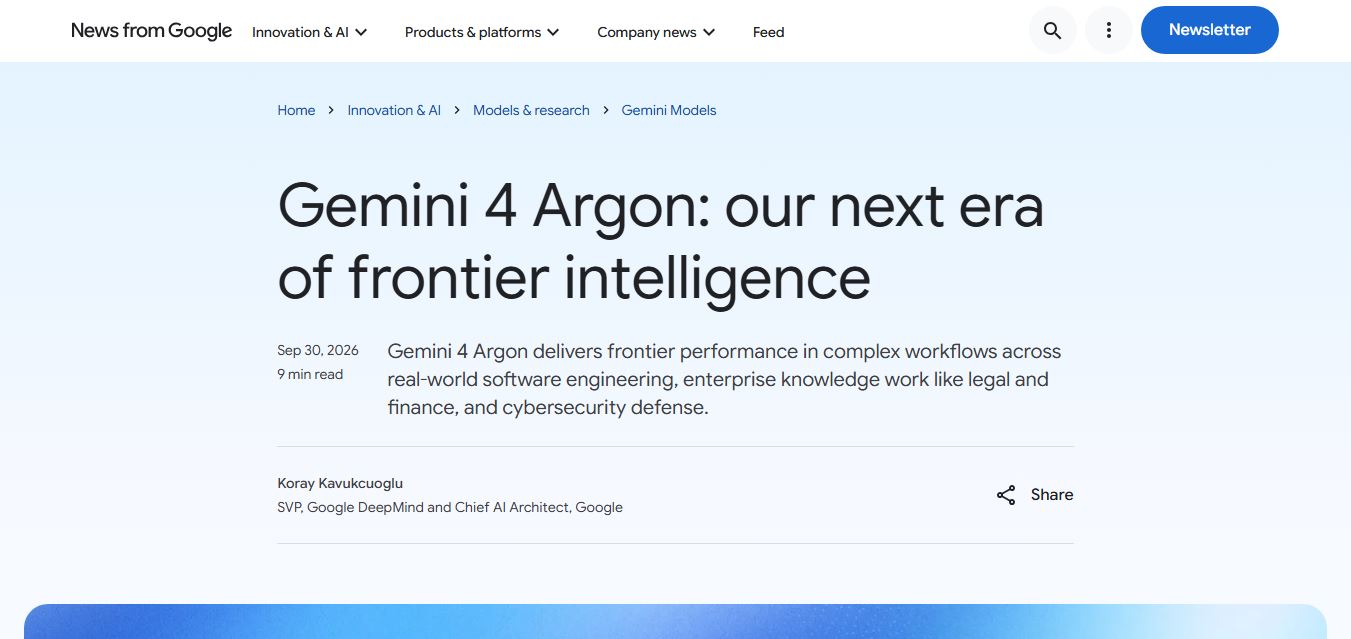
Gemini 4 Argon is Google DeepMind’s most advanced AI model, built for complex, long-running tasks like software engineering, finance, legal work, and cybersecurity. It delivers deep reasoning, handles multi-step workflows, and processes large context inputs, making it ideal for enterprise automation and high-level problem solving.
What is Gemini 4 Argon?
Gemini 4 Argon is a next-generation AI model from Google designed to deliver faster, more efficient, and highly capable performance across tasks like reasoning, coding, multimodal understanding, and real-time applications. It focuses on improving speed, cost-efficiency, and scalability while maintaining strong accuracy, making it suitable for both consumer products and enterprise use. Built as part of the Gemini model family, it supports text, images, and other data types, enabling more advanced AI experiences across Google’s ecosystem and developer platforms.
Announced on September 30, 2026 by Google and Google DeepMind, Gemini 4 Argon introduces an unprecedented generation ceiling capable of outputting up to 1 million tokens in a single trajectory (a dramatic leap from previous 64K limits). Proven inside Google's production infrastructure, Argon-driven agent teams have autonomously migrated massive C/C++ codebases into memory-safe Rust—including the 800K+ line Fuchsia OS Zircon kernel—and optimized data center fleet telemetry to reclaim over 300 TiB of memory. Through Google's Fairwind Program, Argon is also deployed to vetted cyber defense teams to detect, validate, and patch critical software vulnerabilities before malicious exploitation.
- Developer / Lab: Google & Google DeepMind (Mountain View, CA, USA & London, UK)
- Release Date: September 30, 2026 (Rolling out via Google AI Studio, Vertex AI preview, and the Fairwind cyber defense initiative)
Use Cases:
- Conducting end-to-end repository migrations and refactoring legacy C/C++ code into modern, memory-safe languages like Rust
- Autonomous defensive vulnerability research, black-box penetration testing, and automated security patch generation
- Synthesizing multi-modal enterprise knowledge work across complex financial charts, regulatory SEC filings, and long videos
- Drafting and reviewing institutional documentation using writing tools to produce audit briefs, technical specifications, and legal memoranda
Technology:
- Next-generation native multimodal transformer architecture trained for sustained long-horizon reasoning and test-time compute scaling
- 1-million-token output horizon allowing full architectural plans, code libraries, and execution transcripts in a single generation
- Grounded tool-use loop integrating compiler diagnostics, runtime execution feedback, and automated test emulation
Target Users:
- Enterprise software engineering teams managing multi-repo modernizations, architectural migrations, and performance profiling
- Cybersecurity defense organizations, red/blue teams, and security researchers operating within authorized assessment scopes
- Financial analysts, quantitative researchers, and legal counsel managing evidentiary synthesis across documents and tables
- AI engineers building autonomous agent runtimes requiring multi-step planning and extended trajectory execution
Corporate Entity: Google LLC / Alphabet Inc. (Mountain View, CA, USA)
Key features of Gemini 4 Argon
Gemini 4 Argon's key features are
- 1-Million Output Token Trajectory: Capable of writing up to 1,000,000 output tokens in a single continuous pass, preventing the state fragmentation and context loss inherent to chunked generation.
- Automated End-to-End Code Migrations: Operates autonomously across entire codebases to translate languages, implement automated testing suites, and optimize runtime performance.
- Autonomous Cybersecurity Defense (Fairwind): Built-in capabilities to inspect source code, execute black-box penetration tests on web systems, identify flaws, and generate validated patches.
- State-of-the-Art SWE Benchmarks: Delivers frontier scores across real-world software benchmarks, including 77.9% on DeepSWE v1.1.
- Native Multimodal Video & Document Parsing: Scores 91.7% on LVBench for deep comprehension of long-form videos, charts, financial balance sheets, and technical diagrams.
- Business Automation Orchestration: Leads Zapier's AutomationBench at 51.3%, measuring autonomous multi-step execution across integrated enterprise SaaS APIs.
- Context Caching Discounts: Offers up to 95% discount on cached input tokens, drastically reducing overhead for repetitive repository analysis.
- Deep Knowledge Work Reasoning: Scores 68.90% on the GDP-weighted Vals Index v2.1 across professional accounting, legal drafting, and corporate tax workflows.
Gemini 4 Argon Pricing
Gemini 4 Argon is offered through Google AI Studio and Google Cloud Vertex AI under a tiered developer API structure, featuring special introductory rates.
Introductory API Pricing:
- Input Tokens: $2.00 per 1 million tokens
- Output Tokens: $10.00 per 1 million tokens
- Cached Input Tokens: Up to 95% discount off standard input pricing (~$0.10 per 1M cached tokens)
Standard Production Rates:
- Input Tokens: $4.00 per 1 million tokens
- Output Tokens: $20.00 per 1 million tokens
Cybersecurity & Fairwind Access:
- Controlled access for approved defensive security organizations and enterprise partners under vetted compliance agreements
Disclaimer: Prices are listed in USD. Gemini 4 Argon is rolling out in structured access phases. Token billing for reasoning steps and extended context windows applies per API request. Visit cloud.google.com/vertex-ai for live quota limits and regional pricing.
Who is using Gemini 4 Argon?
Gemini 4 Argon is designed for technical teams, security professionals, and enterprise operators, including
- Core Infrastructure Engineers: Executing automated refactoring from legacy C/C++ to memory-safe Rust across systems-level operating kernels
- Defensive Cybersecurity Teams: Discovering vulnerabilities, analyzing zero-day attack surfaces, and deploying code patches before exploitation
- Enterprise Financial & Legal Analysts: Processing annual filings, investor decks, and compliance documents into structured balance sheet models
- Data Center Operations Teams: Analyzing continuous fleet telemetry to optimize runtime memory consumption and compute efficiency
- Content Creators: Using writing tools to draft technical architecture proposals, whitepapers, and software modernization roadmaps
- Autonomous Agent Builders: Running long-horizon agent loops that require continuous self-correction and hundreds of thousands of generated tokens
Best Gemini 4 Argon Alternatives
Some of the strongest Gemini 4 Argon alternatives include
- OpenAI GPT-4o / GPT-5
- Anthropic Claude 3.5 Sonnet / Claude 3.7 Sonnet
- Google Gemini 1.5 Pro / Gemini 2.0 Flash
- Genspark
- DeepSeek-V3 / DeepSeek-R1
- Meta Llama 3.3
Pros and Cons of Gemini 4 Argon
Pros
- Industry-first 1-million-token output capacity enables massive single-trajectory code synthesis without hitting length walls
- Demonstrated capability on real-world industrial tasks, including large-scale C-to-Rust translations and datacenter memory reclamation
- Exceptional multimodal understanding across video, technical charts, and financial tables (91.7% on LVBench)
- Native integration with defensive cybersecurity tools via the Fairwind initiative
- 95% context caching discount significantly lowers the cost of repetitive repository analysis
Cons
- Rollout is gated behind vetted preview tiers and structured partner evaluations
- Deep 1M-token output generations at $10 to $20 per million output tokens can accumulate substantial API costs if unmonitored
- Advanced autonomous cyber-defense capabilities are restricted strictly to authorized defenders under the Fairwind Program
- High-latency reasoning loops require asynchronous job orchestration rather than instant sub-second conversational responses
Why Choose Gemini 4 Argon?
Gemini 4 Argon is the premier choice for organizations that need an autonomous frontier model capable of resolving complex, long-horizon technical challenges across software, cybersecurity, and enterprise knowledge work.
- Generate up to 1 million output tokens in a single unbroken trajectory
- Perform complete codebase migrations and architectural refactors autonomously
- Detect and patch critical security flaws with dedicated cyber defense capabilities
- Understand complex financial graphics and multi-hour video feeds natively
- Backed by Google DeepMind's frontier AI infrastructure and enterprise cloud scalability
Gemini 4 Argon vs. Competitors
The main difference between Gemini 4 Argon, OpenAI GPT-4o/Astra, Anthropic Claude 3.5 Sonnet, and Gemini 1.5 Pro is that Gemini 4 Argon provides a 1-million-token output window for single-pass long-trajectory reasoning and built-in cyber defense tooling, whereas Claude specializes in human-aligned coding and writing ergonomics, OpenAI balances conversational speed with multimodal voice/vision, and Gemini 1.5 Pro focuses primarily on long-context input retrieval (up to 2M tokens) with a 64K output cap. Gemini 4 Argon stands out for its unprecedented output generation headroom, enterprise codebase migration track record, and defensive cybersecurity capabilities.
| Feature / Model | Gemini 4 Argon | Claude 3.5 / 3.7 Sonnet | GPT-4o / Astra | Gemini 1.5 Pro |
|---|---|---|---|---|
| Maximum Output Tokens | Up to 1,000,000 Tokens | 8,192 – 64,000 Tokens | 16,384 – 128,000 Tokens | 64,000 Tokens |
| Core Focus | Long-Horizon SWE & Cyber Defense | Software Coding & Nuanced Writing | Omnimodal Interaction & Reasoning | Massive Input Context Retrieval |
| Code Migration Capability | Autonomous Large-Scale (C to Rust) | File-by-File & Chunked Refactoring | Agentic Tool-Chained Refactoring | Analysis & Snippet Generation |
| Defensive Security Suite | Yes (Fairwind Program / CWE-bench) | Standard Safety Alignment | Standard Safety Alignment | Standard Safety Alignment |
| Introductory Pricing (1M Tokens) | $2 Input / $10 Output | $3 Input / $15 Output | $2.50 Input / $10 Output | $1.25 Input / $5 Output |
| Best For | Massive Codebase Migrations & Cyber Defense | Daily Developer Coding & Prose | Interactive Multimodal Applications | High-Volume Input Document Analysis |
How do we rate Gemini 4 Argon?
| Parameter | Rating (out of 5) |
|---|---|
| Long-Horizon Reasoning & Generation Headroom | 5.0 |
| Software Engineering & Migration Capabilities | 5.0 |
| Defensive Cybersecurity & Patching | 4.9 |
| Multimodal Comprehension (Video & Data) | 4.9 |
| Value for Money & Token Economics | 4.7 |
| Overall Score | 4.90 |
Gemini 4 Argon Review
Gemini 4 Argon marks a meaningful milestone in the evolution of artificial intelligence from conversational chat interfaces to true autonomous engineering agents. For years, one of the primary hurdles in software development with large language models was the output token bottleneck: models would hit a 4K or 64K token wall mid-generation, causing multi-step migrations to break or lose variable state. By raising output limits to 1 million tokens in a single pass, Argon allows agent runtimes to tackle entire enterprise repositories, generate comprehensive test harnesses, and iterate against compiler errors end-to-end. Furthermore, its specialized training for cybersecurity defense through the Fairwind Program provides security teams with an automated tool for vulnerability remediation. For enterprises looking to automate complex technical workloads, Gemini 4 Argon sets a formidable benchmark.
Conclusion
Gemini 4 Argon is a frontier intelligence model from Google DeepMind that redefines the scope of what autonomous AI agents can accomplish. By uniting a 1-million-token output horizon, demonstrated end-to-end codebase migration capabilities, state-of-the-art multimodal comprehension, and specialized cybersecurity defense tools, it transitions AI from an assistant into an autonomous engineer. While casual users will continue utilizing lighter models for everyday queries, Gemini 4 Argon’s architectural depth, reasoning endurance, and enterprise scalability make it one of the most powerful frontier models.
FAQ
What is Gemini 4 Argon and why is it important?
Gemini 4 Argon is Google DeepMind’s most advanced AI model and a major upgrade in the Gemini series, designed for complex, real-world tasks across industries. It represents a shift from general chat AI to enterprise-grade reasoning systems that can handle long, multi-step workflows in areas like coding, finance, legal analysis, and cybersecurity.
What makes Gemini 4 Argon different from previous Gemini models?
The biggest upgrade is its ability to handle long-duration, complex reasoning tasks rather than just quick responses. It introduces a significantly larger context window and improved reasoning, allowing it to process massive datasets, entire workflows, and multi-step problems more effectively than earlier Gemini versions.
What are the key capabilities of Gemini 4 Argon?
Gemini 4 Argon excels in software engineering, enterprise workflows, and cybersecurity defense, making it suitable for high-stakes use cases rather than casual usage. It can assist with writing and debugging code, analyzing financial or legal data, and even identifying vulnerabilities in systems, positioning it as a tool for professionals and organizations.
How powerful is Gemini 4 Argon compared to competitors?
Early reports suggest Gemini 4 Argon outperforms competing models from OpenAI and Anthropic in several benchmarks, particularly in coding and enterprise tasks. It has shown strong performance across multiple evaluations and is positioned as Google’s attempt to regain leadership in the AI race.
Why is Gemini 4 Argon not widely available yet?
Google is rolling it out gradually to a limited group of “trusted cyber defenders” and enterprise partners. This controlled release is due to its powerful capabilities and the need to test safety, prevent misuse, and address risks like cyberattacks or prompt injection before public access.
What safety features does Gemini 4 Argon include?
Gemini 4 Argon includes advanced safeguards such as prompt injection resistance, reasoning monitoring, and misuse prevention systems. These features are designed to prevent the model from being exploited in areas like cybercrime, fraud, or harmful activities, reflecting the growing focus on AI safety.
What industries will benefit most from Gemini 4 Argon?
The model is built for enterprise-heavy industries, including fintech, cybersecurity, legal services, software development, and large-scale business operations. It is particularly valuable where tasks require deep reasoning, compliance, or handling complex datasets.
Will Gemini 4 Argon be available to the public?
Yes, Google plans a broader rollout, but only after completing safety testing and enterprise validation. The current phased release suggests that general availability will come later, likely through Google Cloud, APIs, and Gemini-powered products.
What does Gemini 4 Argon mean for the AI market?
Gemini 4 Argon signals a shift toward enterprise AI dominance, where models compete on real-world performance rather than just chat capabilities. It also shows Google’s aggressive push to compete with OpenAI and Anthropic by offering high performance at competitive pricing and stronger safety controls.
User Reviews
No reviews yet for Gemini 4 Argon.
Featured Tools
Featured AI tools from TechShark
Melody Genie
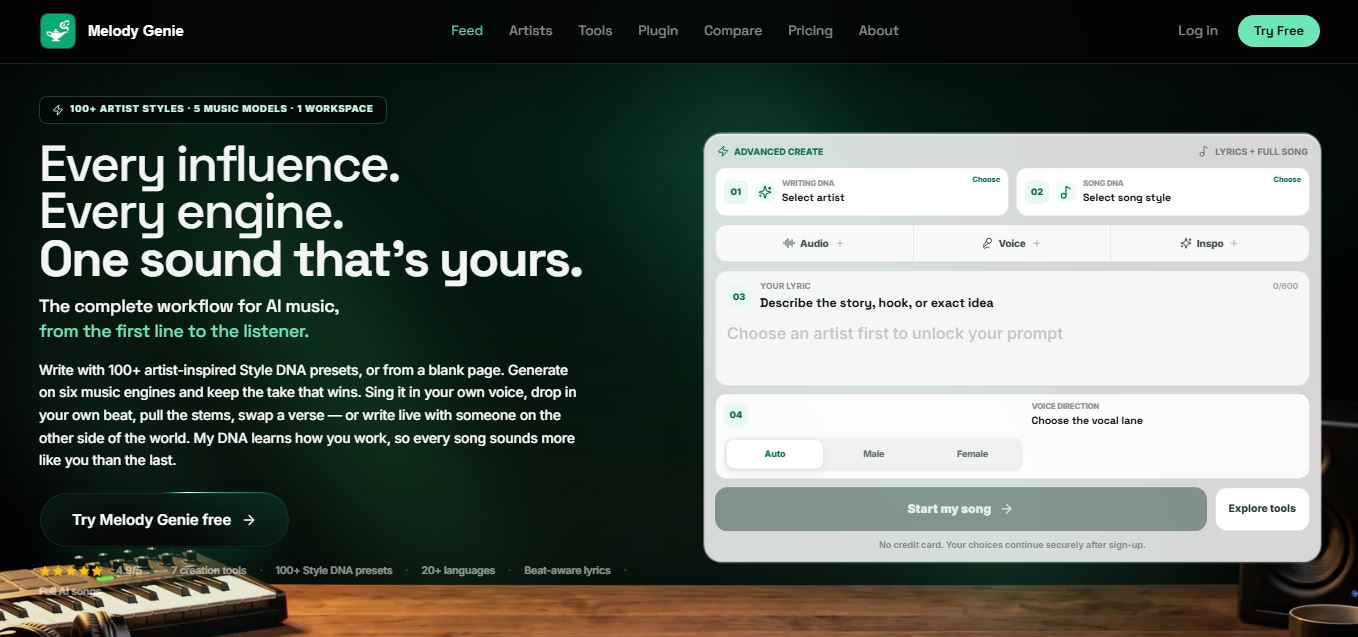
MelodyGenie is an AI-powered music generator that creates original songs from simple text prompts. Users can choose styles, moods, and genres, then instantly generate melodies and full tracks, making it easy for creators, marketers, and hobbyists to produce custom music without musical expertise.
Freemium
Kimi AI
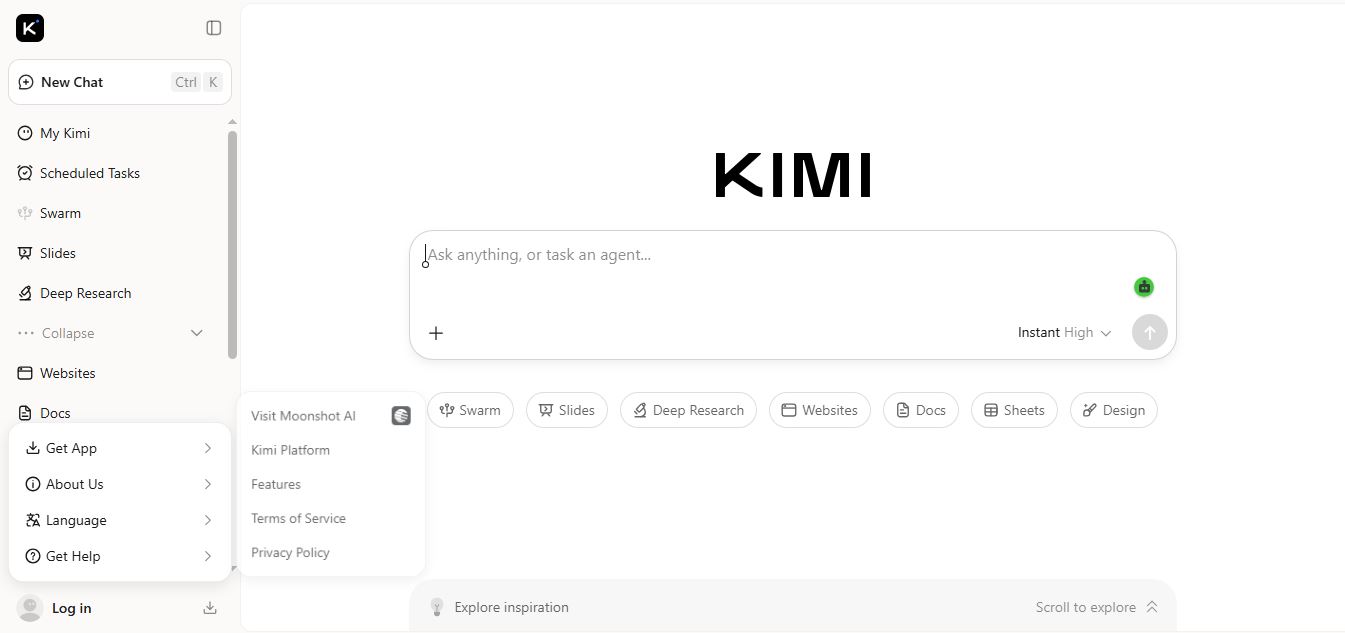
Kimi AI is an advanced AI assistant developed by Moonshot AI that helps you chat, research, write, code, and automate tasks in one place. It supports web search, file analysis, and multimodal inputs, and can even run autonomous “agent” workflows to complete complex tasks end-to-end.
Freemium
Fashion Diffusion AI
Fashion Diffusion is an AI-powered fashion design platform that helps brands and designers create clothing designs, virtual try-ons, AI models, product photos, and marketing visuals faster and cost-effectively.
Paid
Veo 4
Veo 4 AI is an AI video creation platform that generates dramatic videos from text, images, audio, and video prompts using realistic motion and synchronized sound.
Paid
Alternatives
Alternatives to Gemini 4 Argon
The best Gemini 4 Argon alternatives include OpenAI GPT-4o / GPT-5, Anthropic Claude 3.5 Sonnet / Claude 3.7 Sonnet, Google Gemini 1.5 Pro, Genspark, DeepSeek-V3, and Meta Llama 3.3. These models provide frontier reasoning, autonomous coding, and multimodal analysis. While Gemini 4 Argon specializes in an industry-first 1-million-token output horizon for unbroken single-pass software engineering migrations and dedicated cybersecurity vulnerability patching via the Fairwind Program, alternatives like Claude Sonnet focus on daily developer ergonomic coding and human prose, and GPT-4o provides rapid omnimodal voice and vision. Choosing the right foundation model depends on whether you require massive single-trajectory code outputs, vetted cyber defense tools, or lightweight conversational execution.
 4.8
4.8Soroco
Workflow Automation
Soroco helps enterprises understand and improve how people and AI agents perform everyday work. Its Scout platform maps real workflows, identifies bottlenecks, measures operational effort, and highlights automation opportunities. Organizations can use its insights to improve productivity, optimize costs, strengthen decision-making, and build more effective human-AI workflows.
 4.8
4.8Kissflow
No Code
Kissflow is a low-code workflow automation and business process management platform that helps teams build apps, automate approvals, and manage operations without heavy coding. It centralizes workflows, improves visibility, and speeds up processes across departments like HR, finance, and procurement.
ROK Solution
Workflow Automation
ROK Solution is an organization-centric hyperautomation and Identity Governance and Administration (IGA) platform that aligns no-code app development, BPM, generative AI, and automated access rights directly with a real-time, living organizational chart.
 4.8
4.8Lindy
AI Agent
Lindy is an AI medical and business workflow automation platform that builds autonomous AI agents ('Lindys') capable of handling inbox management, customer support, lead qualification, medical scribing, and voice operations.
 4.9
4.9Jinba
Workflow Automation
Jinba is an enterprise AI workflow automation platform that enables teams to build, edit, and deploy production-ready automations using natural language prompts, visual drag-and-drop orchestration, and SOC II compliant execution environments.
 4.9
4.9Replit
Code Assistant
Replit is an AI-powered, cloud-native software development platform and multiplayer IDE featuring the Replit Agent, which autonomously plans, builds, debugs, and deploys full-stack applications from natural language prompts directly in the browser.
 4.9
4.9Zapier
Workflow Automation
Zapier is a no-code automation platform that connects your apps and automates workflows. It lets you trigger actions between tools like Gmail, Slack, and Google Sheets, saving time by eliminating repetitive manual tasks.
 4.8
4.8Taku AI
AI Agent
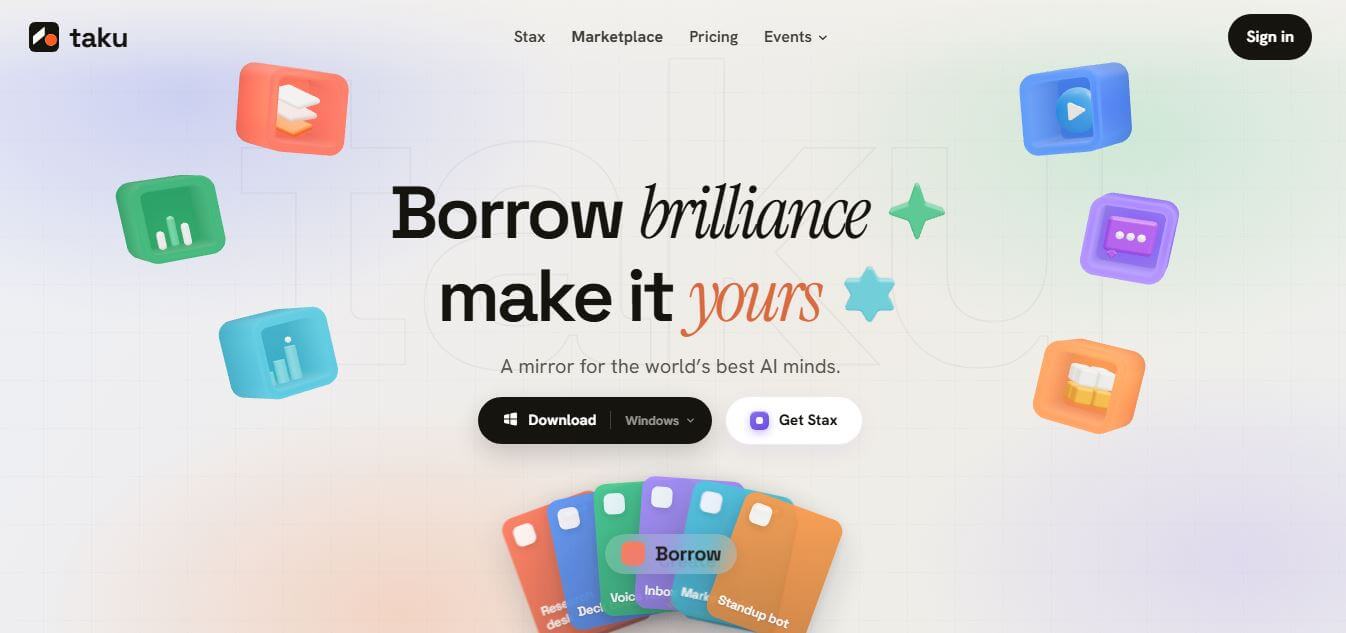
Taku AI is a no-code AI workspace that lets users discover, run, and remix proven AI tools, agents, and workflows in one place. It removes setup complexity by turning ready-made AI systems into one-click apps, helping individuals and teams quickly build and automate tasks.
 4.7
4.7Viktor AI
Workflow Automation
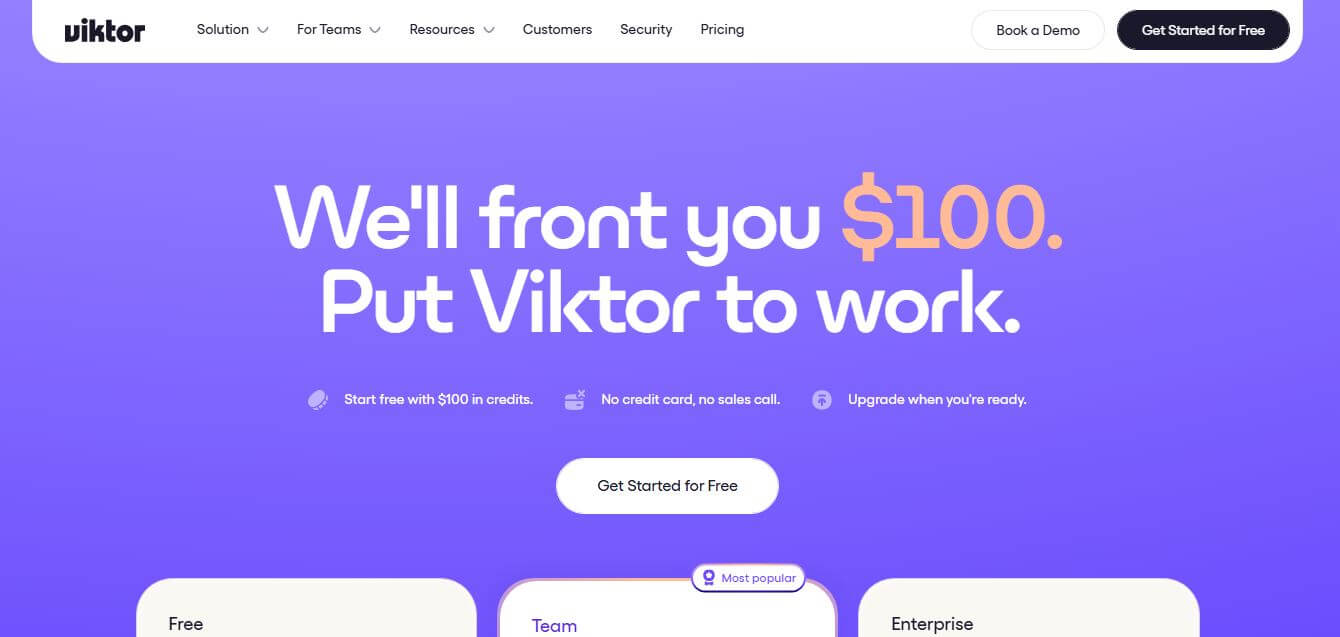
Viktor is an AI employee and autonomous agent platform that integrates into workspace environments like Slack and Microsoft Teams to automate complex tasks, build reports, run campaigns, and connect across thousands of business tools.