
Abacus AI
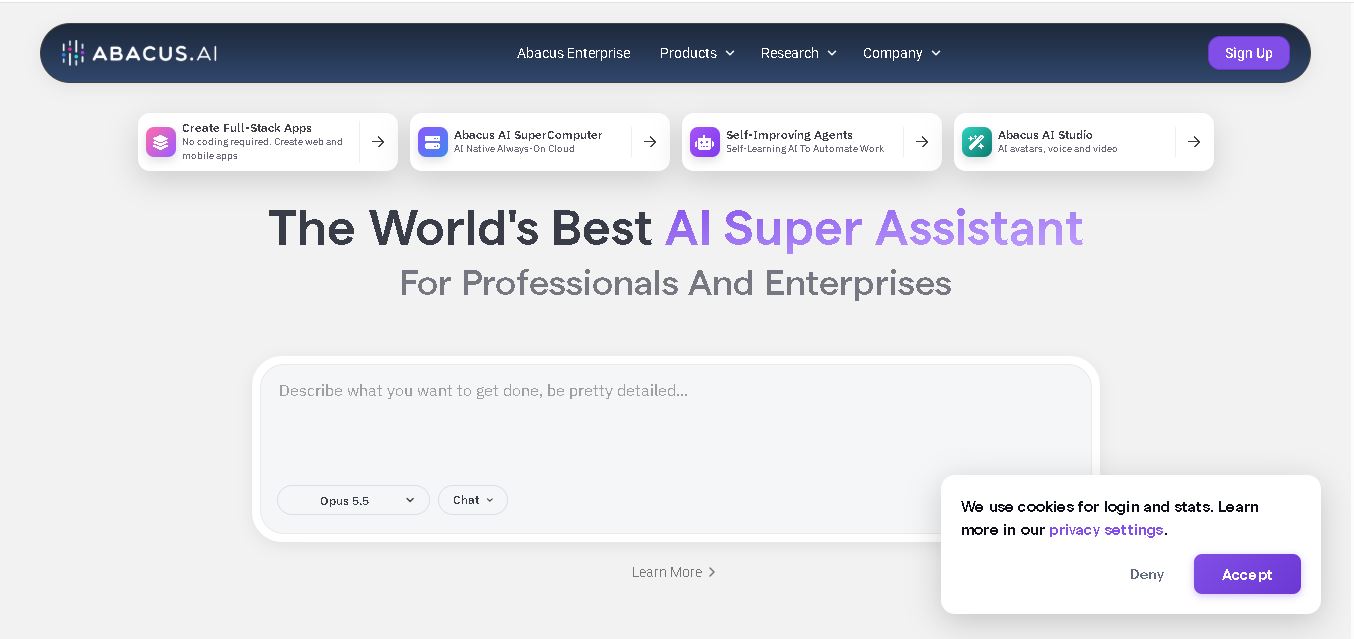
Abacus.AI is an AI-powered platform that helps users automate workflows, build web and mobile apps, analyze data, generate content, and create intelligent AI agents. It combines multiple AI models and productivity tools in one workspace, serving professionals, developers, small businesses, and enterprise teams across industries.
What is Abacus AI?
Abacus.AI is an AI-powered productivity and automation tool that helps users build applications, create AI agents, analyze data, and automate complex workflows. Its platform combines AI assistants, multiple AI models, app development capabilities, and content generation features in one workspace. Whether you are a developer building custom applications, a professional managing daily tasks, or a business streamlining operations, Abacus.AI simplifies work and boosts productivity with AI-driven solutions.
Abacus. AI reports serving over 3 million professionals, small businesses, and enterprises, including dozens of Fortune 500 companies. ChatLLM provides access to 100+ AI models. The basic plan costs $10 per user monthly and includes 20,000 credits, while Pro costs $20 total monthly with 30,000 credits. Basic includes 3 limited AI agent tasks. Abacus AI Studio brings together 50+ creative models, while app hosting offers a free usage allowance of up to 25,000 credits monthly for eligible resources across supported services.
- Platform Role: Enterprise AI Operating System, MLOps Infrastructure, ChatLLM Suite & Autonomous AI Agent Platform
- Developer & Organization: Abacus. AI Inc. (San Francisco, California)
- Cross-Platform Access: Cloud Web Console, Python SDK, REST API Gateway, Enterprise SSO Integrations, and native cloud connectors (AWS, GCP, Azure, Snowflake)
Use Cases:
- Deploying enterprise ChatLLM super-assistants for code generation, document synthesis, multi-modal analysis, and internal knowledge search
- Building enterprise Retrieval-Augmented Generation (RAG) pipelines over complex internal databases, vector stores, and document repositories
- Orchestrating autonomous AI DeepAgents to execute multi-step workflows, web research, financial modeling, and data analytics tasks
- Automating time-series forecasting, personalized recommendation engines, churn prediction, and fraud detection models
- Managing full-lifecycle MLOps, including continuous integration, feature store management, drift detection, and live model monitoring
Technology:
- Proprietary Neural Architecture Search (NAS) and deep learning algorithms optimized for tabular, time-series, text, and vision data
- Unified LLM gateway routing queries across top foundational models (OpenAI GPT-4, Claude, Gemini, Llama, and fine-tuned open models)
- DeepAgent framework utilizing autonomous reasoning loops, tool usage execution, code interpreters, and dynamic memory persistence
- Enterprise-grade security architecture compliant with SOC 2 Type II, HIPAA, ISO 27001, and zero-data-retention options
Target Users:
- Enterprise AI, Data Science, and Machine Learning teams building custom predictive and generative AI tools
- Software engineering teams needing multi-model LLM access, automated code interpreters, and API endpoints
- Business analytics and operational teams executing multi-agent workflows, forecasting, and data enrichment
- CIOs and IT directors seeking a secure, unified AI governance environment without multi-vendor vendor lock-in
Acquisition: Native cloud AI platform developed and operated by Abacus. AI Inc., San Francisco, California
What are the key features of Abacus AI?
Abacus AI's key platform features are
- Enterprise ChatLLM Teams: Single-interface access to state-of-the-art LLMs, customizable system prompts, team collaboration hubs, and automated context routing.
- DeepAgent Autonomous Workflows: AI agent framework capable of autonomous multi-step reasoning, browsing, executing Python code, and generating structured reports.
- State-of-the-Art RAG & Vector Store: Native document ingestion engine supporting hybrid search, semantic chunking, and instant enterprise database grounding.
- Automated MLOps & Feature Store: Full ML lifecycle pipeline automation from raw data ingestion and feature engineering to deployment and drift monitoring.
- LLM Fine-Tuning Studio: Direct fine-tuning capabilities for open-weights foundational models using custom organizational datasets and feedback loops.
- Multi-Cloud & Data Warehouse Connectors: Direct integration with Snowflake, Databricks, BigQuery, AWS S3, Salesforce, and PostgreSQL.
- Real-Time API & Batch Deployment: Instant deployment of trained models or generative chains as production-ready REST endpoints with auto-scaling infrastructure.
- Enterprise Security & Compliance: Role-based access control (RBAC), SSO (Okta, SAML), enterprise data isolation, and comprehensive audit logging.
How much does Abacus AI cost?
Abacus AI provides subscription plans tailored to individual professionals, small teams, and enterprise-wide multi-cloud deployments.
Individual & Small Team Plans:
- ChatLLM Pro / Team ($10 - $20/user/month): Provides team access to leading LLMs, ChatLLM super-assistant capabilities, DeepAgent tools, multi-modal chat, and document uploads.
Enterprise & MLOps Tiers:
- Enterprise AI Platform (Custom Enterprise Pricing): Includes full MLOps suite, custom fine-tuning, enterprise RAG, dedicated cloud infrastructure, custom connectors, and SLA guarantees.
Disclaimer: Individual ChatLLM subscriptions grant access to public foundation models and AI agent features. Custom MLOps pipelines, dedicated model hosting, and enterprise SOC 2 compliance require an enterprise sales contract.
Who should use Abacus AI?
Abacus AI is designed for enterprises, data science teams, and developers, including
- Enterprise Engineering Teams: Technical organizations looking to consolidate multi-LLM API subscriptions under one unified, secure platform.
- Data Science & MLOps Leaders: Teams needing an end-to-end framework to automate feature stores, model training, monitoring, and pipeline orchestration.
- Business Analysts & Knowledge Workers: Professionals needing autonomous DeepAgents to run complex web research, code execution, and data generation tasks.
- Product & FinTech Developers: Software teams embedding custom recommendation, forecasting, or generative search capabilities directly into customer applications.
What are the best alternatives to Abacus AI?
Some of the strongest Abacus AI alternatives include
- DataRobot
- Dataiku
- Scale AI
- Amazon SageMaker
- Databricks Mosaic AI
- C3.ai
What are the pros and cons of Abacus AI?
What are the pros of Abacus AI?
- Unified access to multiple top-tier LLMs and AI models inside a single intuitive workspace
- Powerful DeepAgent capability for autonomous complex task execution and code interpreter running
- Automates both traditional predictive AutoML and modern generative RAG/LLM applications
- Extensive connector network for seamlessly linking cloud warehouses like Snowflake and BigQuery
- Rapid deployment to production-grade REST APIs with built-in monitoring and feature stores
What are the cons of Abacus AI?
- A broad feature set across AutoML and generative AI presents a learning curve for novice users
- Advanced enterprise MLOps and custom dedicated model deployments require enterprise sales engagement
- API query consumption and high-volume agent usage require careful credit monitoring
Why should you choose Abacus AI?
Managing multiple AI vendors, complex MLOps scripts, and disconnected LLM keys often creates security risks and operational bloat. Abacus AI solves this by delivering an end-to-end platform that handles everything from foundation LLM routing to automated data science pipelines. Powered by state-of-the-art DeepAgents and native RAG, Abacus AI empowers enterprise teams to rapidly move from concept to scalable AI production.
How does Abacus AI compare to competitors?
The primary distinction between Abacus AI, DataRobot, Dataiku, and Amazon SageMaker lies in platform unification, generative agent capabilities, and developer accessibility. While SageMaker focuses on low-level infrastructure for cloud engineers and DataRobot excels at traditional predictive modeling, Abacus AI delivers a modern platform natively bridging traditional AutoML, ChatLLM teams, and autonomous DeepAgents.
| Feature / Platform | Abacus AI | DataRobot | Dataiku | Amazon SageMaker |
|---|---|---|---|---|
| Core Focus | Generative AI, DeepAgent & End-to-End MLOps | Enterprise AutoML & Predictive Analytics | Collaborative Data Science & Analytics | Cloud ML Infrastructure & Developer Tooling |
| Generative AI & LLMs | ChatLLM suite, native RAG & DeepAgent suite | LLM monitoring & hosted application wrappers | LLM mesh & enterprise prompt engineering | AWS Bedrock & JumpStart model hosting |
| Autonomous AI Agents | Native DeepAgent framework with execution tools | Basic workflow automation integrations | Scenario testing & custom Python flows | Requires custom Bedrock Agent buildout |
| Data Integration | Direct native sync with Snowflake, BigQuery, AWS S3 | Broad enterprise warehouse connectors | Deep multi-source data processing engine | Native AWS ecosystem integration |
| Best For | Teams needing unified ChatLLMs, agents, and full AutoML | Enterprise business teams seeking automated predictive modeling | Cross-functional analytics teams collaborating on data projects | Cloud engineers building custom ML pipelines on AWS |
How do we rate Abacus AI?
| Parameter | Rating (out of 5) |
|---|---|
| Generative AI & ChatLLM Features | 4.9 |
| Autonomous DeepAgent Capabilities | 4.8 |
| Automated MLOps & Pipeline Performance | 4.7 |
| Enterprise Security & Compliance | 4.9 |
| Value for Money | 4.7 |
| Overall Score | 4.80 |
What is our review and verdict on Abacus AI?
Abacus AI sets a high standard for modern enterprise AI platforms. By seamlessly bridging generative chat tools, autonomous agent workflows, and traditional predictive MLOps under a single unified environment, it drastically reduces deployment friction. Whether for team-wide ChatLLM access or full-scale custom model operations, Abacus AI delivers an exceptionally powerful and versatile platform.
Conclusion
Abacus.AI is a versatile AI platform for users who want to bring multiple AI capabilities into a single workspace. From building applications and generating documents to analyzing data and automating repetitive tasks, it offers tools for a wide range of professional needs. Businesses can also use its AI agents and enterprise solutions to develop customized workflows. Before choosing a plan, review the available models, usage limits, integrations, and security features to determine whether Abacus.AI fits your requirements.
FAQ
What can you do with Abacus.AI?
Abacus.AI can help users build websites and applications, create presentations and reports, analyze data, conduct research, generate images and videos, write code, and automate repetitive tasks.
Is Abacus.AI free to use?
Abacus.AI offers paid subscriptions, with promotional pricing sometimes available for the first month. The Basic plan is listed at $10 per user per month after applicable promotions, while Pro costs $20 per user per month. Check the official website for current pricing and usage limits.
What is Abacus AI Agent?
Abacus AI Agent is a general-purpose AI agent that can perform complex tasks, conduct research, build applications, generate documents, and automate workflows by using AI models and connected tools.
Can Abacus.AI build apps without coding?
Yes. Abacus AI Agent lets users describe an application in natural language and assists with writing code, testing functionality, and deploying a shareable application. Coding knowledge is not required to get started.
Does Abacus.AI support multiple AI models?
Yes. Abacus.AI provides access to multiple AI models for tasks such as text generation, coding, research, image creation, and video generation. Model availability depends on the current subscription and platform offerings.
Can Abacus.AI analyze documents and data?
Yes. Abacus.AI can analyze uploaded documents, summarize files, process spreadsheets, examine datasets, and generate charts and reports to support research and business decisions.
Does Abacus.AI integrate with other business tools?
Yes. Abacus.AI supports connections to tools and services such as Google Drive, Gmail, Slack, Salesforce, and other enterprise systems, depending on the product and configuration.
What are the best alternatives to Abacus.AI?
Alternatives to consider include ChatGPT, Claude, Google Gemini, and Microsoft Copilot. Compare their AI models, agent capabilities, coding tools, integrations, data analysis features, and subscription costs to find the best fit.
Who should use Abacus.AI?
Abacus.AI is suitable for professionals, developers, startups, researchers, and enterprise teams that want to build applications, analyze data, access multiple AI models, and automate complex workflows through a unified AI platform.
User Reviews
No reviews yet for Abacus AI.
Featured Tools
Featured AI tools from TechShark
Melody Genie
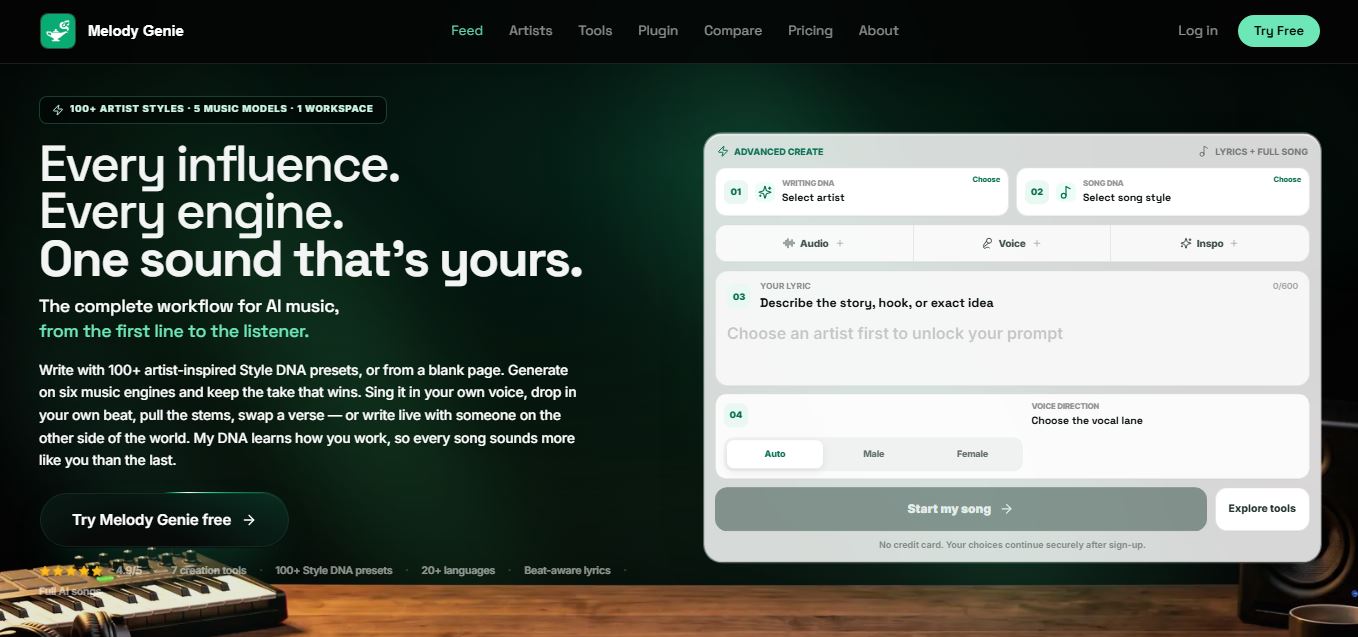
MelodyGenie is an AI-powered music generator that creates original songs from simple text prompts. Users can choose styles, moods, and genres, then instantly generate melodies and full tracks, making it easy for creators, marketers, and hobbyists to produce custom music without musical expertise.
Freemium
Kimi AI
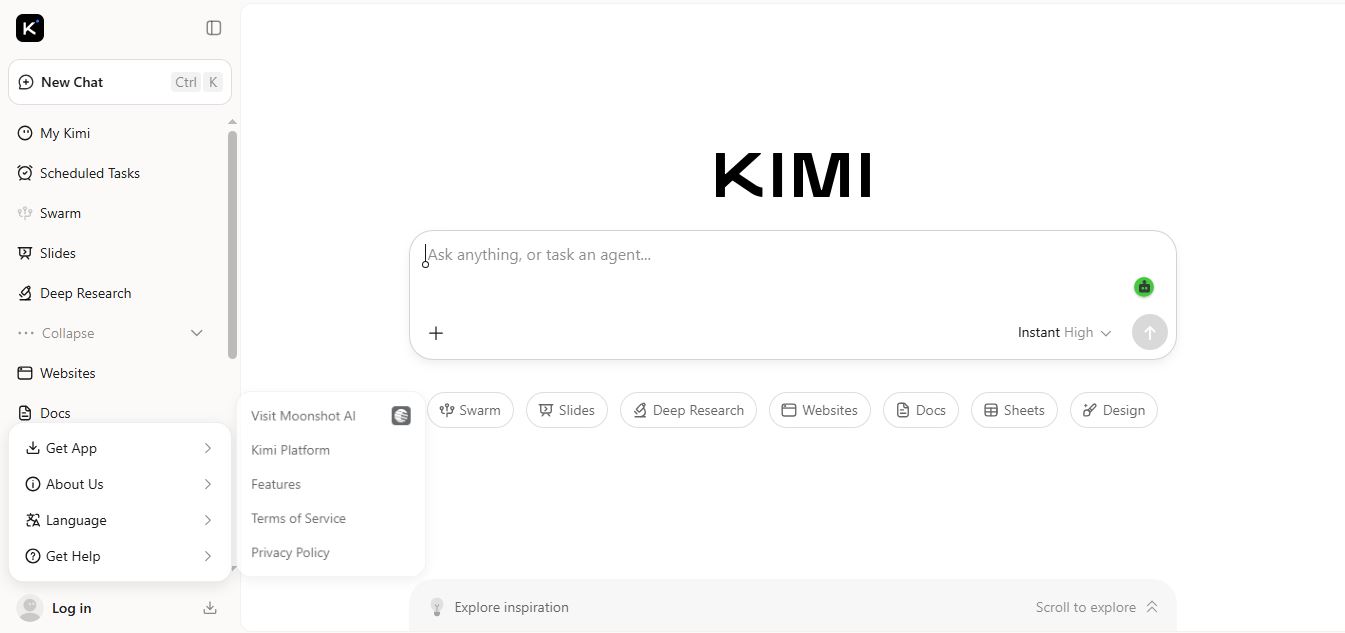
Kimi AI is an advanced AI assistant developed by Moonshot AI that helps you chat, research, write, code, and automate tasks in one place. It supports web search, file analysis, and multimodal inputs, and can even run autonomous “agent” workflows to complete complex tasks end-to-end.
Freemium
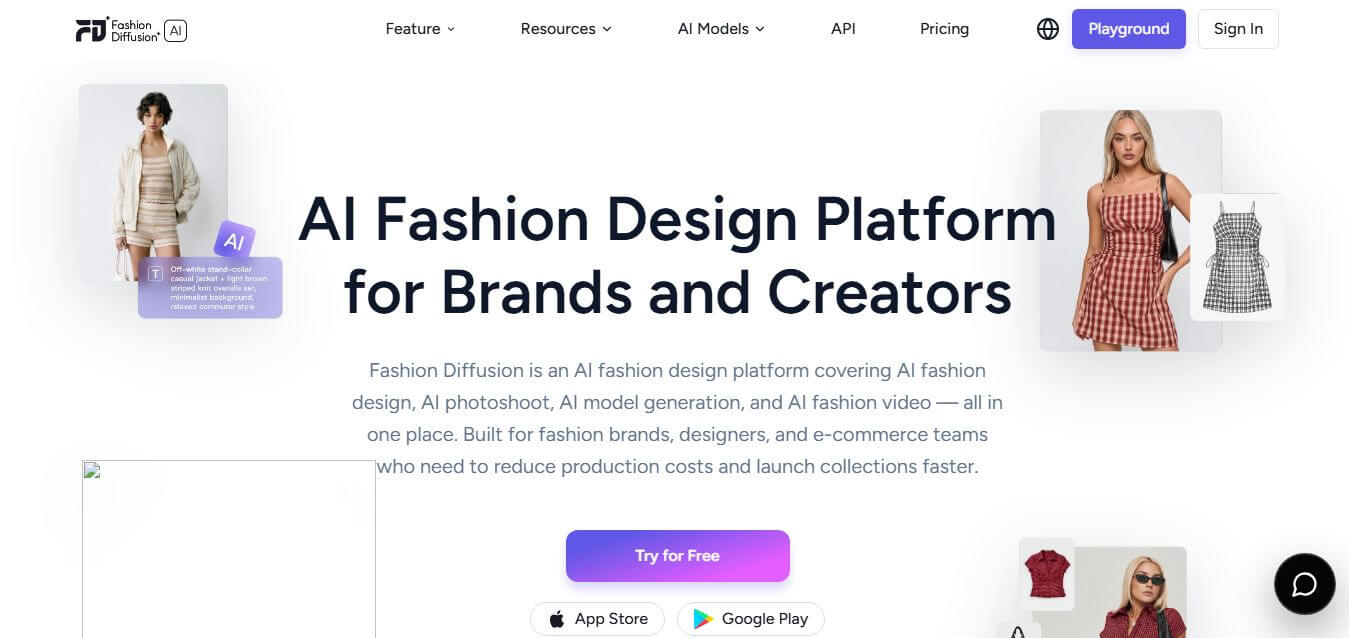
Fashion Diffusion AI
Fashion Diffusion is an AI-powered fashion design platform that helps brands and designers create clothing designs, virtual try-ons, AI models, product photos, and marketing visuals faster and cost-effectively.
Paid
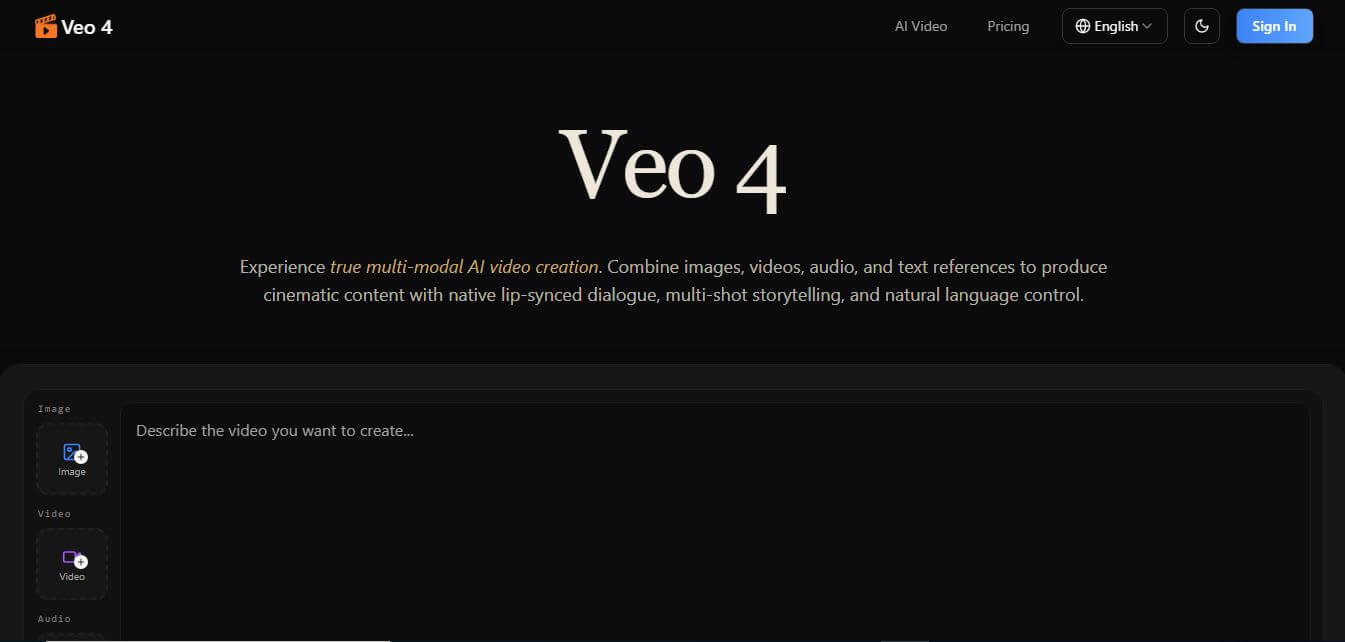
Veo 4
Veo 4 AI is an AI video creation platform that generates dramatic videos from text, images, audio, and video prompts using realistic motion and synchronized sound.
Paid
Alternatives
Alternatives to Abacus AI
The best Abacus AI alternatives include DataRobot, Dataiku, Amazon SageMaker, and Scale AI. While Abacus AI provides a unified enterprise AI platform combining ChatLLMs, autonomous DeepAgents, and full-stack MLOps, alternatives like DataRobot focus heavily on enterprise AutoML and Amazon SageMaker offers low-level AWS-native machine learning infrastructure.
 4.8
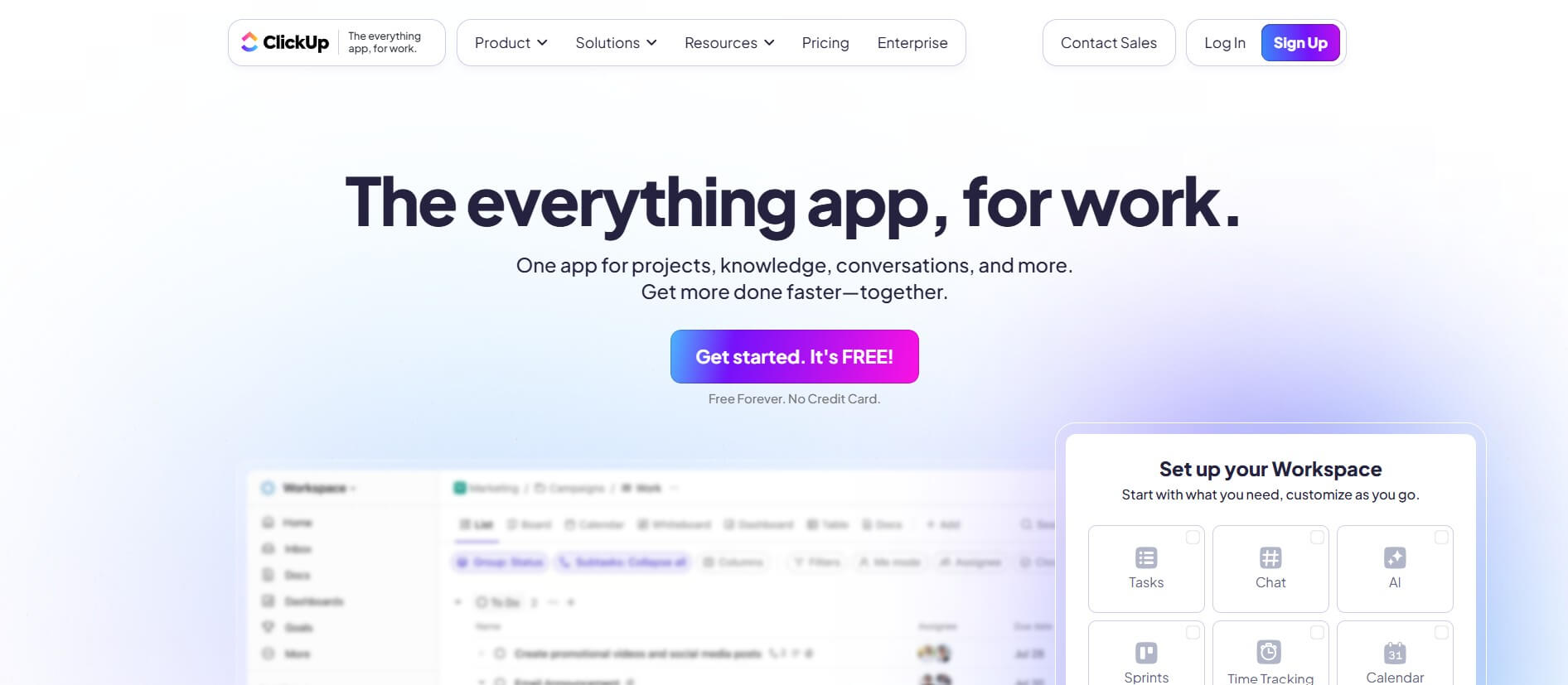
ClickUp
Productivity
ClickUp is an all-in-one work management platform that helps teams manage projects, tasks, documents, goals, and collaboration in one workspace. Its AI features assist with task creation, meeting summaries, content generation, and workflow automation, while customizable dashboards, multiple project views, and integrations help teams improve productivity and track progress.
 4.9
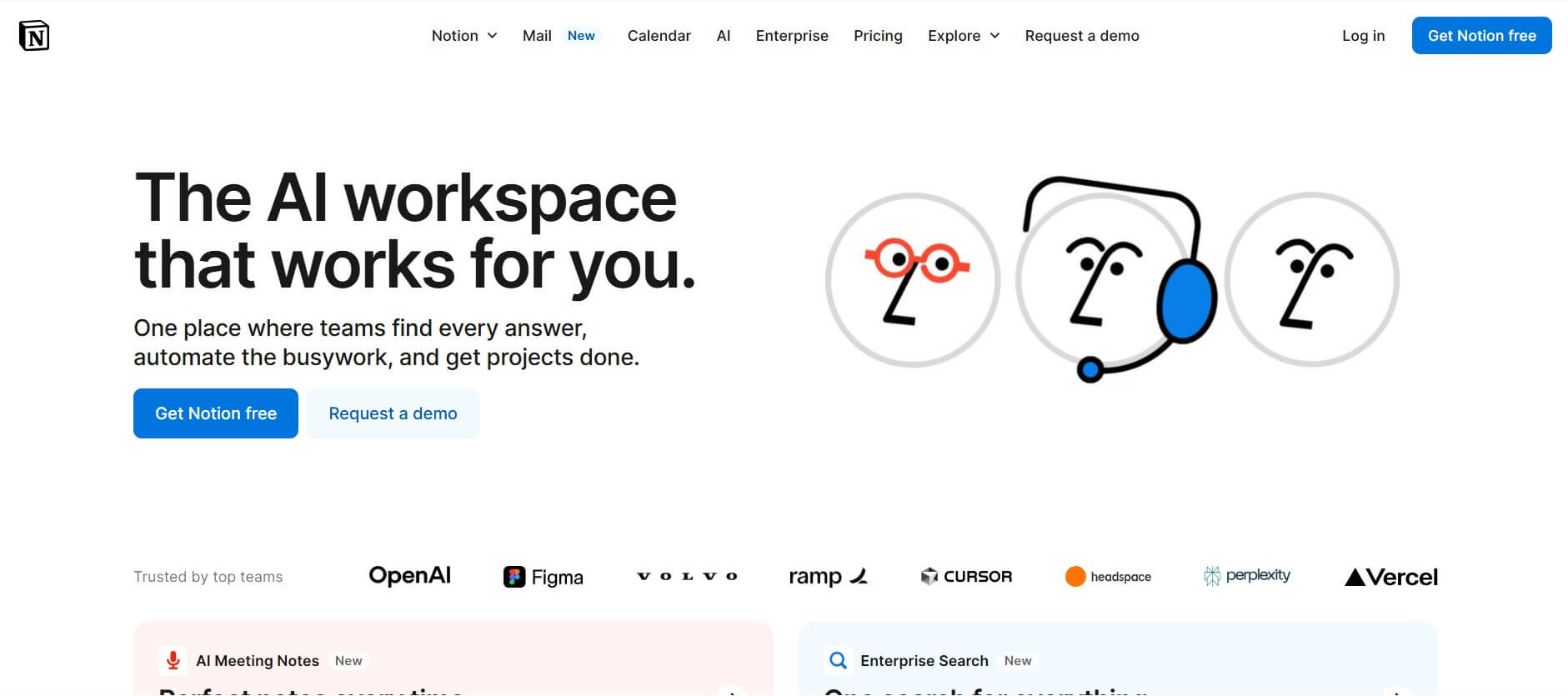
Notion
Productivity
Notion is an all-in-one productivity and AI workspace that helps individuals and teams manage documents, notes, projects, databases, and company knowledge. Its AI features support writing, research, meeting summaries, enterprise search, and workflow automation, while customizable templates and integrations keep everyday work organized in one place.
 4.7
Quinvio AI
Productivity
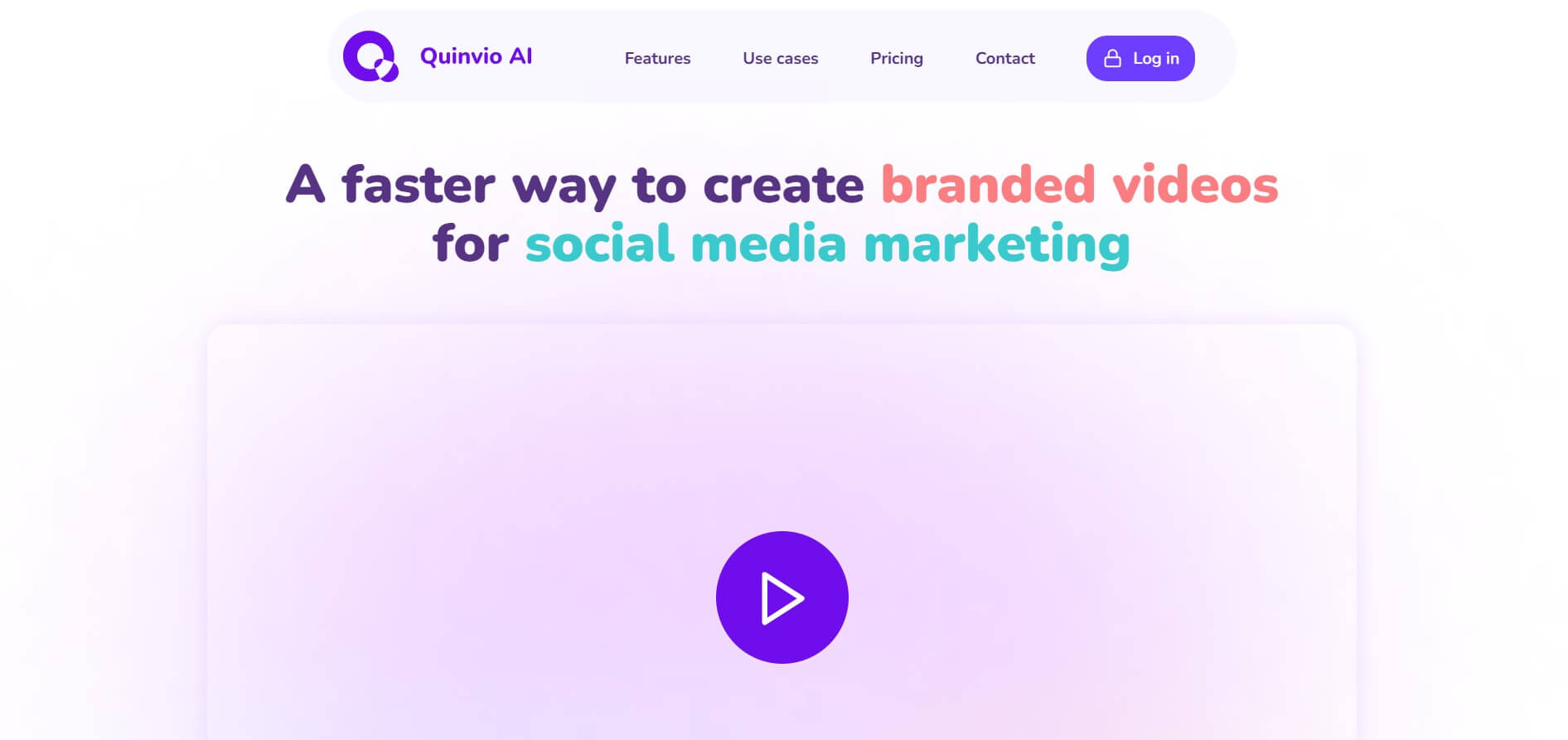
Quinvio AI helps you turn ideas, scripts, blogs, or web content into polished video presentations. You can refine messaging, choose branded templates, add AI avatars and voiceovers, and produce shareable visual content without traditional recording or editing workflows. It is especially useful for marketers, educators, trainers, creators, and business teams.
 4.9
HubSpot
Marketing
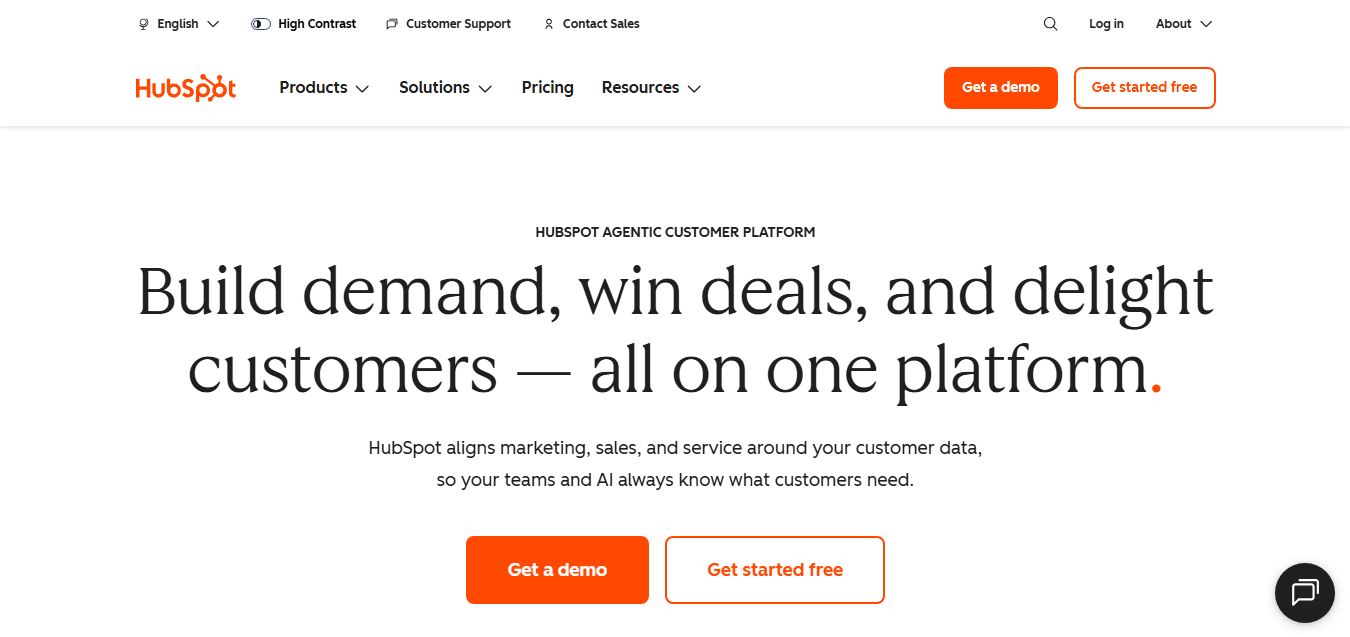
HubSpot is an AI-powered customer platform that helps businesses manage marketing, sales, customer service, and content in one place. It offers a free CRM, automation tools, analytics, and AI features, enabling teams to attract leads, close deals, and deliver better customer experiences at scale.
 4.9
TestSprite
Testing
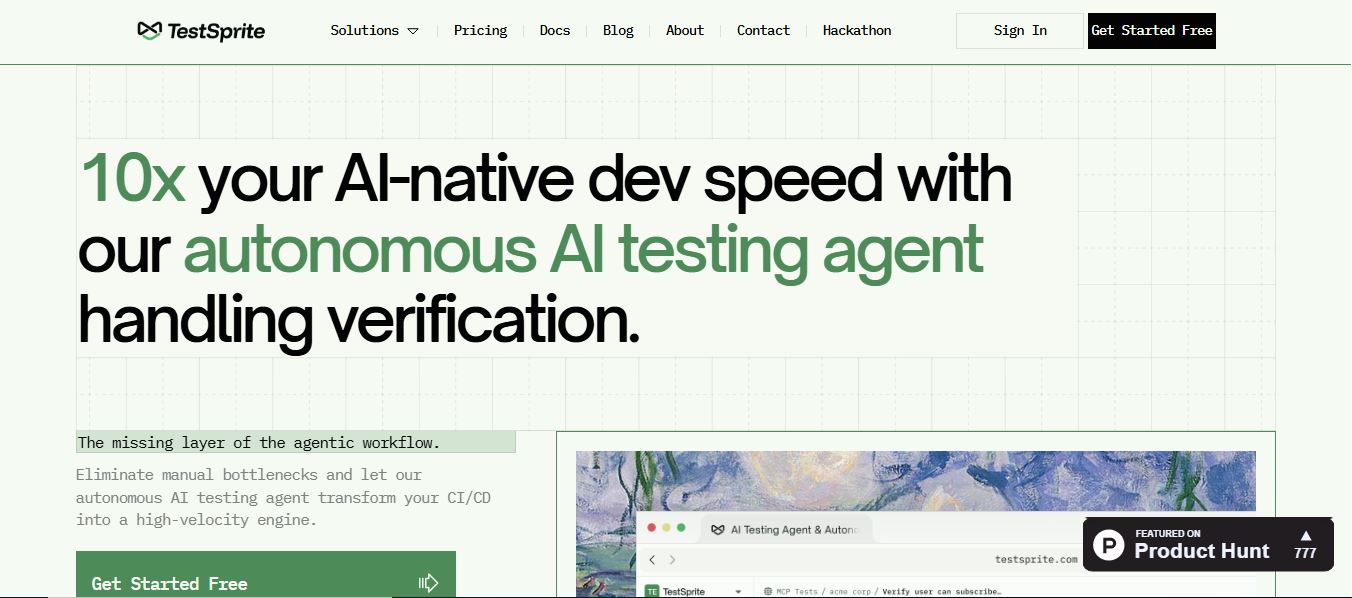
TestSprite is an AI-powered software testing agent that helps developers automatically generate, run, and fix end-to-end tests for web apps. It simulates real user behavior, detects issues, and provides root-cause insights with suggested fixes, enabling faster releases and more reliable software without manual QA effort.
 4.8
Microsoft Copilot
Productivity
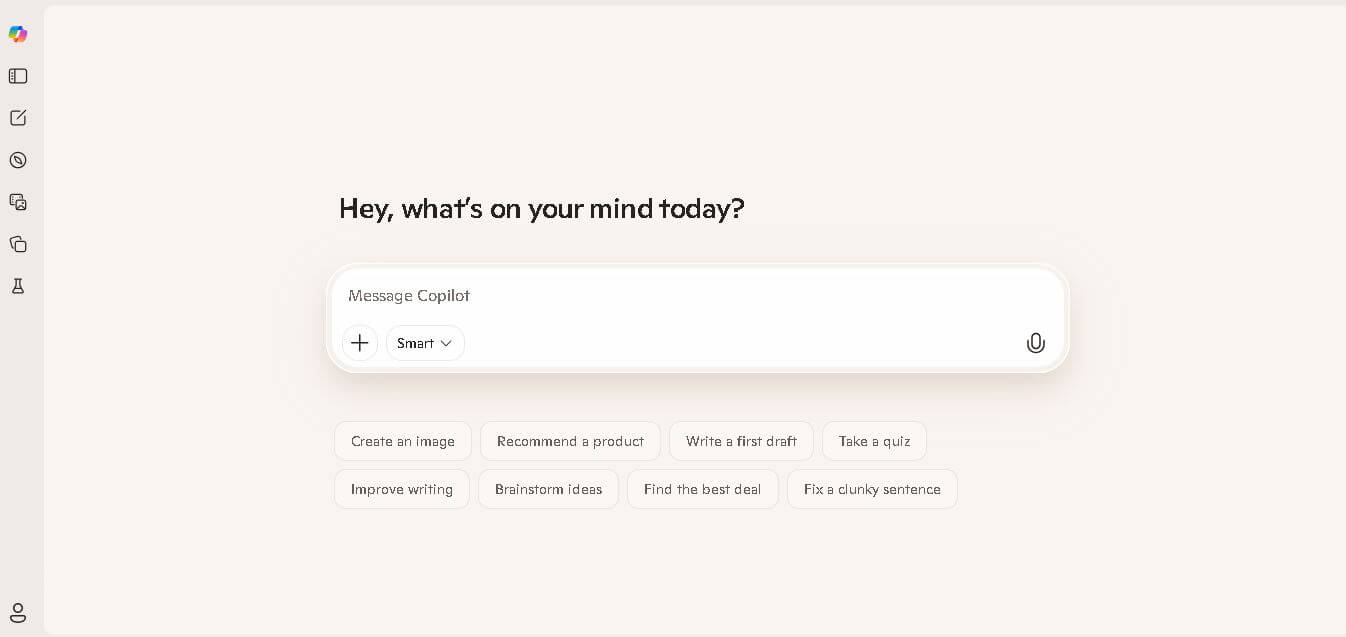
Microsoft Copilot is an AI-powered assistant that helps users write, research, analyze data, and automate tasks across apps like Word, Excel, Outlook, and Teams. It combines large language models with real-time data to generate content, answer questions, and improve productivity across personal and professional workflows.
 4.9
Casablanca AI
Productivity
Casablanca AI is an AI-powered virtual camera that corrects your gaze in real time during video calls, making it appear like you’re maintaining natural eye contact. It works with tools like Zoom and Teams, improving trust, engagement, and communication without needing extra hardware.
 4.9
Granola
Productivity
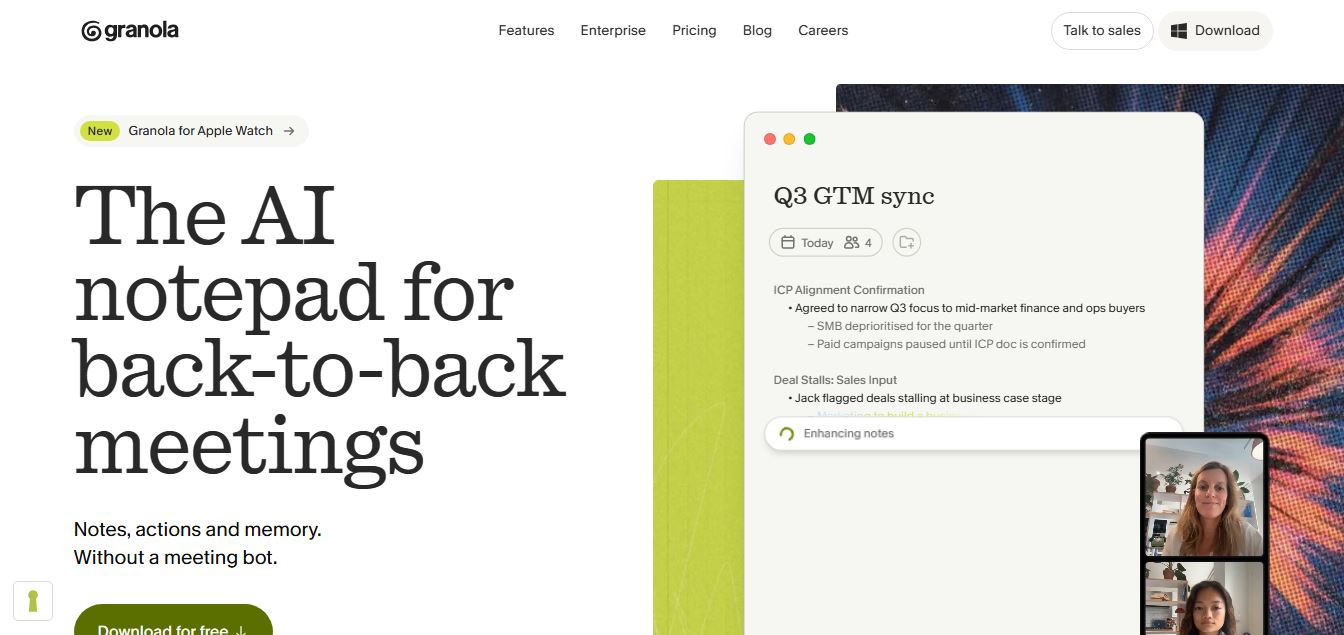
Granola is an AI-powered meeting assistant that helps you capture, organize, and act on conversations without losing focus. It listens to meetings, turns notes into structured summaries, and generates action items and follow-ups automatically—so you stay present while everything important is documented and ready to use.
 4.8
AI Submit
Productivity
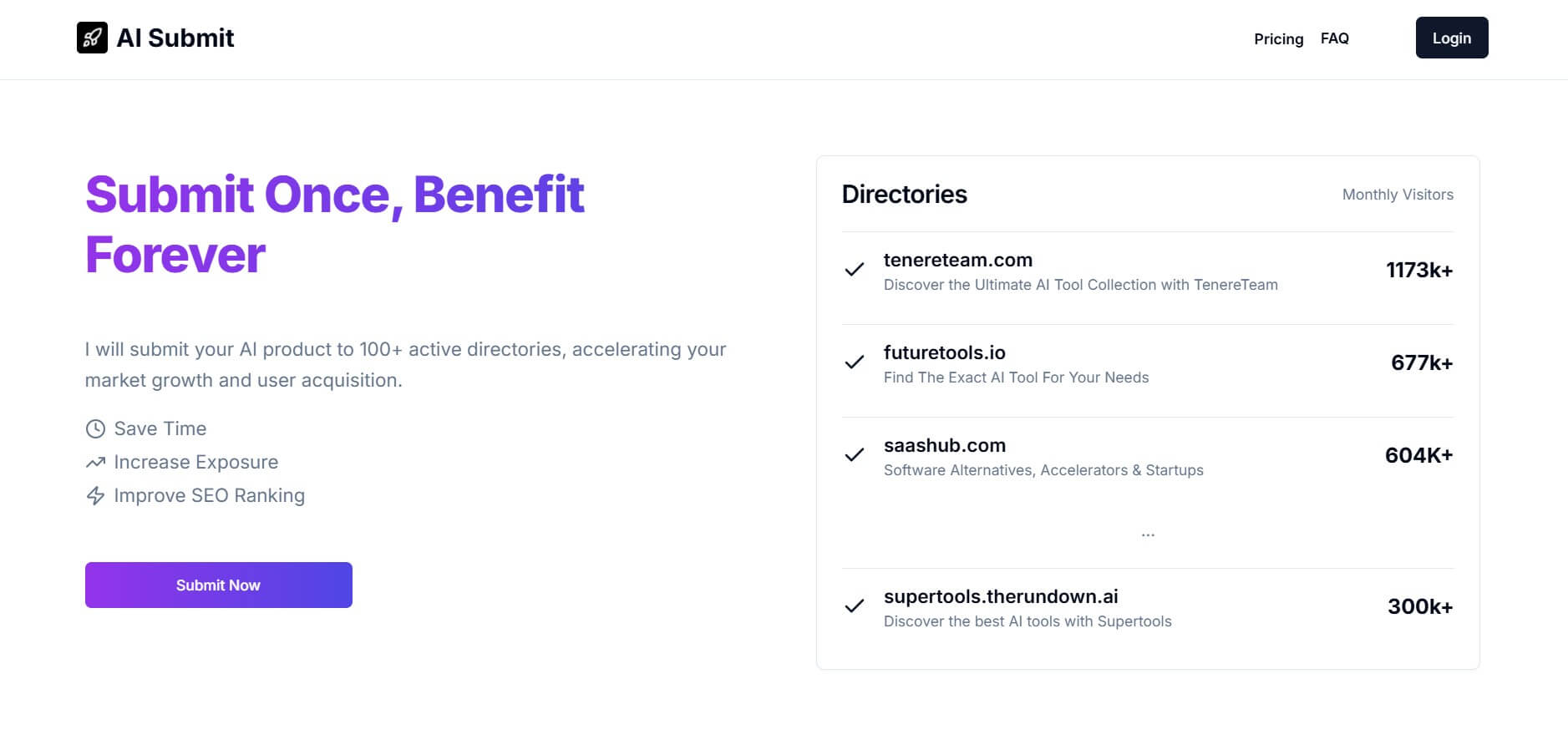
AI Submit is an automated directory submission and SEO distribution platform that allows AI startup founders and developers to submit their artificial intelligence tools to dozens of top AI directories simultaneously for backlink building and traffic growth.