
4DV.ai
4DV.ai is a 4D video technology platform that transforms visual media into dynamic, interactive experiences. Using 4D Gaussian Splatting, it captures spatial and temporal information to create explorable scenes. The technology is designed for immersive storytelling across entertainment, sports, fashion, advertising, and other visual-media applications.

What is 4DV.ai?
4DV.ai is a visual-media technology designed to turn conventional video into dynamic, explorable 4D experiences. Its system uses 4D Gaussian Splatting to represent scenes across space and time, allowing viewers to experience moving imagery from different perspectives. The company focuses on an end-to-end workflow covering capture, reconstruction, creation, playback, and distribution. Its applications include film, music videos, sports, fashion shows, commercials, and other immersive media experiences.
4DV.ai focuses on 4D video creation and distribution through 4D Gaussian Splatting technology. The company presented its complete capture, reconstruction, and artistic-creation workflow at SIGGRAPH 2025 and received the Real-Time Live! Best-in-Show Award. Its SIGGRAPH demonstration used a multi-camera setup, while its research work also explores sparse-view reconstruction and compression. The company’s technology targets applications across film, music, sports, fashion, advertising, AR, and VR.
- Platform Role: 4D Gaussian Splatting (4DGS) Volumetric Video Creation & Distribution Ecosystem
- Developer & Leadership: Founded by Jiaming Sun (co-author of FreeTimeGS) & research teams from Zhejiang University
- Industry Recognition: Winner of SIGGRAPH 2025 Real-Time Live! Best-in-Show (First Chinese development team to earn the honor)
- Platform Availability: Cloud/Enterprise Processing Workflow, WebGPU Browser Playback via PlayCanvas, and WebXR App integration (Apple Vision Pro & Meta Quest)
Use Cases:
- Converting multi-view or smartphone 2D video captures into fully interactive, 360-degree 4D dynamic spatial scenes
- Virtual camera manipulation in virtual production, allowing filmmakers to reframe shots, orbit actors, and change angles post-capture
- Interactive sports replay systems, enabling tactical camera panning and free-viewpoint replay analysis
- Creating immersive commercial advertising, fashion shows, e-commerce brand showcases, and music videos
- Exporting spatial volumetric datasets for WebXR, virtual reality (VR), augmented reality (AR), and light-field displays
Technology:
- Continuous Spacetime 4D Gaussian Splatting (4DGS) rendering primitives encoding spatial (XYZ), temporal (time), color, and opacity data
- Real-time WebGPU & PlayCanvas rendering engine capable of ultra-high frame rate playback (300+ FPS rendering pipelines)
- InfiniteStudio capture integration supporting multi-camera PTZ arrays (e.g., OBSBOT multi-camera rigs) and casual phone footage
- Continuous Gaussian tracking algorithms that eliminate popping artifacts and tolerate unsynchronized multi-camera sources
Target Users:
- Film directors, VFX artists, and virtual production teams seeking post-capture camera freedom
- Sports broadcasting networks and tactical video analysts needing dynamic free-viewpoint playback
- XR/VR/AR experience developers and spatial media agencies creating interactive 3D video content
- Commercial, fashion, and luxury brand creators looking for interactive spatial advertisements
Acquisition: Enterprise service platform and custom volumetric capture system operated via 4DV.ai

What are the key features of 4DV.ai?
4DV.ai's key platform features are
- Continuous 4D Gaussian Reconstruction: Rebuilds dynamic scenes frame-by-frame into millions of moving spatial Gaussians without temporal flickering or popping artifacts.
- Free-Camera Orbital Navigation: Viewers and editors can pan, orbit, zoom, and adjust camera height freely while the video is actively playing or paused.
- WebGPU & WebXR Browser Playback: Stream and interact with volumetric 4D videos directly within web browsers, Apple Vision Pro, or Meta Quest without specialized software installation.
- Unsynchronized Camera Tolerance: Advanced AI alignment algorithms handle multi-camera setups (such as GoPro or iPhone arrays) even if shutter sync is imprecise.
- Infinite Slow Motion & Time Scrubbing: Pause playback at any millisecond to inspect action, orbit subject, or render smooth slow-motion camera paths.
- High Compression Pipeline: Compresses gigabytes of multi-angle raw footage into streamable 30–60 Mbps volumetric 4D assets.
How much does 4DV.ai cost?
4DV.ai operates primarily as a high-end enterprise service, custom production solution, and platform for studios, brands, and broadcast partners rather than a self-serve consumer SaaS.
Pricing Models:
- Enterprise & Studio Custom Licensing: Custom quotes based on capturing multi-camera hardware deployment (InfiniteStudio rig setup), cloud reconstruction GPU compute, and WebXR player distribution.
- Web Experience Preview: Interactive browser demos and WebXR samples are accessible for testing directly on 4DV.ai and partnered VR distribution networks.
Disclaimer: Public self-serve pricing tiers are not currently offered. Enterprise pricing and studio pipeline access are provided directly by 4DV.ai upon commercial inquiry.
Who should use 4DV.ai?
4DV.ai is designed for spatial computing pioneers and visual media creators, including
- Film & Commercial VFX Studios: Production crews wanting bullet-time camera trajectories and virtual camera movement without physically re-shooting.
- Broadcasters & Sports Networks: Production engineers building interactive multi-angle replays and volumetric fan experiences.
- Spatial Computing Developers: Creators developing immersive apps for Apple Vision Pro, Meta Quest, and WebXR platforms.
What are the best alternatives to 4DV.ai?
Some of the strongest 4DV.ai alternatives in volumetric video and 4DGS include
- Gracia AI
- Luma AI
- Volinga
- Kiri Engine
- Postshot by Jawset
What are the pros and cons of 4DV.ai?
What are the pros of 4DV.ai?
- SIGGRAPH award-winning 4D Gaussian reconstruction fidelity with smooth, flicker-free temporal tracking
- Real-time WebGPU browser rendering requiring no bulky app downloads for end viewers
- Allows complete camera freedom during live playback, bridging the gap between video and 3D video games
- Efficient data compression converting massive camera streams into streamable, web-friendly bandwidth
What are the cons of 4DV.ai?
- High-end volumetric results generally require multi-camera capture rigs or controlled video inputs
- Currently operates as an enterprise/B2B service without an instant self-serve consumer portal
- Requires WebGPU or modern GPU hardware on client devices for maximum frame rates
Why should you choose 4DV.ai?
Traditional 2D video restricts the viewer to a static lens angle chosen during production. 4DV.ai transforms video into a dynamic spatial environment using state-of-the-art 4D Gaussian Splatting. By allowing real-time camera movement, temporal scrubbing, and instant WebXR streaming, 4DV.ai provides studios and brand creators with the tools to deliver groundbreaking spatial computing experiences across web browsers and VR headsets.
How does 4DV.ai compare to competitors?
The primary distinction between 4DV.ai, Gracia, Luma AI, and Volinga lies in platform integration and target workflow. While Luma AI focuses heavily on static 3D NeRFs/splats and Gracia prioritizes consumer VR content streaming, 4DV.ai specializes in end-to-end studio production workflows, multi-camera PTZ capture pipelines, and WebGPU browser rendering.
| Feature / Platform | 4DV.ai | Gracia AI | Luma AI | Volinga |
|---|---|---|---|---|
| Core Focus | End-to-End Enterprise 4D Volumetric Video | Streamable 4DGS VR Player & Platform | Static NeRFs, 3D Splats & AI Video | Unreal Engine 4DGS Virtual Production |
| WebGPU Browser Playback | Yes (Native PlayCanvas integration) | Yes (Browser & Native Apps) | Yes (for static 3D scenes) | No (Unreal Engine plugin) |
| Multi-Camera Capture Rigs | Yes (InfiniteStudio multi-PTZ / iPhone rigs) | User-uploaded 4D sequences | Single-camera sweep capture | Requires pre-rendered or captured data |
| Target Delivery | Broadcast, Film, Commercials, WebXR | VR Headsets (Vision Pro, Quest) & Web | General 3D Capture & Generative AI | Virtual Production & Real-time VFX |
How do we rate 4DV.ai?
| Parameter | Rating (out of 5) |
|---|---|
| Reconstruction Quality & Fidelity | 4.9 |
| Real-Time Playback Speed (WebGPU/WebXR) | 4.8 |
| Innovation & Technology Leadership | 4.9 |
| Enterprise Pipeline Integration | 4.7 |
| Accessibility & Self-Serve Ease | 4.2 |
| Overall Score | 4.70 |
What is our review and verdict on 4DV.ai?
4DV.ai represents a major leap forward in spatial computing and volumetric video generation. By converting multi-view camera footage into streamable, real-time 4D Gaussian splats, it grants creators unprecedented post-capture camera freedom. For broadcast networks, film studios, and VR developers, 4DV.ai offers one of the most advanced 4D dynamic video platforms available.
Conclusion
4DV.ai represents an approach to visual media that combines spatial reconstruction, temporal information, and interactive viewing through 4D Gaussian Splatting. Its end-to-end workflow covers capture, reconstruction, creation, playback, and distribution, with applications spanning film, sports, music, fashion, and advertising. Its SIGGRAPH 2025 recognition and ongoing research into compression and sparse-view reconstruction demonstrate continued work toward practical immersive video. For creators exploring interactive and spatial storytelling, 4DV.ai offers an interesting technology direction.
FAQ
What does 4DV.ai do?
4DV.ai develops technology for creating and distributing 4D video. Its approach uses 4D Gaussian Splatting to represent dynamic scenes in space and time, allowing viewers to explore video from different perspectives. The company focuses on making volumetric and immersive video more practical for applications including entertainment, advertising, sports, fashion, and interactive media.
What is 4D Gaussian Splatting in 4DV.ai?
4D Gaussian Splatting is the underlying technology used by 4DV.ai to represent dynamic visual scenes. Instead of treating video as a flat sequence of images, the approach models spatial information together with changes over time. This allows reconstructed scenes to become interactive and explorable while retaining the motion and visual characteristics of recorded content.
Can 4DV.ai make videos interactive?
Yes. 4DV.ai is designed around the idea of turning conventional visual media into explorable, interactive dynamic spaces. Supporting demonstrations show viewers changing perspectives while experiencing recorded scenes. Rather than restricting viewers to a single fixed camera viewpoint, 4D video provides a more spatial way to experience moving content.
What industries can use 4DV.ai?
4DV.ai identifies film, music videos, sports, fashion shows, and commercials as application areas for its technology. Its underlying 4D video workflow can also support broader immersive-media experiences involving computer vision, computer graphics, AR, VR, and interactive storytelling. The specific implementation depends on the production requirements and intended viewing experience.
Does 4DV.ai support real-time playback?
Real-time playback is an important part of 4DV.ai's technology demonstrations. Its 4D Gaussian Splatting approach is intended to make dynamic reconstructed scenes suitable for interactive viewing rather than only offline rendering. External descriptions of the technology also report real-time scene exploration, including changing viewpoints while the video content continues to represent motion.
Does 4DV.ai require multiple cameras?
4DV.ai has demonstrated multi-camera capture workflows, including a SIGGRAPH presentation involving approximately 20 cameras. However, research associated with the company also explores sparse-view reconstruction, which focuses on reconstructing dynamic 3D humans from limited camera viewpoints. Therefore, capture requirements can depend on the particular workflow, reconstruction method, and production objective.
User Reviews
No reviews yet for 4DV.ai.
Featured Tools
Featured AI tools from TechShark
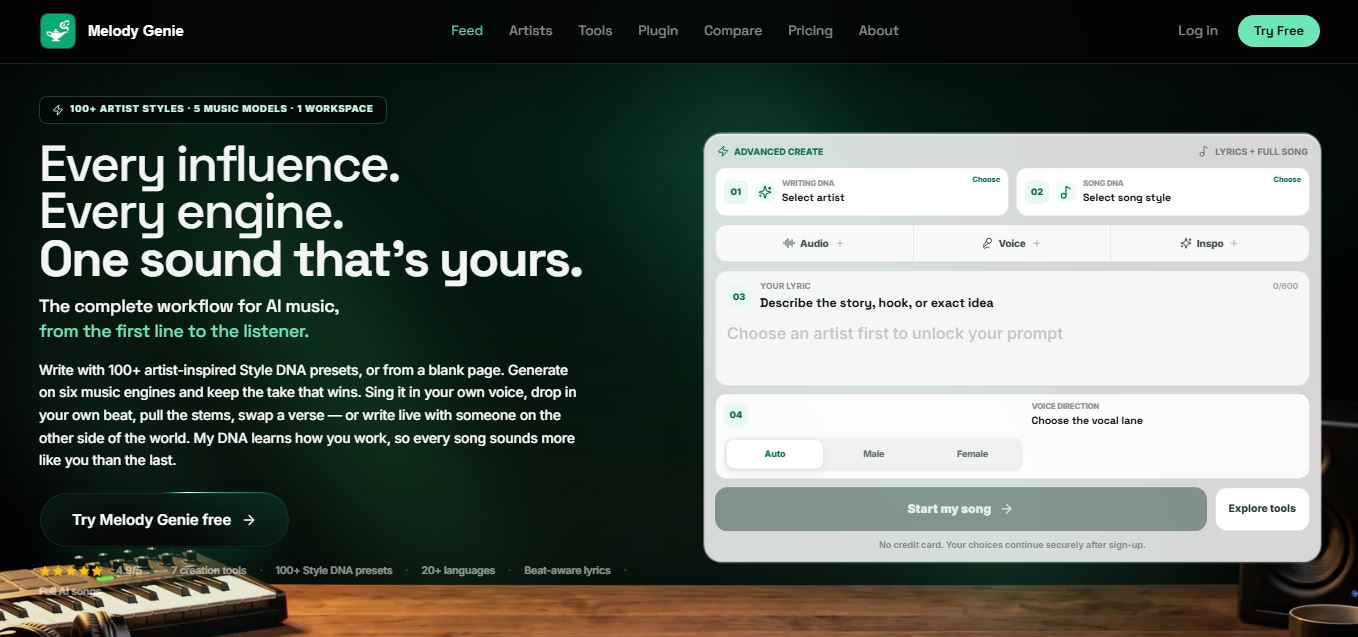
Melody Genie
MelodyGenie is an AI-powered music generator that creates original songs from simple text prompts. Users can choose styles, moods, and genres, then instantly generate melodies and full tracks, making it easy for creators, marketers, and hobbyists to produce custom music without musical expertise.
Freemium
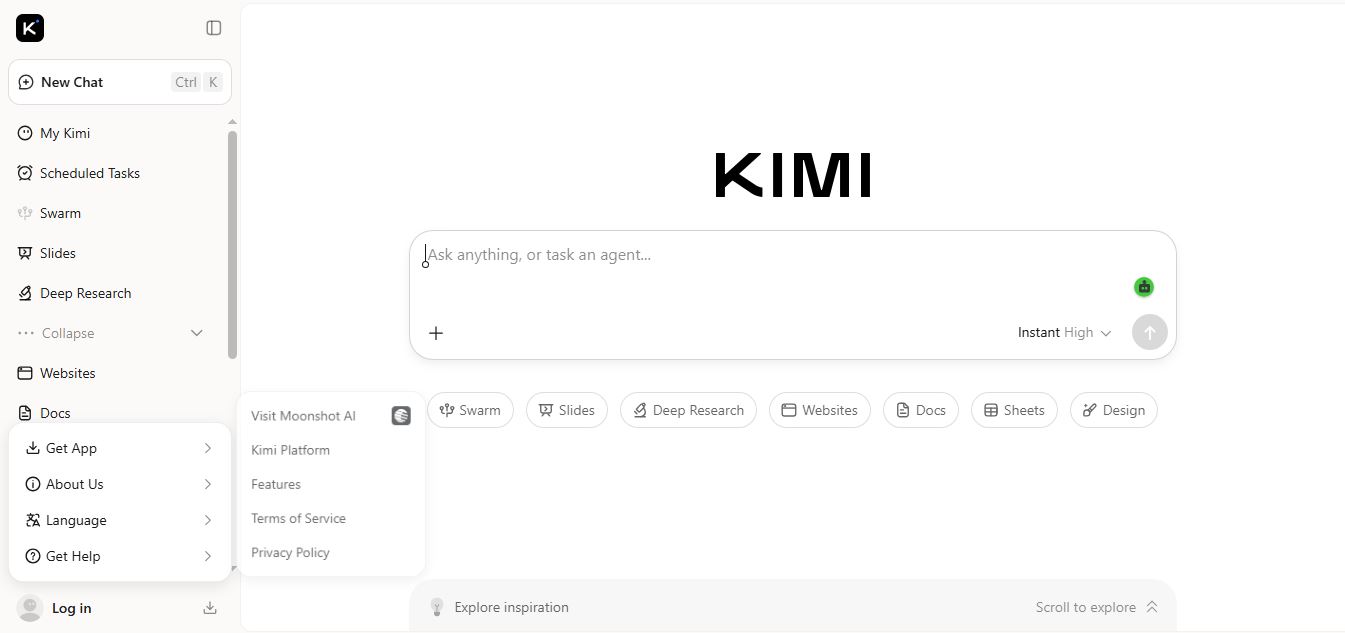
Kimi AI
Kimi AI is an advanced AI assistant developed by Moonshot AI that helps you chat, research, write, code, and automate tasks in one place. It supports web search, file analysis, and multimodal inputs, and can even run autonomous “agent” workflows to complete complex tasks end-to-end.
Freemium

Fashion Diffusion AI
Fashion Diffusion is an AI-powered fashion design platform that helps brands and designers create clothing designs, virtual try-ons, AI models, product photos, and marketing visuals faster and cost-effectively.
Paid
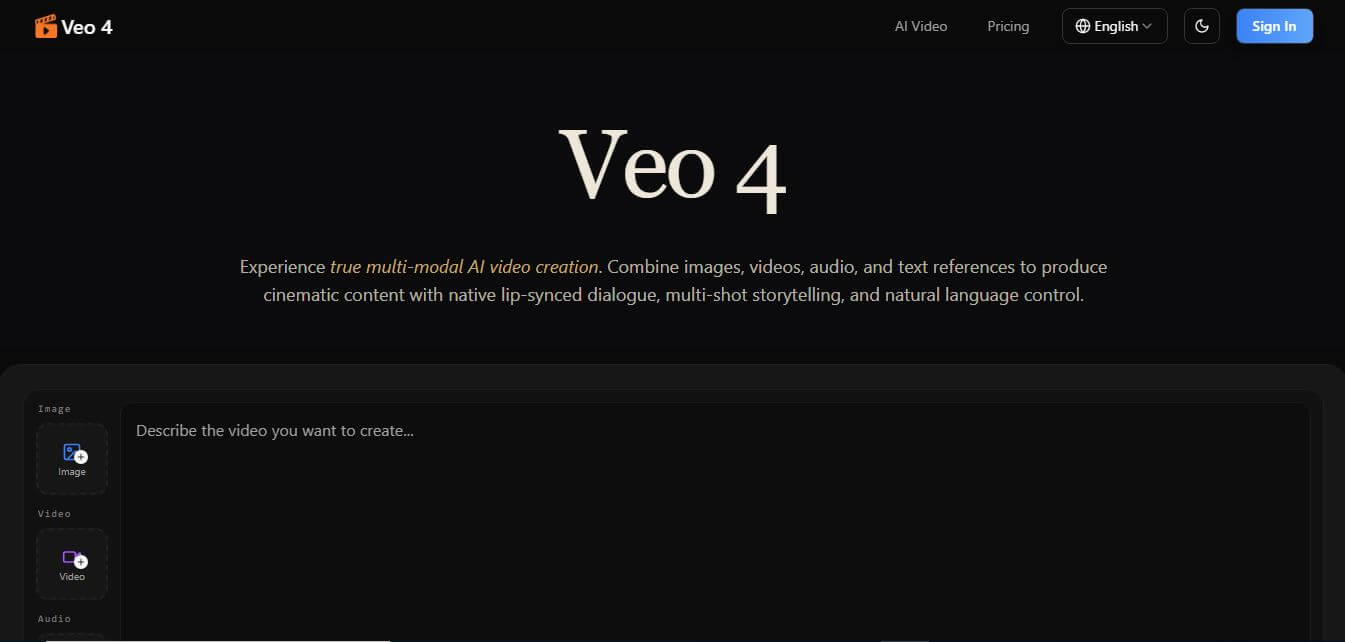
Veo 4
Veo 4 AI is an AI video creation platform that generates dramatic videos from text, images, audio, and video prompts using realistic motion and synchronized sound.
Paid
Alternatives
Alternatives to 4DV.ai
The best 4DV.ai alternatives include Gracia AI, Luma AI, Volinga, and Kiri Engine. While 4DV.ai provides end-to-end enterprise multi-camera 4D Gaussian Splatting capture and WebGPU browser playback, alternatives like Gracia specialize in consumer VR streaming and Volinga integrates dynamic splats directly into Unreal Engine.
 4.8
4.8Shuffll
Video Editing
Shuffll goes beyond traditional video creation by connecting personalized video directly to enterprise data and workflows. Its API-first infrastructure, 40+ AI models, automated production, and built-in brand governance make it suitable for organizations that need video at scale. For businesses seeking higher engagement without building large production teams, Shuffll offers a practical way to turn existing data into personalized, on-brand video experiences.
 4.8
4.8Opus Clip (Opus Pro)
Video Editing
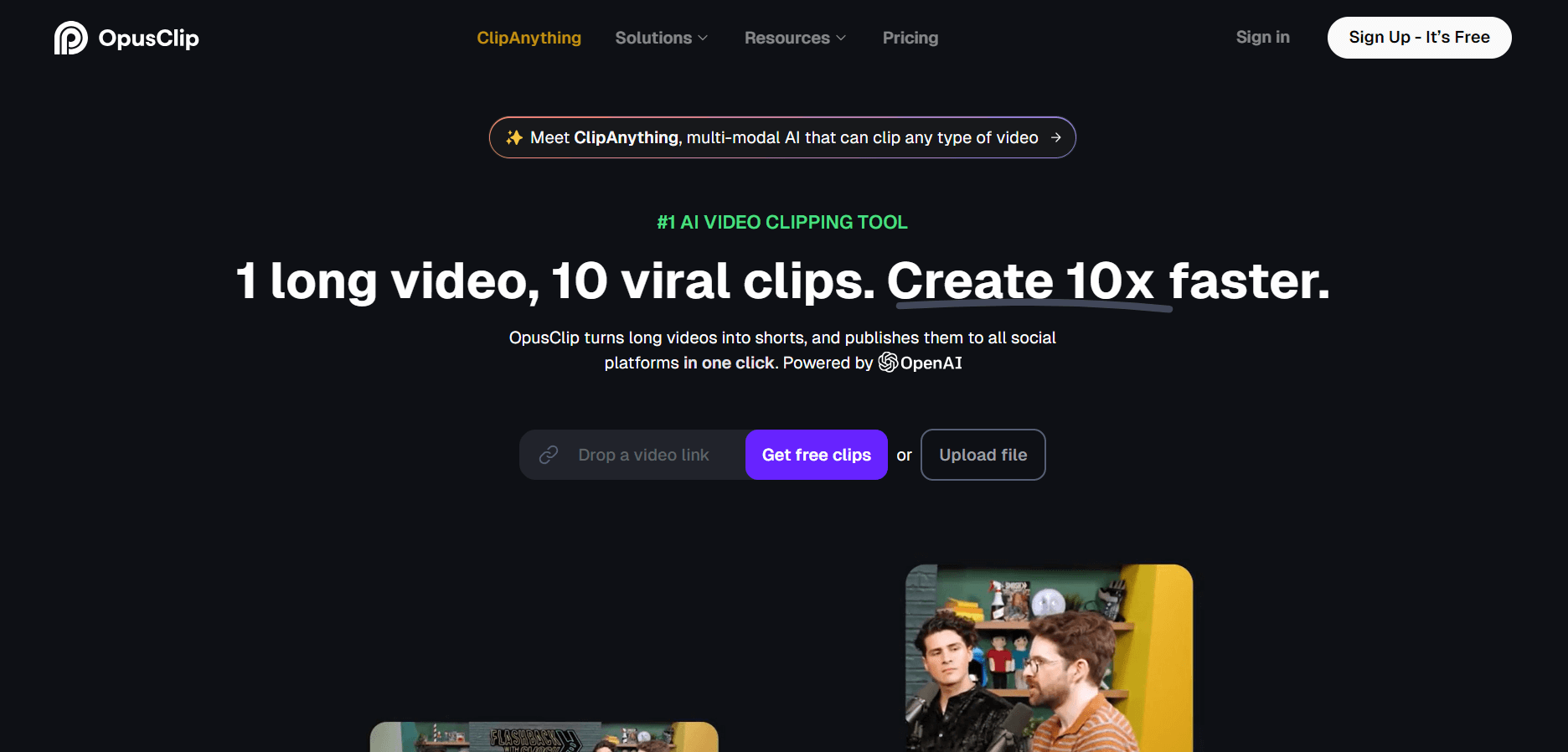
OpusClip helps creators transform long-form videos into short, social-ready clips. It can identify engaging moments, generate captions, reframe footage, add B-roll, enhance audio, and support publishing across major social platforms. It is designed for creators, marketers, podcasters, businesses, and teams that want to scale video content production.
 4.8
4.8Dubbah
Video Editing
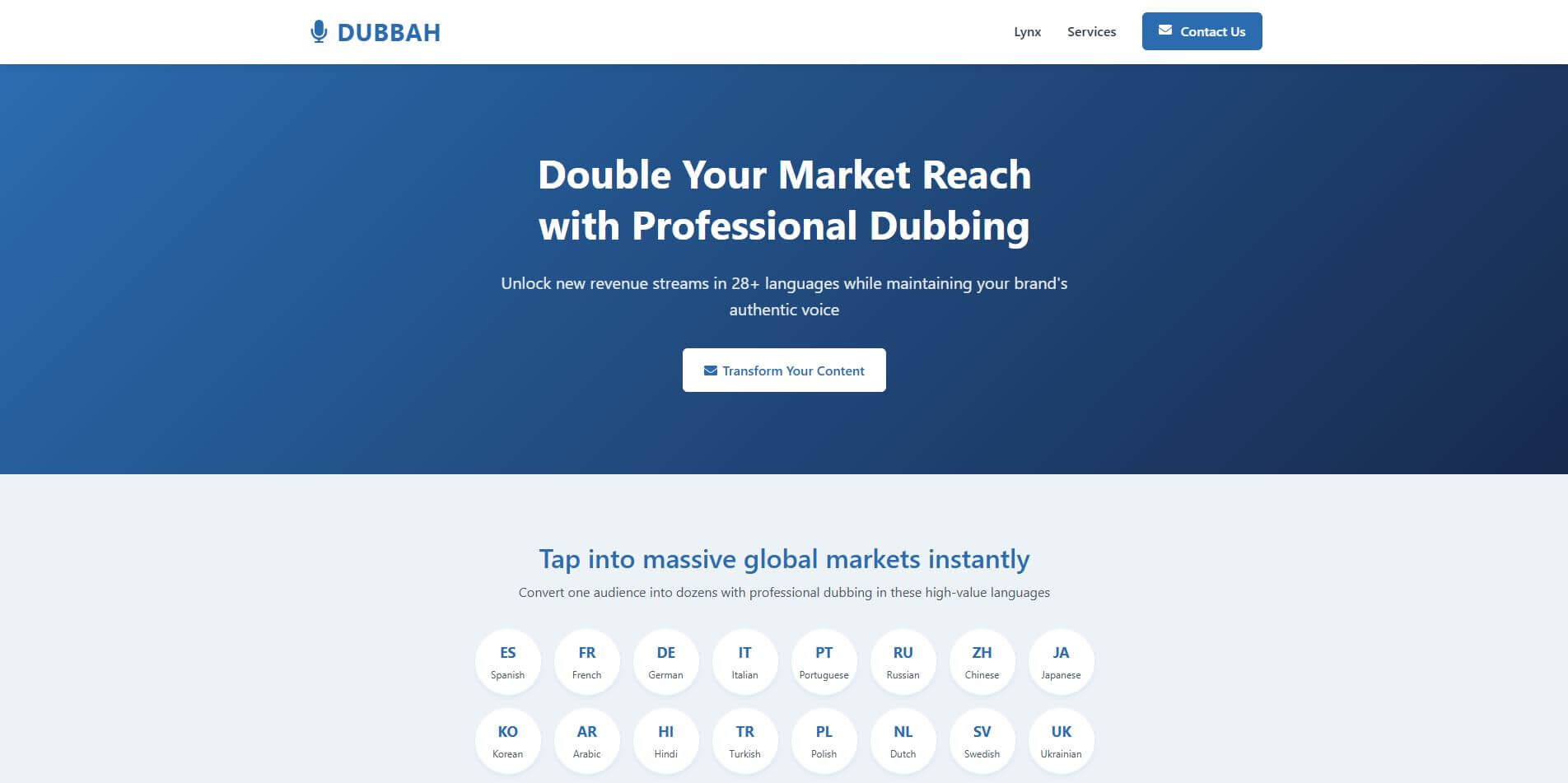
Dubbah helps Mac users translate and dub videos into 14 languages while preserving a familiar speaker voice. The app processes media locally, supports editing translated lines, and works offline after setup. With no account, subscription, or per-minute fee, it offers a simple, straightforward option for creators producing multilingual video content.
 4.9
4.9Clipchamp
Video Generator
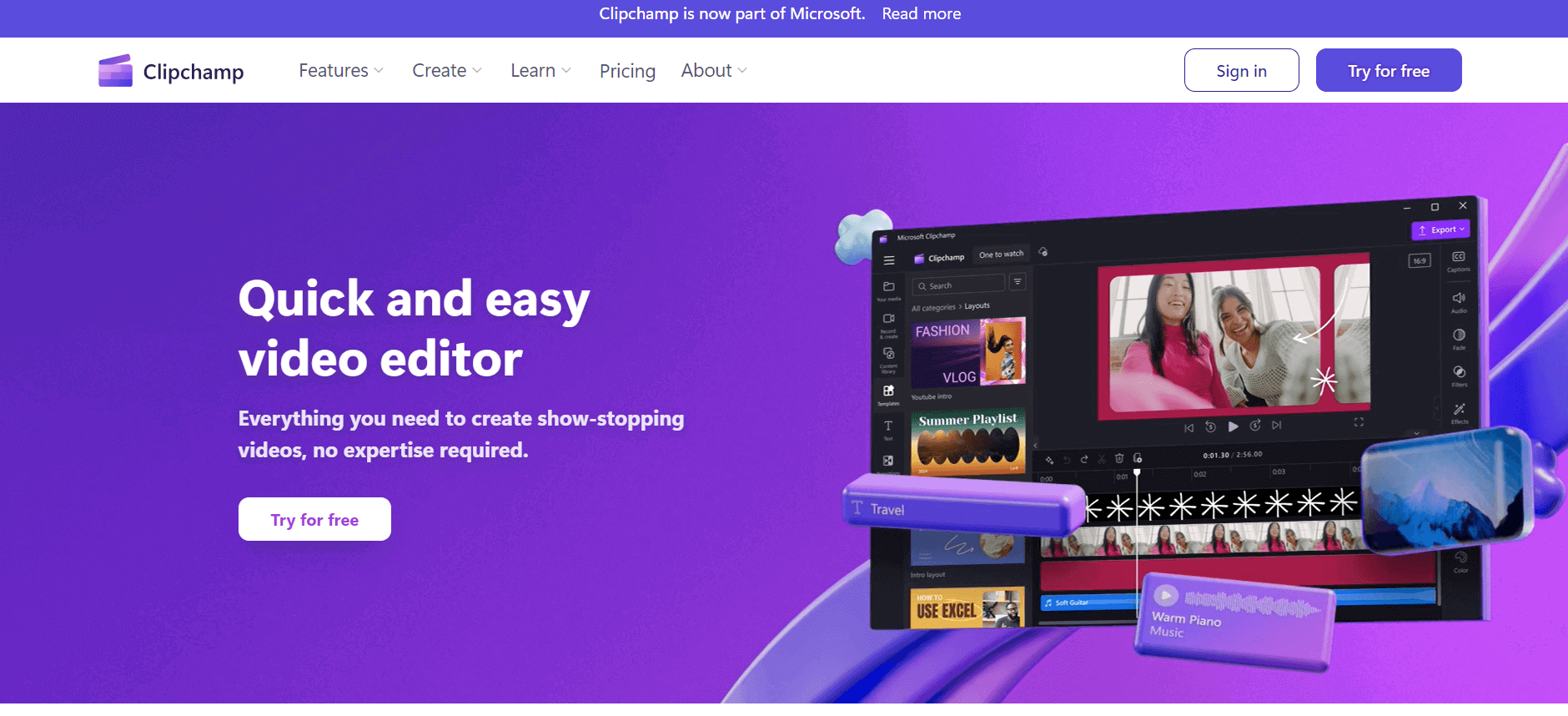
Clipchamp is an AI-powered online video editor by Microsoft that helps users record, edit, and share videos directly from the browser. It offers templates, stock media, and AI tools like subtitles, voiceovers, and noise removal, enabling fast, professional video creation without advanced editing skills.
 4.9
4.9CapCut
Video Editing
CapCut is an AI-powered video editing platform that helps creators edit, generate, and enhance videos using smart tools like auto captions, text-to-speech, templates, and one-click video creation. It supports social media content, marketing videos, and storytelling with fast, easy, and professional editing workflows.
 4.9
4.9Media.io
Video Editing
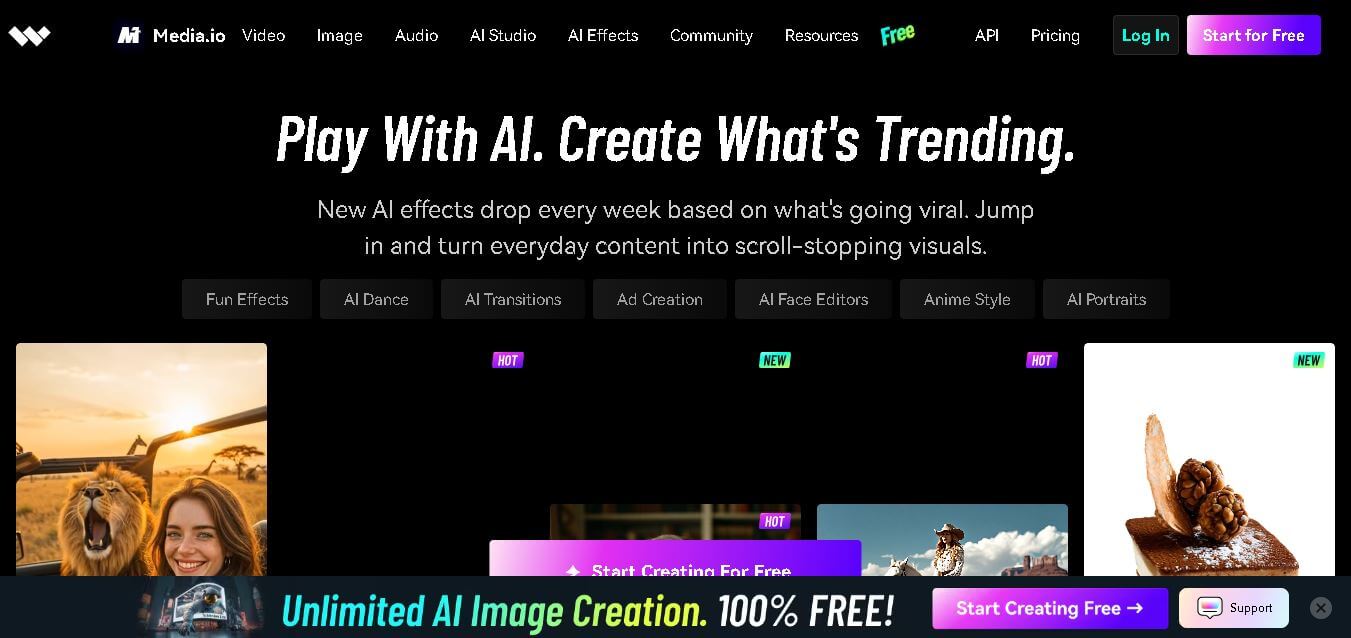
Media.io is an AI-powered creative platform that helps users generate, edit, and enhance videos, images, audio, and ads from simple prompts or assets. It combines AI generation, editing, and workflows in one place, enabling creators to turn ideas into polished content quickly without switching tools.
 4.9
4.9Video Candy
Video Editing
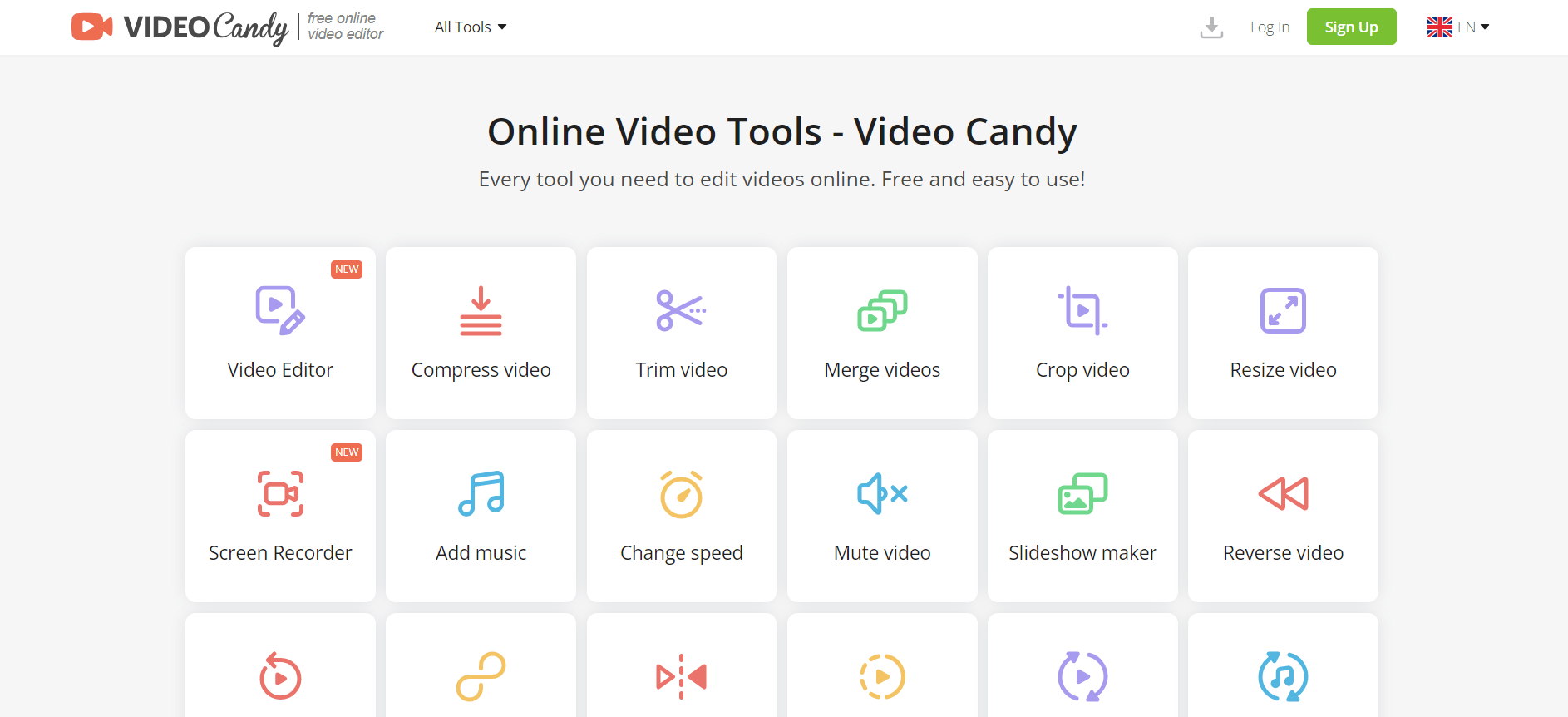
Video Candy is a free online video editing platform that helps users trim, merge, compress, convert, and enhance videos directly in the browser. It offers 70+ tools with a simple drag-and-drop interface, making video editing fast, accessible, and efficient without installing complex software.
 4.8
4.8Vheer
Image
Vheer is a free AI image and video generator that helps users create visuals from text or photos instantly. It includes tools for image editing, background removal, and image-to-video conversion, offering unlimited generations without signup, making it ideal for quick, creative content production.
 4.9
4.9Artlist
Image
Artlist is a subscription-based platform that provides high-quality royalty-free music, sound effects, and video assets for creators. It helps filmmakers, YouTubers, and marketers access unlimited creative resources, making it easy to produce professional content without worrying about licensing issues.