Unity
Unity (unity.com) is a cross-platform real-time 3D and 2D game engine and interactive development platform—with Unity 6 and Unity AI workflows, C# scripting, Unity Cloud DevOps (Version Control, Asset Manager, Build Automation), and mobile/console/PC/XR deployment—for game studios, indie developers, and industrial 3D teams.
What is Unity?
Unity (unity.com) is a real-time 3D and 2D development engine and interactive creation platform built for game developers, studios, XR/spatial creators, and industrial digital-twin/visualization teams. Rather than building separate rendering, physics, audio, UI, and platform deployment pipelines from scratch for each target device, developers author scenes and gameplay in C# inside the Unity Editor and deploy across mobile (iOS and Android), PC, Mac, Linux, web, game consoles, and XR/spatial headsets including Apple Vision Pro. Alongside Unity 6 engine capabilities and Unity AI credit-based tools, the platform connects with Unity Cloud services—including Unity Version Control, Unity Asset Manager, Unity Build Automation, and Cloud Diagnostics—plus the Unity Asset Store ecosystem.
Built around cross-platform real-time rendering, C# gameplay programming, and integrated cloud DevOps/asset workflows without per-install runtime fees, Unity powers interactive games and real-time 3D applications at every scale. Across the Unity Editor, Unity AI tools, and Unity Cloud, teams can build and deploy 2D, 3D, mobile, PC, console, web, and XR experiences from one codebase; accelerate prototyping with Unity AI credits and MCP/coding-agent integrations; collaborate with unlimited public-cloud Version Control seats and Asset Manager storage; and scale from free Personal to Pro, Enterprise, and Industry tiers.
- Core Focus / Category: Cross-Platform Real-Time 3D & 2D Game Engine (Unity 6), Unity AI Assistance & Editor Automation, Unity Cloud DevOps (Version Control, Asset Manager & Build Automation), and Multi-Platform Game, XR & Industrial 3D Deployment
- Platform Architecture: Desktop Unity Editor (Windows, macOS, and Linux) paired with C# scripting, Universal Render Pipeline (URP) and High Definition Render Pipeline (HDRP), Unity Cloud services (25 GB free standard storage, 100 GB free monthly egress, and unlimited public-cloud Version Control seats), and per-seat subscription tiers
- Key Specialization: Broad cross-platform deployment across mobile, desktop, web, consoles, and Apple Vision Pro; optional splash screen customization starting with Unity 6 on Personal; no per-install Runtime Fee (cancelled in September 2024); and integrated Unity AI credits (2,000/month on Pro and 3,000/month on Enterprise/Industry) alongside Asset Store and DevOps pipelines
Use Cases:
- Building and shipping 2D and 3D mobile games (iOS/Android), PC/Mac titles, web games, and live-service experiences from a unified C# codebase
- Developing and publishing console titles and spatial computing / Apple Vision Pro and VR/AR applications on Pro, Enterprise, and Industry plans
- Accelerating prototyping, coding assistance, and asset workflows using Unity AI credits, external coding agents/MCP servers, and Unity Asset Store packages
- Managing team repositories, 3D asset libraries, and automated cloud builds with Unity Version Control, Unity Asset Manager, and Unity Build Automation
Technology:
- Real-Time Rendering, Physics & C# Runtime Engine featuring Unity 6, URP/HDRP rendering pipelines, C# scripting, animation/physics systems, and multi-target build compilation
- Unity AI & Extensibility Layer providing monthly Unity AI credits on paid subscriptions, editor scripting/MCP integrations for coding assistants, and third-party AI SDK plug-ins
- Unity Cloud DevOps & Asset Layer delivering unlimited public-cloud Unity Version Control seats, Unity Asset Manager (10 GB/org on Personal; 50–120 GB/seat on paid tiers), Build Automation, and Cloud Diagnostics
Target Users:
- Indie developers, students, and hobbyists building games with under $200,000 in annual revenue and funding on Unity Personal
- Mobile, PC, console, and XR game studios scaling teams on Unity Pro or Enterprise
- Automotive, manufacturing, robotics, HMI, and digital-twin teams building real-time 3D apps on Unity Industry
- Developers and creators pairing design tools and generative 3D/animation tools with a real-time engine
Corporate Entity: Operates as Unity Technologies (NYSE: U; headquartered in San Francisco, California; unity.com)

Key features of Unity
Unity's key features are
- Cross-Platform 2D & 3D Engine (Unity 6): Build once in C# and deploy across iOS, Android, Windows, macOS, Linux, web, consoles, and XR/Apple Vision Pro.
- Unity AI Credits & Coding-Agent Workflows: Access 2,000–3,000 monthly Unity AI credits on paid tiers alongside editor extensibility and MCP coding-agent integrations.
- Unity Cloud DevOps & Asset Manager: Collaborate with unlimited public-cloud Version Control seats, 25 GB free standard storage, 100 GB monthly egress, and Build Automation.
- Optional Splash Screen & No Runtime Fee: Customize or remove the Made with Unity splash screen in Unity 6 on Personal, with no per-install runtime fee.
- Asset Store & Enterprise Source Access: Tap thousands of Asset Store packages and unlock read-only source code access, 3-year extended LTS, and dedicated support on Enterprise.
Unity Pricing
Unity uses a per-seat subscription model gated by combined annual revenue and funding thresholds—Personal (free), Pro, Enterprise, and Industry—with zero royalties or per-install runtime fees, plus pay-as-you-go cloud storage, egress, and build-minute meters.
Engine Plans (2026 Reference, USD):
- Unity Personal ($0 / Free): Available for individuals and organizations with up to $200,000 in annual revenue and funding. Includes the full engine, optional splash screen in Unity 6, Cloud Diagnostics, 10 GB Asset Manager storage per org, and unlimited public-cloud Version Control seats.
- Unity Pro ($2,310/seat/year prepaid annually, or $210/seat/month paid monthly): Required when combined annual revenue and funding exceed $200,000. Adds console and Apple Vision Pro publishing, 2,000 Unity AI credits/month, 50 GB/seat Asset Manager storage, and expedited support.
- Unity Enterprise (Custom pricing): Required for businesses exceeding $25 million in annual revenue and funding. Adds read-only engine source code access, 3 years of extended LTS, cloud/on-prem build automation, 3,000 Unity AI credits/month, 120 GB/seat Asset Manager storage, and dedicated support.
- Unity Industry (Custom pricing): Tailored for non-game enterprise sectors (automotive, manufacturing, architecture, robotics, HMI) with 3,000 Unity AI credits/month and specialized industrial workflows (published USD prices exclude applicable local taxes such as GST in India).
Disclaimer: Revenue/funding thresholds ($200K for Pro; $25M for Enterprise), annual vs. monthly seat rates, Unity AI credit grants, cloud storage/egress/build-minute rates, and published USD prices are subject to change and exclude applicable taxes such as GST in India. Check unity.com/products for current pricing and terms.
Who is using Unity?
Unity is designed for game developers, studios, and real-time 3D teams, including
- Indie Developers & Students: Building 2D, 3D, mobile, and PC titles for free on Unity Personal under the $200K revenue/funding threshold
- Mobile & Cross-Platform Game Studios: Shipping live-service, casual, and mid-core titles across iOS, Android, PC, and consoles on Unity Pro
- XR & Spatial Computing Teams: Creating VR, AR, and Apple Vision Pro experiences with real-time rendering and spatial SDKs
- Industrial & Enterprise Organizations: Building digital twins, HMI interfaces, robotics simulations, and training tools on Unity Industry and Enterprise
Best Unity Alternatives
Some of the strongest Unity alternatives include
- Unreal Engine (Real-time 3D engine by Epic Games known for high-fidelity PC/console graphics, Blueprints/C++, virtual production, and a 5% royalty above $1M lifetime gross revenue)
- Godot Engine (Free, open-source MIT-licensed 2D and 3D game engine with GDScript/C# and zero seat fees or royalties)
- Rosebud AI (Browser-based AI game maker turning natural-language prompts into playable 2D, Three.js 3D, voxel, and multiplayer games with editable code)
- Playmix AI (Browser-based AI game maker creating playable prototypes with 2D/3D art, sprite sheets, and instant share links)
- GDevelop (No-code and event-driven 2D/3D game engine for fast web, mobile, and desktop publishing)
- Three.js / Babylon.js (Open-source JavaScript/WebGPU 3D frameworks for browser-native games and interactive 3D web apps)
Pros and Cons of Unity
Pros
- Industry-leading cross-platform reach across iOS, Android, PC, Mac, Linux, web, consoles, and Apple Vision Pro with a massive Asset Store ecosystem
- Generous Personal tier ($0 up to $200K annual revenue/funding) with optional splash screen removal in Unity 6, unlimited cloud Version Control seats, and no per-install runtime fee
- Predictable per-seat Pro pricing ($2,310/yr or $210/mo) with zero revenue royalties—advantageous for high-grossing mobile and live-service hits
- Includes monthly Unity AI credits (2,000–3,000/month) on paid tiers and supports external coding agents/MCP workflows
Cons
- The $200,000 threshold counts combined revenue and external funding/advances—requiring funded teams to purchase Pro seats ($2,310/seat/year) before shipping
- Console and Apple Vision Pro publishing require Pro or higher (plus platform-holder approval), and Havok Physics is no longer bundled starting in Unity 6.3
- Cloud build minutes, Asset Manager storage beyond base quotas, egress above 100 GB, and Asset Store plugins can add ongoing operational costs
- Full desktop C# engine workflow has a steeper learning curve than browser prompt-to-game tools like Rosebud AI or Playmix AI
Why Choose Unity?
Unity is a strong fit when you want a proven, cross-platform 2D/3D engine with C# control, a massive asset ecosystem, cloud DevOps tools, and predictable per-seat licensing without revenue royalties.
- Build once and deploy across mobile, desktop, web, consoles, and XR/Apple Vision Pro
- Start free on Unity Personal up to $200K in annual revenue and funding with customizable splash screens in Unity 6
- Scale teams with unlimited public-cloud Version Control seats, Asset Manager, and Unity AI credits
- Avoid revenue-share royalties as game sales scale on Pro or Enterprise
Unity vs. Competitors
The primary difference between Unity, Unreal Engine, Godot Engine, and Rosebud AI lies in pairing a commercial C# cross-platform engine with per-seat licensing, cloud DevOps, and Unity AI credits against high-fidelity C++/Blueprint engine licensing with 5% gross royalties, open-source MIT engine freedom, or browser-based prompt-to-code vibe coding. While Unreal Engine leads in out-of-the-box photorealistic PC/console rendering with royalties above $1M, Godot offers zero-cost MIT open-source flexibility, and Rosebud AI focuses on instant browser prompt-to-game prototyping, Unity stands out for mobile/cross-platform reach, Asset Store depth, and royalty-free per-seat commercial scaling.
| Feature / Platform | Unity (unity.com) | Unreal Engine | Godot Engine | Rosebud AI |
|---|---|---|---|---|
| Primary Focus | Cross-Platform 2D/3D Game & Real-Time 3D Engine | High-Fidelity 3D Game Engine & Virtual Production | Open-Source 2D & 3D Game Engine | Browser Vibe-Coded 2D/3D/Voxel/Multiplayer Games |
| Core Capabilities | C#, Unity 6, Unity AI credits, Cloud DevOps & Asset Store | C++/Blueprints, Nanite/Lumen, PC/console & virtual sets | GDScript/C#, lightweight editor, 2D/3D nodes & exports | Prompt-to-code, Rosie chat, sprites/3D/skyboxes/audio |
| Best Workflow Fit | Mobile, cross-platform, XR/Vision Pro & live-service games | Photorealistic PC/console games & film/virtual production | 2D/indie 3D projects seeking zero license/royalty lock-in | Rapid prompt-to-playable browser prototypes & remixing |
| Pricing Model | Free (<$200K); Pro $2,310/yr ($210/mo), Enterprise/Industry | Free under $1M gross; 5% royalty above $1M (3.5% EGS) | Free & open-source (MIT license, 0% royalty) | Free (10,000 cr); Indie Dev $15/mo, Scale $100/mo + tiers |
| Best For | Cross-Platform Production, Mobile Scale & Royalty-Free Seats | AAA Visual Fidelity & Royalty-Based Revenue Scaling | Full Open-Source Ownership & Zero Licensing Overhead | Conversational Prompt-to-Game Prototyping in Browser |
How do we rate Unity?
| Parameter | Rating (out of 5) |
|---|---|
| Cross-Platform Engine Power, Unity 6 & Asset Ecosystem | 4.6 |
| Unity Cloud DevOps, AI Credits & Multi-Target Deployment | 4.3 |
| Free Personal Tier (<$200K) & Royalty-Free Seat Scaling | 4.2 |
| Funding-Inclusive Pro Trigger & Cloud/Add-On Meter Costs | 3.8 |
| Overall Score | 4.23 |
Unity Review
Unity remains one of the most versatile real-time 2D and 3D engines in the industry, combining Unity 6 performance, C# flexibility, an unmatched Asset Store, and deployment across mobile, PC, web, consoles, and Apple Vision Pro. With the Runtime Fee permanently cancelled, customizable splash screens on Personal, unlimited public-cloud Version Control seats, and monthly Unity AI credits on paid tiers, its value proposition is clearer than in prior years. While funded teams crossing $200,000 must budget for $2,310/seat/year Pro licenses and cloud build/storage add-ons, Unity continues to be a cornerstone platform for real-time 3D and game production.
Conclusion
Unity is a cross-platform real-time 3D and 2D development platform that empowers creators and studios to build games, XR experiences, and industrial 3D applications from a single C# workflow. With Unity 6, Unity AI credits, integrated cloud DevOps, and royalty-free per-seat scaling, it supports projects from solo prototypes to global releases. For developers and studios seeking a proven multi-platform real-time 3D engine, Unity is a top choice.
User Reviews
No reviews yet for Unity.
Featured Tools
Featured AI tools from TechShark
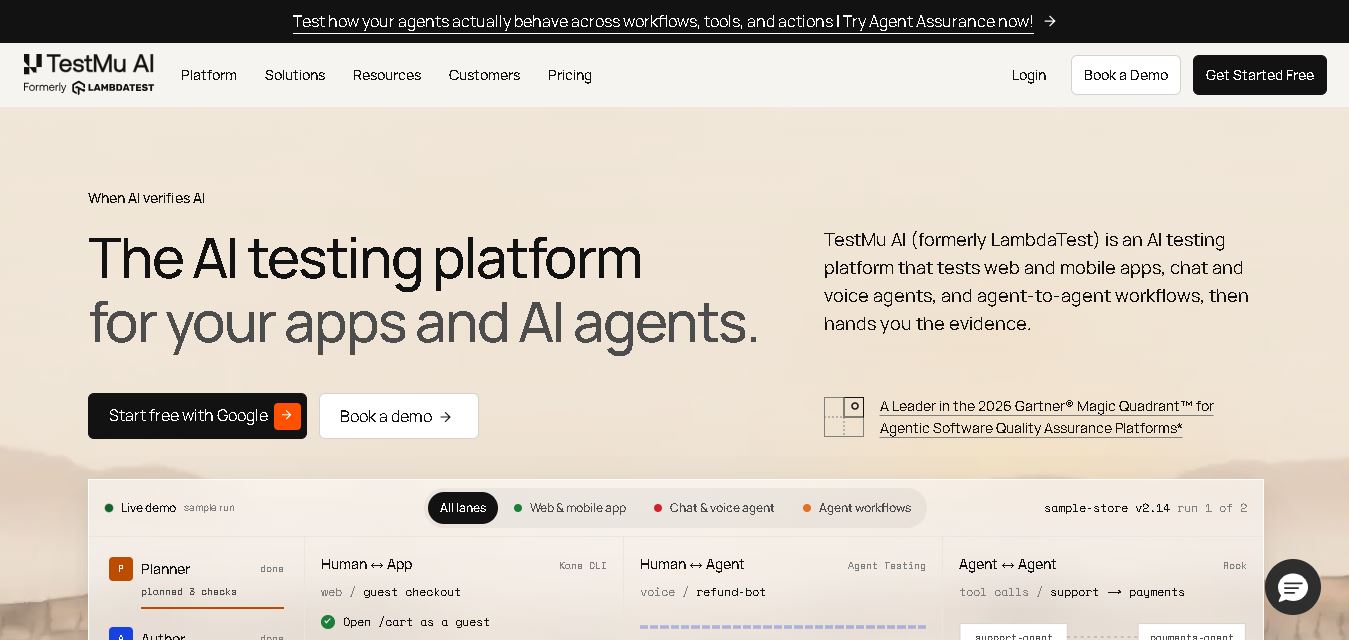
TestMu AI
TestMu AI is an AI-powered quality engineering platform that helps teams automate software testing across browsers, operating systems, mobile devices, and AI agents. It combines natural-language test creation, cloud execution, visual testing, and intelligent test management to accelerate software releases.
Freemium
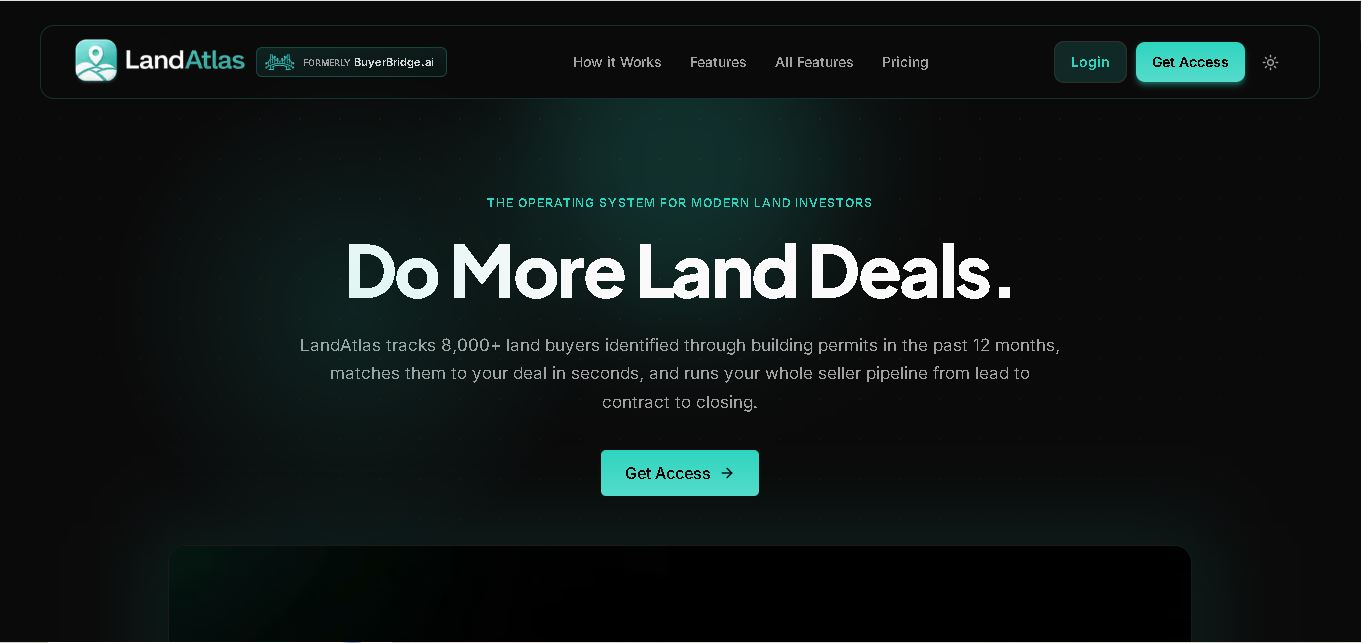
LandAtlas
LandAtlas is a land investing platform that combines parcel research, skip tracing, buyer matching, contracts, and deal management. It helps land wholesalers and acquisition teams organize property leads, evaluate opportunities, connect with potential buyers, and manage transactions from one workspace.
Paid
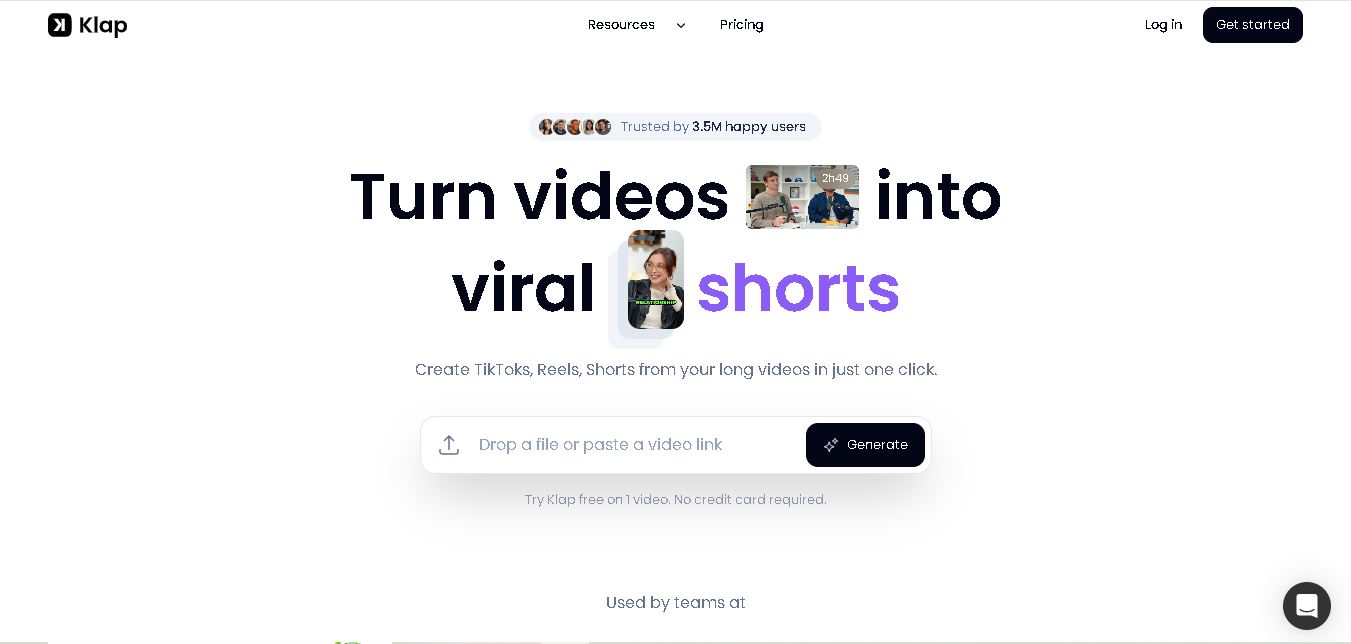
Klap
Klap is an AI video clipping platform that transforms long videos into short-form social media content. It automatically identifies highlights, creates captions, reframes speakers, and schedules clips, helping creators, podcasters, and marketing teams repurpose existing videos with less manual editing.
Free
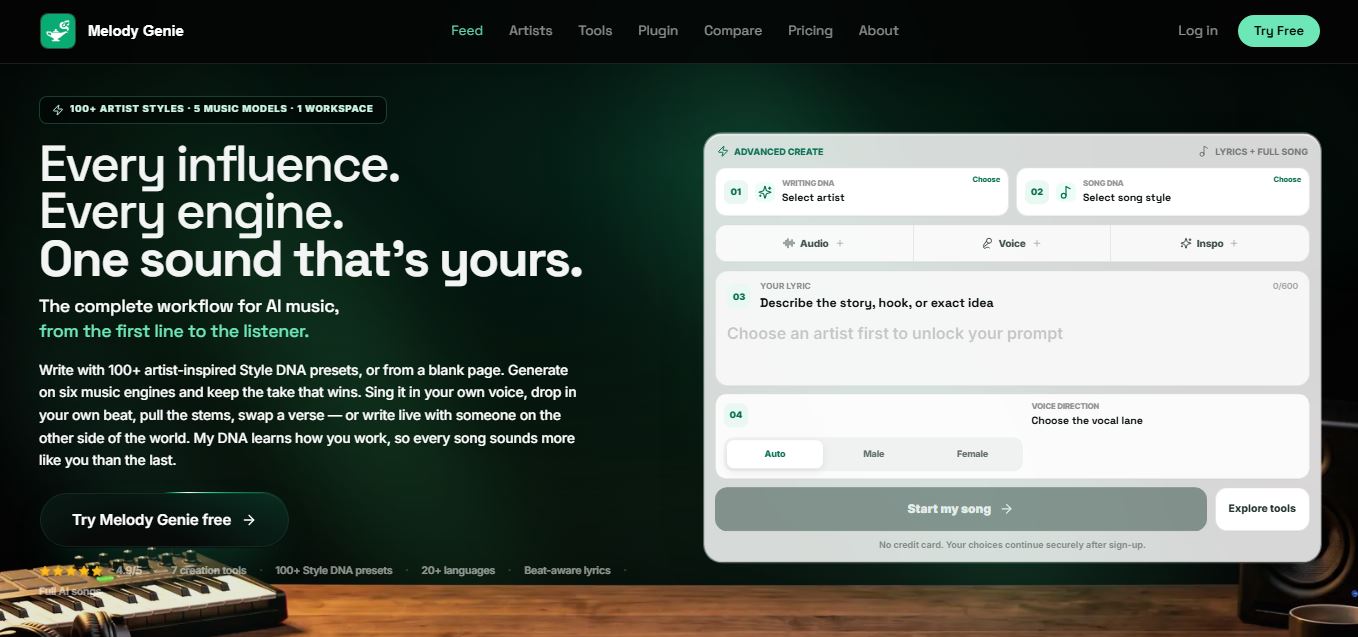
Melody Genie
MelodyGenie is an AI-powered music generator that creates original songs from simple text prompts. Users can choose styles, moods, and genres, then instantly generate melodies and full tracks, making it easy for creators, marketers, and hobbyists to produce custom music without musical expertise.
Freemium
Alternatives
Alternatives to Unity
The best Unity alternatives include Unreal Engine, Godot Engine, Rosebud AI, Playmix AI, GDevelop, Three.js, and Babylon.js. These platforms provide high-fidelity 3D game engines, open-source MIT game development, browser-based prompt-to-code AI game creation, or web-native 3D frameworks. While Unity stands out for cross-platform deployment across mobile, PC, web, consoles, and Apple Vision Pro alongside Unity 6, C# scripting, Unity AI credits, Unity Cloud DevOps, and royalty-free per-seat scaling across Free Personal (<$200K revenue/funding), Pro ($2,310/seat/yr or $210/mo), Enterprise, and Industry tiers, alternatives like Unreal Engine excel in photorealistic PC/console rendering with royalties above $1M, Godot offers zero-cost MIT open-source ownership, and Rosebud AI focuses on instant browser vibe-coded game prototyping. Choosing the right platform depends on whether you want a full commercial cross-platform C# engine or royalty-based AAA visuals, MIT open-source freedom, and browser AI game makers.
Physna
AI Agent
Physna (physna.com) is a physical AI and geometric deep-learning platform—led by CEO Paul Powers and connected to the Thangs 3D ecosystem—that codifies 3D models, CAD files, scans, and photos into searchable geometric data so engineering, procurement, and manufacturing teams can identify parts, find duplicates or alternates, and connect data across PLM and ERP systems.
Onshape
AI Agent
Onshape (onshape.com)—acquired by PTC—is a cloud-native 3D CAD and built-in Product Data Management (PDM) platform that runs in web browsers and mobile devices with real-time multi-user collaboration, branching and merging, release management, BOMs, Simulation, CAM Studio, Render Studio, and PCB Studio for hardware and product engineering teams.
Adam
AI Agent
Adam (adam.new) is an AI mechanical engineering and CAD platform—with CADAM open-source text-to-CAD, Copilot for Onshape and Fusion, MCP integrations, and workflows for SOLIDWORKS, PLM, and simulation—that helps engineers generate and edit CAD models, create 2D drawings, run DFM and FEA loops, and manage engineering context.
Zoo
AI Agent
Zoo (zoo.dev)—formerly KittyCAD—is an AI-native hardware engineering and CAD platform featuring Zoo Design Studio, the KCL programming language for parametric B-rep CAD, Zookeeper AI agent, Engine/Agent/File APIs, Zoo MCP, and a CNC machining beta for mechanical engineers, developers, and hardware teams.
Womp
AI Agent
Womp (womp.com) is a browser-based 3D modeling, AI generation, and on-demand 3D printing platform featuring Liquid 3D (SDF/CSG), Spark AI copilot, Womp Flow nodes, 500+ Super Materials, 4K/60fps renders, clean-topology mesh exports, and direct physical 3D printing in 17 materials for designers, creators, and teams.
Vectary
AI Agent
Vectary (vectary.com) is a browser-based 3D design, AI ideation, and interactive web/AR publishing platform featuring Vectary Studio and Vectary Canvas AI, CAD importing and optimization, PBR materials, 3D product configurators, interactive manuals, app-free AR, and Viewer API workflows for designers, product teams, and enterprises.
Rosebud AI
AI Agent
Rosebud AI (rosebud.ai) is a browser-based AI game maker and creation platform—founded in 2019 by CEO Lisha Li and backed by Y Combinator—that turns natural-language prompts into playable 2D, 3D, voxel, and multiplayer games with editable code, generated art, sound, and 360° skyboxes, instant web hosting, Windows/Steam export on Pro, and Rosebud Play community remixing.
WANNA
AI Agent
WANNA (wanna.fashion)—a brand of Perfect Corp.—is an augmented reality (AR) virtual try-on and 3D product visualization platform for fashion and luxury brands, offering AR try-on and 3D viewers for footwear, bags, clothes, watches, jewellery, and scarves across web, iOS, Android, and in-store mirrors.
 4.7
Spark Hire
AI Agent
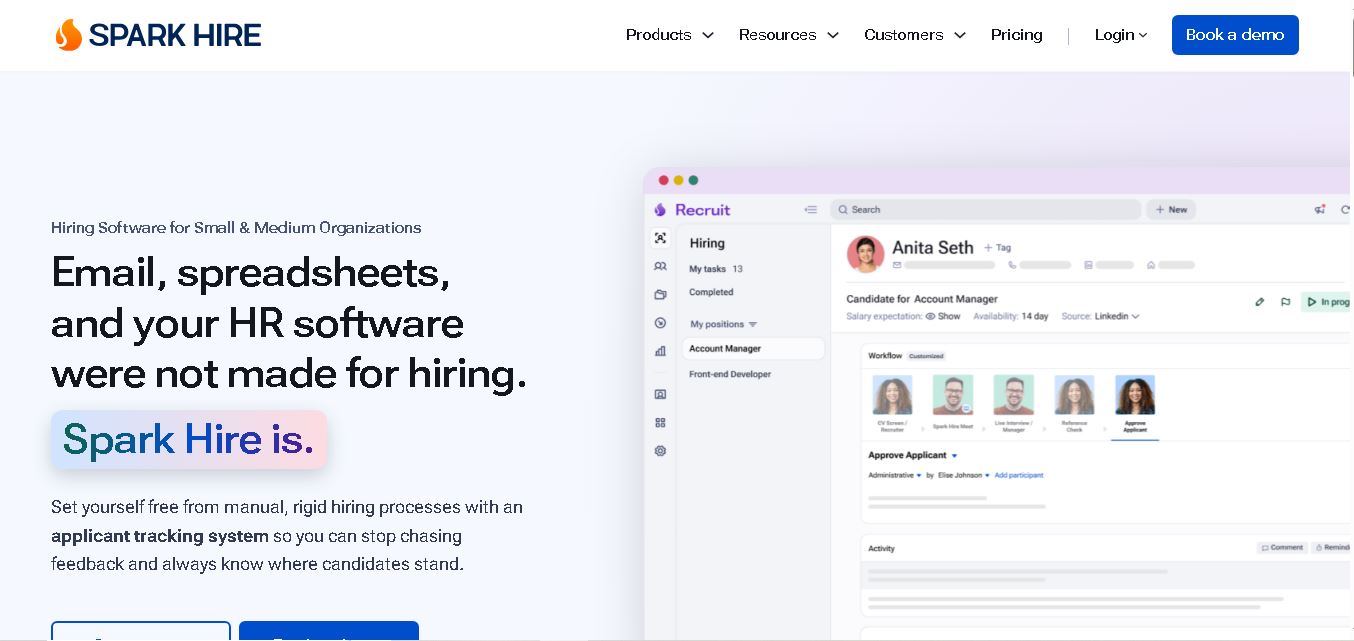
Spark Hire helps recruitment teams simplify hiring through one-way video interviews, live interviews, applicant tracking, and candidate evaluations. It enables employers to screen applicants remotely, collaborate with hiring managers, and organize recruitment workflows. Its AI-assisted features support interview transcription, summaries, and candidate review while maintaining human involvement in hiring decisions.