
Stanford STORM
STORM is Stanford’s research-focused AI system for exploring unfamiliar topics and creating structured, citation-supported articles. It researches subjects from multiple perspectives, gathers relevant information, organizes findings into an outline, and produces a detailed draft. For students, writers, researchers, and curious readers, STORM can provide a useful starting point for deeper investigation.
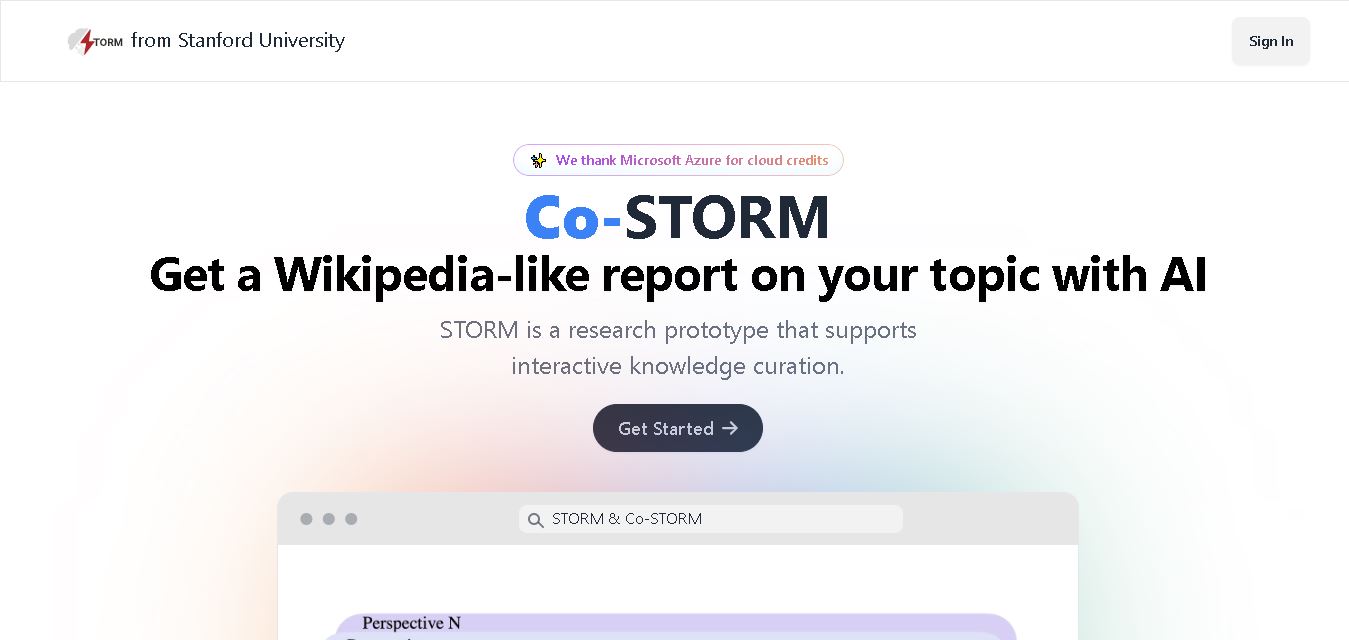
What is Stanford STORM?
STORM is a research system from Stanford’s Open Virtual Assistant Lab (OVAL) designed to investigate a topic, discover diverse perspectives, organise evidence, and generate a structured research article with citations. Instead of relying on one response, STORM simulates conversations between expert perspectives and a writer to improve research coverage. It is especially useful when you need a starting point for exploring unfamiliar subjects, comparing viewpoints, or producing a citation-supported overview from web sources.
STORM was developed by Stanford researchers as part of the World Wide Knowledge project. The system can research topics, discover perspectives, ask follow-up questions, and organise findings into cited articles. Stanford reported that more than 300,000 users had requested 500,000 topics in a workshop presentation. STORM is based on research published in 2024, including the paper “Assisting in Writing Wikipedia-like Articles from Scratch with Large Language Models". Its workflow emphasises multi-perspective exploration, source retrieval, outlining, and citation-supported synthesis.
- Platform Role: Automated Knowledge Curation System, Multi-Agent Deep Research Tool & Academic Report Generator
- Developer & Organization: Stanford Open Virtual Assistant Lab (OVAL) / Stanford University
- Cross-Platform Access: Web Browser (storm.genie.stanford.edu), Open-Source Python Library, and API / Local Model Integrations
Use Cases:
- Generating fully structured, cited literature reviews and foundational academic background research reports
- Creating detailed Wikipedia-style articles on complex, technical, or emerging topics with inline web references
- Conducting multi-perspective topic exploration by simulating dialogue between domain experts, sceptics, and practitioners
- Collaborative real-time knowledge discovery with Co-STORM, utilising dynamic mind maps and human-in-the-loop steering
- Building custom automated deep research workflows for developers and data scientists using the open-source Python package
Technology:
- Multi-perspective question generation engine that simulates diverse expert personas to interrogate topics from various angles
- Grounded search and retrieval architecture supporting search providers like Bing, Tavily, DuckDuckGo, Brave, and SearXNG
- Hierarchical outline synthesis module that consolidates gathered Q&A pairs into structured H2/H3 article frameworks
- Co-STORM collaborative framework featuring dynamic mind mapping, moderator agent coordination, and human input steering
Target Users:
- Academic researchers, students, and educators seeking comprehensive topic overviews with verifiable citations
- Content creators, technical writers, and journalists requiring structured research outlines and deep background context
- Market analysts and strategy consultants conducting multi-angle competitive intelligence and trend synthesis
- AI developers and researchers exploring multi-agent workflows, autonomous deep research, and open-source LLM agents
Acquisition: Open-source academic project and web service developed and operated by Stanford OVAL Lab

What are the key features of Stanford STORM?
Stanford STORM's key platform features are
- Multi-Perspective Expert Simulation: Generates diverse personas (e.g., Domain Expert, Skeptic, Practitioner) to ask nuanced follow-up questions about a topic.
- Grounded Web Retrieval & Citation: Actively searches live internet sources and automatically embeds inline references into the synthesised text.
- Hierarchical Outline Generation: Organizes disparate research findings and Q&A insights into a coherent, structured table of contents prior to writing.
- Co-STORM Interactive Mode: Allows humans to collaborate with AI agents in real time, steering discussion direction and refining findings.
- Dynamic Mind Mapping: Visualises collected concepts and information snippets into an evolving, interactive concept map during research.
- Open-Source Python Framework: fully customisable framework allowing integration with local LLMs (Ollama) and custom retrieval backends.
How much does Stanford STORM cost?
Stanford STORM is a completely free, open-source research preview provided by Stanford University, with open code available for self-hosting.
Pricing & Access Overview:
- Free Web Platform ($0): Free public web access at storm.genie.stanford.edu for generating research reports and testing Co-STORM.
- Open-Source Codebase ($0): Free MIT/CC-licensed Python code available on GitHub for self-hosting, local LLM execution, and customization.
Disclaimer: Stanford STORM is a research prototype. Web usage is subject to university cloud resource limits and research terms of service. Self-hosted deployments may incur API fees from underlying LLM and search providers.
Who should use Stanford STORM?
Stanford STORM is designed for researchers, students, and information professionals, including
- Academic Researchers & Students: Scholars needing fast, citation-backed literature reviews, historical contextualization, and structured topic outlines.
- Journalists & Content Strategists: Writers looking to eliminate blank-page paralysis and discover unexpected angles or questions on complex subjects.
- AI Engineers & Developers: Teams interested in prototyping multi-agent architectures, open-source deep research tools, and retrieval-augmented generation (RAG).
What are the best alternatives to Stanford STORM?
Some of the strongest Stanford STORM alternatives include
- Perplexity AI
- OpenAI Deep Research
- Google Gemini Deep Research
- Consensus AI
- Elicit
- Open-R1 / Open Deep Research Tools
What are the pros and cons of Stanford STORM?
What are the pros of Stanford STORM?
- Multi-perspective questioning uncovers blind spots and nuances missed by standard single-prompt LLM searches
- Completely open-source with full transparency into agent reasoning, prompts, and retrieval mechanisms
- Generates well-structured, Wikipedia-quality long-form articles with direct web citations
- Co-STORM mode provides interactive human steering and visual concept mind mapping
- Free to use through Stanford OVAL's web research preview interface
What are the cons of Stanford STORM?
- Slower report generation times compared to instantaneous search tools due to multi-pass agent dialogs
- As a research prototype, the public web interface may experience usage rate limits or server latency
- Requires manual claim verification, as underlying models can occasionally misinterpret retrieved source context
Why should you choose Stanford STORM?
Standard search engines and single-pass AI summaries often suffer from narrow viewpoints and missing context. Stanford STORM solves this by imitating the collaborative, critical process of human editorial teams. By forcing AI agents to adopt distinct personas, challenge assumptions, and build structured outlines before drafting, STORM produces research reports that are significantly more thorough, well-organized, and citation-dense than standard AI responses.
How does Stanford STORM compare to competitors?
The key difference between Stanford STORM, Perplexity AI, OpenAI Deep Research, and Elicit lies in system architecture, transparency, and collaboration. While commercial deep research tools operate as closed, proprietary search engines, STORM offers an open-source, multi-persona agent framework that emphasizes structural outline synthesis and interactive human-AI co-research.
| Feature / Platform | Stanford STORM | Perplexity AI | OpenAI Deep Research | Elicit |
|---|---|---|---|---|
| Core Focus | Multi-Agent Knowledge Curation & Outlining | Conversational Web Search & Discovery | Autonomous Multi-Step Web Deep Research | Academic Paper Analysis & Literature Review |
| Agent Architecture | Multi-Persona Dialog & Outline Synthesis | Iterative Search & Direct Summarization | Autonomous Task Execution & Browsing | Semantic Search over Paper Databases (Semantic Scholar) |
| Human-in-the-Loop Steering | High (Co-STORM discourse & mind maps) | Moderate (Follow-up prompts) | Low (Runs background agent workflows) | Moderate (Filter and table adjustments) |
| Open-Source Availability | 100% Open Source (GitHub / Python) | Proprietary Closed System | Proprietary Closed System | Proprietary Commercial Platform |
| Best For | Researchers wanting open-source multi-perspective Wikipedia-style articles | Everyday web queries and fast factual research | Executive research briefs requiring exhaustive web search | Scholars analyzing peer-reviewed scientific literature databases |
How do we rate Stanford STORM?
| Parameter | Rating (out of 5) |
|---|---|
| Research Depth & Multi-Perspective Synthesis | 4.9 |
| Citation Accuracy & Grounding | 4.7 |
| Open-Source Flexibility & Code Transparency | 5.0 |
| User Collaboration & Mind Mapping (Co-STORM) | 4.8 |
| Value for Money & Accessibility | 5.0 |
| Overall Score | 4.88 |
What is our review and verdict on Stanford STORM?
Stanford STORM represents a major milestone in AI-assisted deep research. By converting standard web search into a structured conversation between simulated expert personas, it produces long-form knowledge articles that are vastly superior in organization and depth compared to single-prompt summaries. For academics, journalists, and open-source AI developers, STORM is an indispensable tool for structured learning and knowledge discovery.
Conclusion
STORM represents Stanford’s approach to making AI-assisted research more structured, source-oriented, and comprehensive. Instead of simply responding to a prompt, it explores perspectives, develops questions, retrieves information, organizes evidence, and generates citation-supported articles. This makes it useful for discovering unfamiliar topics and creating research starting points. Still, generated information should be verified against original sources, particularly for academic, professional, or high-stakes use.
FAQ
What does STORM by Stanford do?
STORM researches a topic by exploring different perspectives, generating relevant questions, retrieving supporting information, and organising the findings into a structured article. It is designed to go beyond simple question answering by simulating research-orientated interactions. The final output includes citations, helping users trace information back to supporting sources.
How does STORM research a topic?
STORM approaches research as a multi-step process. It explores perspectives, identifies questions worth investigating, retrieves information from sources, reviews the gathered material, and develops an organised outline before writing. This workflow is intended to provide broader topic coverage than simply generating an answer from a single conversational prompt.
Does STORM provide citations?
Yes. Citation-supported research is a central part of STORM’s workflow. Stanford describes Genie’s research capabilities as producing comprehensive articles with fine-grained citations, while STORM’s research process retrieves supporting information and organises it for article generation. Users should still review cited sources themselves before relying on generated information for important research.
Is STORM useful for academic research?
STORM can be useful for starting academic research because it helps explore unfamiliar subjects, identify perspectives, gather sources, and organise information. Stanford has also used STORM-related research in educational and research contexts. However, students and researchers should independently verify sources, interpretations, and claims before using generated material in formal academic work.
Can STORM write a complete article?
Yes. STORM is specifically designed to investigate a topic and generate a comprehensive, structured article from the information it gathers. Stanford describes the system as simulating different perspectives, asking pertinent questions, retrieving information, reviewing findings, and developing an article with references. The generated article should be treated as research assistance, not final authority.
User Reviews
No reviews yet for Stanford STORM.
Featured Tools
Featured AI tools from TechShark
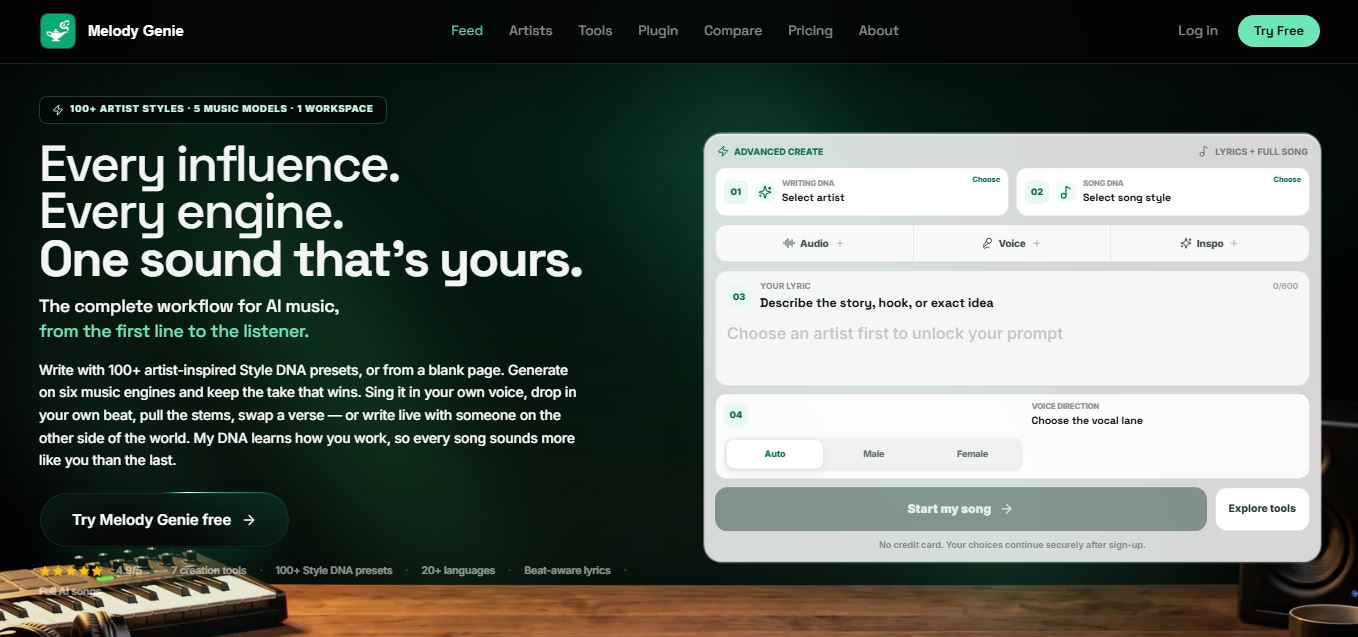
Melody Genie
MelodyGenie is an AI-powered music generator that creates original songs from simple text prompts. Users can choose styles, moods, and genres, then instantly generate melodies and full tracks, making it easy for creators, marketers, and hobbyists to produce custom music without musical expertise.
Freemium
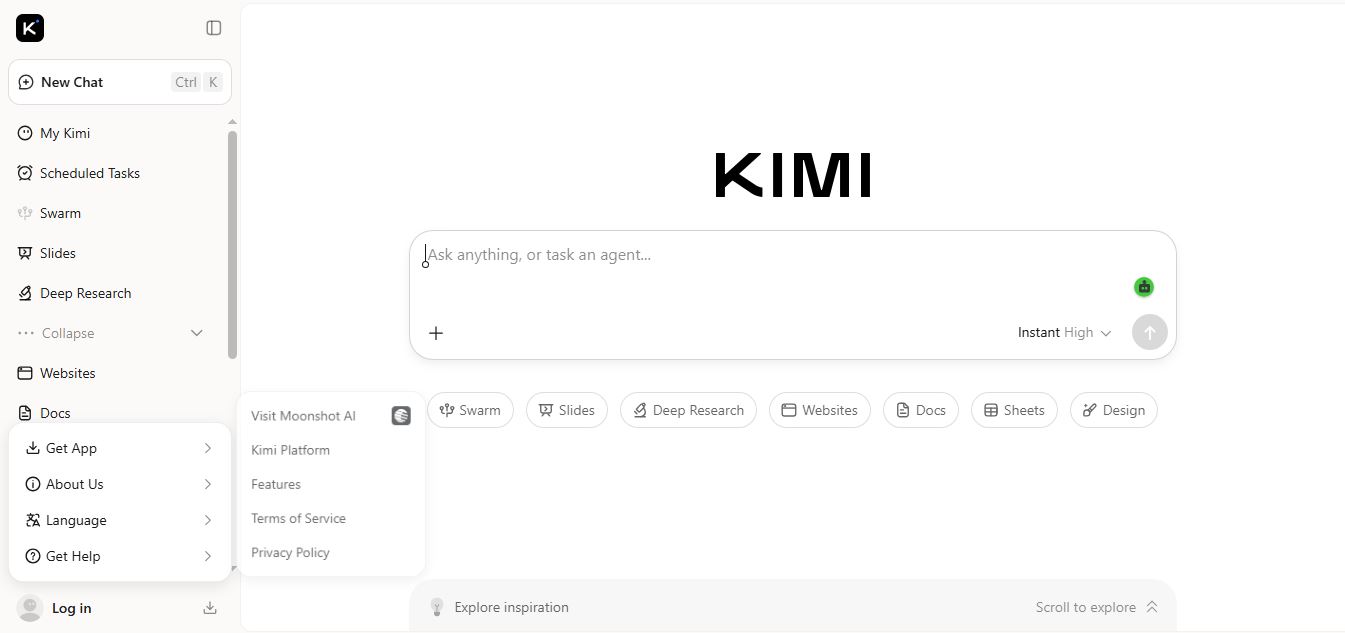
Kimi AI
Kimi AI is an advanced AI assistant developed by Moonshot AI that helps you chat, research, write, code, and automate tasks in one place. It supports web search, file analysis, and multimodal inputs, and can even run autonomous “agent” workflows to complete complex tasks end-to-end.
Freemium

Fashion Diffusion AI
Fashion Diffusion is an AI-powered fashion design platform that helps brands and designers create clothing designs, virtual try-ons, AI models, product photos, and marketing visuals faster and cost-effectively.
Paid
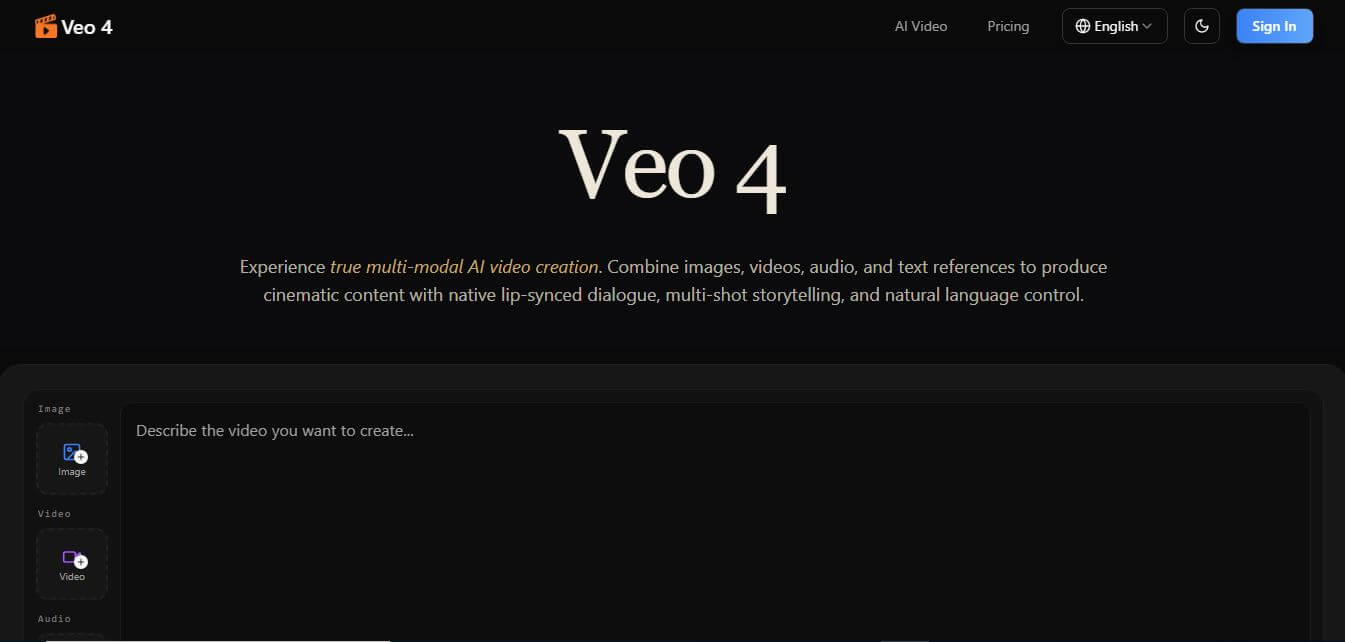
Veo 4
Veo 4 AI is an AI video creation platform that generates dramatic videos from text, images, audio, and video prompts using realistic motion and synchronized sound.
Paid
Alternatives
Alternatives to Stanford STORM
The best Stanford STORM alternatives include Perplexity AI, OpenAI Deep Research, Google Gemini Deep Research, and Elicit. While Stanford STORM provides an open-source multi-agent research workflow centered on multi-perspective expert dialog and Wikipedia-style knowledge curation, alternatives like Perplexity AI offer fast real-time conversational search and Elicit specializes in structured scientific literature analysis.
Kommunicate
AI Agent
Kommunicate (kommunicate.io) is an AI-powered customer service automation and live chat platform that unites no-code generative AI agents, Kompose chatbot builder, seamless human escalation, voice AI, and omnichannel messaging across WhatsApp, web, and mobile apps.
Text
AI Agent
Text is an AI-powered customer service platform that combines live chat, help desk ticketing, AI agents, and workflow automation. It helps businesses manage customer conversations, automate repetitive support tasks, answer questions, engage website visitors, and turn customer interactions into sales opportunities through a unified communication workspace.
DocsBot AI
AI Agent
DocsBot AI is an AI chatbot and agent platform that turns websites, documents, knowledge bases, and support tickets into conversational assistants. Businesses can use it to automate customer support, answer questions, share internal knowledge, connect workflows, and provide information through website widgets and supported integrations.
SiteGPT AI
AI Agent
SiteGPT is an AI chatbot platform that helps businesses automate customer support using their website content, documents, and knowledge sources. It answers visitor questions, supports lead generation, and integrates into websites, allowing teams to handle repetitive inquiries, improve customer experiences, and provide assistance around the clock.
 4.7
4.7Halcyon
AI Agent
Halcyon is an AI energy intelligence platform that helps professionals search regulatory filings, analyze energy-market information, monitor developments, and access structured datasets. It combines document search, natural-language queries, AI-powered alerts, and specialized data subscriptions to turn fragmented energy information into actionable intelligence for research, monitoring, planning, and faster decision-making.
 4.5
4.5Enhancv
AI Agent
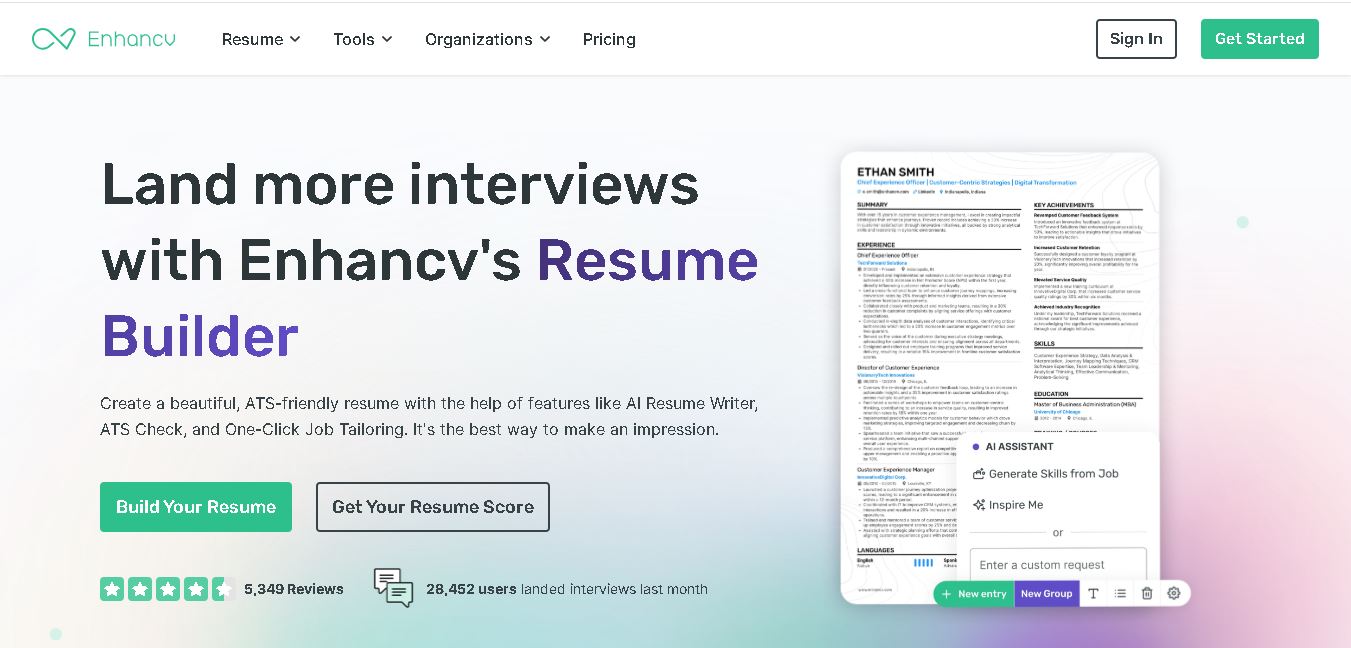
Enhancv helps job seekers build ATS-friendly resumes using customizable templates, AI writing assistance, resume checking, and job-specific tailoring. It also supports cover letters, application tracking, interview preparation, and resume translation. The platform is designed for candidates who want a polished application while keeping control over their experience, wording, and presentation.
 4.9
4.9Domo
AI Agent
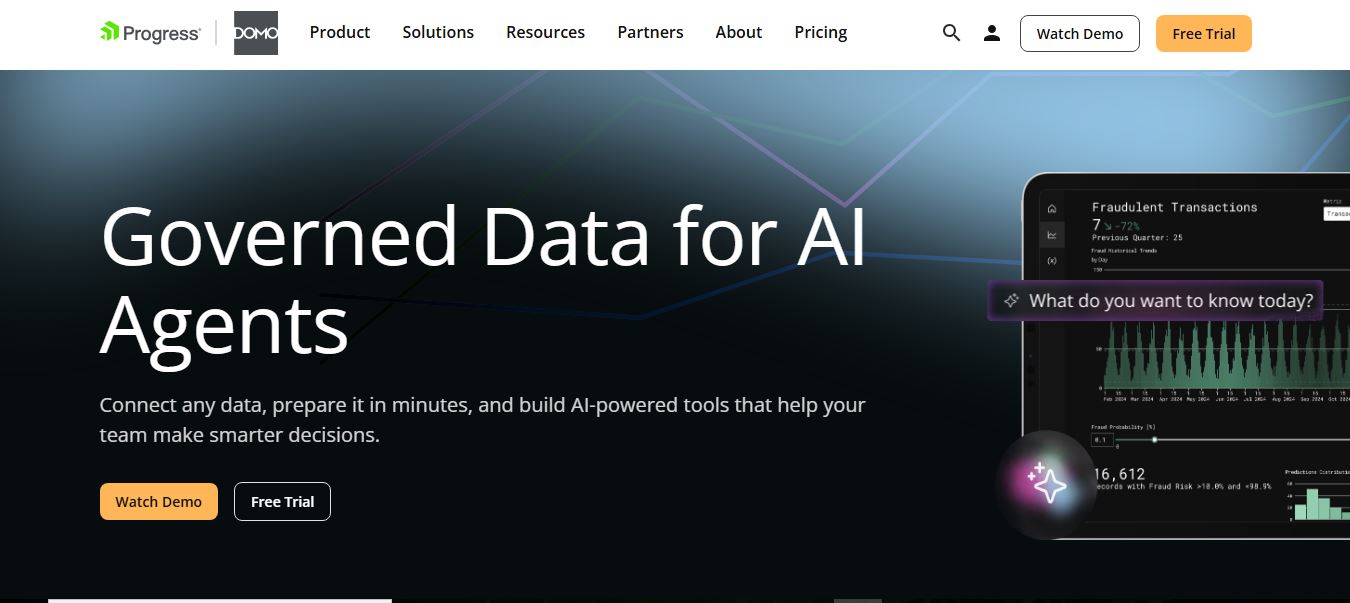
Domo is an AI-powered data and analytics platform that helps businesses connect, visualize, and act on data from multiple sources in one place. It combines dashboards, automation, and AI insights to turn raw data into decisions, enabling teams to monitor performance and drive better outcomes in real time.
 4.9
4.9Doppler
AI Agent
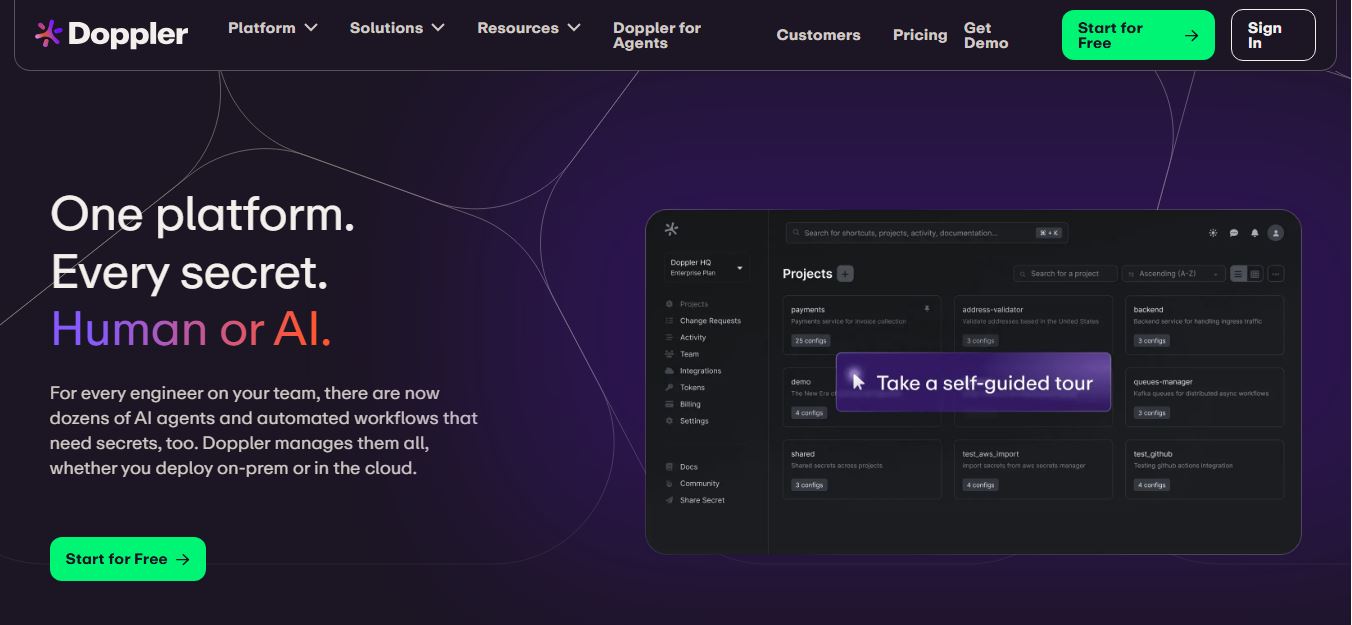
Doppler is a secrets management platform that helps developers and teams securely store, manage, and sync sensitive data like API keys, tokens, and credentials across apps and environments. It centralizes secrets, automates access control, and ensures secure, consistent configuration for applications and AI agents.
 4.8
4.8Genspark
AI Agent
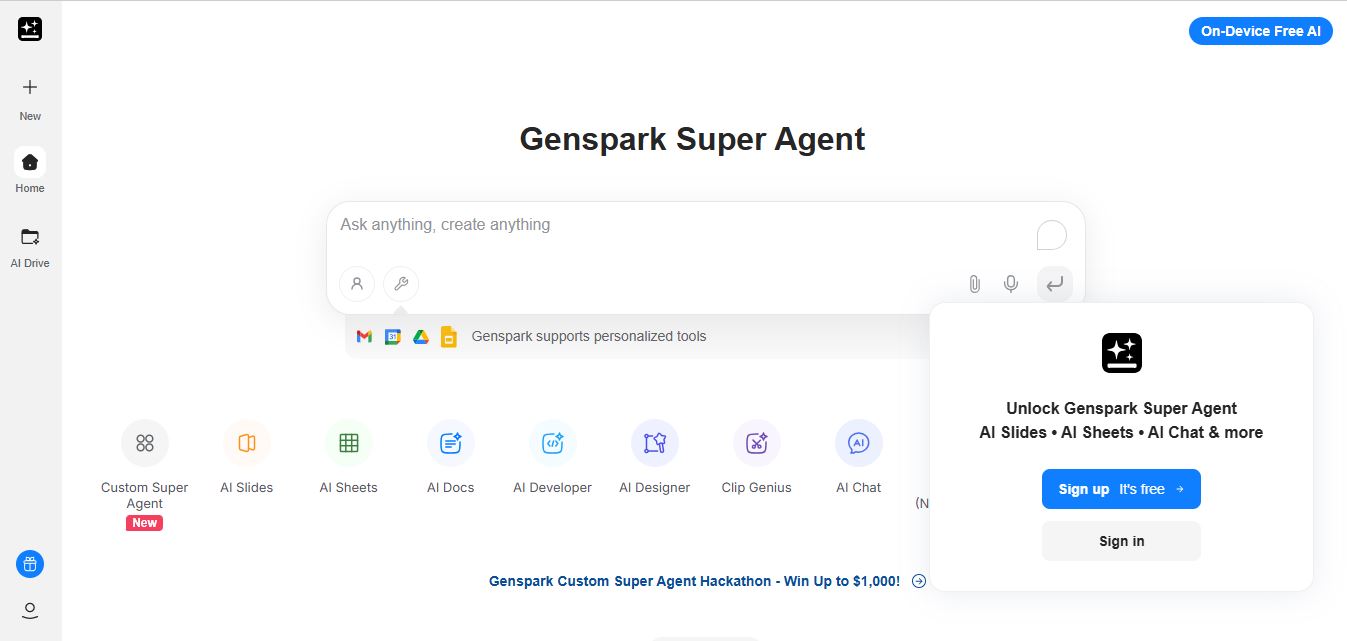
Genspark is an AI-powered all-in-one workspace built around autonomous agents that can research, write, analyze data, and create content from a single prompt. Its “Super Agent” plans and executes tasks across tools, delivering complete outputs like presentations, reports, code, and media automatically.