
Stackmint AI
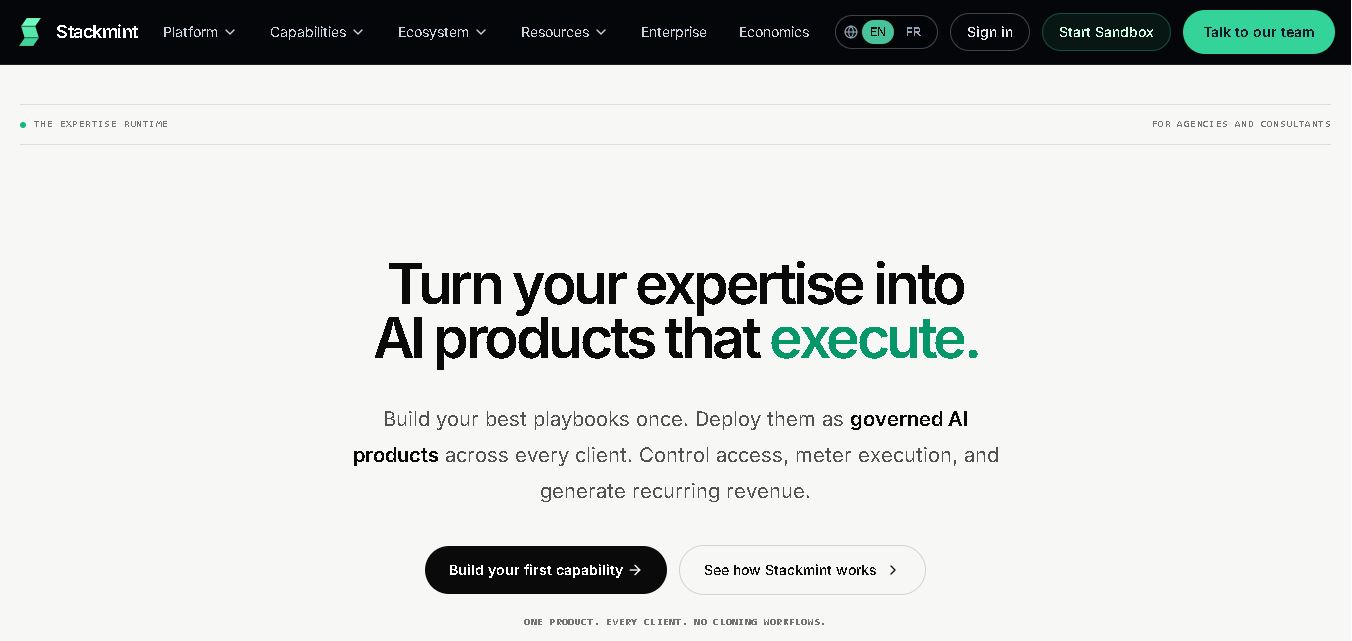
Stackmint helps agencies, consultants, and enterprise teams transform their expertise into governed AI products. It combines workflow building, model orchestration, permissions, human approvals, budgets, client isolation, auditing, deployment, and monetization. Teams can reuse capabilities across clients while independently managing context, credentials, versions, and access for each workspace.
What is Stackmint AI?
Stackmint is a governed AI execution platform designed to help agencies, consultants, systems integrators, and enterprises turn repeatable expertise into deployable AI products. It provides the infrastructure to build workflows, apply permissions, control budgets, add human approvals, monitor executions, and maintain audit trails. Stackmint separates model intelligence from execution, allowing teams to work with multiple AI models while keeping workflows governed. Its capabilities can be deployed across client workspaces and delivered through interfaces such as web, mobile, APIs, Slack, ChatGPT, Claude, and MCP-compatible clients.
Stackmint structures AI execution around 4 core layers: Business Capability, Branch, Bud, and contained intelligence. Its homepage highlights 6 governance controls: permissions, approvals, memory, model policies, budgets, and audits. The platform supports 5 deployment-oriented stages: build, govern, deploy, monetize, and distribute. Stackmint can also work across numerous model providers, including OpenAI, Anthropic, Mistral, DeepSeek, Qwen, Grok, and others. Its example lead-qualification product illustrates pricing of $2,000/month + metered execution.
- Platform Role: AI Execution Runtime, Enterprise Capability Control Plane & Monetization Engine
- Developer & Organization: Stackmint, Inc.
- Cross-Platform Access: Web Browser Interface, Embeddable UIs, API endpoints, Slack, ChatGPT, Claude, and MCP-compatible interfaces
Use Cases:
- Converting manual consulting playbooks into reusable, automated AI products deployed across client portfolios
- Automating complex lead qualification, content generation, and customer support workflows directly inside client CRMs
- Setting granular governance policies, including human-in-the-loop approvals, model allow/deny lists, and client memory isolation
- Metering capability execution to charge clients recurring subscriptions and usage-based execution credits
- Deploying single core capabilities into isolated client workspaces without rebuilding or cloning underlying codebases
Technology:
- Governed Execution Runtime decoupling LLM intelligence from real-world enterprise actions
- Model-Agnostic Routing (BYOM) supporting integrations with models like Groq, Claude, OpenAI, and custom enterprise setups
- Isolated client memory architecture and enterprise permission management
- Built-in execution metering, entitlement management, and billing infrastructure
Target Users:
- Agencies looking to replace high-headcount client delivery with automated execution products
- Management and IT consultants turning proprietary frameworks into scalable software assets
- Systems integrators building governed, multi-tenant AI products for enterprise deployments
Acquisition: Native cloud platform hosted and operated by Stackmint (stackmint.ai)
What are the key features of Stackmint AI?
Stackmint AI's key platform features are
- Vibe-Code & Govern: Build capability logic conversationally while embedding strict governance controls directly into execution paths.
- Multi-Tenant Client Isolation: Deploy one root product across multiple client workspaces with separated context, data, memory, and credentials.
- Enterprise Control Plane: Enforce workspace permissions, human-in-the-loop approvals, max budget limits, and full execution audit trails.
- Omnichannel Distribution: Deploy AI products through web, mobile, APIs, Slack, or any Model Context Protocol (MCP) client.
- Monetization & Entitlements: Package execution into custom subscription tiers and metered credit-based billing.
How much does Stackmint AI cost?
Stackmint AI provides sandbox environments for building and testing, with commercial plans scaling based on workspace seats, active client deployments, and metered execution volume.
Pricing Tiers:
- Developer Sandbox: Free access to test, build capabilities conversationally, and run initial integrations.
- Agency & Enterprise Plans: Custom usage-based and seat-based licensing tailored to client deployment count and runtime execution needs.
Disclaimer: Enterprise deployments, multi-workspace routing, and monetization tools require contacting Stackmint's sales team for custom licensing.
Who should use Stackmint AI?
Stackmint AI is designed for expertise-driven businesses, including
- Digital & Marketing Agencies: Service firms wanting to productize campaign building, content factories, and lead scoring.
- B2B Strategy Consultants: Advisors wanting to leave behind functional software agents inside client organizations instead of static PDF decks.
- AI Systems Integrators: Technical teams seeking an enterprise control plane to manage AI agents across diverse client IT environments.
What are the best alternatives to Stackmint AI?
Some of the strongest Stackmint AI alternatives include
What are the pros and cons of Stackmint AI?
What are the pros of Stackmint AI?
- Eliminates workflow cloning by deploying single master capabilities across multiple client workspaces
- Native governance includes budget caps, approval triggers, model policies, and client memory isolation
- Separates model intelligence from execution, avoiding vendor lock-in to a single LLM
- Built-in entitlement and billing engines allow immediate product monetization
What are the cons of Stackmint AI?
- Requires upfront mapping of business playbooks into clear execution steps
- Targeted primarily at agencies and B2B firms rather than individual consumer creators
Why should you choose Stackmint AI?
Scaling service agencies traditionally requires adding headcount for every new client account. Stackmint breaks this linear constraint by decoupling delivery costs from revenue growth. By transforming proprietary strategies into governed software products that run directly inside client CRMs and workflows, firms can scale recurring revenue while keeping execution safe and controlled.
How does Stackmint AI compare to competitors?
While generic agent frameworks focus on developer orchestration and automation platforms focus on simple trigger-action links, Stackmint serves as a dedicated runtime for agencies to package, govern, deploy, and monetize business capabilities across separate client accounts.
| Feature / Platform | Stackmint AI | Dust.tt | CrewAI Enterprise | Make.com |
|---|---|---|---|---|
| Primary Target | Agencies, Consultants & SIs | Internal Enterprise Teams | Developer & Engineering Teams | General Automation Builders |
| Multi-Client Deployment | Native workspace isolation without cloning | Single-company workspace focus | Requires custom dev infrastructure | Requires scenario copying per client |
| Built-In Monetization | Yes (entitlements & usage billing) | No | No | No |
| Governance Controls | Approvals, budget caps, model policies & audit | Enterprise SSO & data privacy | Code-level role definitions | Basic connection permissions |
How do we rate Stackmint AI?
| Parameter | Rating (out of 5) |
|---|---|
| Multi-Tenant Architecture & Deployment | 4.9 |
| Governance & Control Features | 4.8 |
| Monetization & Productization Tools | 4.7 |
| Model-Agnostic Flexibility | 4.9 |
| Value for Agencies & Consultants | 4.8 |
| Overall Score | 4.82 |
What is our review and verdict on Stackmint AI?
Stackmint AI provides a crucial missing link for modern service businesses wanting to become AI-native. By providing a runtime that solves multi-tenant governance, version rollout, and credit-based monetization out of the box, it allows agencies to package their core IP into scalable products without wrestling with complex custom software maintenance.
Conclusion
Stackmint takes a different approach to AI automation by focusing on governed execution rather than model access alone. It gives agencies, consultants, systems integrators, and enterprises a way to package expertise into reusable capabilities, connect them with business systems, control their execution, and deploy them across client environments. With multi-model orchestration, governance controls, human approvals, auditing, and usage-based monetization, Stackmint is positioned as infrastructure for organizations building repeatable, measurable AI-driven business workflows.
FAQ
What is Stackmint used for?
Stackmint is designed for turning repeatable business expertise and workflows into governed AI capabilities. Agencies, consultants, and systems integrators can build a workflow once, deploy it across multiple client workspaces, and control permissions, budgets, approvals, memory, and model access. This approach helps organizations move from manually delivered expertise toward reusable AI-based execution.
Who is Stackmint designed for?
Stackmint is primarily designed for businesses where expertise itself is part of the product. Its website specifically highlights agencies and consultants, while its documentation describes enterprise use cases involving governed AI workflows. Systems integrators and other domain experts can also package capabilities, deploy them for clients, and monetize their specialized workflows through the platform.
How does Stackmint help agencies?
Stackmint allows agencies to turn repeatable client-delivery processes into reusable AI capabilities instead of rebuilding workflows for every account. Agencies can deploy the same capability across different client workspaces while keeping client-specific context, permissions, credentials, memory, and configurations separate. This creates a centralized way to manage reusable workflows across multiple customers.
Can consultants monetize their expertise with Stackmint?
Yes. Consultants can package frameworks, methodologies, and specialized judgment into AI capabilities that clients can use. Stackmint supports private client installations as well as marketplace distribution. According to its website, publishers can earn royalties when customers use published capabilities, while operators can define pricing for installed capabilities and recurring client services.
Does Stackmint support multiple AI models?
Yes. Stackmint is model-agnostic and supports orchestration across multiple foundation models, infrastructure providers, and developer tools. Its listed ecosystem includes providers such as OpenAI, Anthropic, Mistral, DeepSeek, Qwen, Grok, Perplexity, Meta Llama, and others. Teams can select different models for different workflows based on performance, cost, compliance, or infrastructure requirements.
What are Buds and Branches in Stackmint?
Buds are typed, reusable execution units that can perform tasks such as calling models, accessing databases, sending messages, or invoking APIs. Branches connect Buds into directed execution pipelines and define how a workflow should operate. A deployed Capability applies governance policies to these workflows, creating the controlled experience used by end-users.
User Reviews
No reviews yet for Stackmint AI.
Featured Tools
Featured AI tools from TechShark
Melody Genie
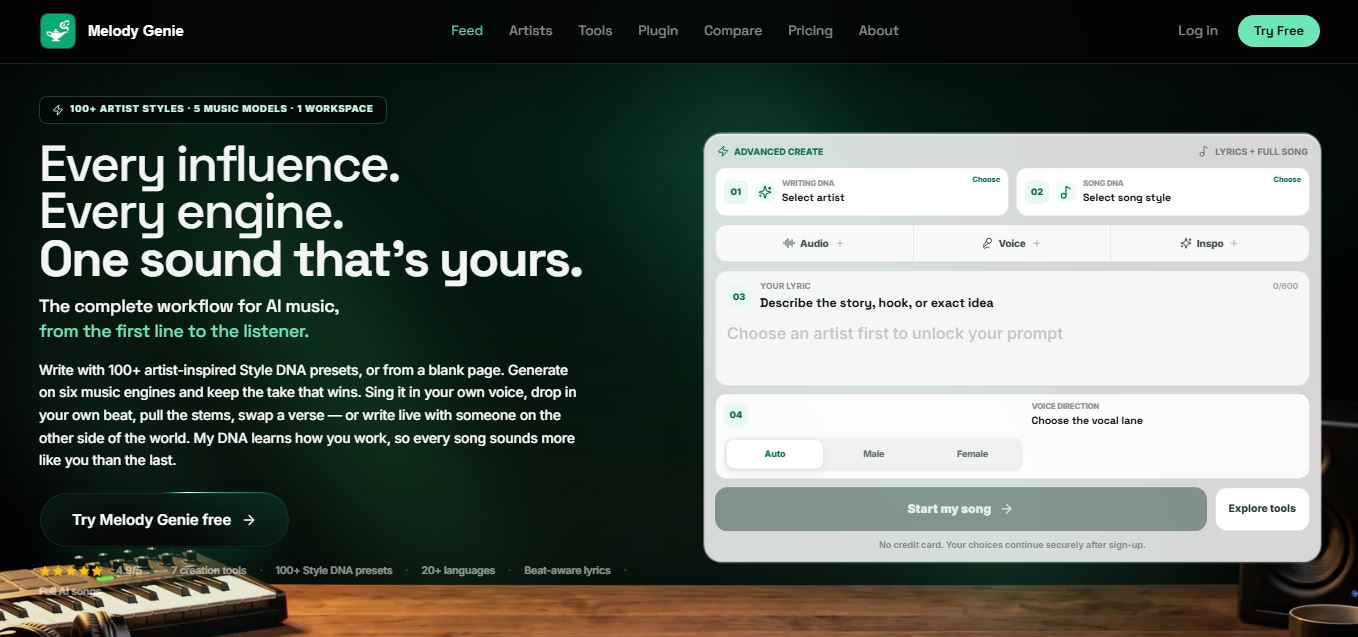
MelodyGenie is an AI-powered music generator that creates original songs from simple text prompts. Users can choose styles, moods, and genres, then instantly generate melodies and full tracks, making it easy for creators, marketers, and hobbyists to produce custom music without musical expertise.
Freemium
Kimi AI
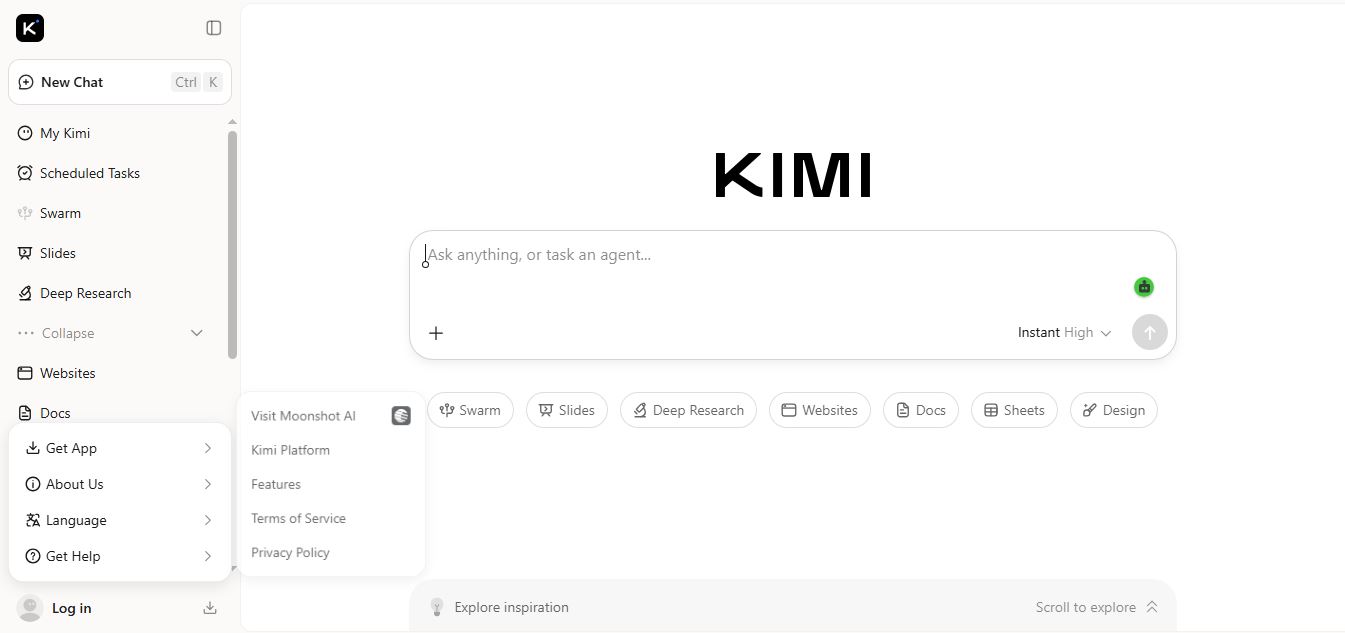
Kimi AI is an advanced AI assistant developed by Moonshot AI that helps you chat, research, write, code, and automate tasks in one place. It supports web search, file analysis, and multimodal inputs, and can even run autonomous “agent” workflows to complete complex tasks end-to-end.
Freemium
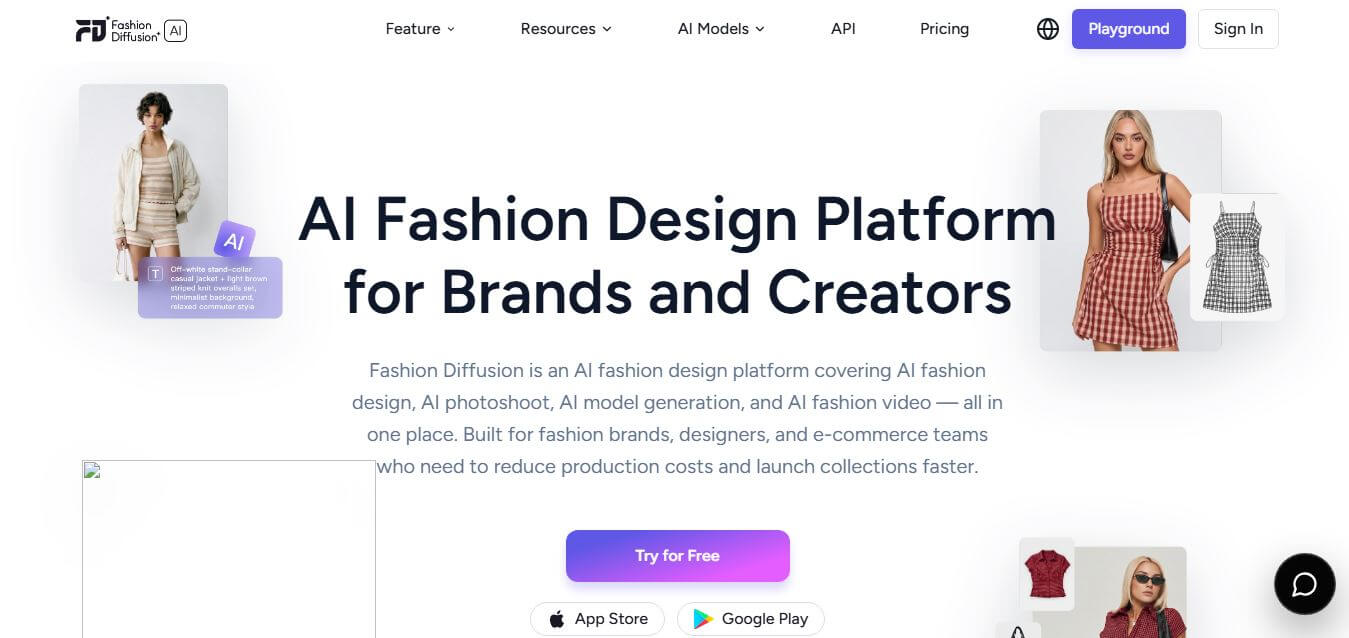
Fashion Diffusion AI
Fashion Diffusion is an AI-powered fashion design platform that helps brands and designers create clothing designs, virtual try-ons, AI models, product photos, and marketing visuals faster and cost-effectively.
Paid
Veo 4
Veo 4 AI is an AI video creation platform that generates dramatic videos from text, images, audio, and video prompts using realistic motion and synchronized sound.
Paid
Alternatives
Alternatives to Stackmint AI
The best Stackmint AI alternatives include Dust.tt, CrewAI Enterprise, LangGraph Studio, and Relevant AI. While Stackmint AI provides a dedicated multi-tenant runtime for agencies and consultants to package, govern, and monetize execution capabilities across client workspaces, alternatives like Dust.tt focus primarily on internal enterprise knowledge and CrewAI emphasizes developer-first multi-agent orchestration.
 4.9
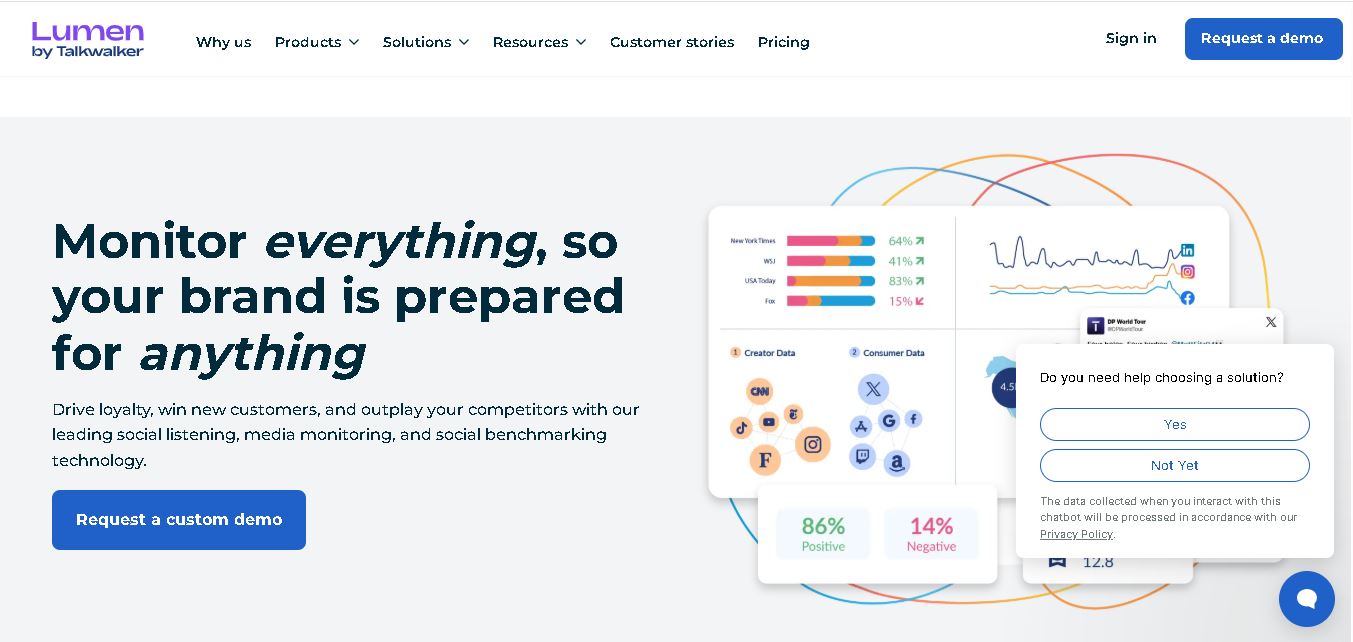
4.9Talkwalker
AI Agent
Talkwalker is a consumer intelligence and social listening solution that helps brands track online mentions, analyze audience sentiment, monitor competitors, and discover emerging trends. It combines social media analytics, media monitoring, customer feedback, and AI-powered insights to support marketing, public relations, reputation management, and data-driven business decisions across global markets.
 5.0
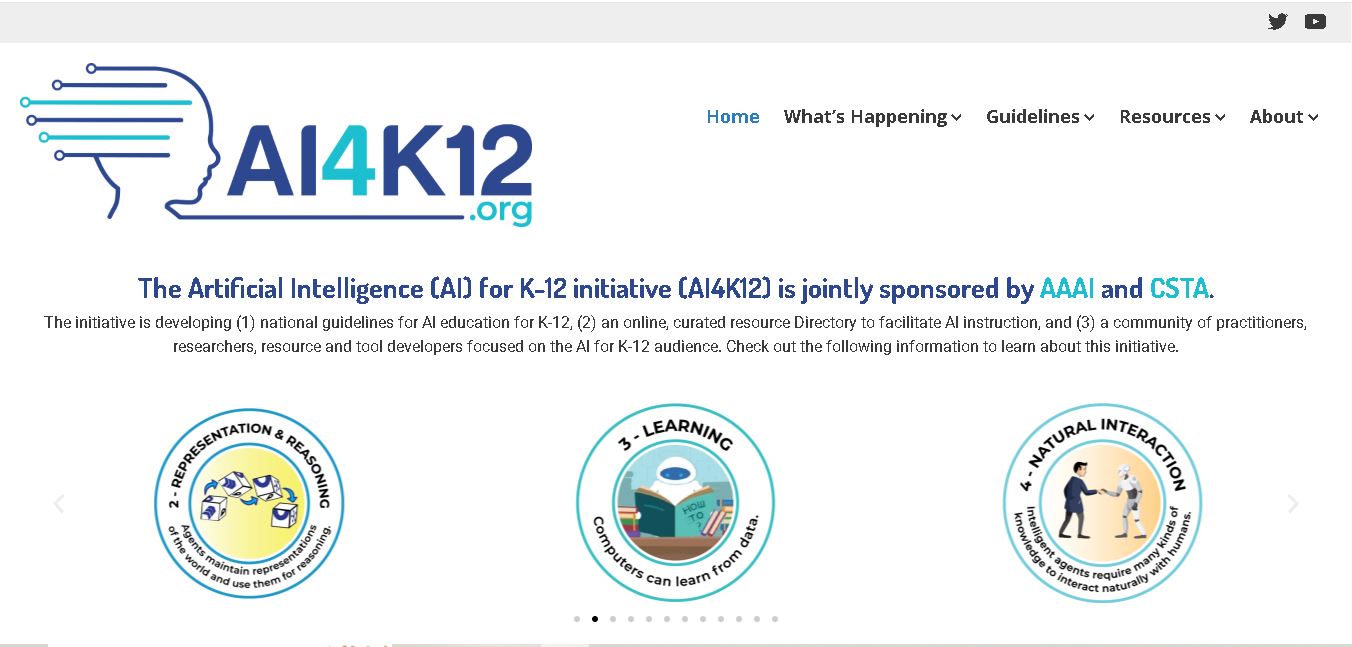
5.0AI4K12
AI Agent
AI4K12 is an educational initiative focused on bringing artificial intelligence into K–12 classrooms. It provides grade-level learning guidelines, curated teaching resources, and the Five Big Ideas framework. Designed for educators and curriculum developers, AI4K12 supports age-appropriate AI instruction and helps students understand how intelligent technologies work and affect society.
Kommunicate
AI Agent
Kommunicate (kommunicate.io) is an AI-powered customer service automation and live chat platform that unites no-code generative AI agents, Kompose chatbot builder, seamless human escalation, voice AI, and omnichannel messaging across WhatsApp, web, and mobile apps.
Text
AI Agent
Text is an AI-powered customer service platform that combines live chat, help desk ticketing, AI agents, and workflow automation. It helps businesses manage customer conversations, automate repetitive support tasks, answer questions, engage website visitors, and turn customer interactions into sales opportunities through a unified communication workspace.
DocsBot AI
AI Agent
DocsBot AI is an AI chatbot and agent platform that turns websites, documents, knowledge bases, and support tickets into conversational assistants. Businesses can use it to automate customer support, answer questions, share internal knowledge, connect workflows, and provide information through website widgets and supported integrations.
SiteGPT AI
AI Agent
SiteGPT is an AI chatbot platform that helps businesses automate customer support using their website content, documents, and knowledge sources. It answers visitor questions, supports lead generation, and integrates into websites, allowing teams to handle repetitive inquiries, improve customer experiences, and provide assistance around the clock.
 4.7
4.7Halcyon
AI Agent
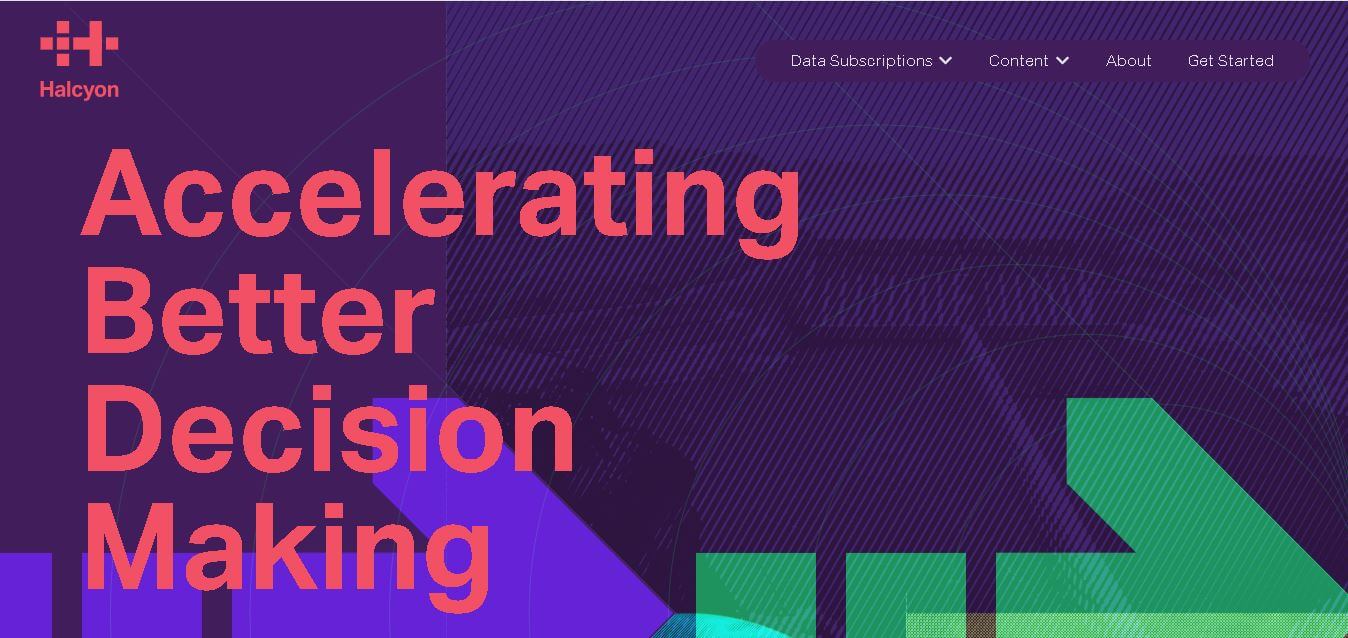
Halcyon is an AI energy intelligence platform that helps professionals search regulatory filings, analyze energy-market information, monitor developments, and access structured datasets. It combines document search, natural-language queries, AI-powered alerts, and specialized data subscriptions to turn fragmented energy information into actionable intelligence for research, monitoring, planning, and faster decision-making.
 4.5
4.5Enhancv
AI Agent
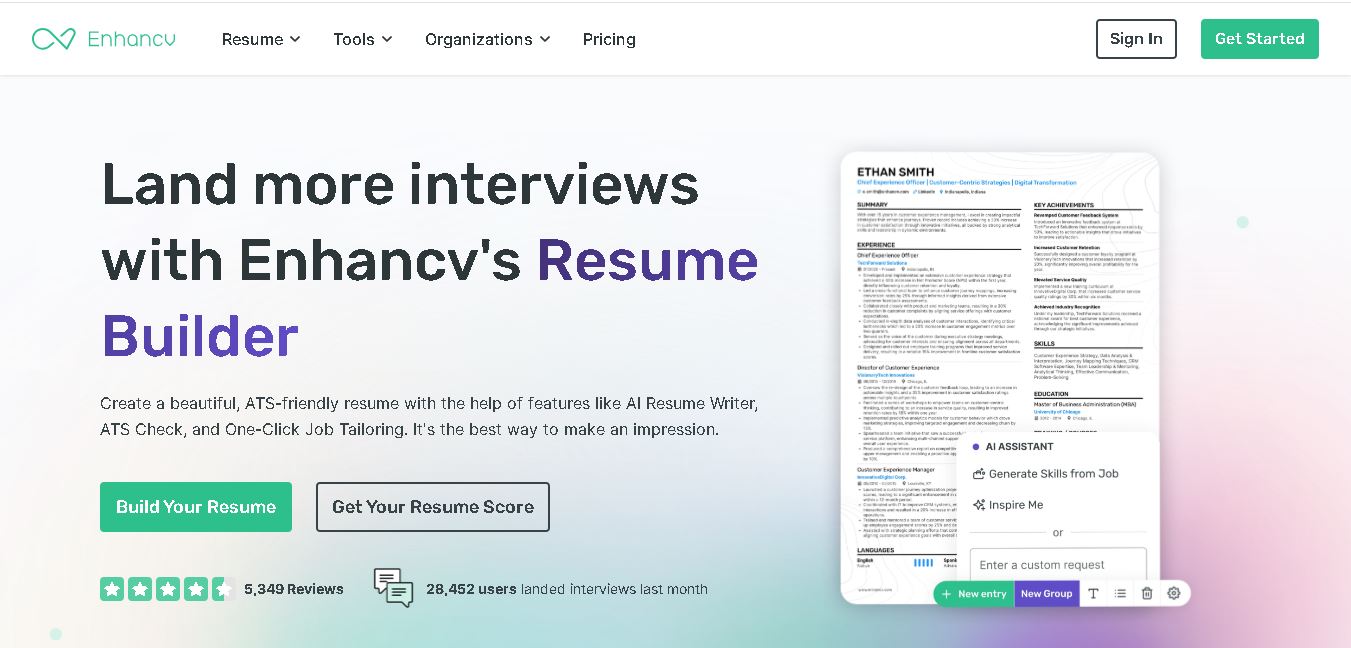
Enhancv helps job seekers build ATS-friendly resumes using customizable templates, AI writing assistance, resume checking, and job-specific tailoring. It also supports cover letters, application tracking, interview preparation, and resume translation. The platform is designed for candidates who want a polished application while keeping control over their experience, wording, and presentation.
 4.9
4.9Domo
AI Agent
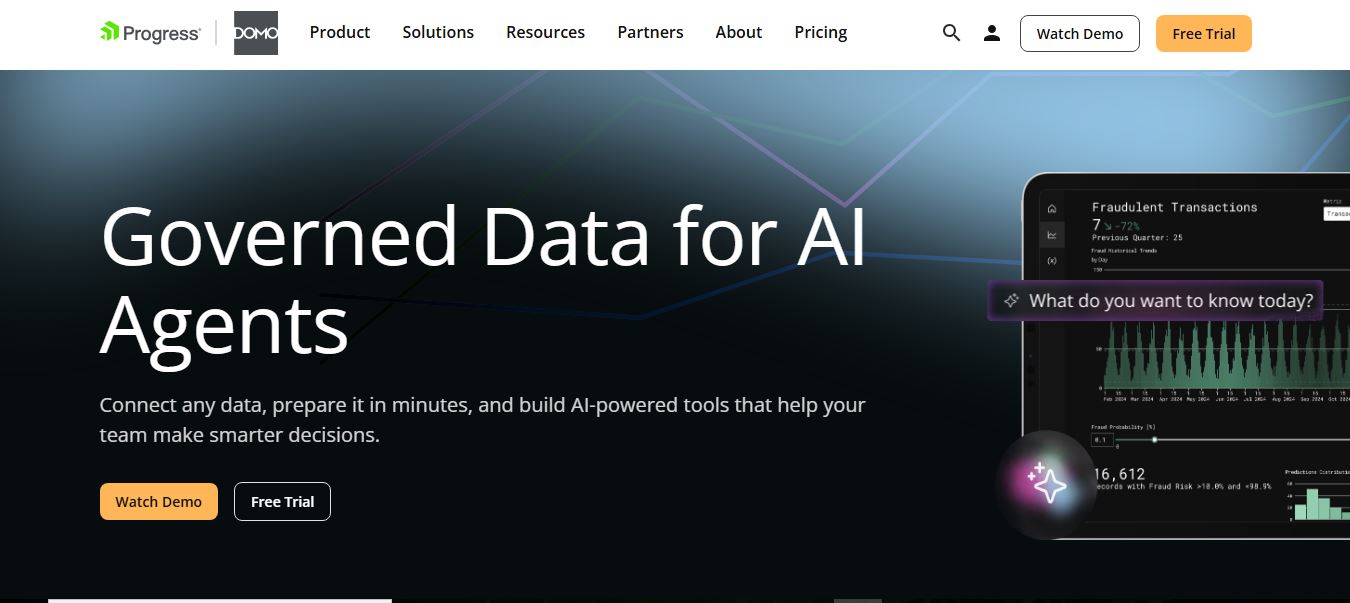
Domo is an AI-powered data and analytics platform that helps businesses connect, visualize, and act on data from multiple sources in one place. It combines dashboards, automation, and AI insights to turn raw data into decisions, enabling teams to monitor performance and drive better outcomes in real time.