What is Shield AI?
- Founders: Brandon Tseng, Ryan Tseng, and Andrew Reiter
- Launch Year: 2015
- Headquarters: San Diego, California, USA
-
Use Cases:
- Autonomous drone reconnaissance in GPS-denied areas
- AI-powered navigation for VTOL and fixed-wing aircraft
- Real-time mission planning for defense and security agencies
-
Technology:
- Hivemind Autonomy Stack for sensing, perception, and decision-making
- Edge-based AI computing for real-time flight autonomy
- Integration with unmanned and crewed defense systems
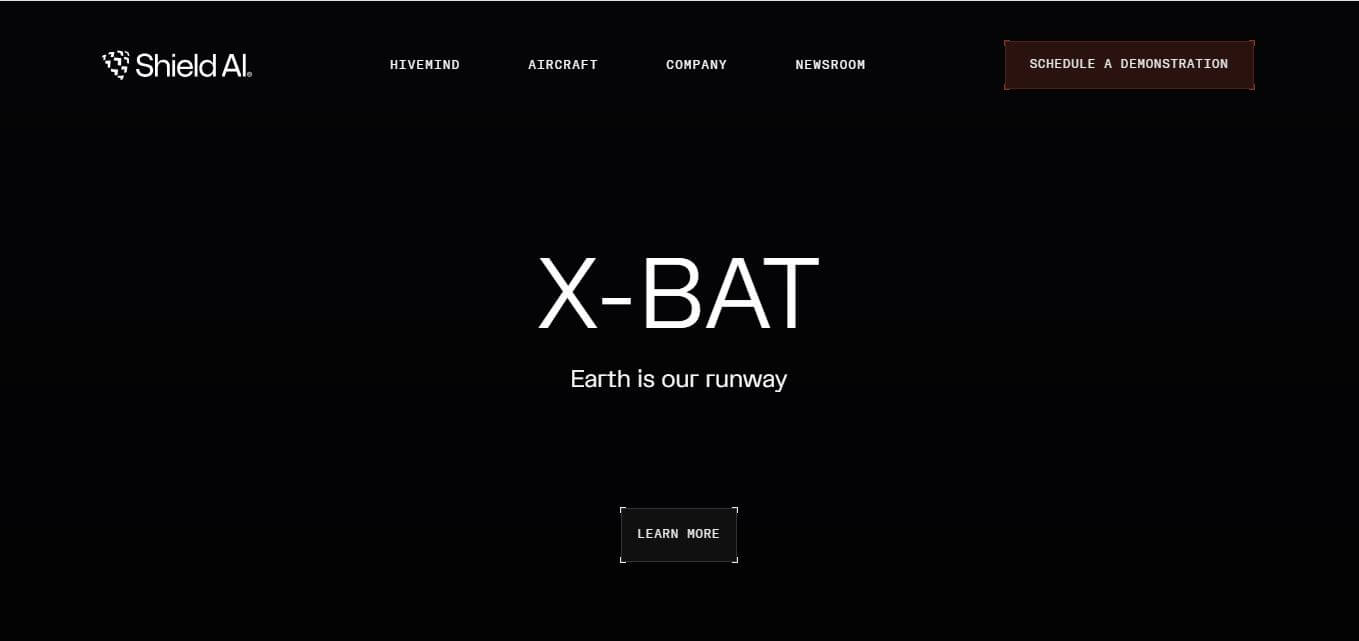
Shield AI is an AI-powered research platform that revolutionizes autonomous operations in defense, aerospace, and mission-critical environments. By using machine learning, computer vision, and autonomous decision-making, Shield AI allows drones and planes to find their way, detect their surroundings, and take action on their own, even if GPS or communication signals are lost. The autonomy stack, named Hivemind, enables aircraft and drones to make intelligent in-flight decisions in real time. Designed to increase mission safety, decrease risk to human operators, and increase efficiency for defense organizations, Shield AI is ultimately to protect service members and civilians while providing superior situational awareness in the field.
Key features
Shield AI's key features are
- Autonomous Flight in GPS-Denied Environments: It functions reliably in situations where communication or navigation signals are no longer available.
- Hivemind AI Pilot: A sophisticated level of an autonomy engine that allows drones and aircraft to plan, sense, and execute missions independently.
- Multi-Platform Capability: Compatible with quadcopters, VTOL aircraft, and fixed-wing systems.
- Mission Resilience: Improves operational safety and lessens human risk in higher threat conditions.
- Edge Autonomy: Operates independently of a cloud-based connection.
- Scalable Deployment: Easily adaptable across domains in defense and aerospace services for different mission needs.
Pricing
Shield AI’s offerings are available via contracts tailored to defense and enterprise clients. Pricing involves considerations such as platform type, mission needs, and deployment size, and there are no public pricing tiers or subscription models because Shield AI primarily serves government and defense customers.
Disclaimer: For the latest and most accurate pricing information, please visit the official Shield website.
Who is using Shield AI?
A diverse range of users and organizations utilize Shield AI
- The U.S. Air Force and the U.S. Marine Corps
- The U.S. Special Operations Command (SOCOM)
- Allies in international defense organizations
- Defense integrators and contractors are developing AI self-governance
- Security and surveillance organizations using unmanned intelligence and reconnaissance systems
Alternatives
Some Shield AI alternatives are
- Anduril Industries
- Skydio
- Palantir Defense Systems
- AeroVironment
- Boeing Autonomous Systems
Conclusion
Shield AI is a leading industry developer of defense self-governance with AI-enabled unmanned and manned systems. Its Hivemind autonomy stack provides the capability to operate successfully within a contested, congested environment with the safety of our service members in mind, to increase mission success. Tested in the military and defense sectors, Shield AI continues to redefine how autonomous aircraft operate with an understanding of the globally fast mission framework.
People are also reading:






 Verified