
SearchGPT (ChatGPT Search)
SearchGPT is OpenAI's AI-powered web search and real-time retrieval engine integrated into ChatGPT, delivering conversational, up-to-date web answers with in-line source citations, interactive maps, weather, financial widgets, and publisher attribution links.
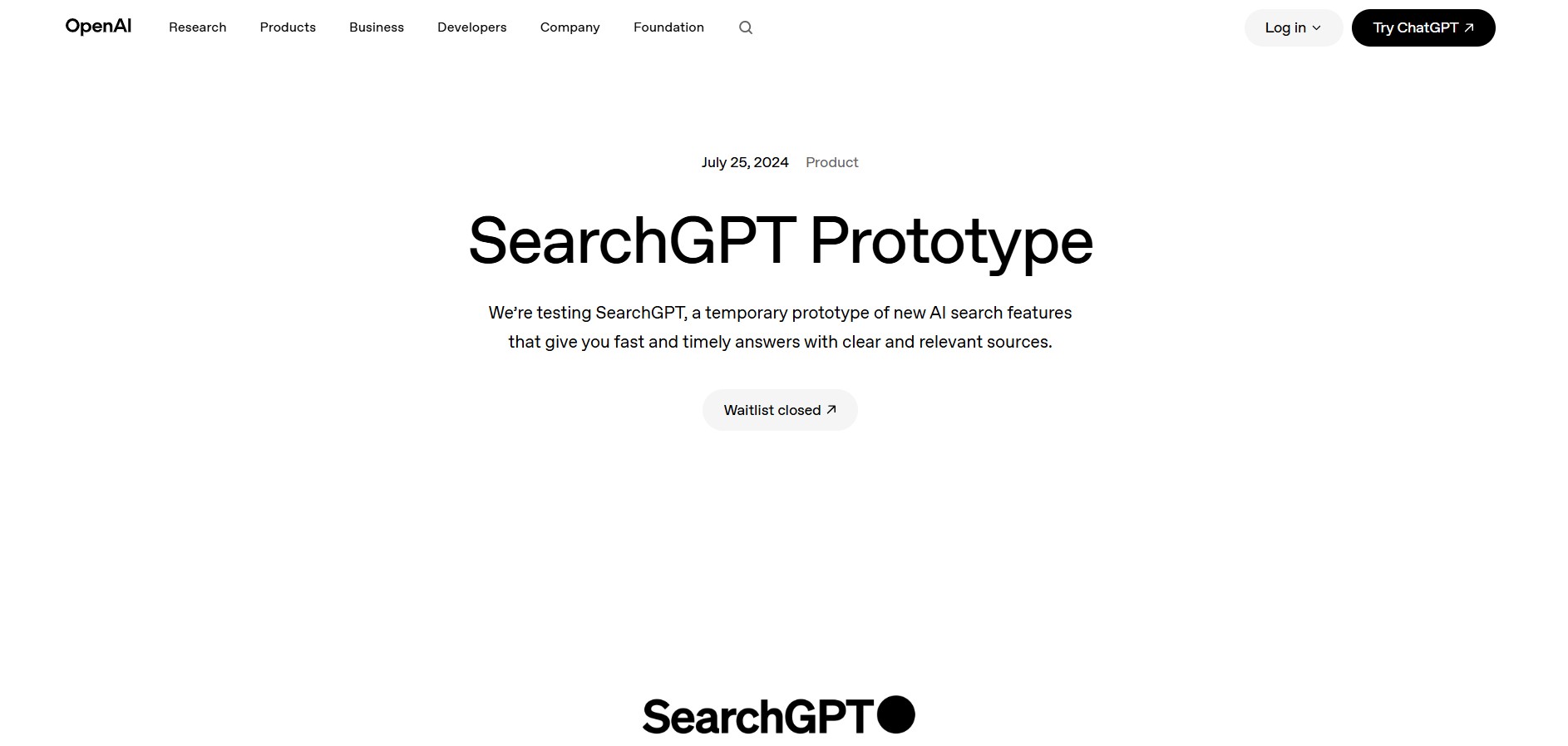
What is SearchGPT?
SearchGPT is an AI-powered search experience developed by OpenAI that combines traditional search with conversational AI, giving direct, summarized answers instead of just links. You can ask questions in natural language and continue with follow-ups, making it feel like a conversation rather than a search query. It pulls real-time information from the web and shows sources for deeper exploration, helping users find accurate information faster without opening multiple pages or doing manual research.
Designed around conversational web discovery with transparent source provenance, SearchGPT blends the reasoning capabilities of OpenAI's frontier models with live web scraping and third-party data partnerships. Instead of requiring users to construct keyword queries or restart searches for follow-up details, SearchGPT retains conversational context and provides direct answers paired with interactive sidebars linking to primary publisher sources.
- Platform Role: Conversational AI Search Engine, Real-Time Web Retrieval & Publisher Citation Network
- Developer & Organization: OpenAI (San Francisco, CA)
- Ecosystem Integration: Available across ChatGPT Web, macOS/Windows desktop apps, iOS, Android, and official browser search extensions
Use Cases:
- Retrieving breaking news headlines, financial market summaries, and live sports scores with direct citations
- Researching technical documentation, developer changelogs, and recent software library releases in real time
- Finding local businesses, restaurants, opening hours, and travel recommendations using interactive map cards
- Comparing competitor products, current retail pricing, and verified consumer reviews without sponsored ad clutter
- Conducting iterative multi-step research where follow-up questions build upon previous search findings automatically
Technology:
- Fine-tuned GPT model variants optimized for search intent classification, query rewriting, and source synthesis
- Real-time web indexing and retrieval partnerships, including Microsoft Bing and specialized weather/financial providers
- Dynamic visual widgets rendering interactive map views, stock charts, weather radars, and publisher media carousels
- Publisher governance tools allowing content owners to manage search appearance independently from training data opt-outs
Target Users:
- Knowledge workers, analysts, and researchers needing fast synthesis of multi-source web documentation
- Developers tracking fast-moving open-source libraries, API changes, and current framework releases
- Consumers looking for ad-free, direct answers to everyday local, news, weather, or shopping inquiries
- Students and academics seeking reliable web sources paired with clear, click-through citations
Acquisition: Native search engine integrated directly inside OpenAI ChatGPT
What are the key features of SearchGPT?
SearchGPT's key platform features are
- Direct Web Answers: Summarizes current web data into structured, easy-to-read responses rather than forcing clicks through traditional SERP links.
- In-Line Named Citations: Links directly to news outlets, blogs, and reference documentation with clear attribution buttons.
- Sources Sidebar: Open a dedicated visual tray displaying all publisher references, article titles, and direct external URLs for each query.
- Contextual Follow-Ups: Retains context across questions, allowing users to drill deeper without repeating previous keywords.
- Interactive Visual Cards: Displays live interactive widgets for weather forecasts, stock performance charts, sports fixtures, and local maps.
- Chrome Extension Default Search: Set ChatGPT search as your default browser search engine to replace traditional address bar navigation.
- Publisher-Friendly Indexing: Allows web publishers to be surfaced in search results without requiring their content to be used for model pre-training.
How much does SearchGPT cost?
SearchGPT functionality is integrated natively into ChatGPT's tier system, offering free search access alongside higher usage allowances for subscribers.
Pricing Plans:
- ChatGPT Free ($0 / month): Full access to web search capabilities with standard query limits and model access.
- ChatGPT Plus ($20 / month): High-volume access to frontier models with integrated search, faster query responses, and priority access during peak hours.
- ChatGPT Team / Enterprise: Team workspace plans ($25 - $30 / user / month) providing administrative domain controls, SOC 2 compliance, and dedicated team collaboration workspaces.
Disclaimer: SearchGPT operates without ads across all ChatGPT tiers. Active plan pricing reflects published rates on openai.com/pricing.
Who should use SearchGPT?
SearchGPT is designed for web researchers and everyday information seekers, including
- Everyday Web Searchers: Getting direct, unbiased answers without scrolling through pages of sponsored links and SEO filler.
- Market Researchers & Analysts: Compiling quick market overviews, industry announcements, and regulatory updates with citation trails.
- Developers & Engineers: Searching current framework bugs, software versions, and API documentation released after static model cutoffs.
- Journalists & Writers: Verifying quotes, fact-checking recent events, and discovering relevant primary sources quickly.
What are the best alternatives to SearchGPT?
Some of the strongest SearchGPT alternatives include
- Perplexity AI
- Google Search (AI Overviews)
- Microsoft Copilot
- Grok (xAI)
- You.com
- Kagi
What are the pros and cons of SearchGPT?
What are the pros of SearchGPT?
- Delivers clean, ad-free search answers with clear and clickable publisher citations
- Natural-language conversational threading allows effortless follow-up queries
- Rich interactive cards for weather, stock tickers, flight status, and local maps
- Available across web, mobile apps, desktop clients, and default browser search settings
- Included in the free ChatGPT plan without requiring an immediate paid subscription
What are the cons of SearchGPT?
- Can occasionally summarize outdated forum threads or hallucinate details on niche, fast-changing topics
- Does not offer deep academic filtering or operator syntax comparable to specialized engines like Google Scholar or Kagi
- Subject to temporary rate limits for free tier accounts during peak server traffic periods
Why should you choose SearchGPT?
Traditional search engines have become cluttered with advertisements, sponsored content, and low-quality SEO articles designed to capture ad revenue rather than provide clear answers. SearchGPT streamlines this experience. By combining conversational understanding with live web indexing, structured source sidebars, and interactive visual data widgets, SearchGPT gives you direct, verified answers without the clutter of conventional search results.
- Receive concise, conversational summaries backed by real-time web citations
- Explore primary sources with ease using the dedicated publisher sidebar
- Ask natural follow-up questions without restarting keyword searches from scratch
- Experience a clean, advertisement-free web navigation environment
How does SearchGPT compare to competitors?
While Perplexity AI focuses heavily on academic citations and curated collection spaces, and Google AI Overviews blends AI summaries directly into traditional ad-driven SERPs, SearchGPT provides a seamless, conversational search experience integrated directly within the ChatGPT ecosystem.
| Feature / Platform | SearchGPT | Perplexity AI | Google AI Overviews | Microsoft Copilot |
|---|---|---|---|---|
| Core Interface | Conversational chat + sources sidebar | Answer engine + collection spaces | Hybrid AI cards inside traditional SERP | Chat pane inside Bing search & Edge |
| Ad Experience | 100% Ad-free experience | Sponsored follow-ups & ad-free Pro | Ad-heavy links & sponsored placements | Integrated sponsored listings |
| Interactive Widgets | Maps, Stocks, Weather, Sports | Visual charts & financial tables | Full Google knowledge graph cards | Bing visual answer snippets |
| Pricing Structure | Free tier / Plus at $20/month | Free tier / Pro at $20/month | 100% Free (Ad-supported) | Free tier / Copilot Pro at $20/month |
| Best For | Seamless conversational web research | Academic source synthesis & collections | Instant local business & shopping lookup | Microsoft 365 & Windows web navigation |
How do we rate SearchGPT?
| Parameter | Rating (out of 5) |
|---|---|
| Answer Accuracy & Timeliness | 4.9 |
| Citation Quality & Transparency | 4.8 |
| Conversational Flow & Follow-ups | 4.9 |
| Interface Simplicity & Widgets | 4.8 |
| Value for Money | 4.9 |
| Overall Score | 4.86 |
What is our review and verdict on SearchGPT?
SearchGPT represents a defining evolution in how we access information on the internet. By replacing ad-saturated search engine result pages with direct, context-aware conversational answers backed by verified source links, it dramatically cuts research time. With deep integration across ChatGPT's ecosystem and ad-free access on free and paid tiers, SearchGPT is one of the most effective web discovery tools available.
Conclusion
SearchGPT represents a shift from traditional search to a more conversational, answer-first experience powered by AI. Instead of scrolling through multiple links, users can get clear, summarized responses with context and sources in one place. This makes research faster and more intuitive. Overall, SearchGPT simplifies how people find information online, helping them get to relevant answers quickly while reducing the friction of traditional search methods.
FAQ
Is SearchGPT still available?
SearchGPT started as a prototype in 2024, but it’s no longer a separate product. Its core features have been integrated directly into ChatGPT as “ChatGPT Search.”
How does SearchGPT work?
It combines AI models with live web data to generate answers. Instead of just matching keywords, it understands your intent, pulls relevant info from multiple sources, and then summarizes it into a single response—with citations so you can verify the info.
Why did OpenAI build SearchGPT?
The goal was to fix a major limitation of chatbots: lack of real-time information. By combining AI + web search, OpenAI made it possible to get fresh, up-to-date answers instantly without switching tools.
Does it replace traditional search engines?
Not fully (yet). It’s more like a new layer on top of search—great for quick answers, research, and comparisons—but traditional search engines still dominate for deep browsing and discovery.
How is SearchGPT different from Google Search?
The main difference is in how results are delivered. SearchGPT provides a direct, conversational answer with context and summaries, while Google Search typically displays a list of links that users need to click through. SearchGPT focuses on saving time and reducing friction, whereas Google emphasizes discovery and breadth of information.
What are the main benefits of using SearchGPT?
SearchGPT offers faster answers, better context understanding, and a more natural interaction style. Users can ask complex or multi-part questions and refine them without starting over. It’s particularly useful for research, comparisons, and decision-making because it combines information from multiple sources into a single, easy-to-understand response.
Does SearchGPT replace traditional search engines?
Not entirely. While SearchGPT is powerful for quick answers and guided exploration, traditional search engines are still useful for browsing, navigating websites, and accessing a wide range of sources directly. In many cases, users may use both together depending on the task.
What does SearchGPT mean for SEO and content creators?
SearchGPT changes how visibility works online. Instead of focusing only on ranking in search results, content creators now need to ensure their content is clear, structured, and authoritative so it can be cited in AI-generated answers. This shift is often called Generative Engine Optimization (GEO), where the goal is to be included in AI responses rather than just attract clicks.
User Reviews
No reviews yet for SearchGPT (ChatGPT Search).
Featured Tools
Featured AI tools from TechShark
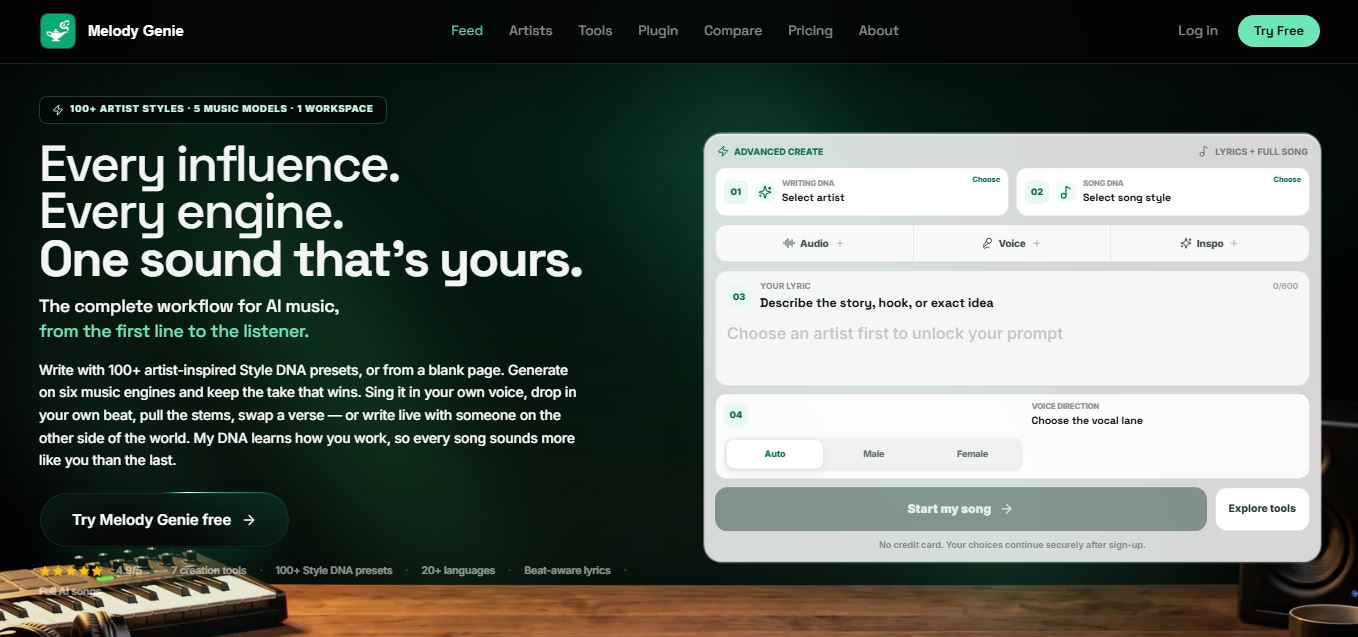
Melody Genie
MelodyGenie is an AI-powered music generator that creates original songs from simple text prompts. Users can choose styles, moods, and genres, then instantly generate melodies and full tracks, making it easy for creators, marketers, and hobbyists to produce custom music without musical expertise.
Freemium
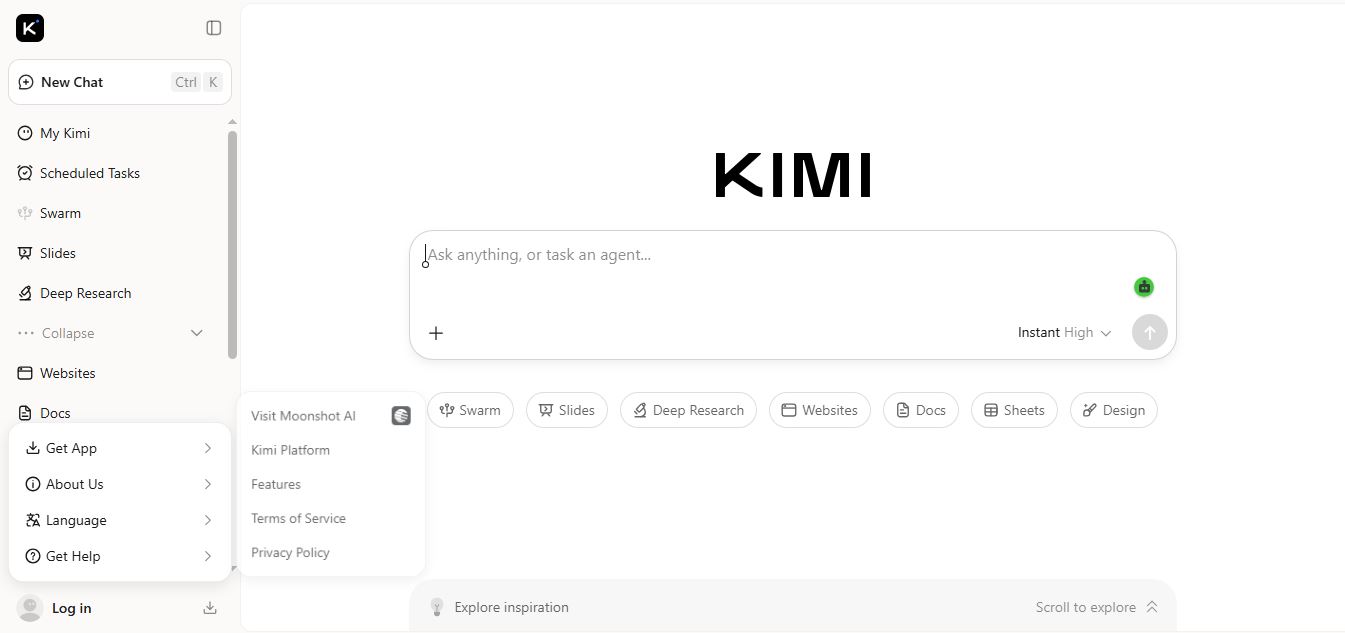
Kimi AI
Kimi AI is an advanced AI assistant developed by Moonshot AI that helps you chat, research, write, code, and automate tasks in one place. It supports web search, file analysis, and multimodal inputs, and can even run autonomous “agent” workflows to complete complex tasks end-to-end.
Freemium

Fashion Diffusion AI
Fashion Diffusion is an AI-powered fashion design platform that helps brands and designers create clothing designs, virtual try-ons, AI models, product photos, and marketing visuals faster and cost-effectively.
Paid
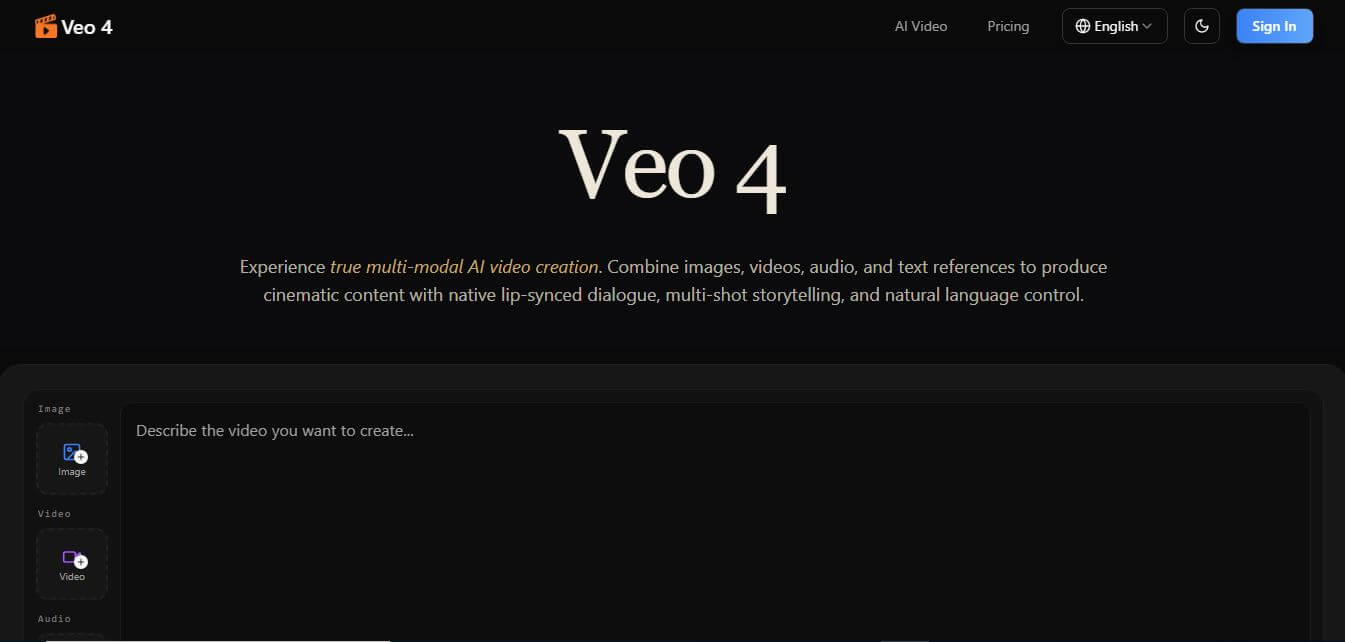
Veo 4
Veo 4 AI is an AI video creation platform that generates dramatic videos from text, images, audio, and video prompts using realistic motion and synchronized sound.
Paid
Alternatives
Alternatives to SearchGPT (ChatGPT Search)
The best SearchGPT alternatives include Perplexity AI, Google Search (AI Overviews), Microsoft Copilot, and Kagi. While SearchGPT provides an ad-free conversational search interface natively integrated into ChatGPT with in-line publisher citations and visual widgets, alternatives like Perplexity AI offer specialized academic research collections, and Google delivers traditional ad-supported web index results.
 4.9
4.9DuckDuckGo
Search Engine
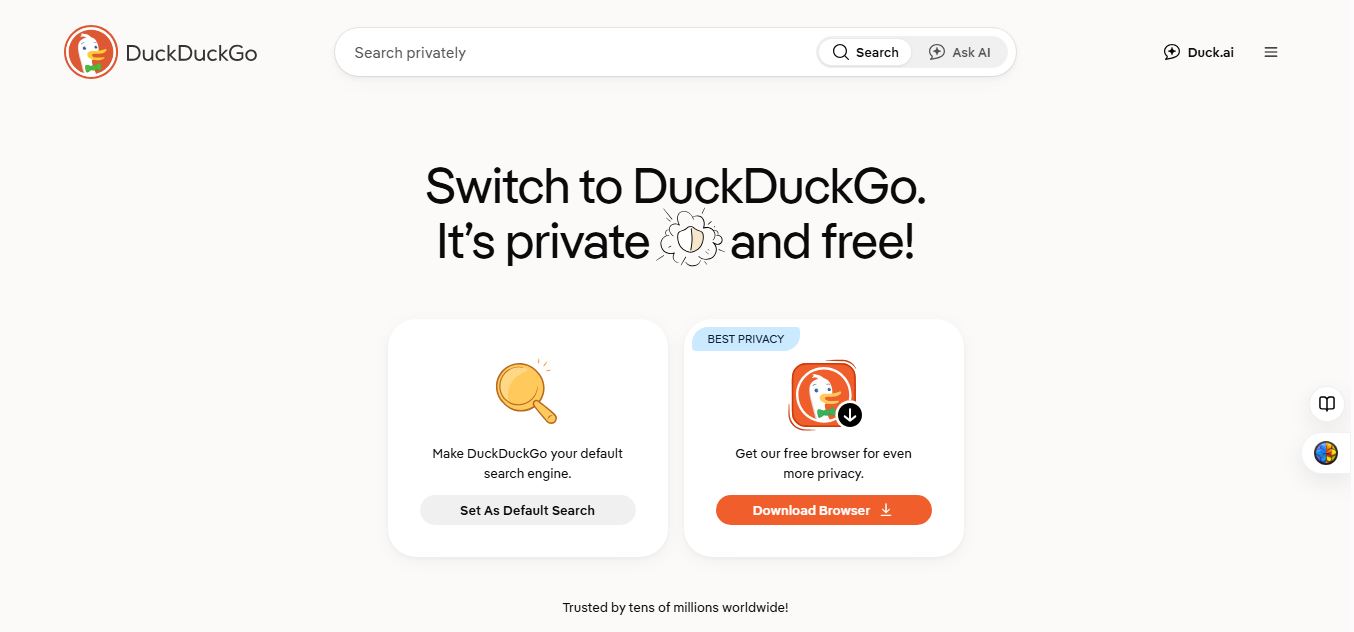
DuckDuckGo is a privacy-focused search engine and browser that helps users search the web without tracking their searches or browsing history. It blocks ads, trackers, and cookies while offering private AI features through Duck.ai, giving users a more secure and privacy-friendly alternative to traditional search and browsing.
 4.9
4.9SearchTools AI
Search Engine
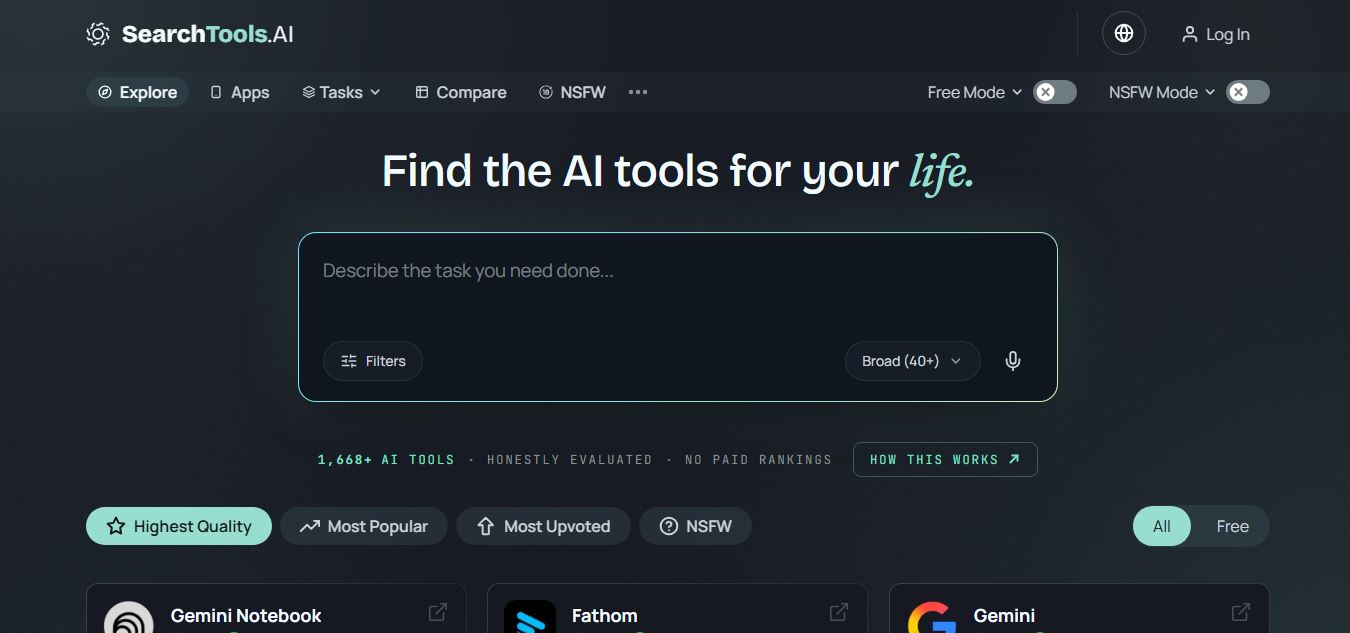
SearchTools.ai is an AI tools discovery platform that helps users find, compare, and evaluate AI software across hundreds of categories. It ranks tools based on real reviews, usage signals, and adoption data, enabling faster research and better decisions without paid placements or biased rankings.
 4.8
4.8Genspark
AI Agent
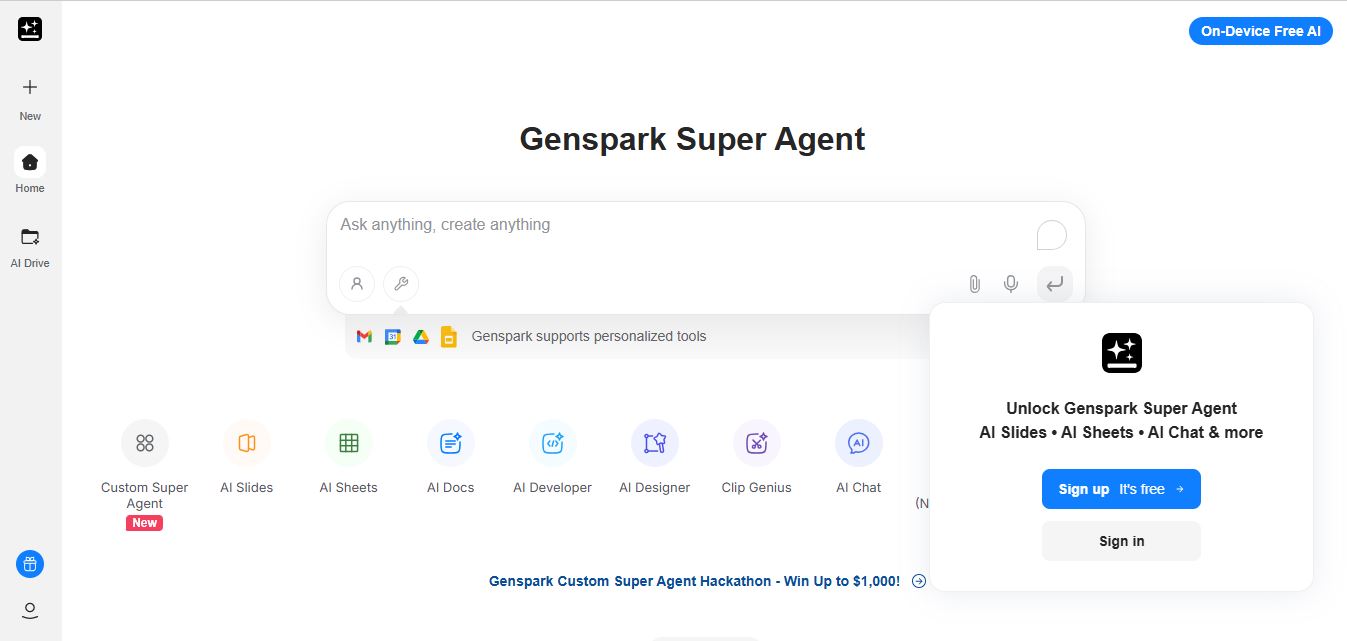
Genspark is an AI-powered all-in-one workspace built around autonomous agents that can research, write, analyze data, and create content from a single prompt. Its “Super Agent” plans and executes tasks across tools, delivering complete outputs like presentations, reports, code, and media automatically.
 4.7
4.7Refsee
Search Engine
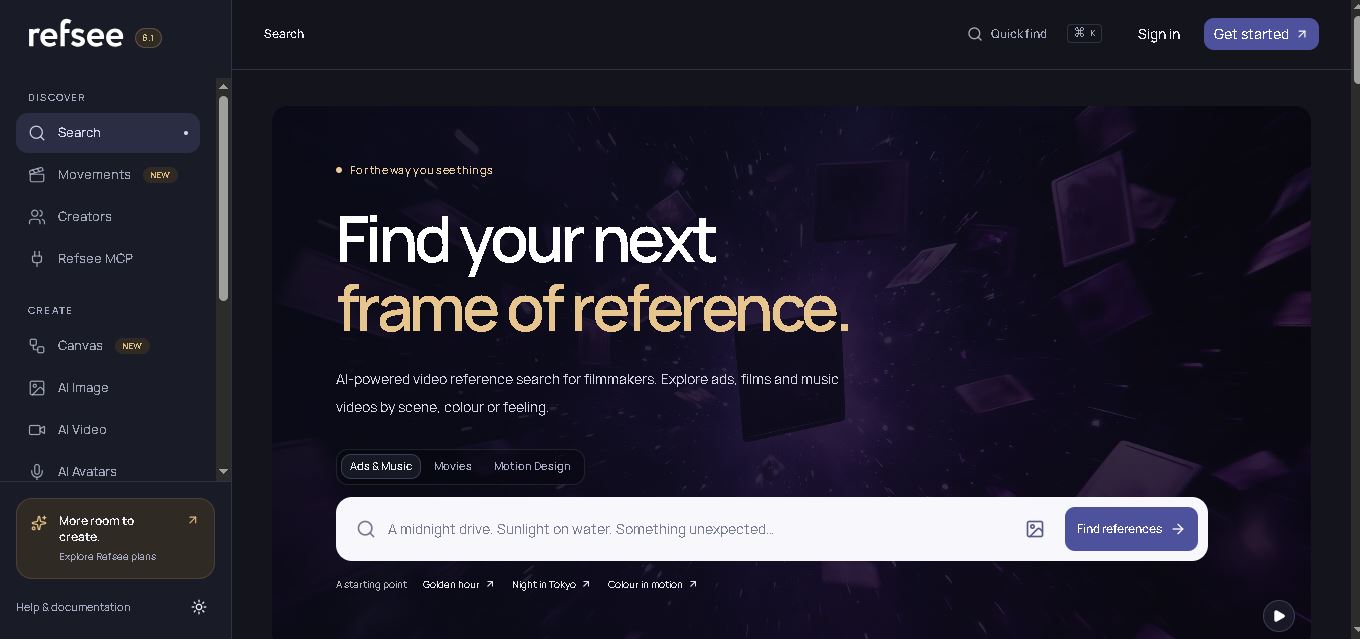
Refsee is a visual research and creative workspace for discovering video references by scene, color, framing, title, or feeling. It helps filmmakers and creative professionals find relevant frames, organize inspiration into moodboards, and transform visual references into original creative concepts using AI-powered image, video, avatar, and editing features.
 4.8
4.8GigaBrain
Search Engine
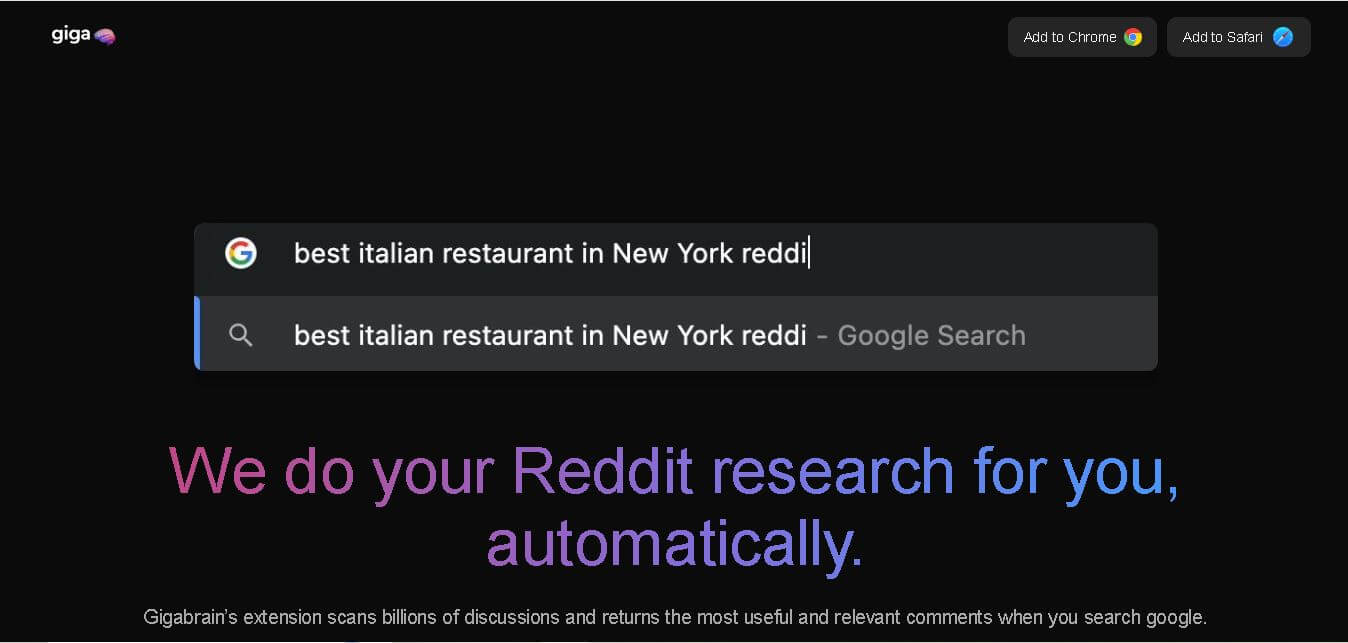
GigaBrain is a Reddit research and discovery tool built to surface useful community opinions, summarize discussions, and reduce repetitive browsing. Its browser extension brought Reddit insights into Google, Bing, and DuckDuckGo searches, while additional products supported deeper research, conversational follow-ups, product discovery, and Reddit trend monitoring for everyday users.
 4.7
4.7Brave Leo AI
Search Engine
Brave Leo is a privacy-focused AI assistant built directly into the Brave browser that helps you summarize webpages, generate content, translate text, and answer questions without leaving your tab. It doesn’t store chats or require an account, keeping your interactions secure and anonymous.
 4.8
4.8Microsoft Bing
Search Engine
Microsoft Bing is an AI-powered search and answer engine that combines traditional web indexing with generative AI, Copilot conversational assistance, Image Creator, Visual Search, and Microsoft Rewards integration.
 4.8
4.8iAsk AI
Search Engine
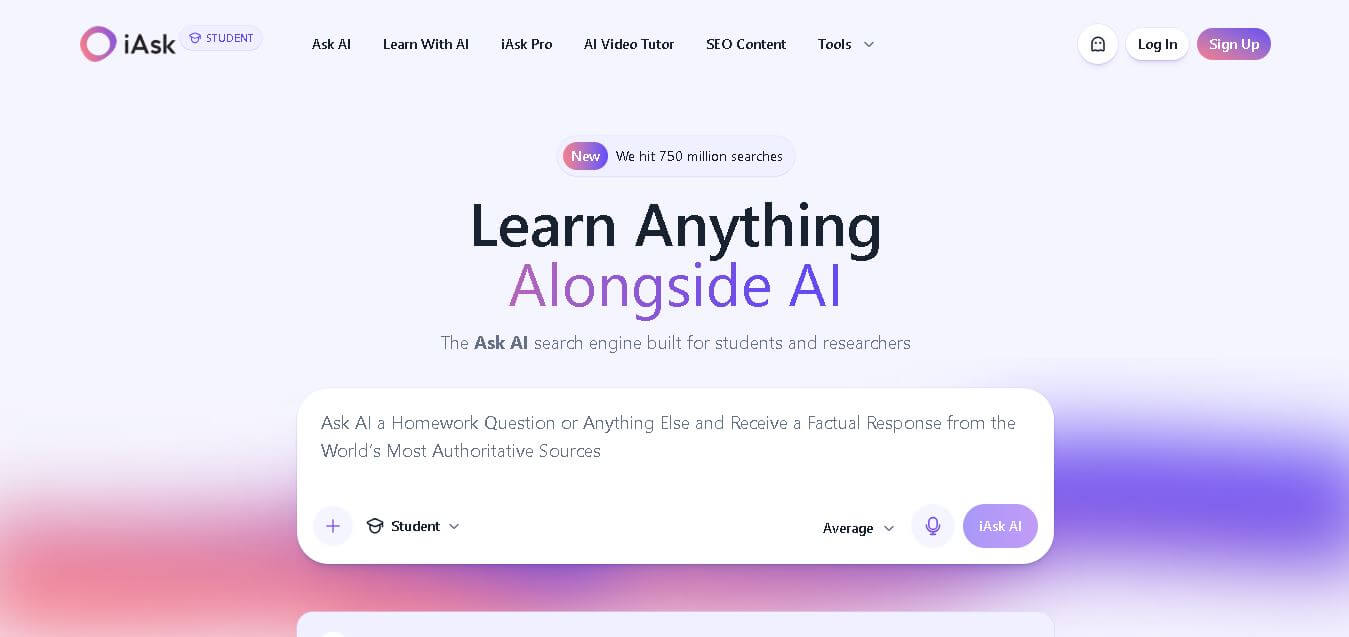
iAsk is an AI search and learning tool designed for students, researchers, and everyday users who want direct answers with traceable sources. It supports natural-language questions, homework guidance, summaries, document analysis, and research workflows, helping users find useful information without navigating through multiple search results today.
 4.5
4.5Findtube.AI
Search Engine
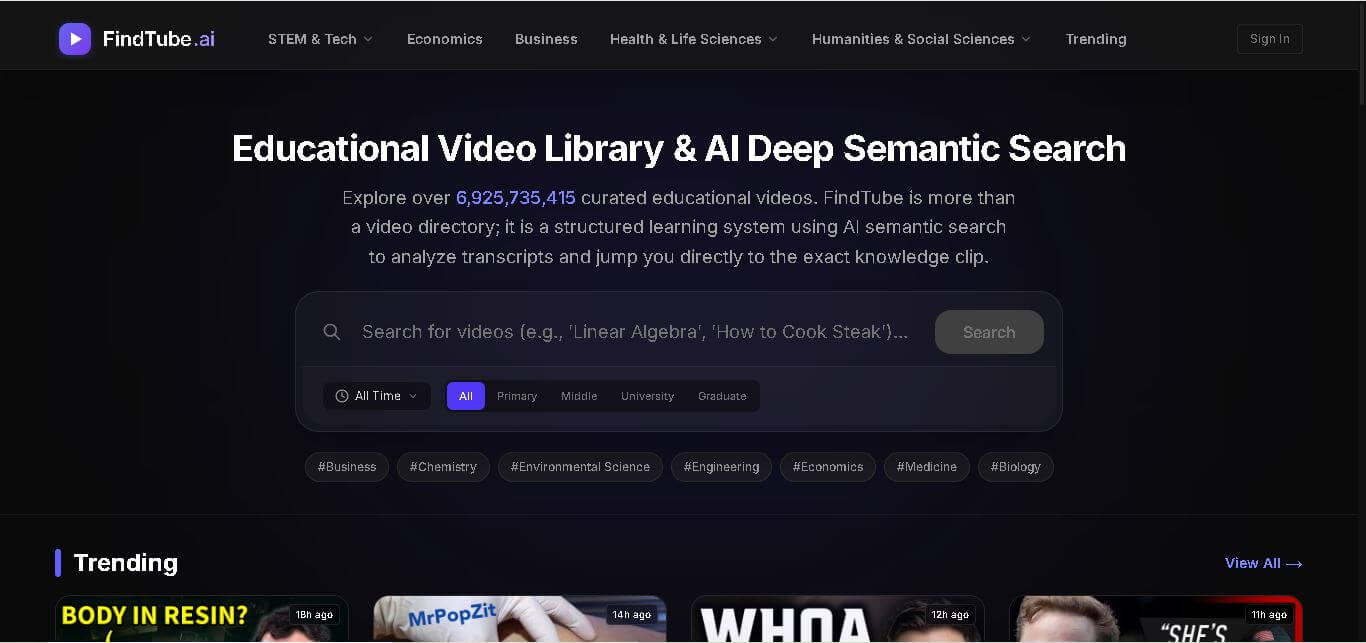
FindTube AI is an AI-powered educational video search platform that helps learners discover relevant YouTube content, locate exact knowledge segments, and build structured learning paths with semantic search.