
Natural Language Playlist
Natural Language Playlist is an AI-powered music discovery platform that creates personalized playlists from simple text prompts, moods, activities, and natural language descriptions.
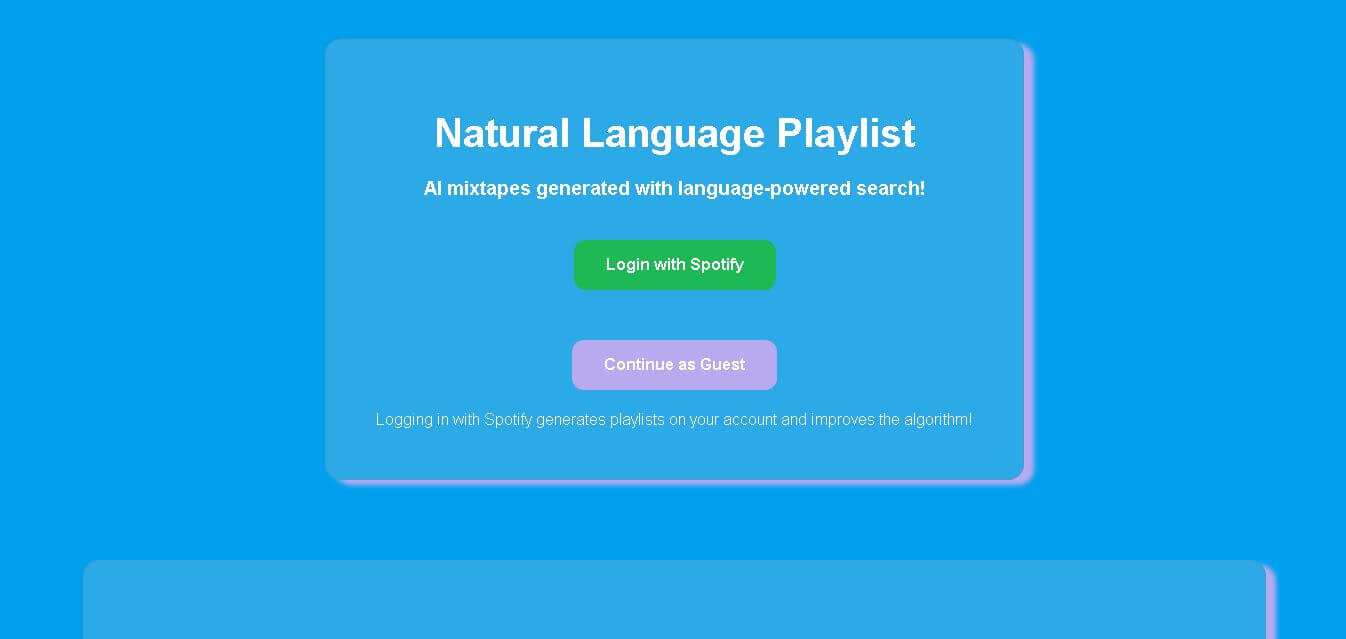
What is Natural Language Playlist AI?
- Founders: Developed by a team of AI engineers and music enthusiasts (public founder details not widely disclosed).
- Launch: Introduced as an experimental AI-driven music discovery platform.
-
Use Cases:
-
Creating mood-based playlists
-
Generating activity-specific music (workout, study, travel)
-
Discovering new artists and genres
-
Event or party playlist creation
-
-
Technology:
-
Natural Language Processing (NLP)
-
Machine learning recommendation models
-
AI-driven semantic analysis
-
Integration with music streaming data
-
Natural Language Playlist is an AI-powered music platform that transforms basic text inputs into customized music playlists. Users can create their own playlists by describing their current mood or upcoming event in plain English. The tool helps users find music by using advanced systems that recommend songs based on their planned activities, including workouts, road trips, and evening relaxation. The system uses natural language processing together with intelligent music matching to deliver personalized listening experiences, which music enthusiasts can access with speed and ease.
Key Features
Natural Language Playlist AI's key features are
-
Text-to-Playlist Generation
Users can type prompts like “chill rainy evening vibes” or “high-energy gym motivation,” and the system generates relevant song recommendations instantly. -
Mood and Context Understanding
The AI analyzes emotional tone, keywords, and context within the prompt to deliver highly relevant playlists instead of generic suggestions. -
Quick Playlist Creation
Eliminates manual searching by delivering ready-to-use playlists within seconds. -
Personalized Discovery
Encourages exploration of new tracks, artists, and genres aligned with the user’s preferences. -
Simple and Clean Interface
Designed for ease of use, allowing anyone to create playlists without technical knowledge. -
Creative Prompt Flexibility
Supports descriptive, emotional, and scenario-based prompts for more imaginative playlist results.
Pricing
- Free access (core features)
- No mandatory subscription
- May include premium integrations (if available)
Disclaimer: For the latest and most accurate pricing information, please visit the official Natural Language Playlist AI website.
Who is using it?
A diverse range of users and organizations utilize Natural Language Playlist AI
- Music lovers exploring new tracks
- Students creating study playlists
- Fitness enthusiasts building workout mixes
- Event planners organizing party music
- Content creators setting background vibes
Alternatives
Some Natural Language Playlist AI alternatives are
- Spotify AI Playlist (by Spotify)
- SoundHound AI Music Tools
- Apple Music Smart Playlists
- Pandora Radio
- Deezer Flow
Conclusion
The Natural Language Playlist system creates an easy and natural way to discover new music. The system enables users to describe their music tastes with simple words, which helps them make playlists without needing traditional playlist creation methods. The combination of AI-driven recommendation technology and mood-based understanding makes it a practical tool for everyday listening. The platform offers modern music streaming solutions through a fast, creative, and personalized system that helps users find music for work focus and energetic workout tracks.
People are also reading
FAQ
How does Natural Language Playlist work?
It uses AI and natural language processing to interpret text prompts and match them with suitable songs and playlists.
Do I need technical knowledge to use it?
No, anyone can use it by simply typing a description in everyday language.
Is it free to use?
Core features are generally available for free, though integrations may vary.
Can I use it for events or parties?
Yes, it’s ideal for generating themed playlists for events, gatherings, and occasions.
Does it support mood-based playlists?
Yes, mood-based playlist creation is one of its primary features.
User Reviews
No reviews yet for Natural Language Playlist.
Featured Tools
Featured AI tools from TechShark
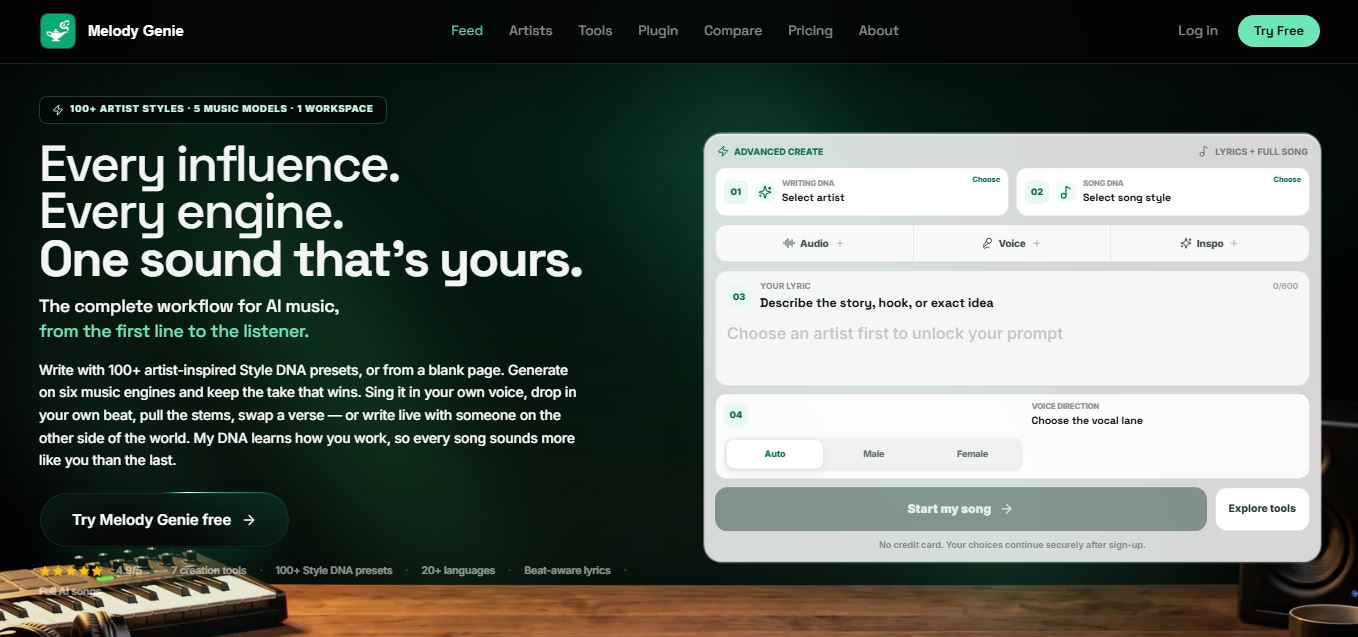
Melody Genie
MelodyGenie is an AI-powered music generator that creates original songs from simple text prompts. Users can choose styles, moods, and genres, then instantly generate melodies and full tracks, making it easy for creators, marketers, and hobbyists to produce custom music without musical expertise.
Freemium
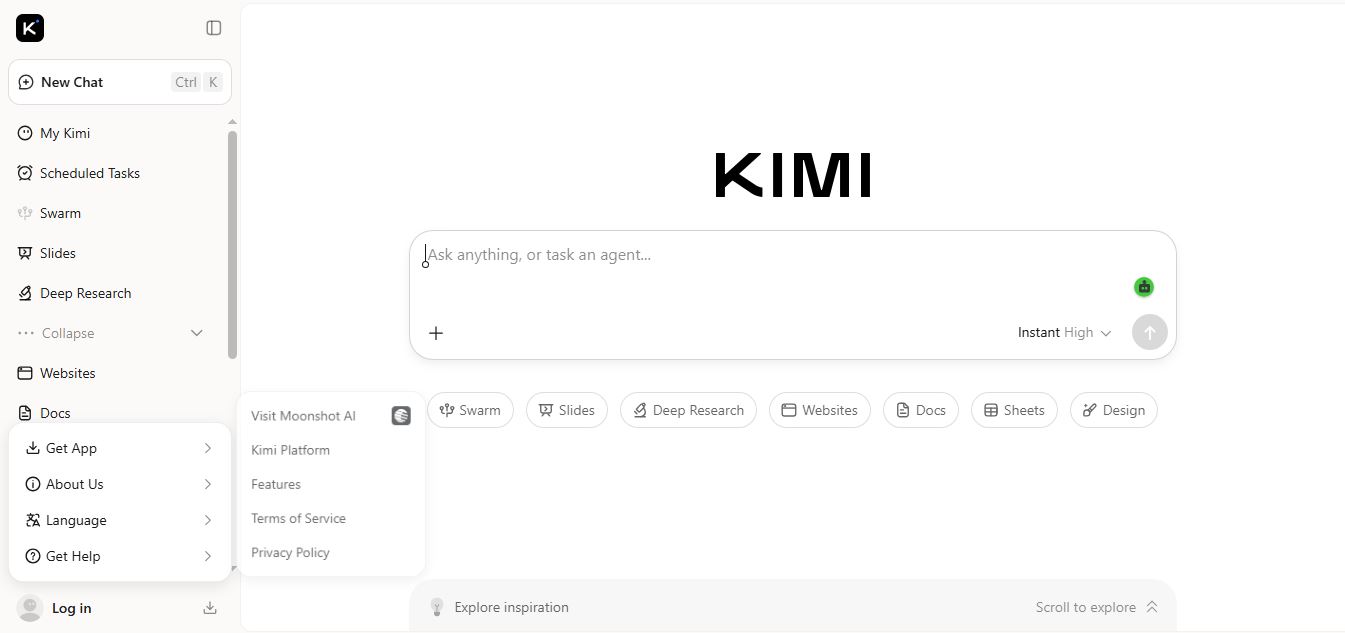
Kimi AI
Kimi AI is an advanced AI assistant developed by Moonshot AI that helps you chat, research, write, code, and automate tasks in one place. It supports web search, file analysis, and multimodal inputs, and can even run autonomous “agent” workflows to complete complex tasks end-to-end.
Freemium
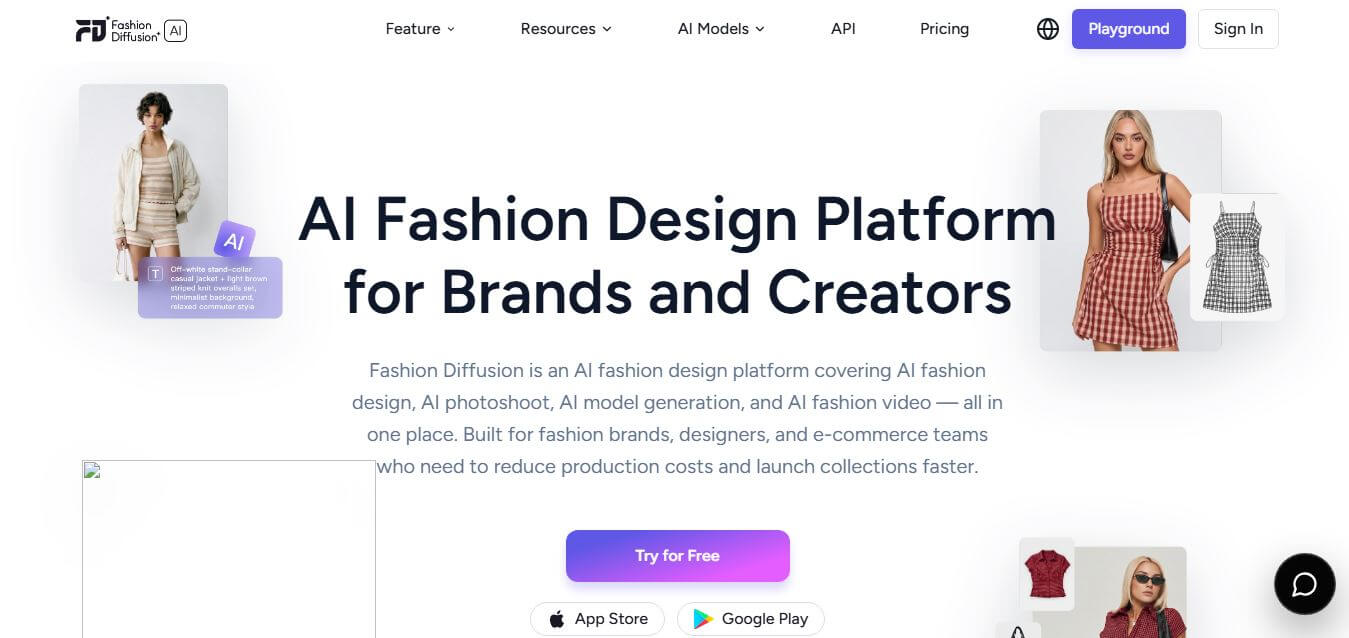
Fashion Diffusion AI
Fashion Diffusion is an AI-powered fashion design platform that helps brands and designers create clothing designs, virtual try-ons, AI models, product photos, and marketing visuals faster and cost-effectively.
Paid
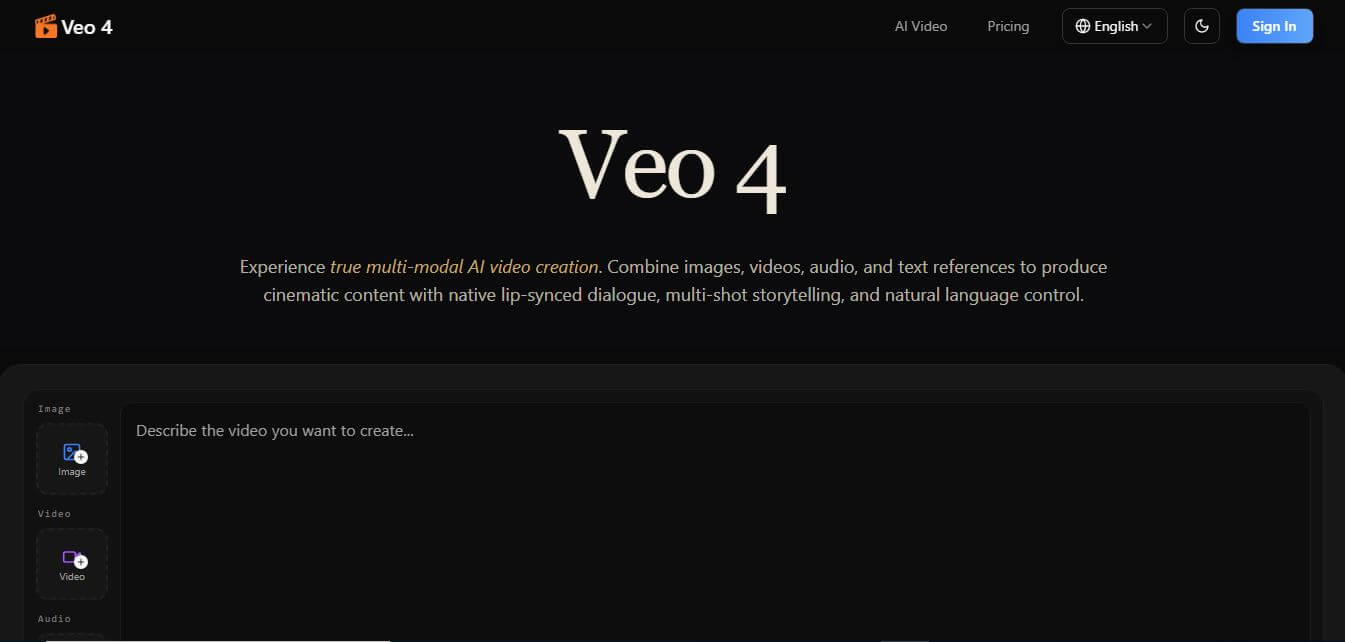
Veo 4
Veo 4 AI is an AI video creation platform that generates dramatic videos from text, images, audio, and video prompts using realistic motion and synchronized sound.
Paid
Alternatives
Alternatives to Natural Language Playlist
Natural Language Playlist helps users generate custom music playlists using everyday language. Simply describe your mood, activity, or vibe, and the AI instantly curates a tailored playlist for streaming and discovery.
 4.9
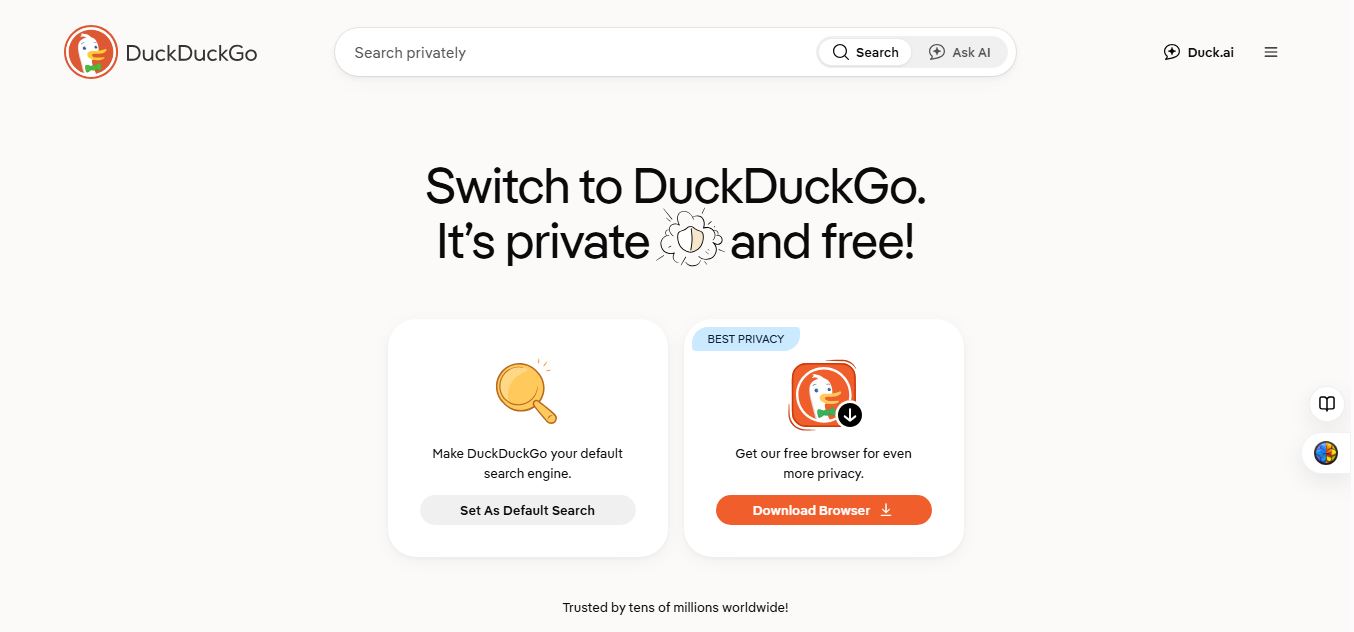
4.9DuckDuckGo
Search Engine
DuckDuckGo is a privacy-focused search engine and browser that helps users search the web without tracking their searches or browsing history. It blocks ads, trackers, and cookies while offering private AI features through Duck.ai, giving users a more secure and privacy-friendly alternative to traditional search and browsing.
 4.9
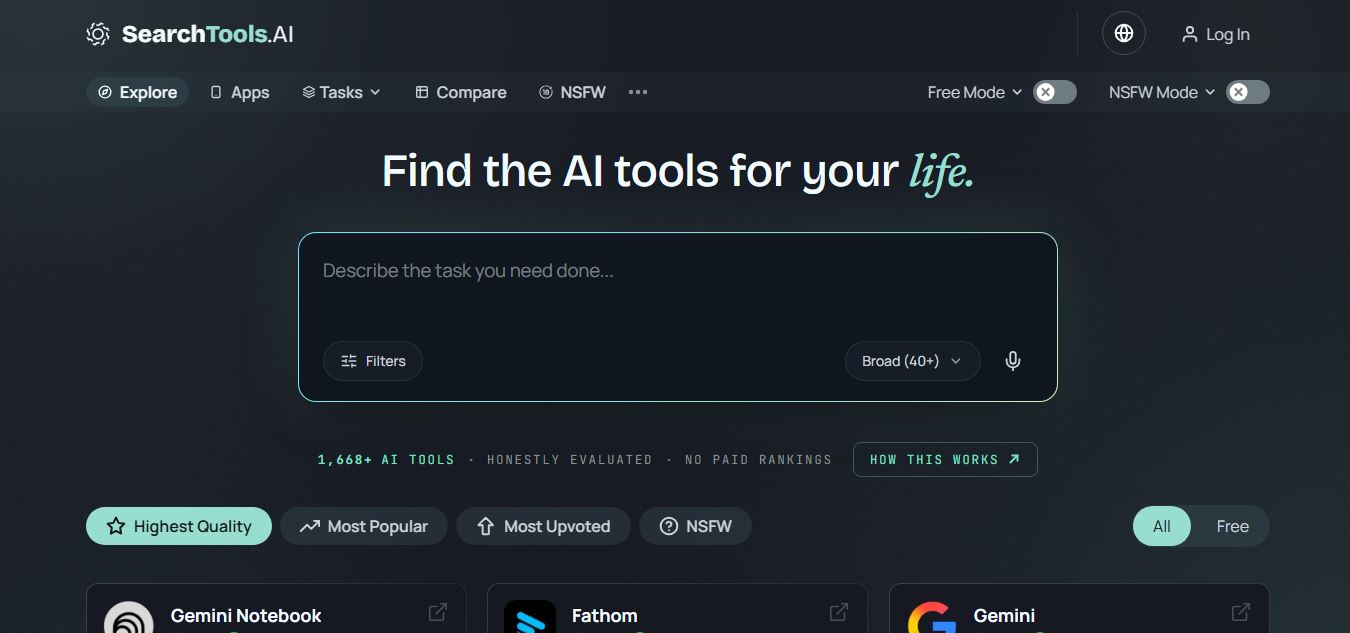
4.9SearchTools AI
Search Engine
SearchTools.ai is an AI tools discovery platform that helps users find, compare, and evaluate AI software across hundreds of categories. It ranks tools based on real reviews, usage signals, and adoption data, enabling faster research and better decisions without paid placements or biased rankings.
 4.8
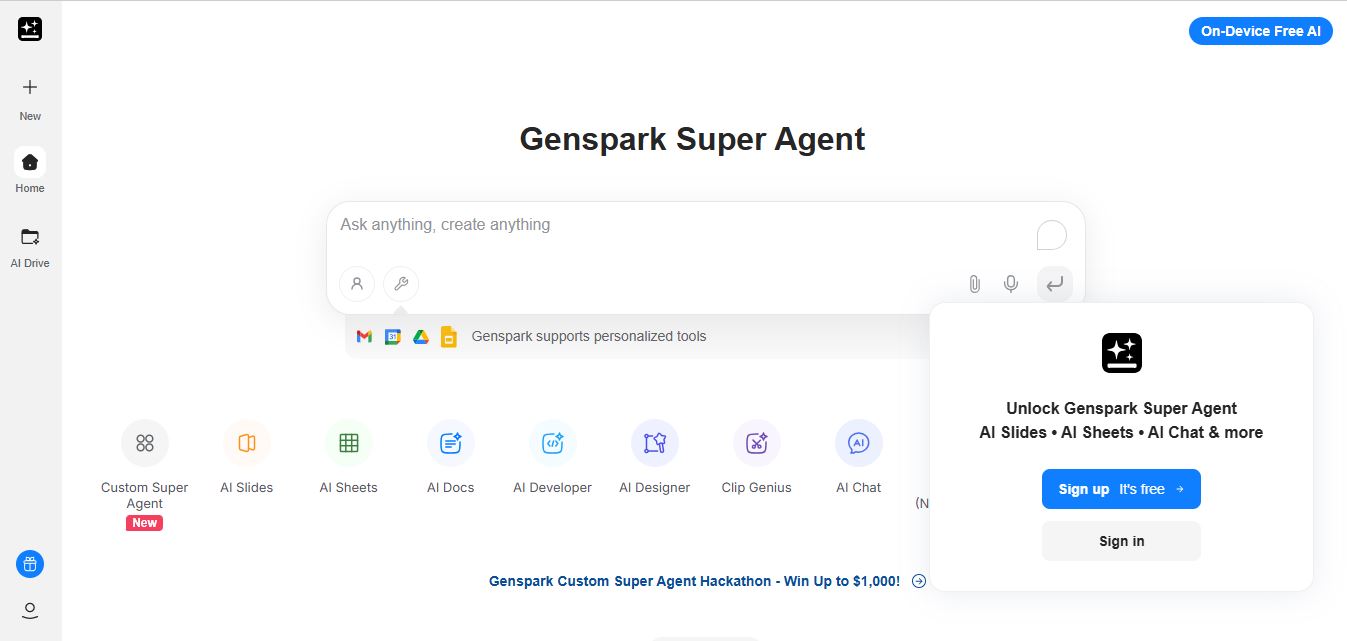
4.8Genspark
AI Agent
Genspark is an AI-powered all-in-one workspace built around autonomous agents that can research, write, analyze data, and create content from a single prompt. Its “Super Agent” plans and executes tasks across tools, delivering complete outputs like presentations, reports, code, and media automatically.
 4.7
4.7Refsee
Search Engine
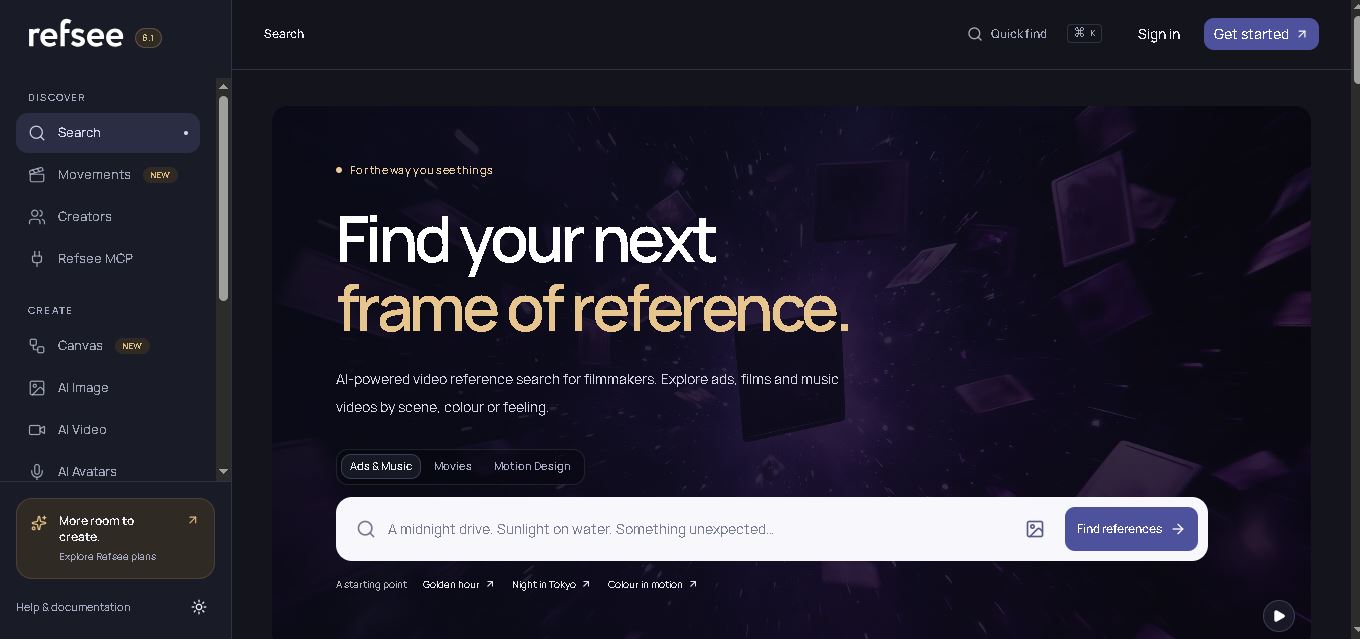
Refsee is a visual research and creative workspace for discovering video references by scene, color, framing, title, or feeling. It helps filmmakers and creative professionals find relevant frames, organize inspiration into moodboards, and transform visual references into original creative concepts using AI-powered image, video, avatar, and editing features.
 4.9
4.9SearchGPT (ChatGPT Search)
Search Engine
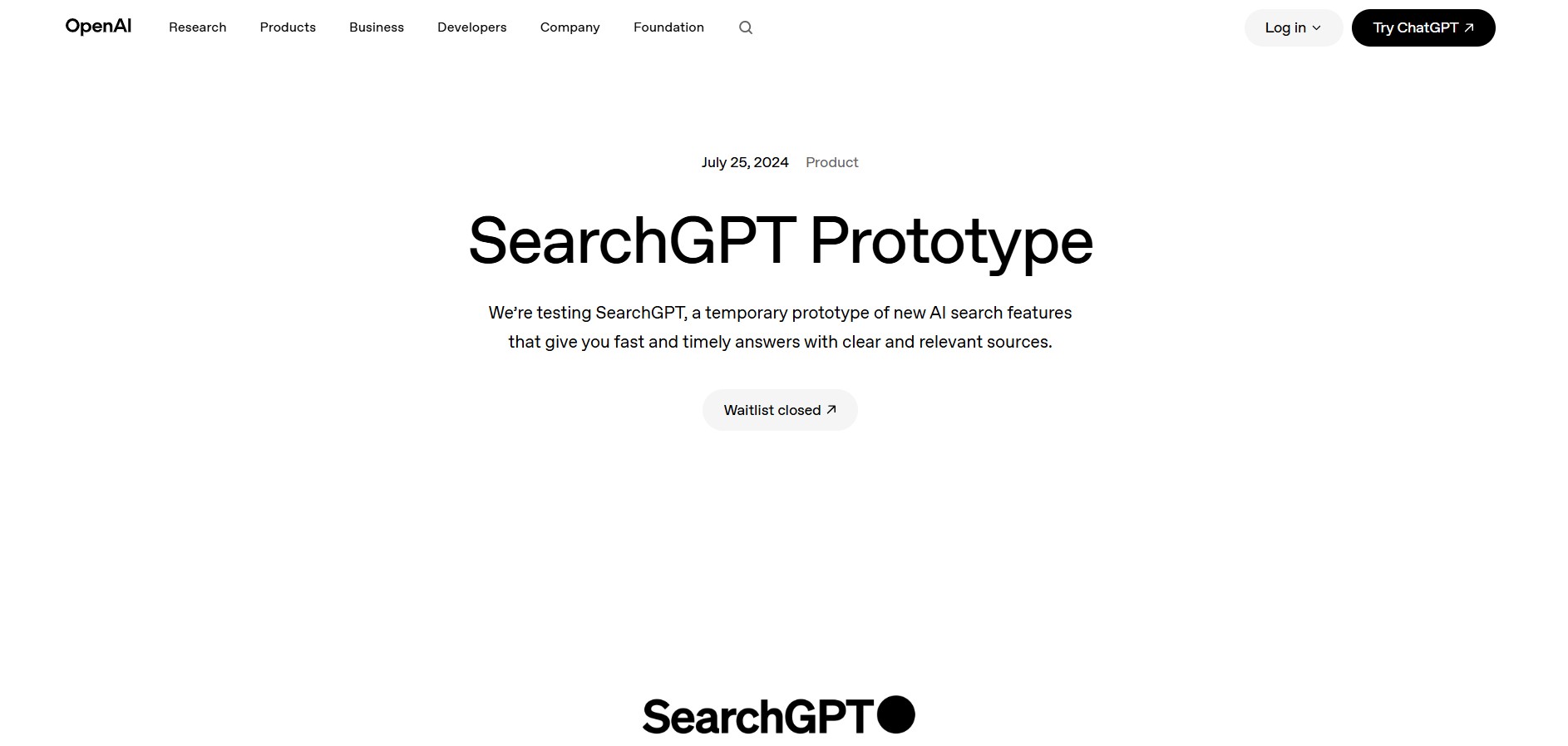
SearchGPT is OpenAI's AI-powered web search and real-time retrieval engine integrated into ChatGPT, delivering conversational, up-to-date web answers with in-line source citations, interactive maps, weather, financial widgets, and publisher attribution links.
 4.8
4.8GigaBrain
Search Engine
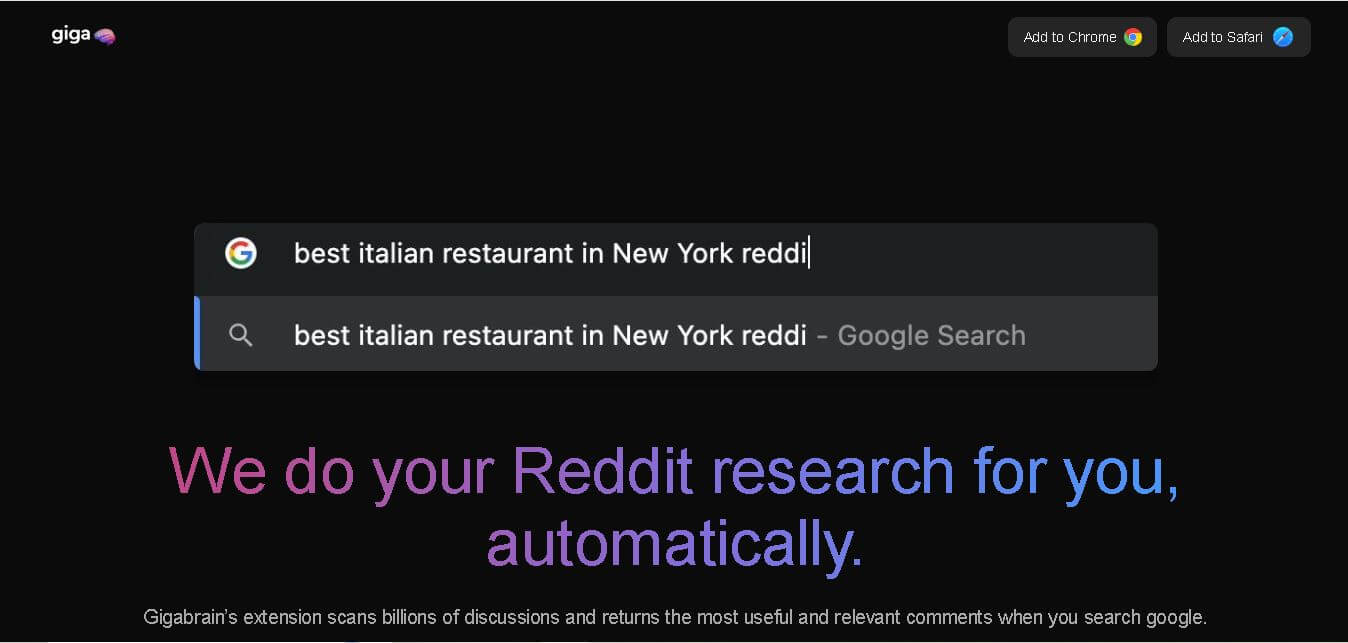
GigaBrain is a Reddit research and discovery tool built to surface useful community opinions, summarize discussions, and reduce repetitive browsing. Its browser extension brought Reddit insights into Google, Bing, and DuckDuckGo searches, while additional products supported deeper research, conversational follow-ups, product discovery, and Reddit trend monitoring for everyday users.
 4.7
4.7Brave Leo AI
Search Engine
Brave Leo is a privacy-focused AI assistant built directly into the Brave browser that helps you summarize webpages, generate content, translate text, and answer questions without leaving your tab. It doesn’t store chats or require an account, keeping your interactions secure and anonymous.
 4.8
4.8Microsoft Bing
Search Engine
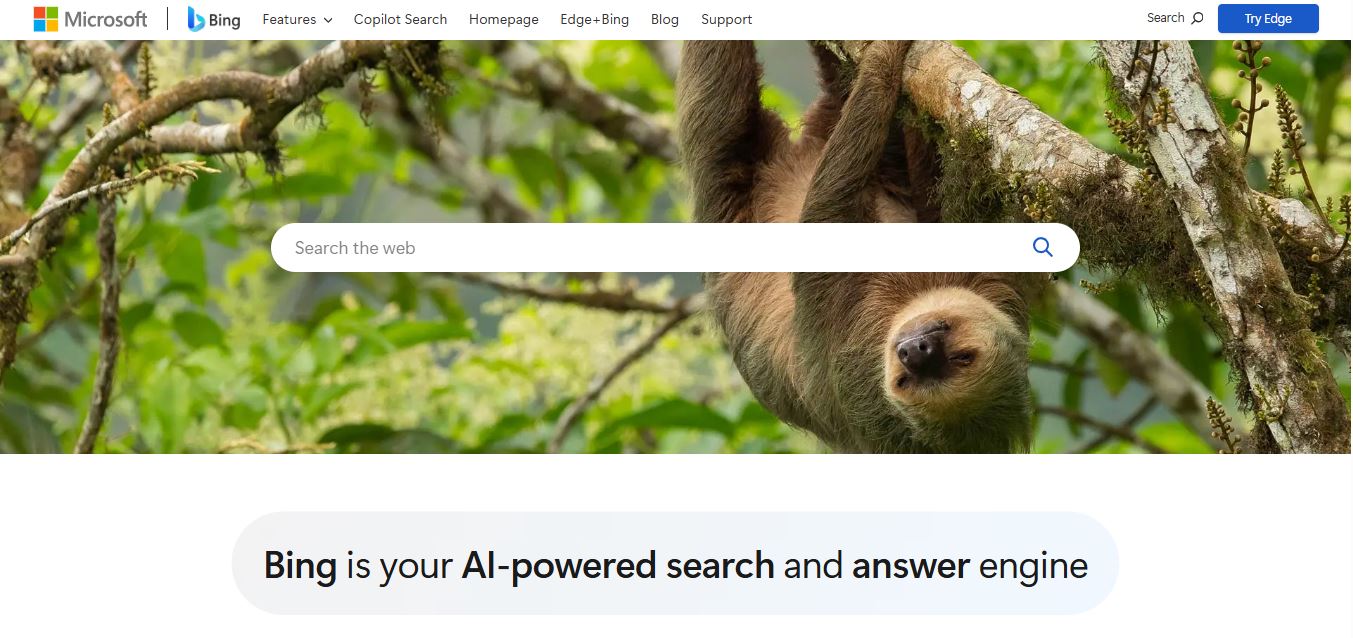
Microsoft Bing is an AI-powered search and answer engine that combines traditional web indexing with generative AI, Copilot conversational assistance, Image Creator, Visual Search, and Microsoft Rewards integration.
 4.9
4.9MemeCam
Fun
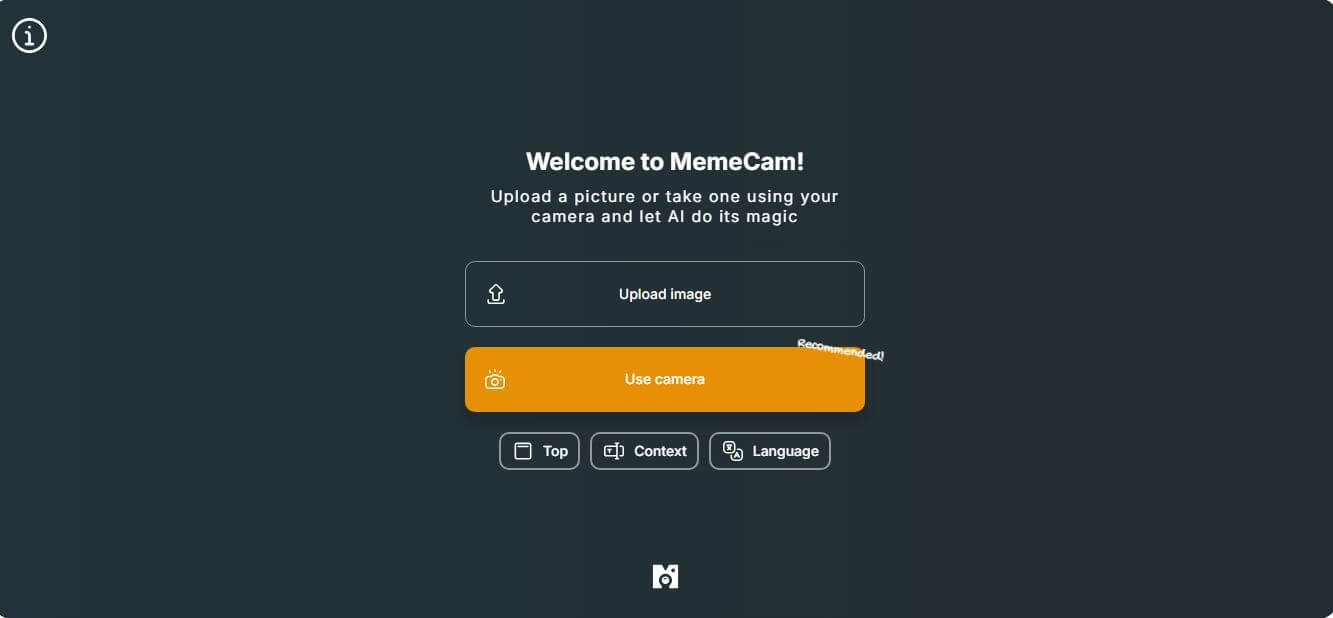
MemeCam is an AI-powered viral meme generator that combines real-time camera capture, computer vision, and GPT-4o multimodal reasoning to analyze your photos and instantly overlay witty, context-aware meme captions without storing your personal images.