
Blume
Blume is an AI-powered developer tool that helps you build, edit, and manage code using natural language. It acts like a coding assistant that can generate features, refactor code, and automate repetitive tasks, making software development faster and more accessible for teams and solo developers.

What is Blume?
Blume is an AI developer tool designed to help teams monitor, manage, and improve coding agents like Codex, Cursor, and Claude Code from a single interface. Instead of manually maintaining rules, skills, and context for each agent, Blume runs as a local “sidecar” that observes your agent sessions, tracks hidden configurations, and turns repeated corrections into structured rules or reusable skills. It gives full visibility into what each agent is doing, lets you review changes before applying them, and keeps everything stored locally for privacy. By continuously learning from real workflows and feedback, Blume helps reduce mistakes, prevent context drift, and ensure your AI agents stay aligned with how your codebase is actually meant to work.
Founded by Danish software engineer Peder Aaby and launched in September 2026, Blume tackles context rot at its root. Operating as a lightweight desktop sidecar that sits alongside Claude Code, Cursor, Codex, and terminal harnesses, Blume watches your active coding sessions entirely locally. When developers issue repetitive corrections, nudges, or frustrated all-caps prompts, Blume's thematic clustering engine detects the pain threshold, evaluates recurrence patterns, and proposes concrete patches to your project's rules (such as
CLAUDE.md,.cursorrules, or custom skills) before agents make the same mistake twice. Blume operates on a free, privacy-first local model where no source code or chat transcripts ever leave your machine.
- Founder & Creator: Peder Aaby
- Platform Availability: Native Desktop Sidecar for macOS, Linux & Windows
- Harness & Agent Support: Claude Code, Cursor, OpenAI Codex 3.0 & Custom CLI Agents
Use Cases:
- Eliminating repetitive corrections by automatically converting recurring developer nudges into durable repository rules
- Detecting architectural drift and anti-patterns across high-velocity vibe coding and multi-file agent refactors
- Auditing and pruning stale, bloated, or conflicting instruction files (
.cursorrules,CLAUDE.md, agent hooks) - Tracking token expenditures, session efficiency, and prompt friction across multiple AI agent providers
- Maintaining codebase standards across distributed teams without spending hours manually editing agent documentation
Technology:
- Local sidecar observation engine analyzing session transcripts, user corrections, and token burn in real time
- Thematic clustering algorithm grouping similar developer interventions to identify persistent failure patterns
- Pain & recurrence scoring mechanism (triggering rule proposals at 5 thematic repeats or 2 high-pain frustration events)
- Zero-telemetry local harness architecture ensuring all session analysis runs locally on-device
Target Users:
- Solo builders and vibe coders running intensive daily agent coding sessions who are tired of repeating instructions
- Full-stack software engineers using Claude Code, Cursor, and Codex on large, growing production codebases
- Engineering leads and architects enforcing consistent repository patterns and preventing AI code duplication
- AI tooling enthusiasts and prompt engineers designing custom agent skills, hooks, and MCP server integrations
Acquisition: Operates as an independent developer tools and agent infrastructure venture (Blume / blume.codes)

Key features of Blume
Blume's key platform features are
- Automated Rule & Skill Extraction: Watches ongoing agent sessions and extracts human intentions, corrections, and instructions, turning them into proposed rules and skills.
- Thematic Pain Clustering: Intelligently groups related corrections and evaluates them against pain thresholds—identifying problems through token spikes, repetitive retries, or explicit developer frustration.
- Human-in-the-Loop Rule Approval: Never silently modifies your codebase context; Blume generates structured diffs proposing updates to
CLAUDE.mdor.cursorrulesthat you review and approve with one click. - Context Rot & Conflict Detection: Maps your existing repository context graph, flagging obsolete instructions, contradictory rules, or overlapping skills that confuse agent reasoning.
- Unified Harness & Credit Tracking: Provides a single dashboard view tracking active rules, hooks, skill files, and token usage costs across Claude Code, Cursor, and Codex.
- Cross-Tool Interoperability: Bridges rules between different coding environments, ensuring lessons learned during Cursor sessions can be formatted for Claude Code or Codex.
- 100% Local Execution: Runs completely as a local desktop sidecar process using your local compute and LLM harness—no chats, code, or proprietary IP leave your machine.
- Lightweight Native Desktop Client: Clean, unobtrusive desktop utility supporting macOS, Windows, and Linux operating systems with zero background performance overhead.
Blume Pricing
Blume operates on a developer-first local freemium model, offering its core desktop sidecar for free alongside upcoming team governance features.
Community / Local Edition:
- $0 / Free: Downloadable desktop application for macOS, Windows, and Linux
- Full access to local session monitoring, thematic clustering, rule proposal diffs, and context graph visualization
- Runs entirely on-device utilizing your existing local developer harness and agent setups
Team & Enterprise Tiers (Roadmap):
- Team Cloud Synchronization: Shared team-wide rule repos, cross-developer skill sharing, centralized agent performance analytics, and enterprise repository governance
Disclaimer: Blume uses your local machine and existing agent CLI harnesses for session extraction. For downloads, documentation, and the latest releases, visit blume.codes.
Who is using Blume?
Blume is used by professional software engineers and AI-forward developers, including
- Full-Stack Vibe Coders: Maintaining momentum on ambitious solo apps without having their agents gradually regress into buggy architectural choices
- Claude Code & Cursor Power Users: Automating the continuous refinement of
CLAUDE.mdand.cursorrulesfiles based on real session feedback - Enterprise Engineering Leads: Preventing junior engineers and autonomous agents from violating internal API design patterns and conventions
- DevOps & Open-Source Maintainers: Codifying contributor guidelines and project idioms into enforceable agent skills directly from PR review comments
Best Blume Alternatives
Some of the strongest Blume alternatives include
- Nex (nex.ai - Organizational Context Layer & 47-Tool MCP Server)
- Cursor (Native
.cursorrulesContext Management) - Claude Code (Anthropic Native Memory &
CLAUDE.md) - Mem0 (AI Agent Memory Layer)
- Continue.dev (Custom Rules & Context Providers)
- Aider (Git-Centric Architect Mode)
Pros and Cons of Blume
Pros
- Solves agent drift by learning from developer corrections and converting them into persistent repository rules
- 100% local sidecar architecture guarantees complete privacy—no code or conversation data leaves your machine
- Thematic clustering prevents one-off comments from prematurely hardening into permanent rules
- Requires human review and approval for every proposed change, preventing agent configuration chaos
- Works across multiple coding environments including Claude Code, Cursor, and OpenAI Codex
Cons
- Newly launched tool (September 2026), with team synchronization and organization-level features still in early rollout
- Requires an active desktop environment alongside your terminal or editor rather than functioning purely as an invisible background daemon
- Effectiveness depends on consistent developer feedback and prompts during agent sessions
Why Choose Blume?
Every developer using AI coding agents eventually hits the same wall: the agent makes a mistake, the developer corrects it in chat, and three days later the agent makes the exact same mistake in another file. Manually updating rules files is tedious, and letting agents rewrite their own rules causes prompt bloat. Blume provides the missing feedback loop.
- Automatically turns repeated human corrections and frustration signals into actionable rule updates
- Prevents context rot by identifying stale and contradictory instructions inside your repository
- Keeps all processing entirely on your local machine without exposing code to external clouds
- Preserves engineering velocity by ensuring AI agents get progressively smarter as your project grows
Blume vs. Competitors
The main difference between Blume, Nex, Mem0, and manual .cursorrules lies in automated context extraction and local execution. While Mem0 is a remote API-based memory service, and Nex operates as an enterprise organizational context graph for revenue and GTM workflows, Blume is a local desktop sidecar dedicated to monitoring coding agent sessions, clustering developer corrections, and actively proposing maintenance updates to local rules and skills.
| Feature / Tool | Blume (blume.codes) | Nex (nex.ai) | Mem0 | Manual .cursorrules |
|---|---|---|---|---|
| Core Focus | Local Agent Session Monitoring & Rule Optimizer | Enterprise GTM Context & Knowledge Graph | Developer-Facing AI Memory Layer | Static Editor Configuration File |
| Execution Environment | Local Desktop Sidecar (Mac/Win/Linux) | Cloud Platform & MCP Server | Cloud API & Local Python SDK | Local Repository Root |
| Correction Learning | Automated thematic clustering & pain scoring | Cross-tool organizational ingestion | Explicit key-value API writes | Manual human typing & editing |
| Supported Editors/Agents | Claude Code, Cursor, Codex & CLI | Claude Code, Cursor, Windsurf | Any LLM Application via API | Cursor IDE only |
| Pricing Structure | Free Local Desktop App | Trial / Usage-based workflow plans | Free open-source / From $19/mo | Free / Open-Source |
| Best For | Developers stopping coding agents from repeating mistakes | RevOps & enterprise sales agent context | App developers building simple user memory | Developers configuring basic editor guidelines |
How do we rate Blume?
| Parameter | Rating (out of 5) |
|---|---|
| Correction Extraction & Clustering Intelligence | 4.9 |
| Privacy Architecture (100% Local Sidecar) | 5.0 |
| Agent Drift Prevention & Rule Maintenance | 4.9 |
| Cross-Agent Compatibility (Claude, Cursor, Codex) | 4.8 |
| Value for Money | 5.0 |
| Overall Score | 4.92 |
Blume Review
Blume addresses one of the most frustrating bottlenecks in agentic software engineering: the compounding decay of agent context as repositories expand. Instead of expecting developers to keep complex instruction files up to date or letting agents manage themselves, Blume intelligently tracks developer corrections, groups frustration signals, and suggests specific rule patches that require strict human approval. Its local-first, zero-telemetry architecture ensures sensitive code never leaves your workstation, making Blume an indispensable companion for developers operating at the frontier of AI pair programming.
Conclusion
Blume is a powerful AI coding agent sidecar designed to solve one of the biggest problems developers face today—agent drift and inconsistent context across sessions. Instead of relying on scattered prompts or manual rule updates, it observes your coding agent workflows (across tools like Claude Code, Codex, and Cursor), surfaces what each agent is doing, and turns repeated corrections into structured rules, skills, and improvements that persist over time. Its biggest strength lies in context maintenance and visibility—it tracks hidden files, rules, hooks, and usage while proposing fixes based on real developer behavior, all with full human approval and local-first privacy. By converting everyday feedback into a durable “rulebook,” it ensures agents stop repeating the same mistakes and gradually improve with each session.
FAQ
What is Blume Codes and how does it work?
Blume Codes is a desktop sidecar app that monitors AI coding agents and improves their performance. It observes agent sessions, tracks rules and workflows, and converts repeated corrections into reusable skills, helping agents produce more accurate and consistent code over time.
Who should use Blume Codes?
Blume Codes is ideal for developers, AI engineers, and teams using tools like Claude Code, Codex, or Cursor. It helps anyone managing multiple coding agents maintain consistency, reduce repeated mistakes, and streamline development workflows across projects.
What features does Blume Codes offer?
Blume Codes offers agent monitoring, rule and skill tracking, usage analytics, and automated improvement suggestions. It also provides visibility into hidden files, hooks, and configurations, giving developers a centralized view of how their coding agents operate.
How is Blume Codes different from other AI coding tools?
Unlike coding assistants that generate code, Blume Codes focuses on improving agent behavior. It learns from past sessions, identifies repeated issues, and suggests structured fixes, ensuring agents evolve and follow consistent project rules instead of repeating mistakes.
Can Blume Codes improve AI agent accuracy?
Yes, Blume Codes improves accuracy by turning repeated corrections into persistent rules or skills. This ensures agents remember best practices across sessions, reducing errors and helping them align better with project-specific requirements over time.
Is Blume Codes free or paid?
Blume Codes is currently free to use, with a desktop application available for macOS, Windows, and Linux. It processes data locally, meaning users can access core features without paying or sending sensitive code outside their device.
How does Blume Codes improve developer productivity?
Blume Codes improves productivity by reducing repetitive corrections and keeping agent context updated automatically. Developers spend less time managing AI behavior and more time building features, while agents become more reliable and aligned with project goals.
User Reviews
No reviews yet for Blume.
Featured Tools
Featured AI tools from TechShark
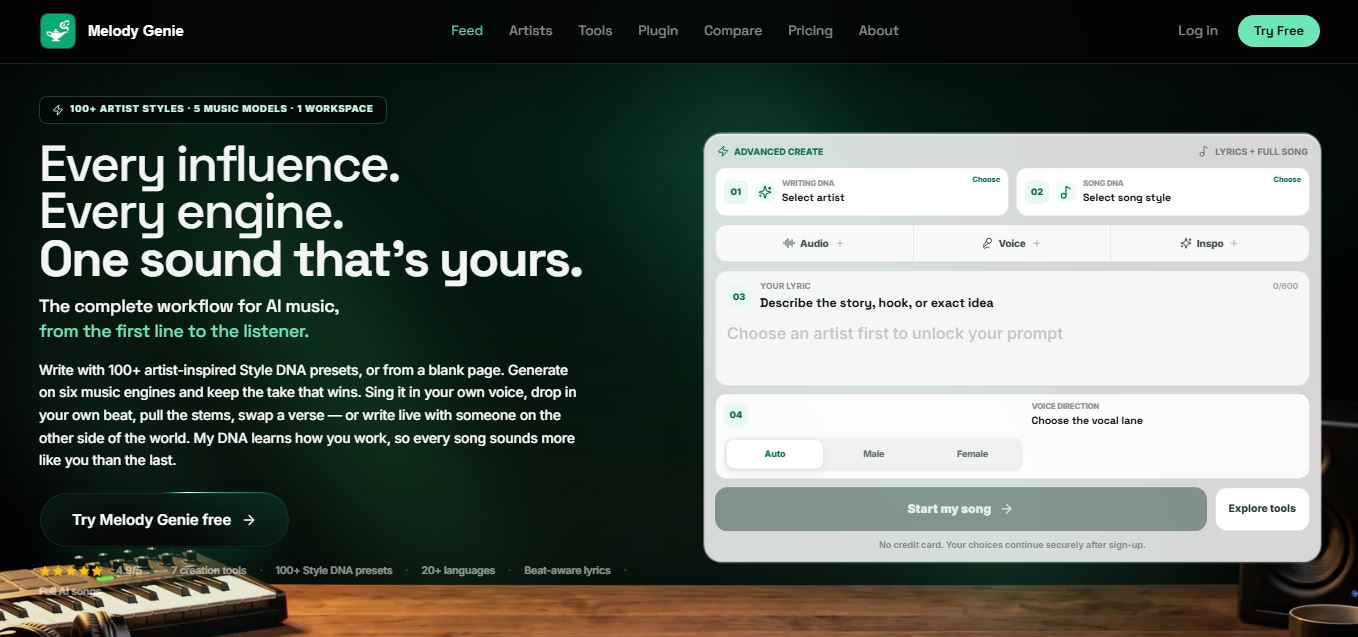
Melody Genie
MelodyGenie is an AI-powered music generator that creates original songs from simple text prompts. Users can choose styles, moods, and genres, then instantly generate melodies and full tracks, making it easy for creators, marketers, and hobbyists to produce custom music without musical expertise.
Freemium
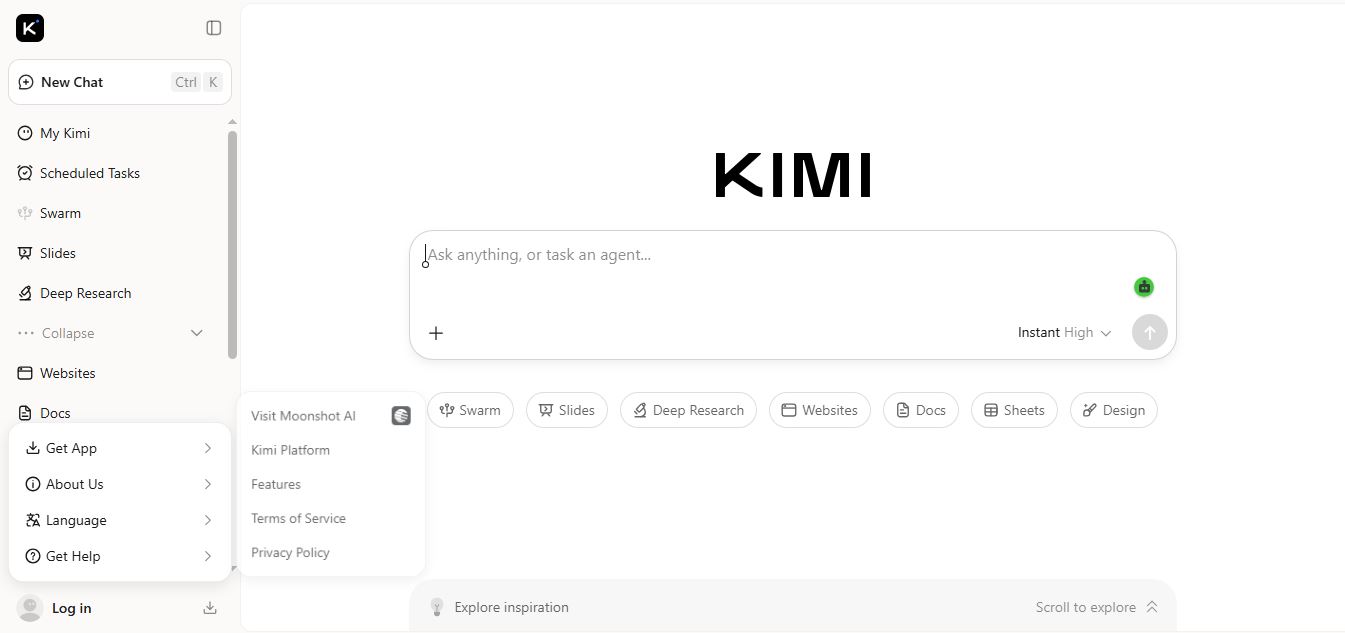
Kimi AI
Kimi AI is an advanced AI assistant developed by Moonshot AI that helps you chat, research, write, code, and automate tasks in one place. It supports web search, file analysis, and multimodal inputs, and can even run autonomous “agent” workflows to complete complex tasks end-to-end.
Freemium

Fashion Diffusion AI
Fashion Diffusion is an AI-powered fashion design platform that helps brands and designers create clothing designs, virtual try-ons, AI models, product photos, and marketing visuals faster and cost-effectively.
Paid
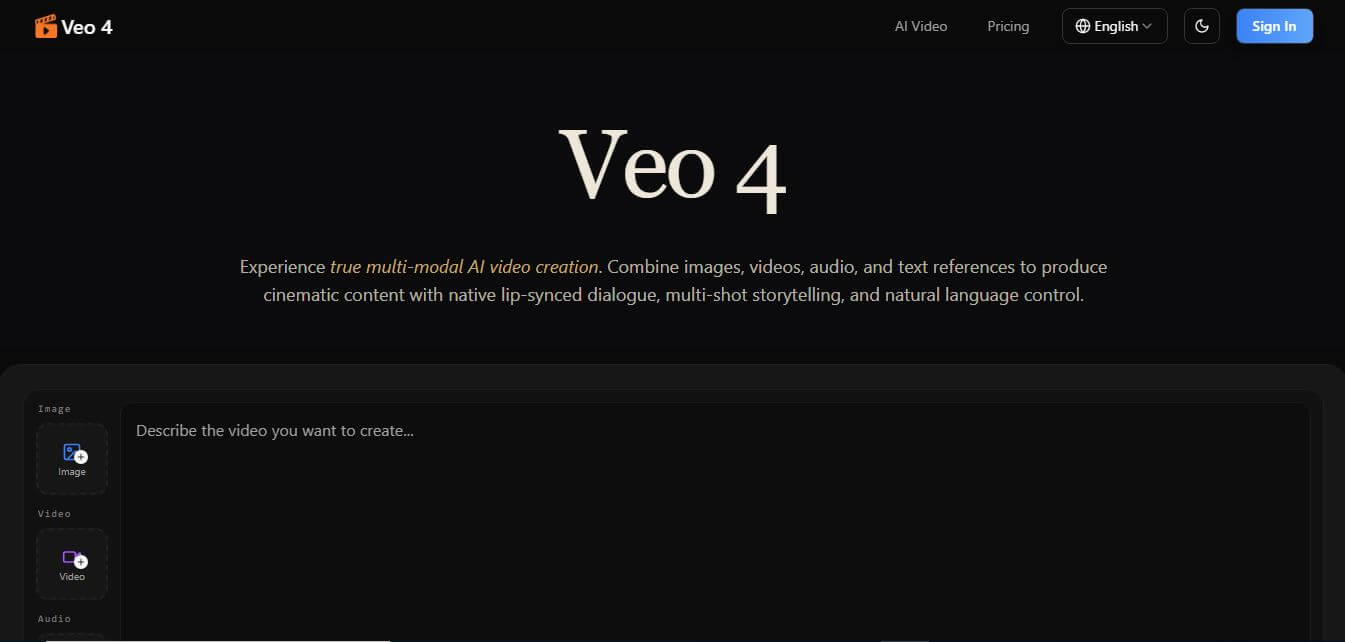
Veo 4
Veo 4 AI is an AI video creation platform that generates dramatic videos from text, images, audio, and video prompts using realistic motion and synchronized sound.
Paid
Alternatives
Alternatives to Blume
The best Blume alternatives include Nex (nex.ai), native Cursor .cursorrules, Claude Code CLAUDE.md memory, Mem0, Continue.dev, and Aider. These tools manage context, prompt guidelines, and agent memory. While Blume specializes in a 100% local desktop sidecar that monitors active coding sessions across Claude Code, Cursor, and Codex to cluster developer corrections and propose updated rules and skills, alternatives like Nex focus on enterprise GTM organizational context graphs, and Mem0 operates as a cloud-hosted user memory API.
Taplink
AI Agent
Taplink (taplink.at) is a versatile micro-landing page and link-in-bio builder designed for social media creators, influencers, small business owners, and digital marketers to convert Instagram, TikTok, and social traffic into sales, leads, and website visits.
Sprinklr
AI Agent
Sprinklr (sprinklr.com) is an enterprise-grade Unified Customer Experience Management (Unified-CXM) platform powered by AI that enables global enterprises to manage social media publishing, AI customer service, social listening, audience insights, and digital marketing across 30+ digital and social channels.
Grin
AI Agent
Grin (grin.co) is a premier enterprise creator management and e-commerce influencer platform designed for direct-to-consumer (DTC) brands and marketing teams to discover creators, automate product seeding, track affiliate revenue, manage content rights, and scale creator-led growth.
CreatorIQ
AI Agent
CreatorIQ (creatoriq.com) is a premier enterprise-grade influencer marketing and creator economy platform designed for global Fortune 500 brands and large enterprises to discover creators, manage end-to-end campaigns, automate relationship workflows, and measure earned media value (EMV) at scale.
Aspire
AI Agent
Aspire (aspire.io) is an all-in-one influencer marketing, affiliate management, and UGC (User-Generated Content) platform designed for e-commerce brands and agencies to discover creators, manage product seeding workflows, automate affiliate tracking, and scale creator-led content.
HypeAuditor
AI Agent
HypeAuditor (hypeauditor.com) is an enterprise-grade AI influencer marketing, audience analytics, and fraud detection platform designed for e-commerce brands, agencies, and marketing professionals to discover creators, verify follower authenticity, track multi-channel campaigns, and analyze market trends across Instagram, TikTok, YouTube, X (Twitter), and Twitch.
Upfluence
AI Agent
Upfluence (upfluence.com) is an enterprise-grade AI influencer marketing, affiliate management, and creator CRM platform that enables e-commerce brands and marketing agencies to discover creators, identify organic customer influencers, send product seeding, manage affiliate sales, and track ROI.
 4.9
4.9Talkwalker
AI Agent
Talkwalker is a consumer intelligence and social listening solution that helps brands track online mentions, analyze audience sentiment, monitor competitors, and discover emerging trends. It combines social media analytics, media monitoring, customer feedback, and AI-powered insights to support marketing, public relations, reputation management, and data-driven business decisions across global markets.
 5.0
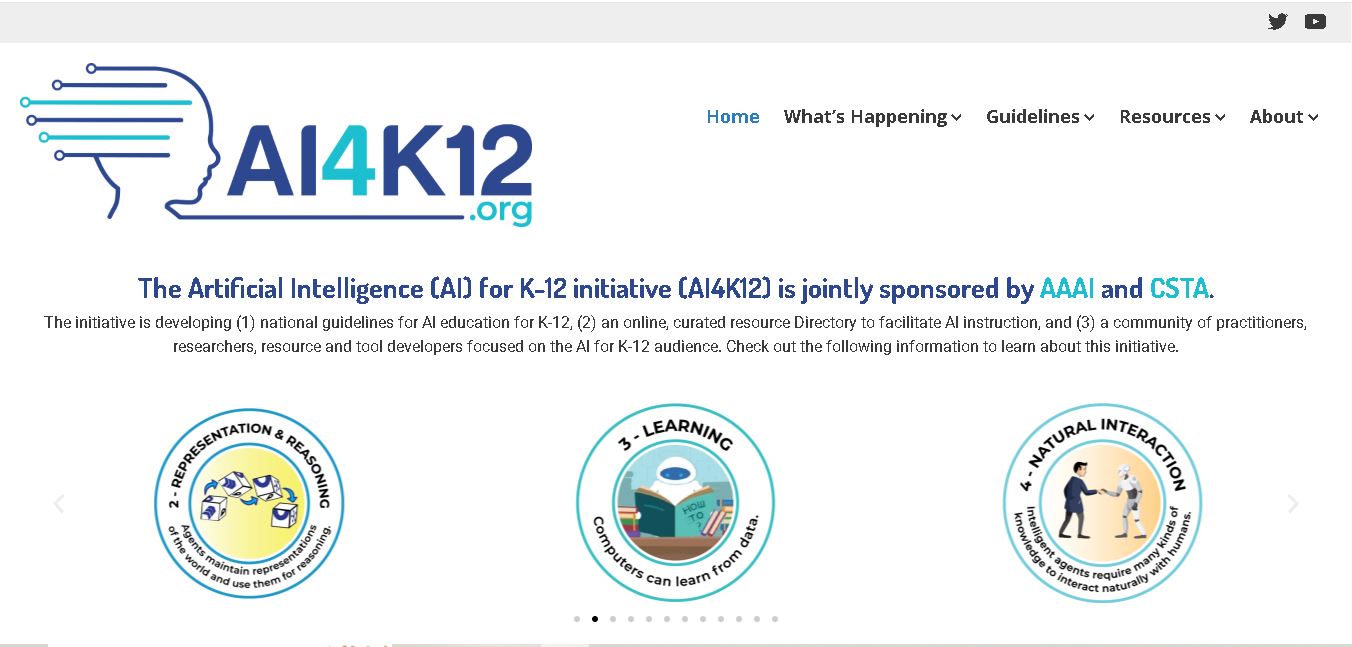
5.0AI4K12
AI Agent
AI4K12 is an educational initiative focused on bringing artificial intelligence into K–12 classrooms. It provides grade-level learning guidelines, curated teaching resources, and the Five Big Ideas framework. Designed for educators and curriculum developers, AI4K12 supports age-appropriate AI instruction and helps students understand how intelligent technologies work and affect society.