Authorizer
Authorizer is an open-source, self-hosted authentication and authorization platform that lets you manage user logins, permissions, and access control using your own database. It supports OAuth2, OpenID Connect, social logins, role-based and fine-grained authorization, and APIs like GraphQL, REST, and gRPC for flexible integration
What is Authorizer?
Authorizer is an open-source, self-hosted authentication and authorization platform that lets developers build secure login systems while keeping full control over user data. Instead of relying on third-party identity providers, it connects directly to your own database and supports modern standards like OAuth2 and OpenID Connect, along with features such as social logins, role-based access control, multi-factor authentication, and passwordless login. It also includes fine-grained authorization powered by an embedded OpenFGA engine, allowing apps and even AI systems to enforce precise permissions at a detailed level. Designed for flexibility and security, Authorizer helps teams implement production-ready auth systems quickly without vendor lock-in.
Created by indie software engineer Lakhan Samani, Authorizer is written in Go for high performance and low memory overhead. Supporting 13+ SQL and NoSQL databases (including PostgreSQL, MySQL, SQLite, MongoDB, and DynamoDB), Authorizer provides out-of-the-box support for passwordless magic links, social logins, multi-factor authentication (TOTP/SMS/Email), fine-grained ReBAC permissions via embedded OpenFGA, Enterprise SSO (SAML 2.0/OIDC), and SCIM 2.0 provisioning—all completely free and open-source under the Apache-2.0 license with optional managed cloud tiers.
- Creator / Founder: Lakhan Samani
- Core Tech Stack: Golang (Gin), GraphQL & REST APIs, React Component Library
- License: Apache-2.0 License (100% Free & Open-Source)
Use Cases:
- Replacing proprietary identity platforms (Auth0, Clerk, Cognito) to eliminate per-MAU subscription bills
- Deploying a self-hosted auth service directly alongside existing databases (Postgres, MySQL, DynamoDB, MongoDB) for data sovereignty
- Implementing fine-grained authorization (ReBAC) and role-based access control (RBAC) in modern B2B SaaS applications
- Adding drop-in authentication screens to React, React Native, or universal JavaScript frontends in minutes
- Securing microservices and cloud workloads using machine-to-machine (M2M) tokens and Kubernetes workload identities
Technology:
- Lightweight, high-concurrency Go backend utilizing Gin web framework with GraphQL and REST endpoints
- Multi-database storage adapter layer supporting 13+ backends (PostgreSQL, MySQL, SQLite, YugabyteDB, MariaDB, DynamoDB, MongoDB, Couchbase)
- Embedded OpenFGA relationship-based access control engine, Redis session caching, and secure HTTP-only cookie/JWT token architecture
Target Users:
- Full-stack engineers and backend developers seeking an unopinionated, database-agnostic authentication engine
- B2B SaaS builders looking for enterprise SSO (SAML/OIDC), SCIM directory sync, and org multi-tenancy
- Security leads requiring on-premise, air-gapped, or VPC compliance deployment (HIPAA, GDPR, SOC 2)
- Indie hackers and startup founders wanting production-grade auth without paying monthly active user (MAU) tax
Acquisition: Operates as an independent open-source developer project and software platform (Authorizer.dev)

Key features of Authorizer
Authorizer's key features are
- Bring Your Own Database (BYODB): Connects directly to 13+ databases including PostgreSQL, MySQL, SQLite, SQL Server, MongoDB, Cassandra, DynamoDB, and PlanetScale.
- Comprehensive Auth Methods: Supports traditional email/password, passwordless magic links, email OTP, SMS OTP (Twilio), and social OAuth (Google, GitHub, Facebook, LinkedIn, Apple).
- Multi-Factor Authentication (MFA): Out-of-the-box support for TOTP authenticator apps (Google Authenticator, Authy), SMS verification codes, and email verification.
- Fine-Grained Authorization (ReBAC & RBAC): Combines standard role-based access control with relationship-based access control (ReBAC) powered by embedded OpenFGA.
- Enterprise SSO & SCIM: Supports SAML 2.0 (as both Service Provider and Identity Provider), OIDC brokering, verified corporate domain routing, and SCIM 2.0 user/group provisioning.
- Machine-to-Machine (M2M) & Workload Identity: Issue client credentials and verify secretless workload identities via Kubernetes ServiceAccount tokens on EKS, GKE, and AKS.
- Multi-Framework SDKs & UI Components: Universal JavaScript SDK, React/React Native UI component libraries, and SDKs for Python and Go.
- One-Click Deployment: Ready-to-run Docker images, Helm charts for Kubernetes, and single-click templates for Railway, Render, Koyeb, and Heroku.
Authorizer Pricing
Authorizer is built on a community-first open-source core with zero user counts or licensing fees for self-hosted instances.
Self-Hosted (Free & Open Source):
- $0 / Free Forever (Apache-2.0 License): Unlimited users, unlimited logins, and no monthly active user (MAU) charges
- Full access to all authentication recipes, 13+ database connectors, enterprise SSO/SAML, ReBAC authorization, and Docker/Kubernetes deployment assets
Managed Cloud & Enterprise Support:
- Optional commercial cloud hosting tiers, dedicated production support SLAs, custom compliance deployments, and priority architectural guidance for enterprise organizations
Disclaimer: For current managed cloud availability, production support contracts, and architectural consulting, please visit the official Authorizer portal at authorizer.dev.
Who is using Authorizer?
Authorizer is used by developers and businesses globally, including
- SaaS Startups: Launching customer authentication and team role management without signing recurring per-user IDaaS contracts
- Enterprise IT & Engineering Teams: Centralizing internal corporate access with SAML 2.0 SSO, SCIM provisioning, and multi-tenant domain routing
- Fintech & Healthcare Companies: Meeting stringent data residency regulations by storing credentials exclusively inside private cloud VPCs
- Indie Developers & Open-Source Projects: Embedding drop-in login screens into React, React Native, and Node.js applications in minutes
Best Authorizer Alternatives
Some of the strongest Authorizer alternatives include
- SuperTokens
- Ory (Kratos / Keto)
- Keycloak
- Clerk
- Auth0 by Okta
- Supabase Auth (GoTrue)
Pros and Cons of Authorizer
Pros
- Completely free and open source with zero per-user or monthly active user (MAU) subscription costs
- Supports 13+ relational and NoSQL databases, eliminating forced migrations to a single database engine
- Fast Golang architecture delivers low memory utilization and millisecond request latencies
- Native enterprise capabilities: SAML 2.0, SCIM 2.0, multi-tenancy, and workload identity out of the box
- Integrated relationship-based access control (ReBAC) powered by OpenFGA handles complex permission graphs
Cons
- Self-hosting requires engineering teams to manage infrastructure updates, database migrations, and Redis caches
- Community ecosystem and third-party pre-built UI themes are smaller than market incumbents like Auth0 or Clerk
- Configuration in v2 shifted strictly to CLI startup arguments, requiring structured container orchestration setup
Why Choose Authorizer?
Most authentication platforms either lock your user data into expensive proprietary clouds with escalating MAU tiers or require heavyweight, complex enterprise setups like Java-based Keycloak. Authorizer provides a modern, lightweight middle ground.
- Keeps all sensitive user data directly inside your existing application database
- Protects your budget from surprise bills as your consumer or B2B user base scales
- Combines modern GraphQL/REST APIs with ready-to-use React component libraries
- Provides enterprise SAML, SCIM, and fine-grained OpenFGA authorization without enterprise paywalls
Authorizer vs. Competitors
The main difference between Authorizer, SuperTokens, Keycloak, and Auth0 lies in database flexibility, resource footprint, and pricing philosophy. While Auth0 charges steep per-MAU rates, Keycloak is a resource-intensive enterprise Java application, and SuperTokens requires dedicated database schemas. Authorizer is a lightweight Go service that connects to 13+ existing databases with zero per-user licensing fees.
| Feature / Tool | Authorizer (authorizer.dev) | SuperTokens | Keycloak | Auth0 |
|---|---|---|---|---|
| Core Focus | Self-Hosted Lightweight Auth & ReBAC | Modular Open-Source Auth Architecture | Enterprise Identity & Access Management | Managed Cloud Identity Platform (IDaaS) |
| Language / Runtime | Go (Gin Server) | Java Core / Node.js SDK | Java (Quarkus) | Cloud Hosted (SaaS) |
| Supported Databases | 13+ (Postgres, MySQL, Mongo, DynamoDB) | Postgres, MySQL | Postgres, MySQL, Oracle, MSSQL | Managed Cloud Silo |
| Fine-Grained Auth | ReBAC via embedded OpenFGA | RBAC / User roles | Fine-grained policies (Uptake) | Fine-Grained Authorization (FGA) |
| Pricing Structure | 100% Free Open Source (Apache-2.0) | Free OSS / Cloud from $29/mo | Free Open Source (Apache-2.0) | Free up to 7.5k MAU / Paid tiers |
| Best For | Devs wanting multi-database self-hosted auth | Teams needing recipe-based auth customization | Large legacy IT & enterprise architectures | Teams wanting zero-maintenance cloud auth |
How do we rate Authorizer?
| Parameter | Rating (out of 5) |
|---|---|
| Database Versatility & Backend Support | 5.0 |
| Authentication & MFA Feature Breadth | 4.9 |
| Enterprise Readiness (SAML, SCIM, Workload ID) | 4.8 |
| Developer Experience & SDK Simplicity | 4.8 |
| Value for Money (Free Open Source) | 5.0 |
| Overall Score | 4.90 |
Authorizer Review
Authorizer delivers a robust and liberating identity layer for the modern developer toolkit. By refusing to compromise on data control or force proprietary database locks, it provides teams with a lightweight, high-performance Go authentication server that can be deployed in minutes. With built-in support for relationship-based access control (ReBAC) via OpenFGA, comprehensive MFA, enterprise SSO, and SCIM 2.0, Authorizer is one of the most capable open-source alternatives to commercial IDaaS giants.
Conclusion
Authorizer is a powerful open-source authentication and authorization platform that gives developers full control over their identity layer by allowing them to self-host and manage users in their own database rather than relying on third-party services. It supports modern standards like OAuth2 and OpenID Connect, along with features such as social logins, passwordless authentication, role-based access control, and fine-grained authorization powered by an embedded OpenFGA engine. Its biggest strength lies in flexibility and ownership—developers can integrate it into any stack using GraphQL, REST, or gRPC APIs while maintaining data privacy, cost predictability, and customization. With added capabilities like multi-factor authentication, passkeys, and even permission-aware AI integrations via MCP, it goes beyond basic auth to support modern AI-driven applications.
FAQ
What is Authorizer.dev?
Authorizer.dev is an open-source authentication and authorization platform that you can self-host. It lets you manage user login, permissions, and identity while keeping all user data in your own database instead of relying on third-party services.
How does Authorizer work?
Authorizer runs as a standalone service that connects to your database and handles authentication flows like login, signup, and session management. It exposes APIs (GraphQL, REST, and gRPC) so you can integrate it into any app or backend.
What can you do with Authorizer?
You can implement login systems, manage user roles, enable social logins, add multi-factor authentication, and control access to APIs or resources—all from one platform.
Does Authorizer support OAuth and SSO?
Yes, it supports OAuth 2.0 and OpenID Connect, along with enterprise SSO using SAML and OIDC providers. This allows users to log in using services like Google, GitHub, or company identity systems.
Which databases does Authorizer support?
Authorizer supports 13+ databases including PostgreSQL, MySQL, MongoDB, DynamoDB, and more, so you can use the same database your app already relies on.
Is Authorizer secure?
Yes, it includes features like HTTP-only cookie sessions, JWT authentication, multi-factor authentication (TOTP, email, SMS), passkeys, and rate limiting to protect user accounts and data.
Is Authorizer free to use?
Yes, Authorizer is open-source (Apache-2.0), so you can use it for free. You only pay for the infrastructure where you host it.
What makes Authorizer different from tools like Auth0 or Firebase Auth?
Unlike hosted solutions, Authorizer is fully self-hosted and open-source. This means better control over data, no per-user pricing, and more flexibility for customization and compliance needs.
Who should use Authorizer.dev?
It’s ideal for developers, startups, and companies that want full control over authentication, need compliance-friendly data storage, or want to avoid vendor lock-in from hosted auth providers.
User Reviews
No reviews yet for Authorizer.
Featured Tools
Featured AI tools from TechShark
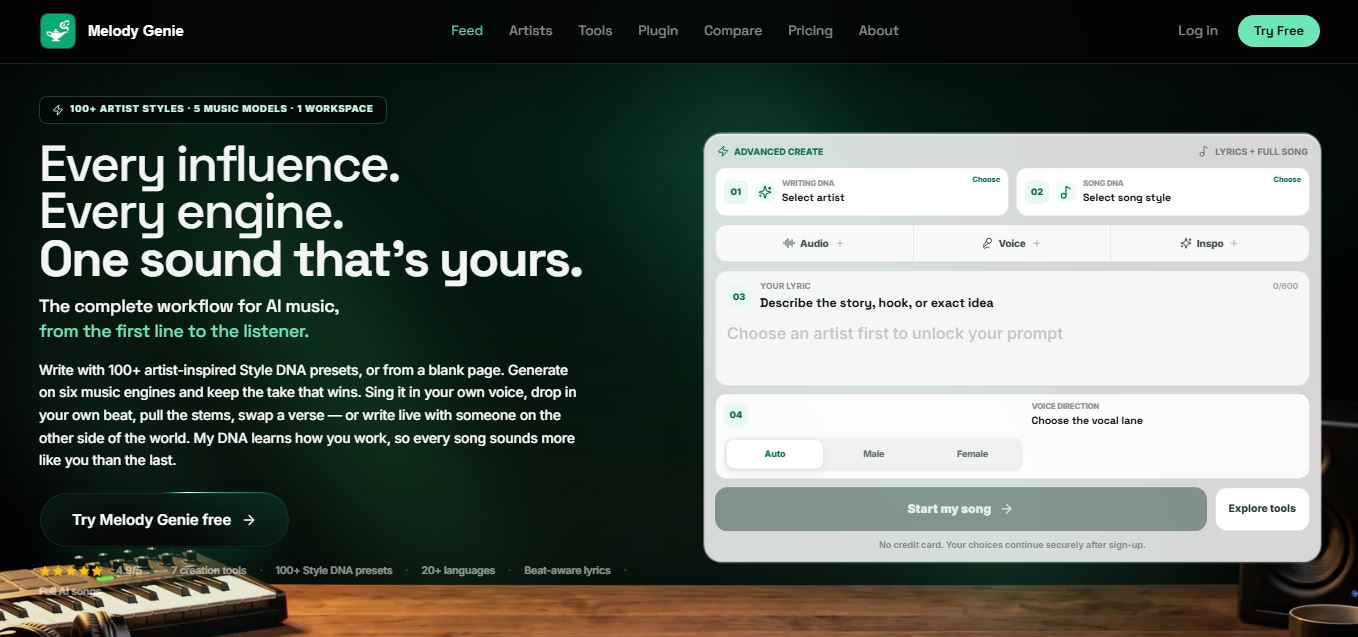
Melody Genie
MelodyGenie is an AI-powered music generator that creates original songs from simple text prompts. Users can choose styles, moods, and genres, then instantly generate melodies and full tracks, making it easy for creators, marketers, and hobbyists to produce custom music without musical expertise.
Freemium
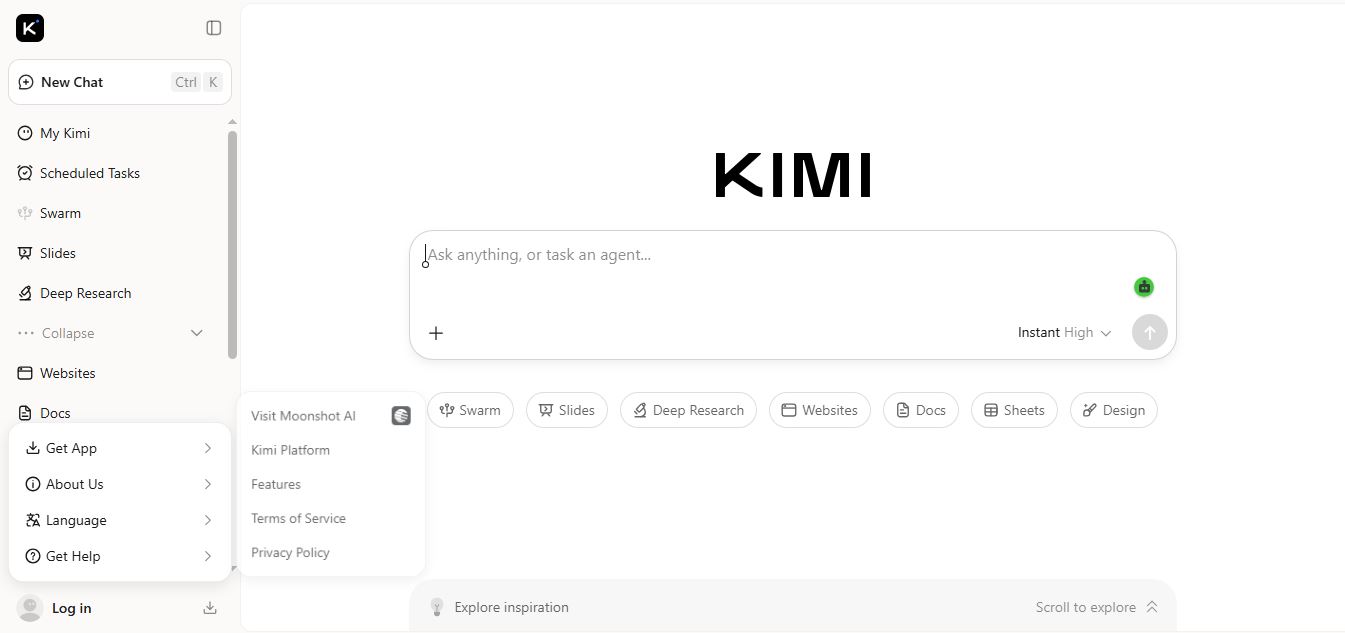
Kimi AI
Kimi AI is an advanced AI assistant developed by Moonshot AI that helps you chat, research, write, code, and automate tasks in one place. It supports web search, file analysis, and multimodal inputs, and can even run autonomous “agent” workflows to complete complex tasks end-to-end.
Freemium
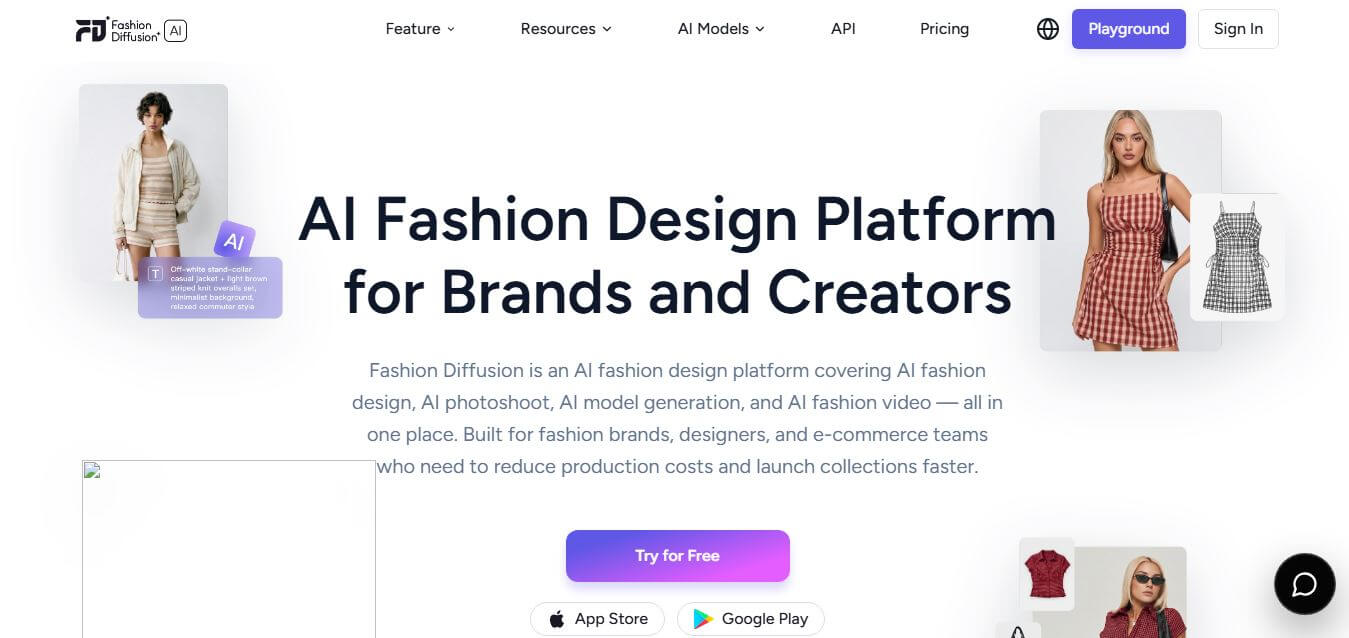
Fashion Diffusion AI
Fashion Diffusion is an AI-powered fashion design platform that helps brands and designers create clothing designs, virtual try-ons, AI models, product photos, and marketing visuals faster and cost-effectively.
Paid
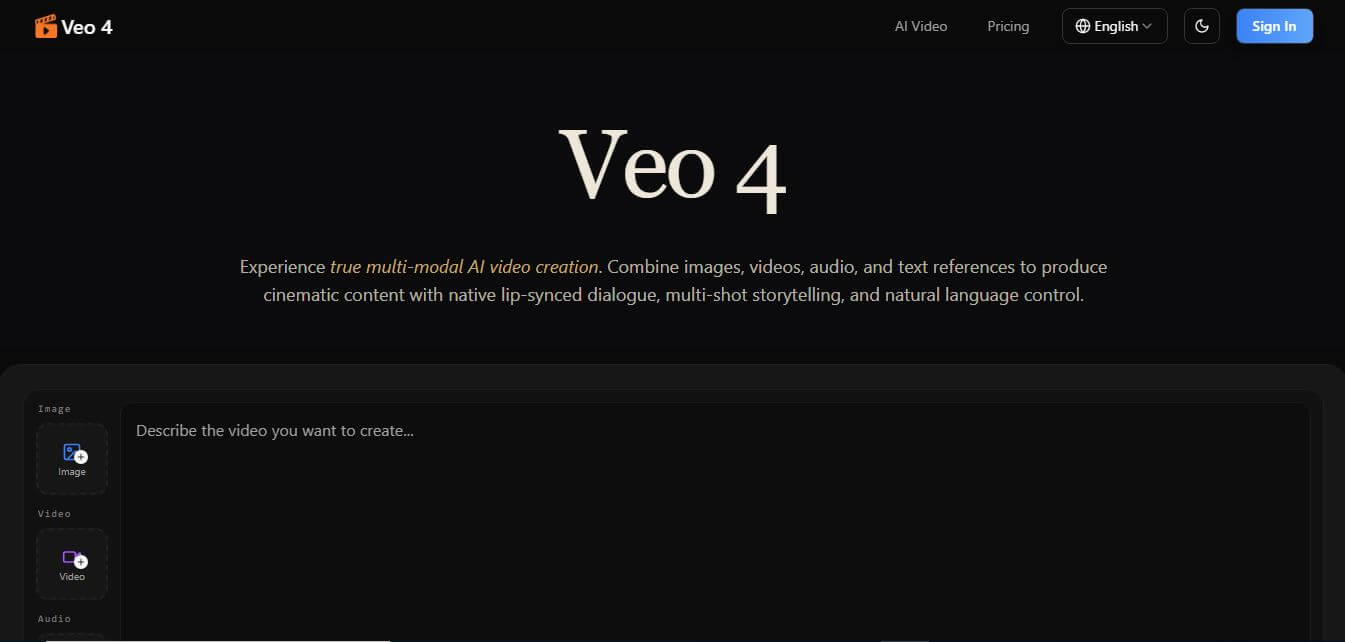
Veo 4
Veo 4 AI is an AI video creation platform that generates dramatic videos from text, images, audio, and video prompts using realistic motion and synchronized sound.
Paid
Alternatives
Alternatives to Authorizer
The best Authorizer alternatives include SuperTokens, Ory (Kratos/Keto), Keycloak, Clerk, Auth0, and Supabase Auth (GoTrue). These platforms deliver authentication, session management, and authorization infrastructures. While Authorizer specializes in a lightweight, high-performance Go architecture supporting 13+ SQL/NoSQL databases with built-in ReBAC (OpenFGA), SAML 2.0, and SCIM 2.0 under the free Apache-2.0 open-source license, alternatives like Auth0 charge recurring monthly active user (MAU) fees, and Keycloak requires a heavier Java enterprise runtime.
 4.9
4.9Claudebin
Code Assistant
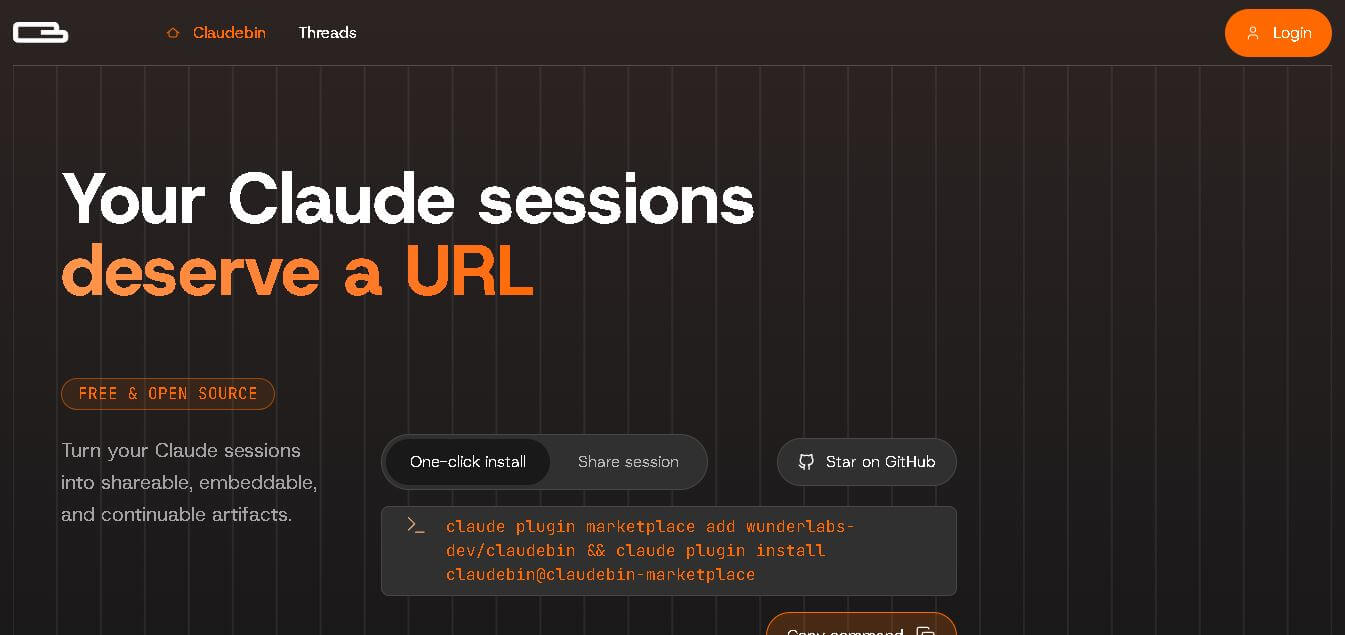
Claudebin is an open-source tool for sharing Claude Code sessions through structured, accessible web links. It captures conversations, file operations, terminal commands, and tool calls, helping developers explain their coding workflows. With session viewing and embedding capabilities, it simplifies technical documentation, collaboration, debugging discussions, and knowledge sharing across development projects.
 4.9
4.9GitFluence
Code Assistant
GitFluence is an AI-powered Git command generator that helps developers turn plain-English instructions into exact Git commands. It eliminates the need to memorize syntax, speeds up version control workflows, and lets users quickly copy accurate commands for tasks like branching, merging, and fixing commits.
 4.9
4.9Kiro
Vibe Coding
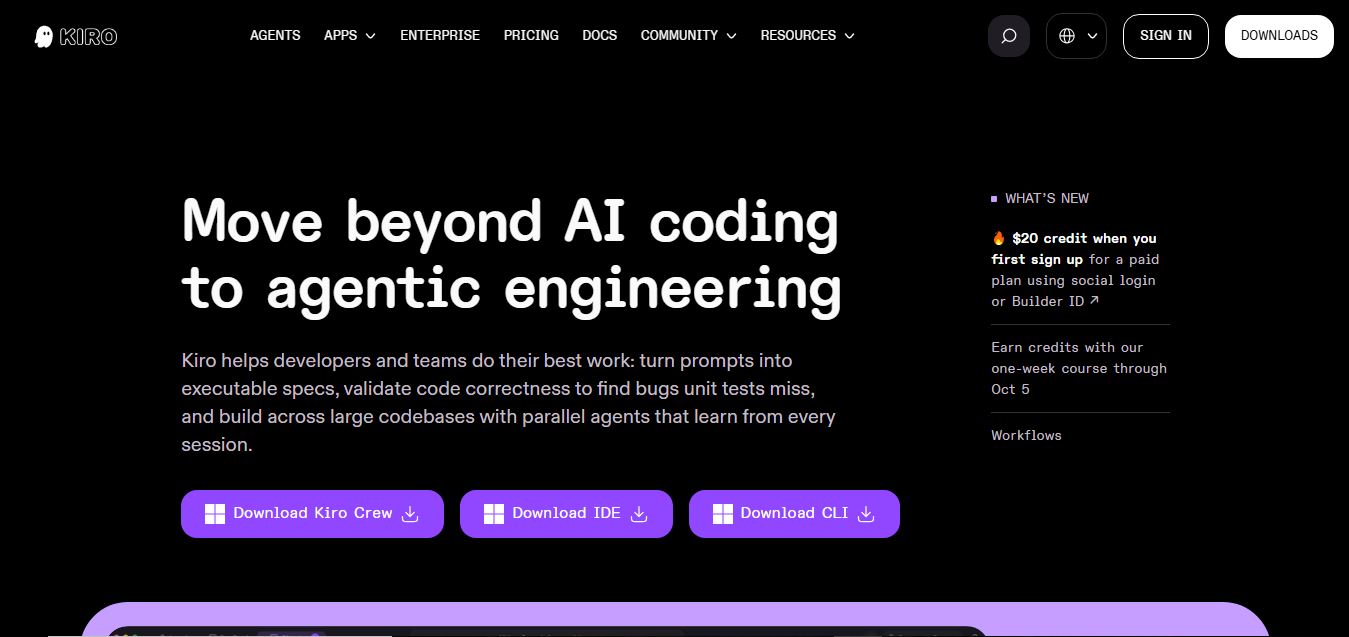
Kiro is an AI-powered developer platform that helps teams plan, build, and ship software using autonomous agents. It turns prompts into structured specs, writes and tests code, and automates workflows across IDE, CLI, and cloud, enabling faster, reliable development from prototype to production.
 4.8
4.8Emergent
Vibe Coding
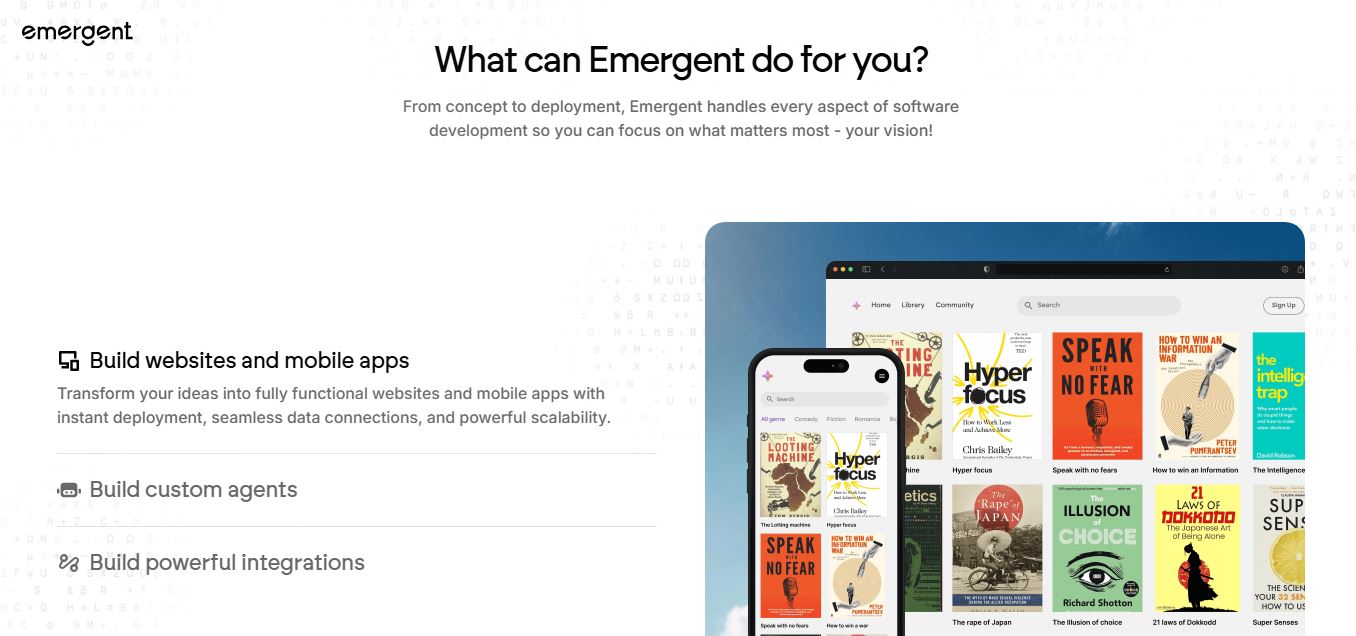
Emergent is an AI-powered app builder that lets users create full-stack web and mobile applications by simply describing their idea. It uses autonomous agents to plan, code, test, and deploy apps, handling everything from backend to hosting without requiring traditional programming skills.
 4.7
4.7Amazon Q Developer
Code Assistant
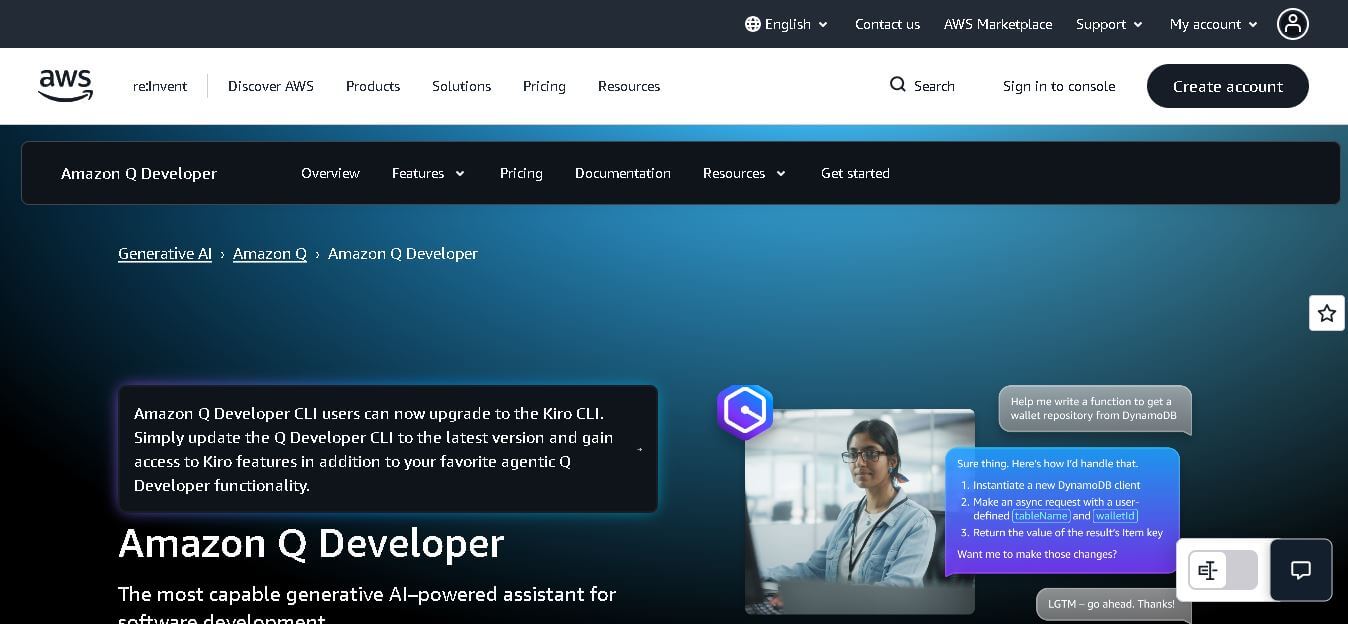
Amazon Q Developer helps developers write, explain, test, refactor, secure, and troubleshoot code while working with AWS services. It provides conversational assistance, inline suggestions, agentic coding, and cloud guidance across supported IDEs, command-line environments, and AWS interfaces. Its goal is to reduce repetitive work and help teams move from ideas to deployable software.
 4.9
4.9GitLab
Code Assistant
GitLab is a DevOps platform that provides a complete suite for planning, coding, testing, and deploying software in one place. It combines version control, CI/CD, security, and collaboration tools, helping teams streamline development workflows and deliver software faster and more efficiently.
 4.9
4.9CodeRabbit
Code Assistant
CodeRabbit is an AI-powered code review assistant that helps developers catch bugs, improve code quality, and speed up pull requests. It analyzes code changes in real time, provides actionable feedback, and integrates with Git workflows to make reviews faster and more efficient.
 4.9
4.9Sourcery
Code Assistant
Sourcery is an AI-powered code refactoring tool that helps developers automatically improve Python code quality. It analyzes code, suggests cleaner and more efficient alternatives, and applies refactors instantly, making code more readable, maintainable, and aligned with best practices.
Tenki Cloud
Code Assistant
Tenki Cloud is a high-performance, cost-efficient cloud infrastructure platform offering disposable sandboxes for AI agents, self-hosted GitHub Actions runners, and automated AI code review.