Snowflake
Snowflake is a cloud data platform that helps businesses store, process, and analyze large amounts of data in one place. It supports data warehousing, data sharing, and real-time analytics, enabling teams to work with data efficiently across multiple cloud environments like AWS, Azure, and Google Cloud.
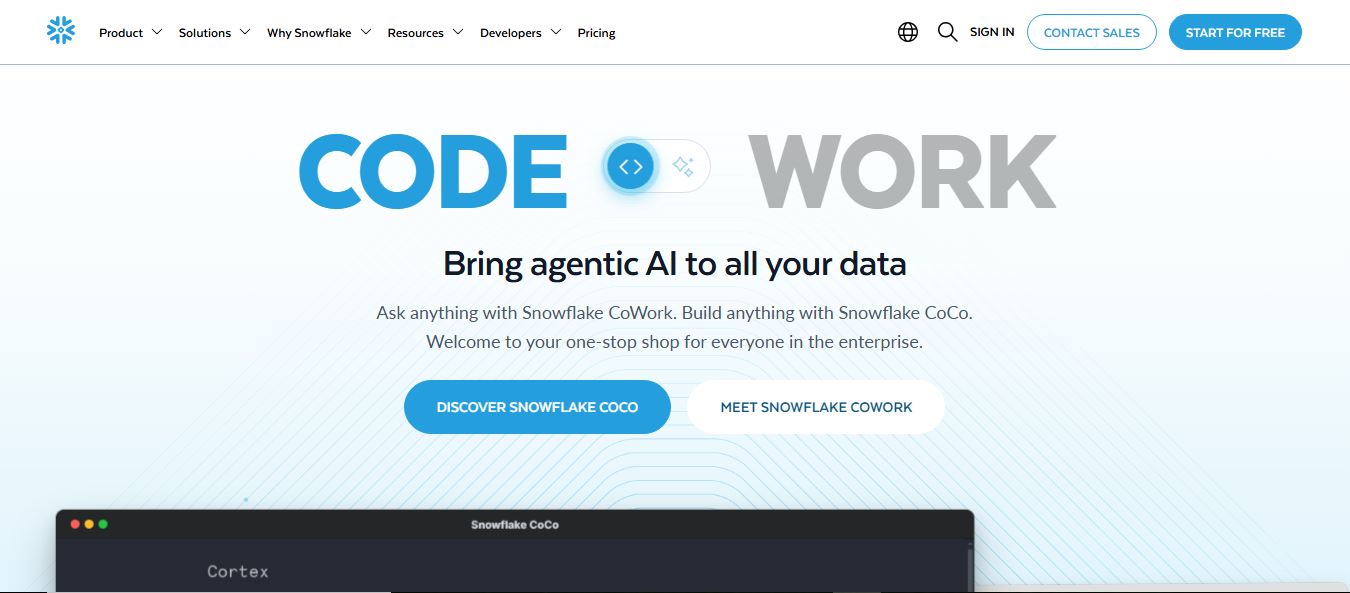
What is Snowflake?
Snowflake is a cloud-based data platform that helps businesses store, manage, analyze, and share data in one unified system. It combines data warehousing, data lakes, analytics, and AI workloads into a single platform, eliminating the need for multiple tools. Built for the cloud, it automatically scales storage and computing power, allowing organizations to handle large datasets efficiently. Snowflake also enables secure data sharing across teams and organizations while supporting advanced analytics, machine learning, and application development, helping companies turn data into actionable insights faster.
Founded in 2012 by data architecture pioneers Benoît Dageville, Thierry Cruanes, and Marcin Żukowski in San Mateo, California, and led by CEO Sridhar Ramaswamy, Snowflake completed the largest software IPO in history in September 2020 on the New York Stock Exchange (NYSE: SNOW). Serving over 10,000 enterprise customers globally—including major global enterprises such as Capital One, Canva, DoorDash, Kraft Heinz, and Cisco—Snowflake processes petabytes of data and billions of queries daily. By pairing its elastic multi-cluster shared data engine with Snowflake Cortex AI and Snowpark, Snowflake enables companies to run machine learning models, build generative AI applications, and share live data without copying files.
- Founder / Leadership: Benoît Dageville, Thierry Cruanes & Marcin Żukowski (Co-founders); Sridhar Ramaswamy (Chief Executive Officer)
- Launch Year: 2012 (Launched out of stealth in 2014; IPO in 2020)
Use Cases:
- Building enterprise cloud data warehouses and petabyte-scale data lakes with automatic query scaling
- Deploying generative AI chatbots, LLM inference, and vector search over proprietary enterprise datasets using Snowflake Cortex
- Executing zero-copy secure data sharing across business units, external partners, and vendors without data duplication
- Developing and running Python, Java, and Scala data engineering pipelines and ML models natively inside Snowpark
Technology:
- Multi-cluster shared data architecture completely separating compute (virtual warehouses) from centralized cloud storage
- Snowflake Cortex AI foundation offering managed access to frontier LLMs (Llama, Mistral, Claude) and native vector search
- Cross-cloud Snowgrid replication fabric unifying data governance and disaster recovery across AWS, Azure, and GCP
Target Users:
- Chief Data Officers (CDOs), Chief Information Officers (CIOs), and enterprise data architects
- Data engineers and analytics engineers building automated ETL/ELT pipelines and transforming data models
- Data scientists and machine learning engineers deploying predictive algorithms and generative AI models
- Content creators using writing tools to draft data architecture blueprints, governance policies, and technical documentation
Corporate Entity: Operates as Snowflake Inc.

Key features of Snowflake
Snowflake's key features are
- Decoupled Storage and Compute: Scale compute resources up, down, or pause them automatically in seconds without affecting underlying compressed data storage.
- Snowflake Cortex AI: Fully managed AI service providing instant SQL and Python access to leading LLMs, semantic text functions, vector embeddings, and enterprise search.
- Secure Data Sharing (Zero-Copy): Share live, governed data tables and views with external partners and clients instantly without moving, extracting, or duplicating files.
- Snowpark Developer Framework: Write complex data processing pipelines and machine learning workflows in familiar languages like Python, Java, and Scala directly inside the engine.
- Continuous Time Travel & Fail-Safe: Access historical data versions, restore dropped tables, and undo accidental data deletions for up to 90 days with native continuous data protection.
- Cross-Cloud Snowgrid: Seamlessly replicate data and disaster recovery environments across different cloud providers (AWS, Azure, Google Cloud) and global regions.
- Snowflake Marketplace: Access third-party commercial and public datasets (financial, demographic, weather, healthcare) directly within your analytical queries.
- Enterprise Security & Tri-Secret Secure: End-to-end data encryption in transit and at rest, customer-managed KMS keys, role-based access control (RBAC), and SOC 2 Type II compliance.
Snowflake Pricing
Snowflake operates on a pure consumption-based model based on Compute Credits and compressed storage used per month, available via on-demand pay-as-you-go or discounted annual capacity commitments.
Free Trial:
- 30-day evaluation trial with $400 worth of free usage credits across cloud platforms (AWS, Azure, GCP)
Standard Edition:
- $2.00 per compute credit; compressed storage billed at approximately $23/TB/month (on-demand or pre-paid)
- Includes core data warehousing, 1-day Time Travel, automatic data encryption, native Snowpark, and zero-copy data sharing
Enterprise Edition (Most Popular):
- $3.00 per compute credit; compressed storage at ~$23/TB/month
- Adds multi-cluster virtual warehouses for automatic concurrency scaling, up to 90-day Time Travel, materialized views, and masking policies
Business Critical Edition:
- $4.00 per compute credit
- Adds customer-managed encryption keys (Tri-Secret Secure), private network connectivity (AWS PrivateLink / Azure Private Link), failover/failback for disaster recovery, and HIPAA/PCI-DSS compliance
Virtual Private Snowflake (VPS):
- Custom enterprise contract for financial services and government institutions requiring dedicated, physically isolated compute and storage infrastructure
Disclaimer: Virtual warehouse compute rates range from 1 credit/hour for X-Small to 128+ credits/hour for large clusters. Capacity commitments typically provide 20% to 45% savings. Visit snowflake.com/en/pricing-options for live details.
Who is using Snowflake?
Snowflake is designed for a broad range of data-driven enterprises and technical professionals, including
- Enterprise Data Engineering Teams: Ingesting, transforming, and modeling billions of daily transactions from production systems into clean analytics tables
- Business Intelligence (BI) Analysts: Connecting Tableau, Power BI, and Looker to run low-latency dashboards without locking database tables
- Data Science & ML Engineers: Training predictive algorithms in Python and leveraging Cortex AI for natural language applications
- Financial Institutions & Healthcare Networks: Managing regulated customer datasets with Tri-Secret Secure encryption and strict role-based access
- Content Creators: Using writing tools to draft data architecture blueprints, governance policies, and technical documentation
- Digital Product & SaaS Companies: Embedding analytics and securely sharing live account usage data with external enterprise customers
Best Snowflake Alternatives
Some of the strongest Snowflake alternatives include
- Databricks
- Google BigQuery
- Amazon Redshift
- Microsoft Fabric (Synapse Analytics)
- ClickHouse
- Dremio
Pros and Cons of Snowflake
Pros
- Complete decoupling of compute and storage allows independent scaling and instant auto-suspension to prevent idle costs
- Zero-copy data sharing lets organizations grant real-time access to live data without file transfers or ETL replication
- True multi-cloud flexibility operates seamlessly across AWS, Microsoft Azure, and Google Cloud with no vendor lock-in
- Snowflake Cortex AI democratizes generative AI and LLM inference natively inside standard SQL queries
- Near-zero management architecture eliminates manual vacuuming, index creation, and partition rebalancing
Cons
- Unmonitored virtual warehouses and inefficient SQL queries can lead to unexpected compute credit consumption spikes
- Storage costs incur additional charges for historical Time Travel and Fail-Safe retention copies
- High-concurrency streaming workloads with sub-second write latencies can be less cost-effective than specialized OLAP engines like ClickHouse
- Enterprise and Business Critical editions carry significant per-credit premiums ($3.00 to $4.00/credit)
Why Choose Snowflake?
Snowflake is the premier choice for organizations that want a fully managed, multi-cloud data foundation that unifies data warehousing, sharing, and enterprise generative AI.
- Eliminates database maintenance overhead with an automated serverless cloud infrastructure
- Scales compute instantly to handle peak business intelligence query loads without concurrency bottlenecks
- Shares live datasets across external business partners in seconds using zero-copy architecture
- Brings generative AI and LLM models directly to your data securely using Snowflake Cortex
- Trusted by thousands of leading global enterprises and backed by proven public-market stability
Snowflake vs. Competitors
The main difference between Snowflake, Databricks, Google BigQuery, and Amazon Redshift is that Snowflake provides an out-of-the-box, fully managed cloud data warehouse with instant compute auto-scaling, SQL-native operations, and zero-copy data sharing across AWS, Azure, and GCP, whereas Databricks originated as an open Apache Spark data lakehouse favored for complex machine learning engineering, BigQuery charges primarily on scanned query bytes within Google Cloud, and Redshift is deeply coupled with native AWS infrastructure. Snowflake stands out for its maintenance-free usability, multi-cloud interoperability, and live data sharing.
| Feature / Tool | Snowflake (snowflake.com) | Databricks | Google BigQuery | Amazon Redshift |
|---|---|---|---|---|
| Core Focus | AI Data Cloud & Managed DW | Data Lakehouse & ML Engineering | Serverless SQL Analytics | Cloud Data Warehouse (AWS) |
| Multi-Cloud Support | Native (AWS, Azure, GCP) | Native (AWS, Azure, GCP) | Google Cloud (Omni for Multi) | AWS Native Only |
| Data Sharing | Zero-Copy Secure Sharing | Delta Sharing Protocol | Analytics Hub Sharing | Redshift Data Sharing |
| Generative AI Layer | Snowflake Cortex AI | Mosaic AI & DBRX | BigQuery Gemini AI | Amazon Q / Bedrock |
| Pricing Structure | $2.00–$4.00/credit + $23/TB | DBU/hour + Cloud Compute | $6.25/TB Scanned or Capacity | Serverless RPU or Provisioned Nodes |
| Best For | Managed Warehousing & Data Sharing | Data Science & Spark Pipelines | GCP-Centric Ad-Hoc Analytics | Deep AWS Ecosystem Workloads |
How do we rate Snowflake?
| Parameter | Rating (out of 5) |
|---|---|
| Performance & Elastic Auto-Scaling | 5.0 |
| Zero-Copy Data Sharing & Marketplace | 5.0 |
| Snowpark & Cortex AI Innovation | 4.9 |
| Multi-Cloud Governance & Security | 4.9 |
| Value for Money | 4.7 |
| Overall Score | 4.90 |
Snowflake Review
Snowflake revolutionized enterprise analytics by solving the fundamental limitations of on-premises and first-generation cloud databases. By separating compute clusters from shared storage, it eliminated query queuing and resource contention, allowing data engineering pipelines, executive dashboards, and data science workloads to run concurrently without degradation. Its zero-copy data sharing fundamentally changed how modern businesses exchange information with partners, while Snowflake Cortex AI embeds frontier large language models directly into SQL workflows. Although organizations must implement FinOps governance to avoid runaway query credit costs, Snowflake remains the benchmark for modern data cloud architecture. For growing enterprises looking to scale their data and AI operations, Snowflake is an outstanding platform.
Conclusion
Snowflake enables organizations to store, analyze, and share data seamlessly through its cloud-based data platform. Instead of managing complex infrastructure, teams can scale storage and compute independently while accessing data in real time. This makes it ideal for analytics, data engineering, and collaboration across teams. Overall, Snowflake simplifies data management, helping businesses unlock insights faster, improve decision-making, and build scalable data-driven operations.
FAQ
What is Snowflake and how does it work?
Snowflake is a cloud-based data platform (AI Data Cloud) that helps organizations store, process, analyze, and share data in one place. It works as a fully managed service, meaning users don’t need to manage infrastructure—Snowflake handles scaling, performance, and maintenance while enabling fast analytics, data engineering, and AI workloads.
What makes Snowflake different from traditional databases?
Unlike traditional databases, Snowflake is built natively for the cloud and separates storage, compute, and services. This allows users to scale resources independently, run multiple workloads simultaneously, and avoid performance bottlenecks while keeping costs optimized.
What features does Snowflake offer?
Snowflake offers features like data warehousing, data engineering pipelines, real-time analytics, AI/ML model deployment, data sharing, and application development. It also includes built-in security, governance, and cross-cloud collaboration tools, making it a unified platform for all data workloads.
Does Snowflake support multiple cloud platforms?
Yes, Snowflake runs on major cloud providers including Amazon Web Services (AWS), Microsoft Azure, and Google Cloud. It also supports cross-cloud and cross-region data sharing, allowing businesses to collaborate and access data globally.
How does Snowflake help with AI and machine learning?
Snowflake enables organizations to build, train, and deploy AI/ML models directly on their data without moving it between systems. It provides tools to integrate large language models (LLMs), create AI applications, and analyze data for predictive insights securely.
How much does Snowflake cost?
Snowflake uses a consumption-based pricing model, meaning you pay for what you use. Costs are mainly driven by compute usage (queries, workloads) and storage (data stored per month). It offers different editions like Standard, Enterprise, and Business Critical depending on features and security needs.
Is Snowflake free to use?
Snowflake offers a free trial with credits (e.g., ~$400) so users can test the platform before committing. After that, billing is based on usage, with no fixed subscription required unless you opt for capacity-based pricing.
Who should use Snowflake?
Snowflake is ideal for data engineers, data analysts, data scientists, enterprises, SaaS companies, and large organizations that need to manage and analyze large volumes of data. It’s especially useful for teams building data-driven products, analytics dashboards, and AI-powered applications.
User Reviews
No reviews yet for Snowflake.
Featured Tools
Featured AI tools from TechShark
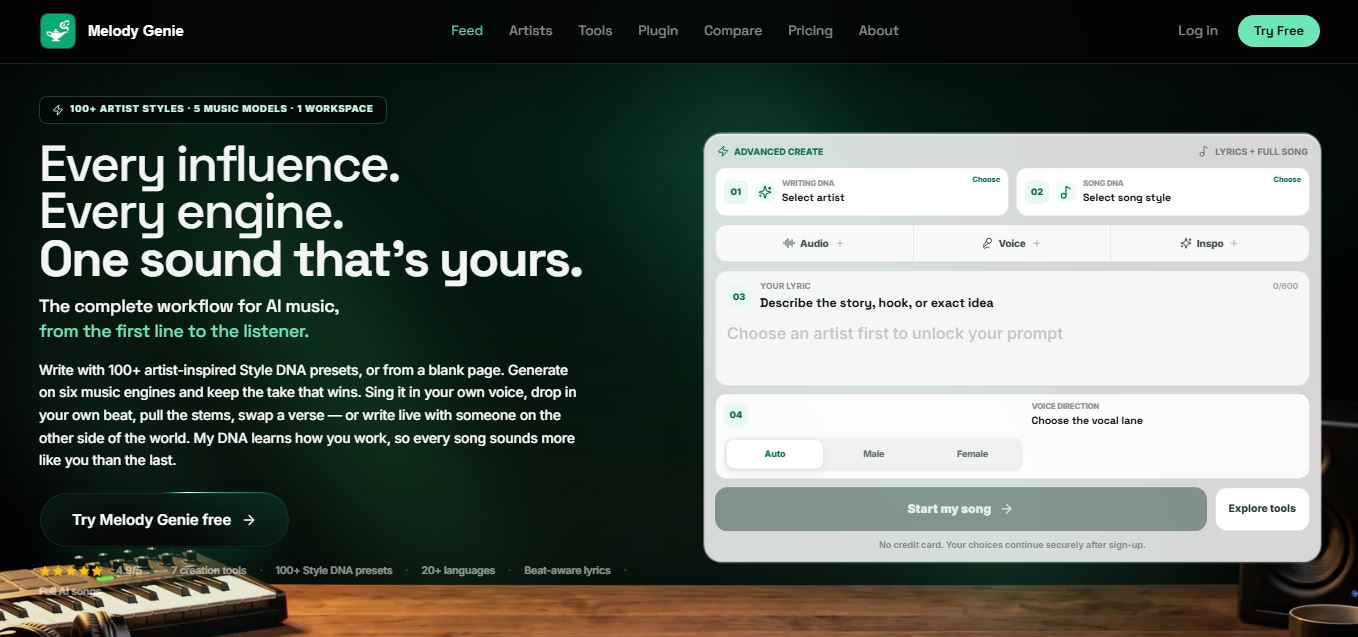
Melody Genie
MelodyGenie is an AI-powered music generator that creates original songs from simple text prompts. Users can choose styles, moods, and genres, then instantly generate melodies and full tracks, making it easy for creators, marketers, and hobbyists to produce custom music without musical expertise.
Freemium
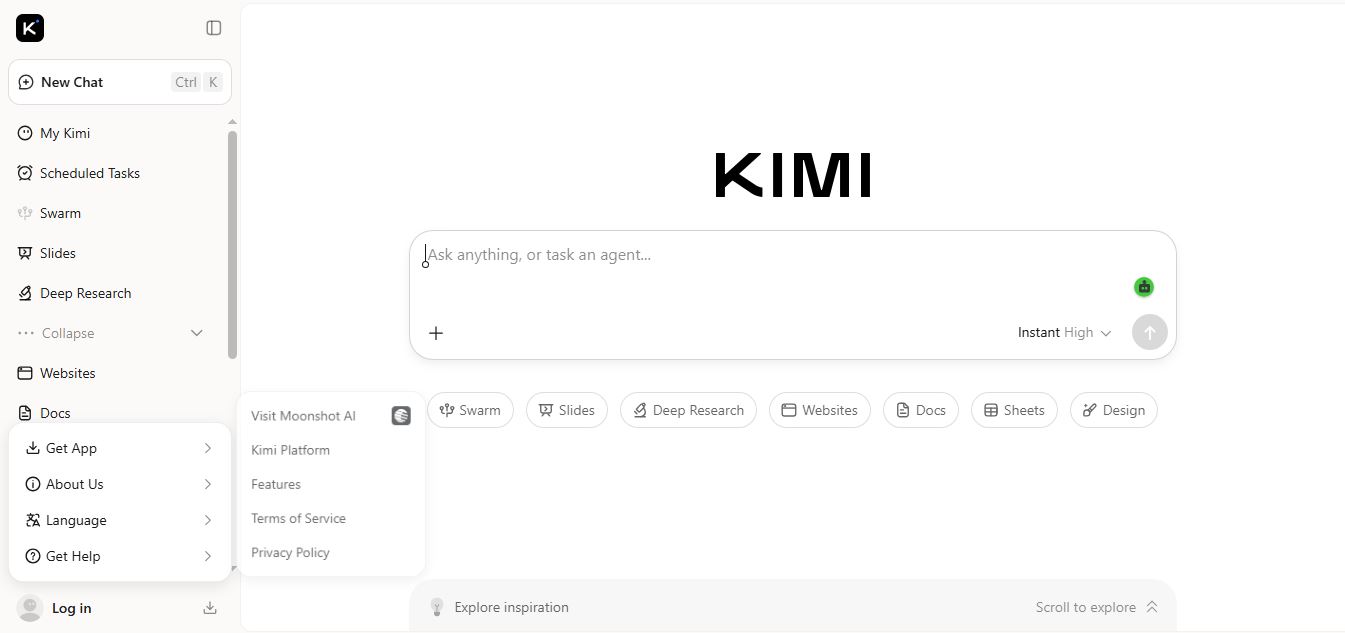
Kimi AI
Kimi AI is an advanced AI assistant developed by Moonshot AI that helps you chat, research, write, code, and automate tasks in one place. It supports web search, file analysis, and multimodal inputs, and can even run autonomous “agent” workflows to complete complex tasks end-to-end.
Freemium

Fashion Diffusion AI
Fashion Diffusion is an AI-powered fashion design platform that helps brands and designers create clothing designs, virtual try-ons, AI models, product photos, and marketing visuals faster and cost-effectively.
Paid
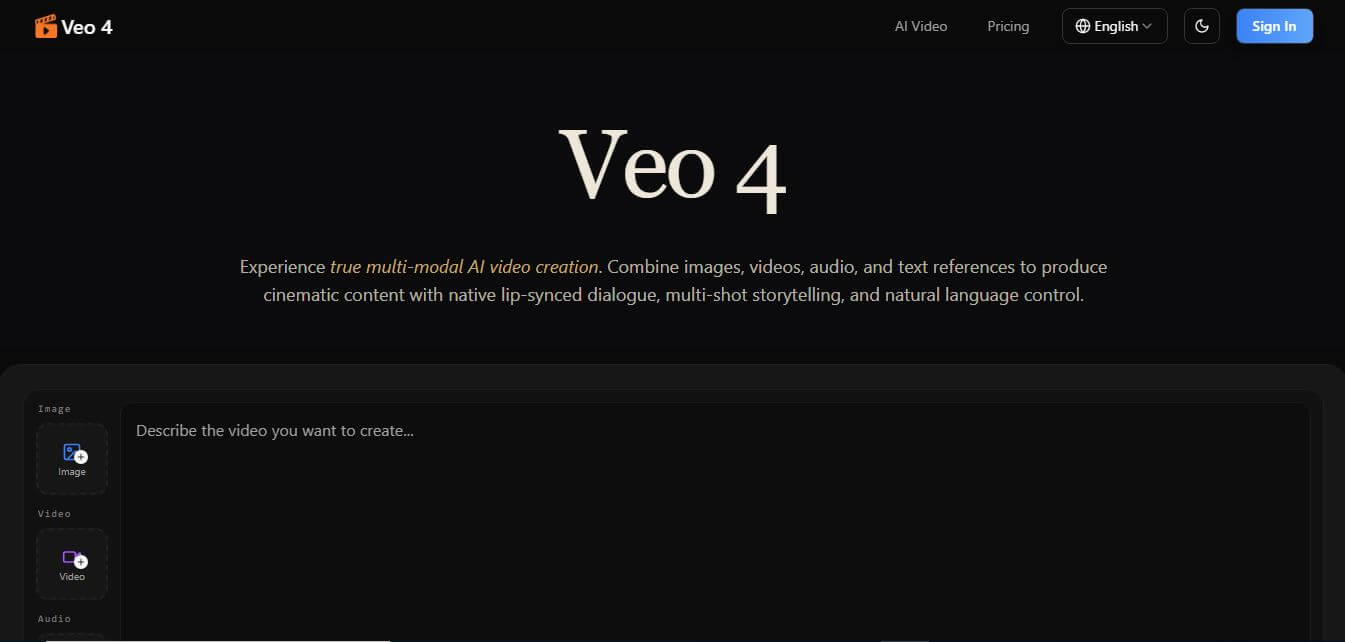
Veo 4
Veo 4 AI is an AI video creation platform that generates dramatic videos from text, images, audio, and video prompts using realistic motion and synchronized sound.
Paid
Alternatives
Alternatives to Snowflake
The best Snowflake alternatives include Databricks, Google BigQuery, Amazon Redshift, Microsoft Fabric (Synapse Analytics), ClickHouse, and Dremio. These platforms provide cloud data warehousing, data lakehouses, and big data analytics software. While Snowflake specializes in a fully managed multi-cloud data warehouse with independent compute auto-scaling, zero-copy data sharing, and native Snowflake Cortex AI, alternatives like Databricks focus on Apache Spark lakehouse architecture and machine learning engineering, and BigQuery offers serverless scanned-byte queries within Google Cloud. Choosing the right tool depends on whether you require turnkey multi-cloud warehousing, deep Spark machine learning pipelines, or cloud-native infrastructure.
 4.8
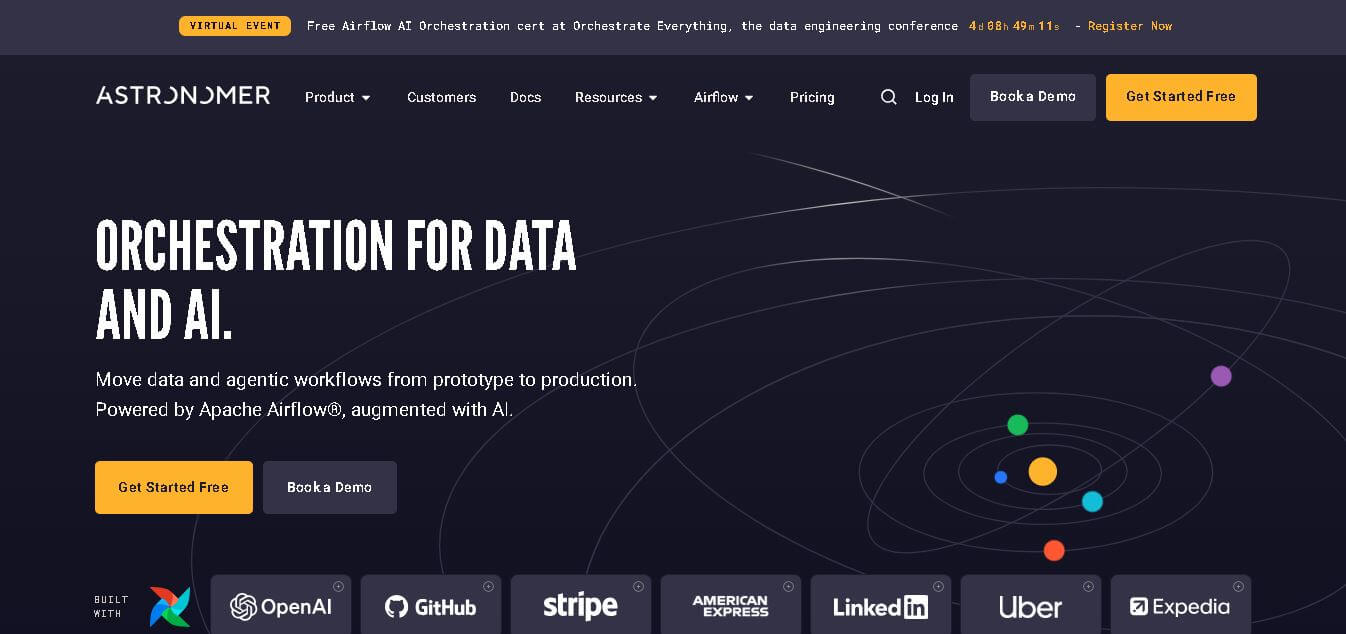
4.8Astronomer
Data Analytics
Astronomer provides Astro, a managed Apache Airflow platform for orchestrating data and AI workflows. It helps data teams develop DAGs, automate deployments, monitor pipelines, scale workloads, manage infrastructure, and troubleshoot failures while reducing operational overhead. Astro supports local and browser-based development, enterprise security, observability, and usage-based infrastructure pricing.
GMPlus
Data Analytics
GMPlus is an AI-powered email assistant that integrates with Gmail to help you write, reply to, and optimize emails faster using ChatGPT. It generates context-aware responses, fixes grammar, and offers ready-made prompts and templates—making email communication quicker, more professional, and efficient.
 4.9
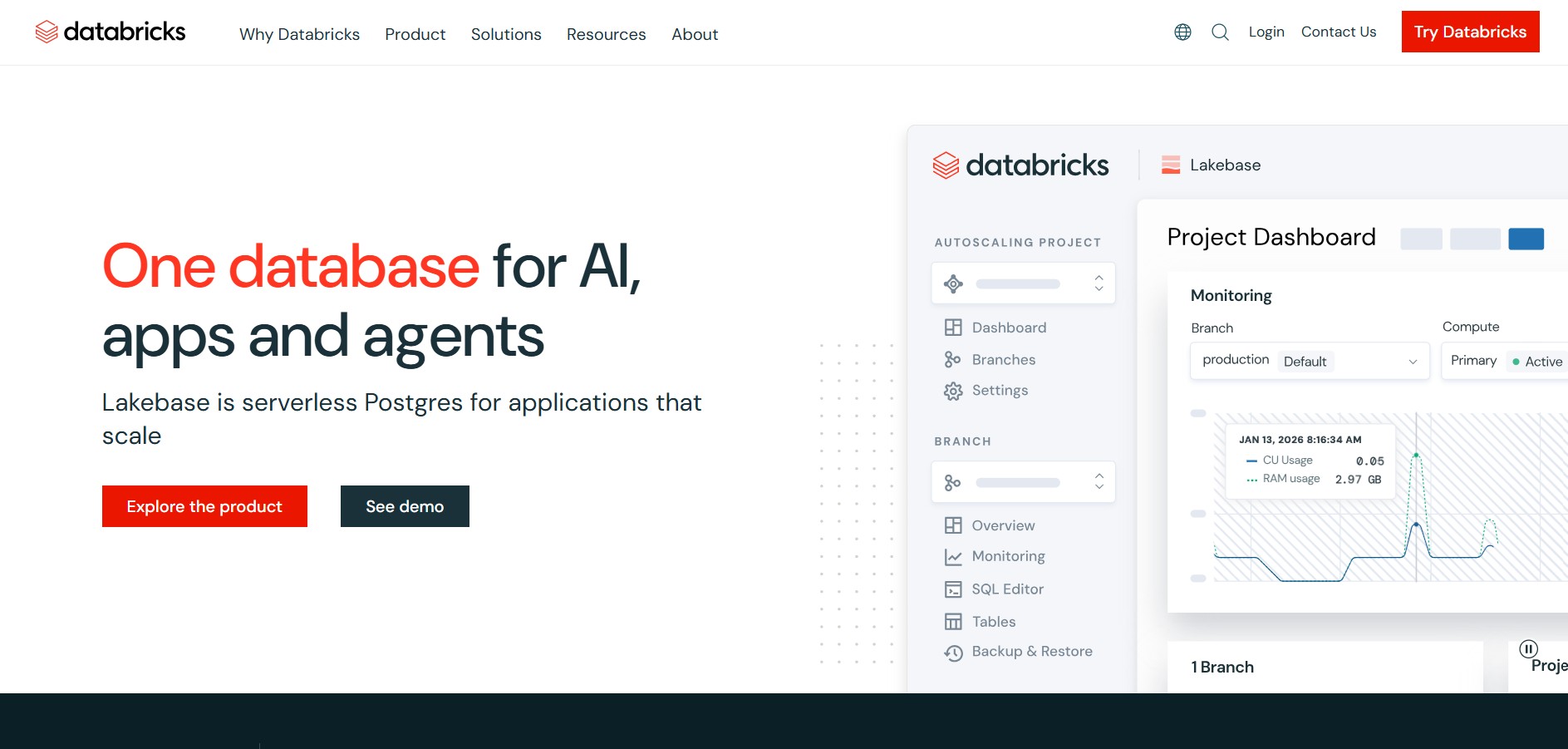
4.9Databricks
Data Analytics
Databricks is a unified data and AI platform that helps teams process, analyze, and build machine learning models on large-scale data. It combines data engineering, analytics, and AI in one environment, enabling faster insights, collaboration, and deployment of data-driven applications across organizations.