
Astronomer
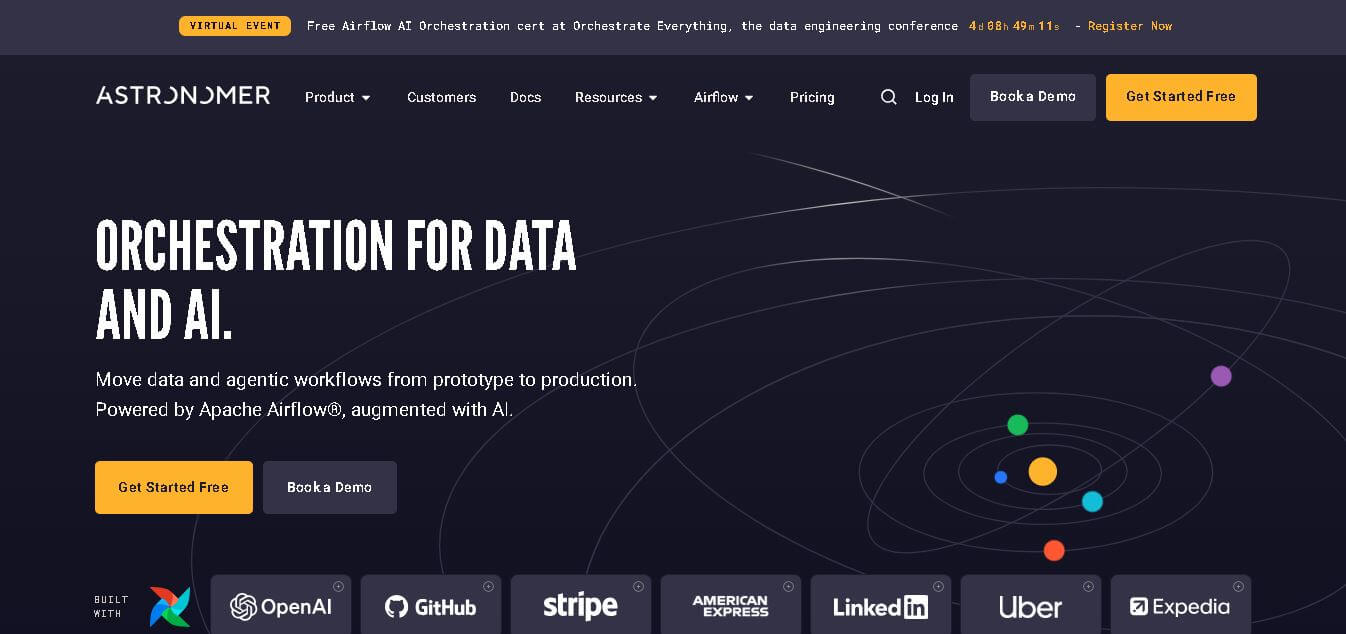
Astronomer provides Astro, a managed Apache Airflow platform for orchestrating data and AI workflows. It helps data teams develop DAGs, automate deployments, monitor pipelines, scale workloads, manage infrastructure, and troubleshoot failures while reducing operational overhead. Astro supports local and browser-based development, enterprise security, observability, and usage-based infrastructure pricing.
What is Astronomer?
Astronomer is a data orchestration company that provides Astro, a managed environment for running Apache Airflow and coordinating data and AI workflows. It helps teams build, deploy, monitor, scale, upgrade, and troubleshoot Airflow DAGs without having to manage the underlying infrastructure themselves. Astro includes development tools, observability, security controls, automated scaling, and enterprise deployment options. Its ecosystem also includes Astro IDE, Astro CLI, Astro Observe, and Otto, an agent designed specifically for Airflow-related development and operations.
Astronomer’s Astro platform is built around Apache Airflow and is designed for high-scale orchestration. The astronomer reports support for up to 500,000 sustained concurrent tasks, with 228 ms p95 task-start latency at 100,000 concurrent tasks. Its multi-region architecture targets less than 15-minute RPO and under 1-hour RTO. Astro Runtime also provides 2 years of maintenance, while the Developer plan starts at $0.35/hour for deployments.
- Platform Role: Modern Data Orchestration Platform, Managed Apache Airflow Service & Data Pipeline Observability Hub
- Developer & Organization: Astronomer, Inc. (New York, NY)
- Cross-Platform Access: Astro Web App, Astro CLI, Browser-Based Astro IDE, Astro Terraform Provider, and REST/GraphQL APIs
Use Cases:
- Orchestrating enterprise ETL/ELT pipelines, dbt transformation jobs, and multi-cloud data movement
- Running event-driven AI agent workflows, LLM fine-tuning pipelines, and automated machine learning operations (MLOps)
- Managing software-defined pipeline deployments across AWS, Google Cloud, Azure, and private cloud environments
- Tracking real-time end-to-end data lineage, automated root cause analysis (RCA), and data product SLAs
- Accelerating developer workflows with AI-assisted DAG authoring, local CLI debugging, and zero-downtime upgrades
Technology:
- Re-engineered the Astro Scheduler engine, achieving sub-300 ms p95 task start latency and up to 500,000 sustained concurrent tasks
- Otto AI Agent natively integrated for automated DAG writing, failure investigation, and Airflow upgrade planning
- Kubernetes and Celery-based auto-scaling architecture with scale-to-zero worker compute capability
- Enterprise-grade security featuring SCIM provisioning, custom RBAC, audit logging, SOC 2 compliance, and air-gapped deployment support
Target Users:
- Data engineering and analytics engineering teams building scalable production pipelines
- Enterprise data architects seeking a managed Airflow environment with guaranteed 99.5% uptime SLAs
- AI and machine learning engineers orchestrating complex model training and retrieval-augmented generation (RAG) loops
- Organizations migrating away from unmanaged, fragile open-source Airflow deployments
Acquisition: Commercial enterprise cloud service operated by Astronomer, Inc. (astronomer.io)

What are the key features of Astronomer?
Astronomer's key platform features are
- Astro IDE & CLI: Build and validate DAGs locally or in a web browser using context-aware AI before deploying to production.
- Otto AI Copilot: An intelligent agent that writes code, diagnoses pipeline errors, and recommends upgrades tailored to your codebase.
- Native dbt Orchestration (Cosmos): Automatically turns dbt projects into modular Airflow DAGs with model-level task visibility.
- Pipeline Lineage & RCA: Real-time visualization of upstream and downstream data dependencies paired with AI-driven root cause analysis.
- Elastic Auto-Scaling: Automatically scales worker resources up or down based on task queue depth, down to zero when idle.
- Infrastructure as Code (IaC): Manage Airflow environments declaratively using the official Astro Terraform Provider or Git-driven CI/CD pipelines.
How much does Astronomer cost?
Astronomer (Astro) utilizes a flexible, usage-based consumption pricing model where users pay for cluster overhead, deployment sizing, and active worker compute hours.
Pricing Overview:
- Developer Plan (From $0.35/deployment/hour): Designed for building and testing DAGs with scale-to-zero compute, API access, and basic CLI tools.
- Team Plan (From $0.42/deployment/hour): Includes production observability, 24x5 support, high-availability deployments, and dedicated cluster availability (from $2.40/hour).
- Business & Enterprise Plans: Adds custom RBAC, SCIM provisioning, 24/7 SLA support, remote execution agents, and private cloud deployment options.
- Worker Compute (From $0.13/hour): Billed only while tasks actively run, scaling automatically based on queue depth.
Disclaimer: Astronomer offers a free trial for developer exploration. Production environments, dedicated hardware, and private cloud deployments are billed according to resource consumption and subscription tier.
Who should use Astronomer?
Astronomer is designed for data-driven enterprises and engineering teams, including
- Data Engineering Teams: Developers who want to write Python DAGs without spending time configuring Kubernetes or Airflow webservers.
- Enterprise Data Leaders: Organizations requiring centralized data lineage, strict regulatory governance, and high-availability uptime SLAs.
- AI & MLOps Engineers: Practitioners running heavy concurrent workloads and requiring event-driven pipeline execution.
What are the best alternatives to Astronomer?
Some of the strongest Astronomer alternatives include
- AWS Managed Workflows for Apache Airflow (MWAA)
- Google Cloud Composer
- Prefect
- Dagster
- Databricks Workflows
- Apache NiFi
What are the pros and cons of Astronomer?
What are the pros of Astronomer?
- High-performance Astro runtime delivers significantly faster task scheduling and lower latency than open-source Airflow
- Complete end-to-end data observability with built-in lineage and AI-powered failure analysis
- The scale-to-zero worker compute model eliminates unnecessary idle infrastructure costs
- Rich developer ecosystem, including Astro CLI, dbt Cosmos integration, and Terraform IaC support
What are the cons of Astronomer?
- Higher starting costs compared to basic self-hosted open-source deployments
- Usage-based pricing across deployments, clusters, and workers requires monitoring for budget optimization
- Focuses primarily on Python and Airflow paradigms, which may present a learning curve for non-coding analysts
Why should you choose Astronomer?
Maintaining self-hosted Apache Airflow instances often leads to broken dependencies, scheduler lags, and high operational strain on data platform teams. Astronomer eliminates these headaches by providing a managed Airflow environment engineered for speed, scale, and observability. With automated scaling, integrated AI debugging, and native support for dbt and cloud platforms, Astronomer lets engineers focus entirely on writing business logic rather than troubleshooting infrastructure.
How does Astronomer compare to competitors?
The primary distinction between Astronomer, AWS MWAA, Prefect, and Dagster lies in underlying framework standards and performance optimization. While AWS MWAA offers a basic managed Airflow service tied to AWS, and Prefect/Dagster require adopting non-Airflow proprietary orchestration frameworks, Astronomer delivers an enhanced, enterprise-grade Airflow experience that retains full open-source compatibility while scaling to hundreds of thousands of concurrent tasks.
| Feature / Platform | Astronomer (Astro) | AWS MWAA | Prefect | Dagster |
|---|---|---|---|---|
| Core Engine | Enhanced Apache Airflow® Runtime | Standard Open-Source Airflow | Proprietary Prefect Framework | Proprietary Dagster Framework |
| Multi-Cloud Support | Yes (AWS, GCP, Azure, Private Cloud) | No (AWS Only) | Yes (Cloud / Self-Hosted) | Yes (Cloud / Self-Hosted) |
| Native Lineage & Observability | Yes (built-in data lineage & AI RCA) | Basic CloudWatch Logs | Yes (task & flow tracking) | Yes (Asset-centric observability) |
| Task Start Latency | Ultra-low (sub-300 ms p95 latency) | Standard Celery/Kubernetes lag | Low | Low |
| Best For | Enterprises standardizing on Airflow with high-performance needs | Simple Airflow workloads entirely within the AWS ecosystem | Teams seeking pure Python dynamic flow execution | Data engineering teams focused on asset-based orchestration. |
How do we rate Astronomer?
| Parameter | Rating (out of 5) |
|---|---|
| Orchestration Performance & Latency | 4.9 |
| Developer Tooling (CLI, IDE & AI) | 4.8 |
| Data Observability & Lineage | 4.9 |
| Enterprise Security & Compliance | 4.9 |
| Value for Money & Pricing Clarity | 4.5 |
| Overall Score | 4.80 |
What is our review and verdict on Astronomer?
Astronomer provides the ultimate platform for teams committed to Apache Airflow. By combining ultra-fast task execution, native data lineage, auto-scaling compute, and the AI-powered Otto copilot, it transforms Airflow from a maintenance-heavy tool into a high-powered enterprise orchestration platform. It is a top-tier investment for data-driven organizations.
Conclusion
Astronomer is a strong choice for teams that want Apache Airflow with managed infrastructure, scalable execution, development tooling, observability, and enterprise controls. Its Astro platform extends the familiar Airflow workflow with capabilities designed for modern data and AI orchestration. With usage-based pricing, a 14-day trial, Airflow 3 resources, and AI assistance through Otto, Astronomer provides an option for organizations moving from individual pipelines toward larger-scale production orchestration.
FAQ
What is Astronomer used for?
Astronomer is used to build, deploy, schedule, monitor, and manage data workflows using Apache Airflow. Teams can orchestrate ETL, machine learning, analytics, batch processing, and AI workflows through Astro. It removes much of the infrastructure management associated with running Airflow, allowing data engineers to concentrate on DAG development, reliability, and business-critical pipelines.
What is Astro by Astronomer?
Astro is Astronomer’s managed orchestration platform built around Apache Airflow. It provides hosted Airflow environments with infrastructure management, scaling, observability, security, deployment controls, and development tooling. Users can continue writing Airflow DAGs while Astro manages the underlying environment. This makes Airflow easier to operate for development, production, and enterprise workloads.
Is Astronomer the same as Apache Airflow?
No. Apache Airflow is an open-source workflow orchestration technology, while Astronomer is a company that provides managed products and services around Airflow. Astro uses Apache Airflow as its foundation and adds infrastructure, development, observability, security, scaling, and support capabilities. Therefore, teams can use familiar Airflow DAGs while benefiting from Astronomer’s managed environment.
Who should use Astronomer?
Astronomer is particularly suitable for data engineering teams that depend on Apache Airflow but want less infrastructure administration. It can support organizations building ETL, analytics, machine learning, batch, event-driven, and AI workflows. Teams that need observability, security controls, scalable execution, automated deployment processes, or enterprise Airflow support can also benefit from Astro.
Does Astronomer support Airflow 3?
Yes. Astronomer provides resources and support for Apache Airflow 3, including guidance for upgrades, DAG versioning, backfills, assets, event-driven scheduling, and remote execution. Astronomer’s documentation specifically provides learning materials for Airflow 3 and explains how teams can use its capabilities with Astro for modern data orchestration workflows.
What are the main features of Astronomer Astro?
Astro includes several capabilities for Airflow development and operations, including Astro CLI, Astro IDE, GitHub integration, branch-based deployments, API access, observability, data quality monitoring, security controls, private networking, secrets management, and automated scaling. The astronomer also provides Otto for AI-assisted DAG authoring, failure investigation, and Airflow upgrade planning.
Does Astronomer provide AI features?
Yes. Astronomer offers Otto, a data engineering agent designed specifically for Apache Airflow. According to Astronomer, Otto can help write DAGs, investigate failures, and plan upgrades while using information about the team’s environment and conventions. Astro also includes AI-assisted capabilities for DAG authoring, debugging, observability, and root-cause analysis depending on the plan and product feature.
User Reviews
No reviews yet for Astronomer.
Featured Tools
Featured AI tools from TechShark
Melody Genie
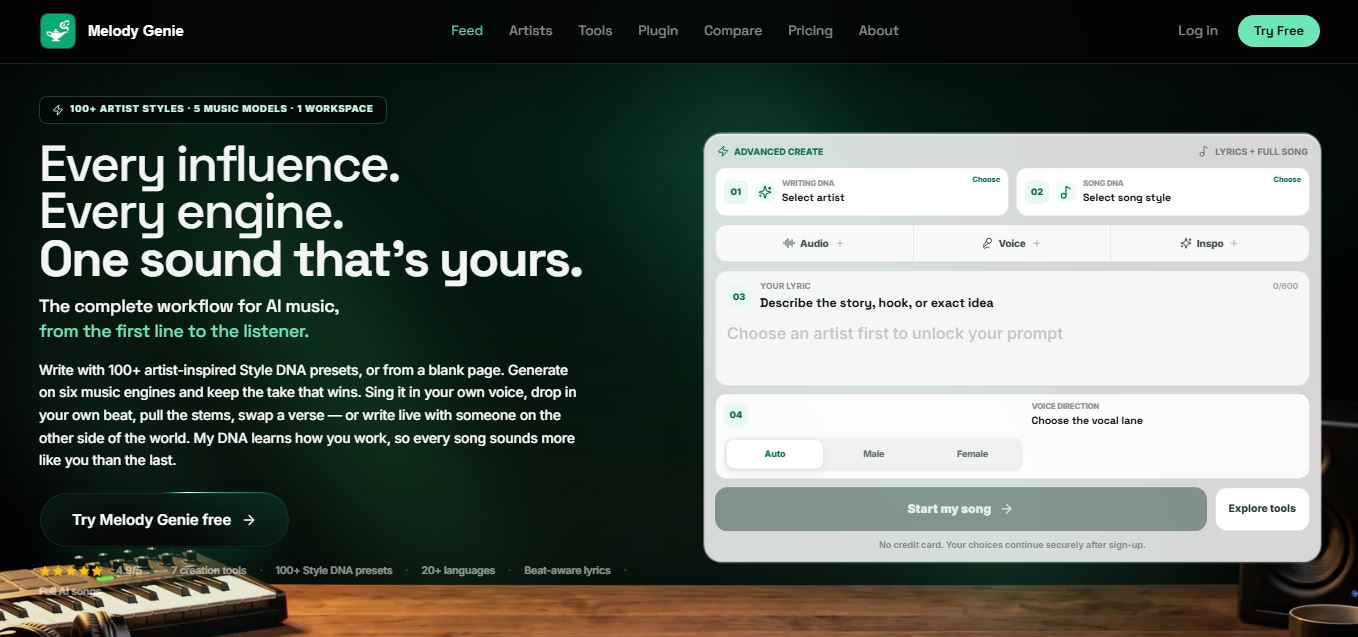
MelodyGenie is an AI-powered music generator that creates original songs from simple text prompts. Users can choose styles, moods, and genres, then instantly generate melodies and full tracks, making it easy for creators, marketers, and hobbyists to produce custom music without musical expertise.
Freemium
Kimi AI
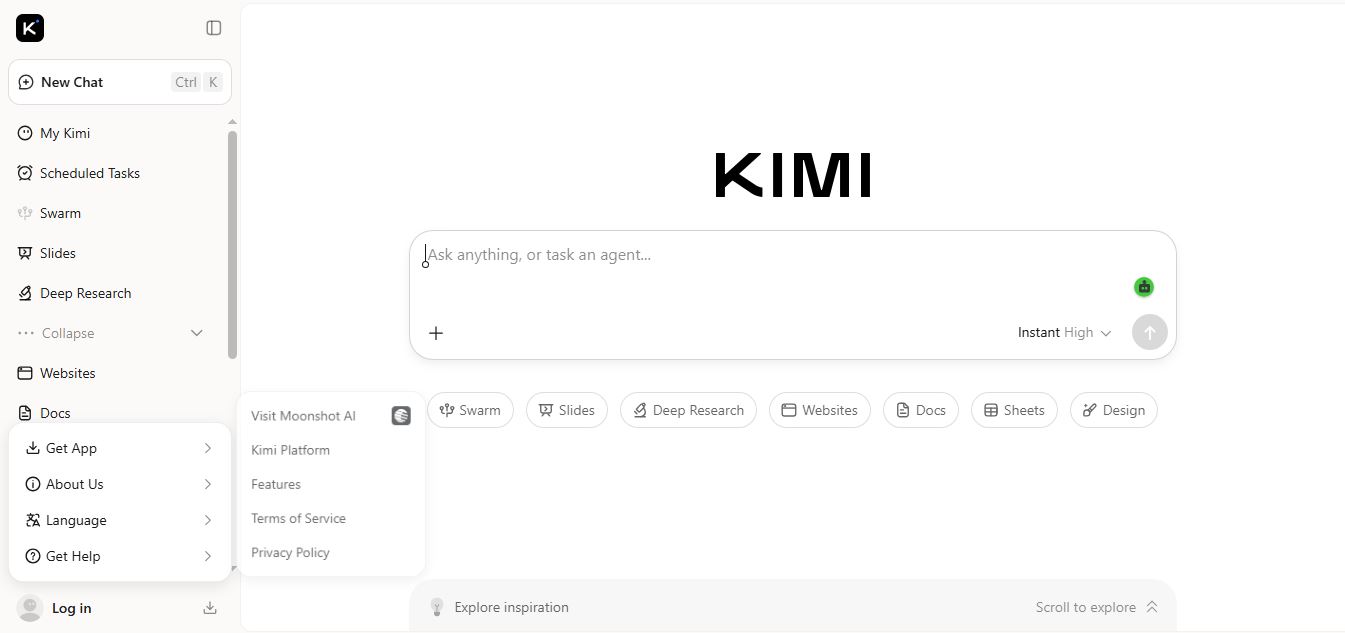
Kimi AI is an advanced AI assistant developed by Moonshot AI that helps you chat, research, write, code, and automate tasks in one place. It supports web search, file analysis, and multimodal inputs, and can even run autonomous “agent” workflows to complete complex tasks end-to-end.
Freemium

Fashion Diffusion AI
Fashion Diffusion is an AI-powered fashion design platform that helps brands and designers create clothing designs, virtual try-ons, AI models, product photos, and marketing visuals faster and cost-effectively.
Paid
Veo 4
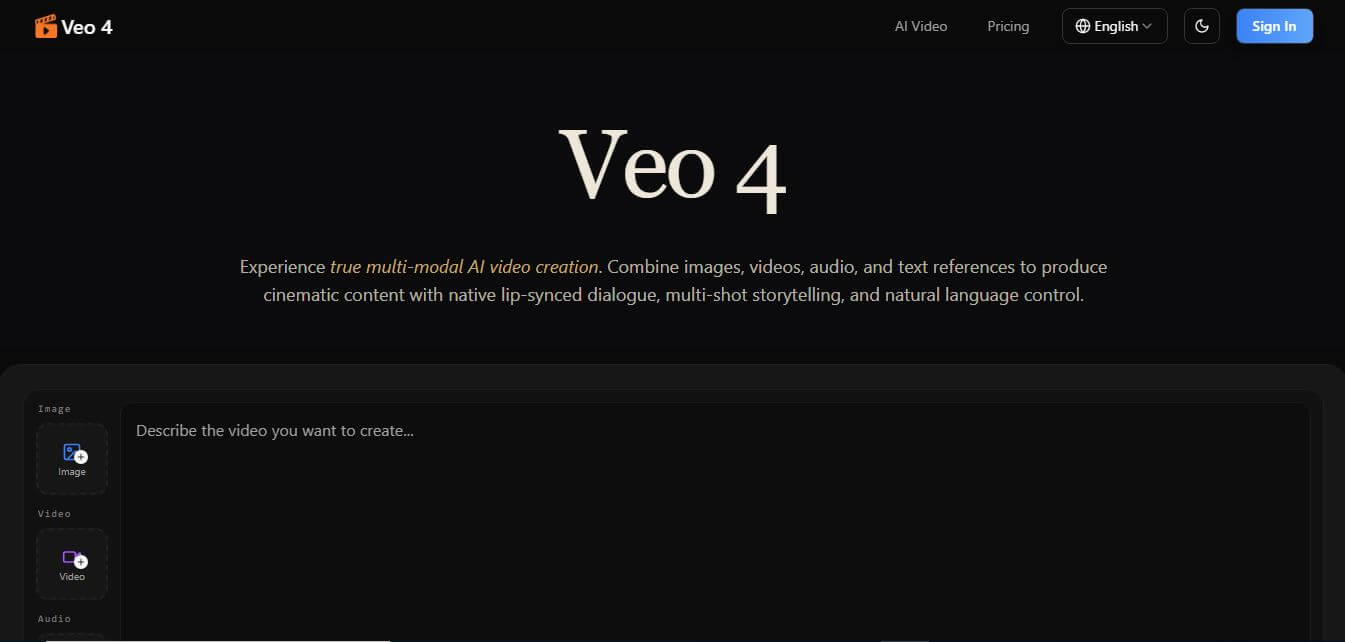
Veo 4 AI is an AI video creation platform that generates dramatic videos from text, images, audio, and video prompts using realistic motion and synchronized sound.
Paid
Alternatives
Alternatives to Astronomer
The best Astronomer alternatives include AWS Managed Workflows for Apache Airflow (MWAA), Google Cloud Composer, Prefect, and Dagster. While Astronomer provides an enterprise-grade Airflow platform with sub-300ms latency, built-in data lineage, and scale-to-zero compute, AWS MWAA offers a native AWS-locked solution, and platforms like Prefect and Dagster utilize proprietary orchestration models.
 4.9
4.9Snowflake
Data Analytics
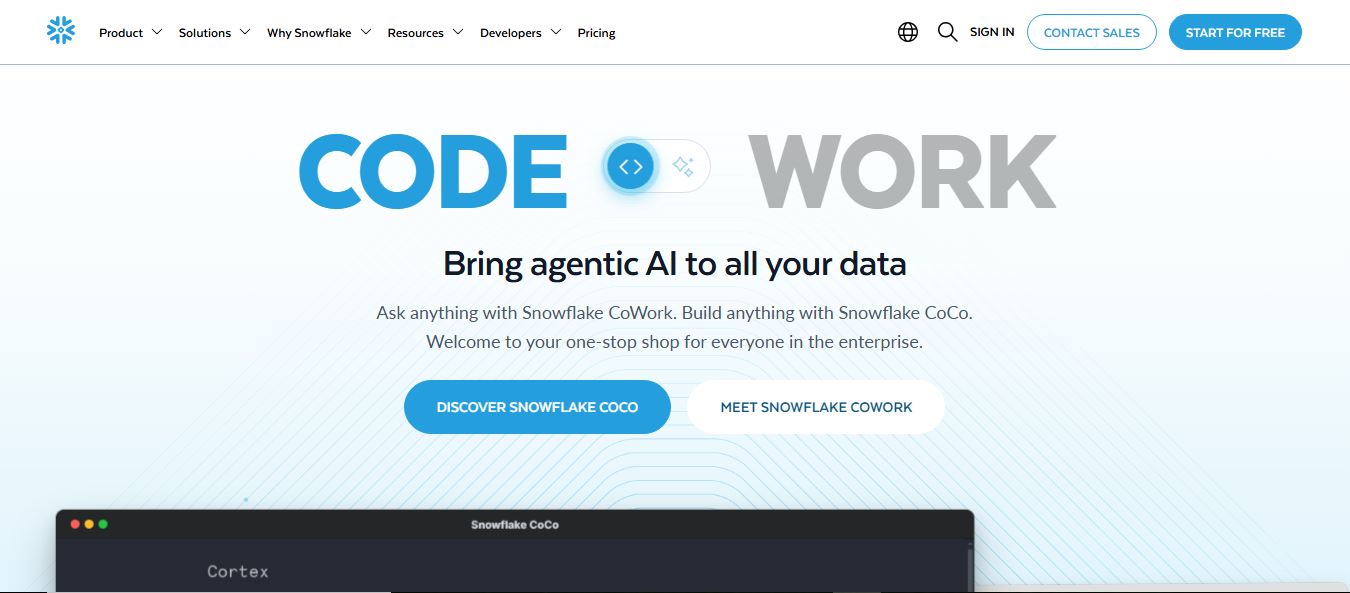
Snowflake is a cloud data platform that helps businesses store, process, and analyze large amounts of data in one place. It supports data warehousing, data sharing, and real-time analytics, enabling teams to work with data efficiently across multiple cloud environments like AWS, Azure, and Google Cloud.
GMPlus
Data Analytics
GMPlus is an AI-powered email assistant that integrates with Gmail to help you write, reply to, and optimize emails faster using ChatGPT. It generates context-aware responses, fixes grammar, and offers ready-made prompts and templates—making email communication quicker, more professional, and efficient.
 4.9
4.9Databricks
Data Analytics
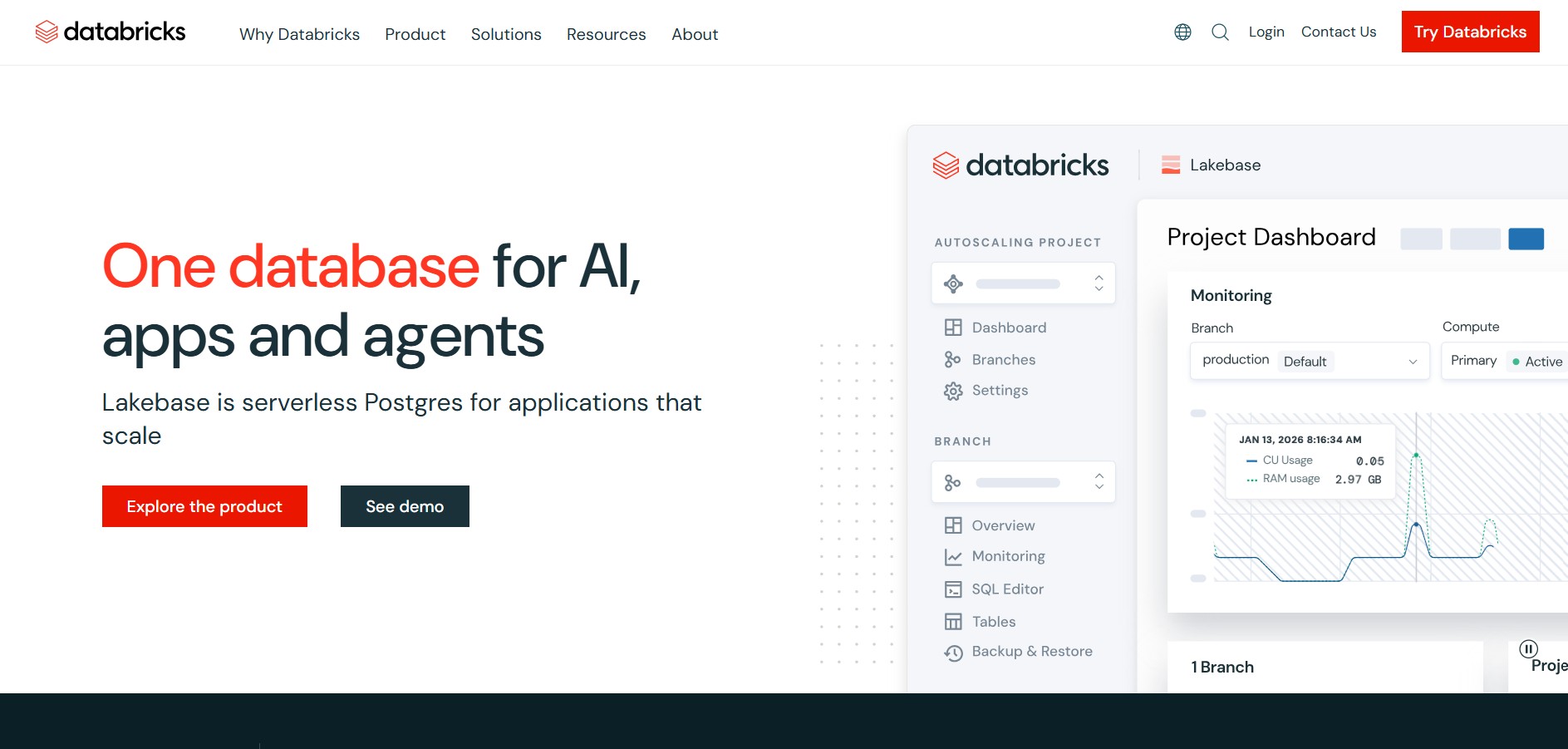
Databricks is a unified data and AI platform that helps teams process, analyze, and build machine learning models on large-scale data. It combines data engineering, analytics, and AI in one environment, enabling faster insights, collaboration, and deployment of data-driven applications across organizations.