
Databricks
Databricks is a unified data and AI platform that helps teams process, analyze, and build machine learning models on large-scale data. It combines data engineering, analytics, and AI in one environment, enabling faster insights, collaboration, and deployment of data-driven applications across organizations.
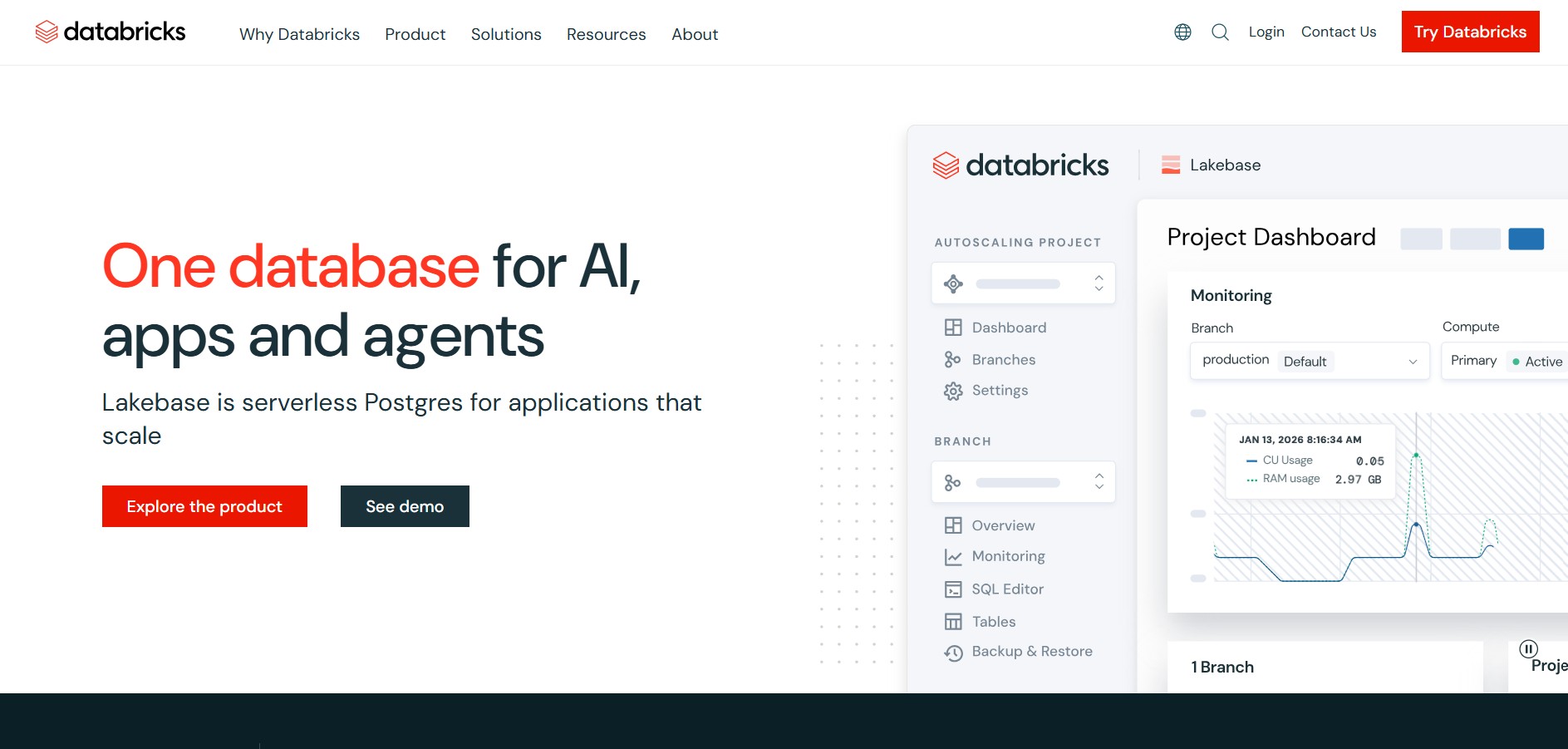
What is Databricks?
Databricks is a unified data and AI platform that allows organizations to store, process, analyze, and build AI applications on massive datasets within a single system. It combines data engineering, data warehousing, analytics, and machine learning into one architecture called the “data lakehouse,” eliminating the need for separate tools and data duplication. Built by the creators of Apache Spark, it runs on cloud infrastructure and supports real-time data pipelines, business intelligence, and AI model development, all with built-in governance and scalability. Designed for enterprises, Databricks helps teams turn raw data into insights, dashboards, and production-ready AI systems from a single, collaborative workspace.
Positioned around the principle of the “Data Intelligence Platform,” Databricks pairs an open lakehouse architecture with an AI engine that understands the semantics, jargon, and metrics unique to each enterprise. Built on open formats like Delta Lake UniForm (supporting Apache Iceberg and Apache Hudi interoperability) and powered by Photon (a vectorized C++ query engine), Databricks enables seamless execution of streaming ETL, serverless SQL warehousing, predictive analytics, and Compound AI systems. Governed centrally by Unity Catalog and enriched by Databricks Assistant and Genie, the platform operates natively across Amazon Web Services (AWS), Microsoft Azure, and Google Cloud Platform (GCP) with a 14-day free trial and consumption-based DBU (Databricks Unit) pricing starting from $0.07 to $0.40+ per DBU.
- Founders & Leadership: Ali Ghodsi (CEO), Matei Zaharia (CTO), Reynold Xin, Patrick Wendell, Ion Stoica, Andy Konwinski & Arsalan Tavakoli-Shiraji
- Core Cloud Ecosystems: AWS, Microsoft Azure (Azure Databricks), Google Cloud Platform & Hybrid Multicloud
- Open-Source Foundations: Apache Spark, Delta Lake, MLflow, Unity Catalog, and Redash
Use Cases:
- Building end-to-end batch and real-time streaming data pipelines using Lakeflow Connect, Lakeflow Pipelines, and Auto Loader
- Running high-performance, cost-effective serverless SQL queries and business intelligence dashboards directly on data lake storage
- Training, fine-tuning, evaluating, and serving custom LLMs and RAG applications using MLflow and Databricks Model Serving
- Enforcing unified data and AI governance, access controls, audit trails, and data lineage across clouds via Unity Catalog
- Empowering non-technical stakeholders to query enterprise datasets in plain conversational English using Databricks Genie spaces
Technology:
- Apache Spark distributed compute engine coupled with Photon, a native vectorized C++ query execution engine optimized for lakehouse performance
- Delta Lake ACID transactional storage layer providing time travel, schema enforcement, and UniForm metadata translation (Iceberg compatibility)
- Unity Catalog providing universal multi-cloud data governance, access controls, feature stores, and agentic tool registries
Target Users:
- Data engineers and ETL architects designing high-volume batch and streaming data pipelines
- Data scientists and machine learning engineers developing predictive models and compound generative AI applications
- Business intelligence analysts and SQL developers querying enterprise data lakes without manual data exports
- Chief Data Officers (CDOs), CISOs, and enterprise architects enforcing cross-cloud compliance and data governance
Acquisition: Operates as a privately held global data and AI enterprise software corporation (Databricks, Inc.)

Key features of Databricks
Databricks' key platform features are
- Unified Data Lakehouse Architecture: Merges the performance, reliability, and governance of enterprise data warehouses with the scalability and low cost of cloud data lakes.
- Lakeflow Pipelines & Connect: Makes data ingestion and workflow orchestration easier with pre-built connectors, declarative pipeline definitions, and automated scaling.
- Serverless Databricks SQL & Photon Engine: Provides instant compute startup and auto-scaling for BI dashboards, running queries up to 12× faster with the vectorized C++ Photon engine.
- Unity Catalog Multi-Cloud Governance: Provides centralized, fine-grained access control, automated column-level data lineage, and audit logging across tables, files, models, and AI functions.
- Mosaic AI & Compound AI Development: Build, evaluate, fine-tune, and deploy foundation models and multi-agent systems with end-to-end tracking through MLflow and AI Gateway.
- Databricks Genie & Assistant: Conversational AI interfaces that let analysts and executives ask complex datasets questions in natural language and get verified SQL results.
- Delta Lake UniForm Interoperability: Write data once in Delta Lake and automatically read it as Apache Iceberg or Apache Hudi without duplicating storage or moving files.
- Collaborative Workspaces & Notebooks: Multi-language interactive notebooks supporting Python, SQL, Scala, and R with real-time co-authoring, version control, and Git integration.
Databricks Pricing
Databricks uses a pay-as-you-go pricing model based on consumption, measured in Databricks Units (DBUs) and billed per second, with prepaid discounts (Databricks Commit Units / DCUs) and cloud provider compute charges.
Free Evaluation:
- 14-Day Free Trial: Access to full platform capabilities on AWS, Azure, or GCP with complimentary usage credits (infrastructure cloud provider costs apply)
- Community Edition: Free, lightweight single-node micro-cluster environment for learning, students, and open-source training
Workload-Based DBU Rates (Examples on AWS/Azure/GCP):
- Data Engineering (Jobs Compute): Starting from ~$0.15 to $0.20 per DBU | Orchestrating scheduled production ETL and streaming pipelines
- Data Warehousing (Databricks SQL): Starting from ~$0.22 per DBU (Classic), ~$0.55 per DBU (Pro), and ~$0.70 per DBU (Serverless) | Fast BI querying with auto-scaling to zero
- Interactive Data Science & All-Purpose Compute: Starting from ~$0.40 to $0.55 per DBU | Interactive notebooks, collaborative analytics, and model experimentation
- Model Serving & Generative AI (Mosaic AI): Starting from ~$0.07 per DBU for token-based foundation model serving and provisioned LLM throughput
Committed Use Discounts:
- Pre-purchasing Databricks Commit Units (DCUs) across 1-year to 3-year enterprise contracts unlocks volume discounts up to 37% off standard on-demand rates
Disclaimer: Total Databricks operating cost comprises Databricks DBU fees plus underlying cloud infrastructure (VM compute, storage, networking) billed directly by your cloud provider (AWS, Azure, or Google Cloud). For the exact regional DBU rate cards, visit databricks.com/product/pricing.
Who is using Databricks?
Databricks is trusted by over 10,000 global enterprises and technology teams, including
- Global Financial Institutions: Analyzing billions of real-time market transactions, fraud signals, and risk compliance matrices with Apache Spark and Delta Lake
- Healthcare & Life Sciences Organizations: Processing genomic sequence pipelines, medical imaging datasets, and clinical trial analytics under HIPAA compliance
- E-Commerce & Retail Giants: Powering real-time recommendation engines, dynamic pricing models, and multi-channel supply chain optimization
- Enterprise AI & Software Teams: Building proprietary LLM agents, knowledge retrieval pipelines (RAG), and generative applications on governed corporate data
Best Databricks Alternatives
Some of the strongest Databricks alternatives include
- Snowflake
- Google Cloud BigQuery
- Amazon Redshift
- Microsoft Fabric
- Cloudera Data Platform
- Dremio
Pros and Cons of Databricks
Pros
- Unifies data engineering, streaming ETL, BI analytics, and advanced AI into a single multi-cloud platform
- Built on open-source standards (Delta Lake, Apache Spark, MLflow) preventing proprietary vendor lock-in
- Photon vectorized engine delivers exceptional performance for high-concurrency SQL and analytical workloads
- Unity Catalog provides unified cross-cloud governance and automated data lineage across all assets
- Delta Lake UniForm provides seamless interoperability with Apache Iceberg and Hudi formats
Cons
- Dual-billing model (Databricks DBUs plus cloud service provider infrastructure costs) can make cloud expenditure forecasting complex
- Steep initial learning curve for organizations transitioning from traditional legacy relational databases
- Non-serverless clusters require careful cluster sizing and auto-termination configuration to avoid idle compute charges
Why Choose Databricks?
Maintaining separate architectures for data warehousing and machine learning creates data duplication, complex ETL sync pipelines, and fragmented security controls. Databricks eliminates architectural sprawl by running all workloads directly on your cloud object storage.
- Keeps your data stored in open formats within your own cloud account rather than locking it into proprietary storage systems
- Powers both high-throughput streaming pipelines and low-latency business intelligence from the same source tables
- Provides a complete machine learning lifecycle with MLflow, automated feature stores, and LLM serving
- Operates consistently across AWS, Azure, and Google Cloud with unified governance through Unity Catalog
Databricks vs. Competitors
The main difference between Databricks, Snowflake, BigQuery, and Microsoft Fabric lies in architectural origin and workload flexibility. While Snowflake originated as a cloud data warehouse that expanded into data science, and BigQuery operates as Google's serverless analytical database, Databricks was engineered from open-source distributed computing (Apache Spark) and open storage (Delta Lake)—providing native capabilities for large-scale data engineering, streaming ETL, and advanced machine learning.
| Feature / Tool | Databricks (databricks.com) | Snowflake | Google Cloud BigQuery | Microsoft Fabric |
|---|---|---|---|---|
| Core Foundation | Open Lakehouse (Spark, Delta, MLflow) | Cloud Data Warehouse & Data Cloud | Serverless Multi-Cloud Data Warehouse | Unified Analytics & OneLake |
| Storage Layer | Open formats (Delta, Iceberg UniForm) | Proprietary Micro-partitions / Iceberg | Capacitor columnar / BigLake formats | OneLake (Delta Lake format) |
| Data Engineering / ETL | Native Apache Spark & Lakeflow | Snowpark & Dynamic Tables | BigQuery Dataform & Spark | Data Factory & Synapse Spark |
| Governance Framework | Unity Catalog (Open-Source) | Snowflake Horizon | Dataplex & IAM | Microsoft Purview |
| Pricing Metric | Per-second DBUs + Cloud compute | Snowflake Credits (Compute-based) | On-demand bytes scanned or Editions | Fabric Capacity Units (CUs) |
| Best For | Enterprises prioritizing data engineering, ML & open formats | Organizations focused primarily on SQL BI & simple sharing | GCP-centric teams wanting serverless SQL analytics | Enterprises committed to Microsoft Power BI & Azure |
How do we rate Databricks?
| Parameter | Rating (out of 5) |
|---|---|
| Data Engineering & Distributed Processing (Spark/Photon) | 5.0 |
| Machine Learning & AI Lifecycle Management (MLflow/Mosaic) | 5.0 |
| Unified Governance & Multi-Cloud Architecture (Unity Catalog) | 4.9 |
| Data Warehousing & SQL Query Performance | 4.8 |
| Value for Money & Compute Efficiency | 4.8 |
| Overall Score | 4.90 |
Databricks Review
Databricks has established itself as the defining foundation for modern enterprise data and artificial intelligence architecture. By solving the historical divide between analytical data warehouses and data science sandboxes, its open lakehouse design provides an efficient, scalable operating model for enterprise data estates. With Photon-accelerated SQL queries, automated Lakeflow data pipelines, seamless Iceberg interoperability via Delta Lake UniForm, and robust multi-cloud governance through Unity Catalog, Databricks equips organizations to run mission-critical analytics and deploy advanced generative AI systems on a single, secure data foundation.
Conclusion
Databricks sets the industry standard for enterprise data intelligence and lakehouse computing. Databricks enables enterprises to streamline data engineering, accelerate business intelligence, and build generative AI systems on open, governed data, using Apache Spark, Delta Lake, Photon, and Unity Catalog across AWS, Azure, and Google Cloud.
FAQ
What is Databricks and how does it work?
Databricks is a unified data and AI platform that combines data engineering, analytics, and machine learning in one system. It uses a lakehouse architecture to process, analyze, and build AI applications on large-scale data without moving it across tools.
Who should use Databricks?
Databricks is ideal for enterprises, data teams, AI engineers, and analysts working with large datasets. It’s especially useful for organizations building data pipelines, analytics dashboards, or AI models that require scalable infrastructure and real-time processing.
What features does Databricks offer?
Databricks offers data engineering pipelines, SQL analytics, machine learning tools, AI model deployment, and governance via Unity Catalog. It also includes notebooks, real-time data processing, and natural language querying for insights across enterprise datasets.
What is a lakehouse in Databricks?
A lakehouse combines the flexibility of a data lake with the performance of a data warehouse. Databricks uses this architecture to store, process, and analyze structured and unstructured data efficiently within one unified system.
Can Databricks be used for AI and machine learning?
Yes, Databricks supports end-to-end AI workflows, including data preparation, model training, fine-tuning, and deployment. It also provides built-in tools and APIs to serve models and integrate them into applications at scale.
Is Databricks free or paid?
Databricks offers a free edition for learning and experimentation, along with a free trial that includes usage credits. Paid plans are usage-based, typically billed through compute units (DBUs) depending on processing requirements.
User Reviews
No reviews yet for Databricks.
Featured Tools
Featured AI tools from TechShark
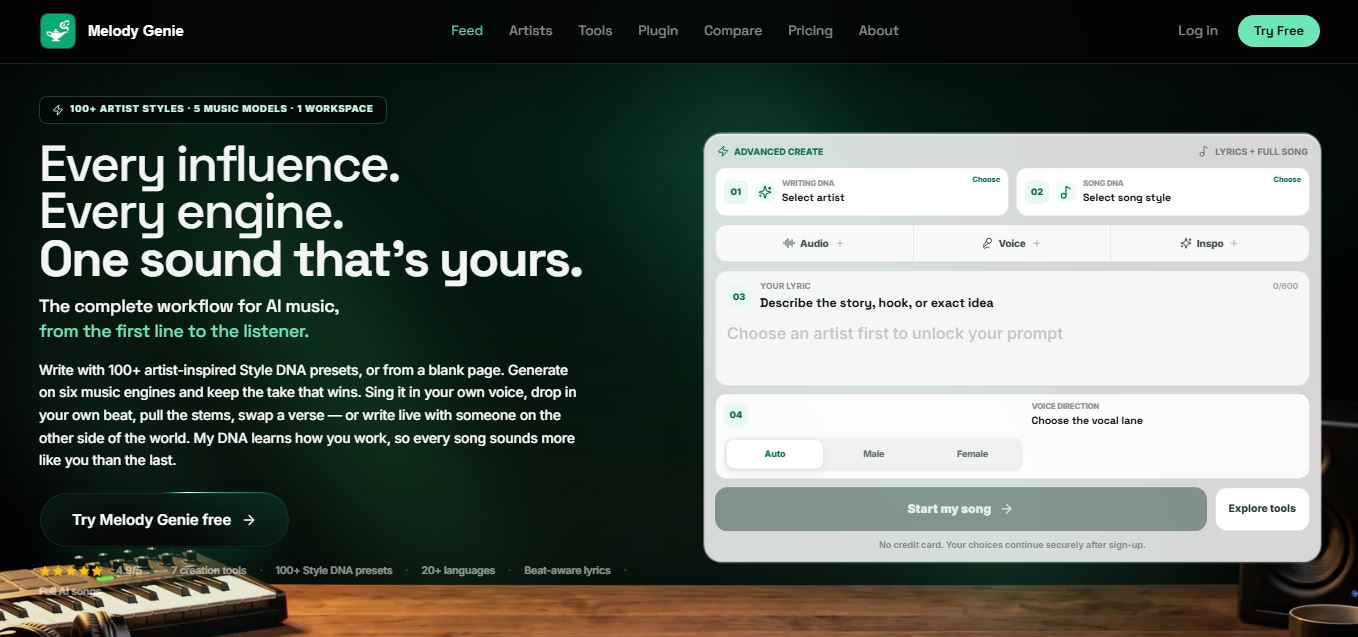
Melody Genie
MelodyGenie is an AI-powered music generator that creates original songs from simple text prompts. Users can choose styles, moods, and genres, then instantly generate melodies and full tracks, making it easy for creators, marketers, and hobbyists to produce custom music without musical expertise.
Freemium
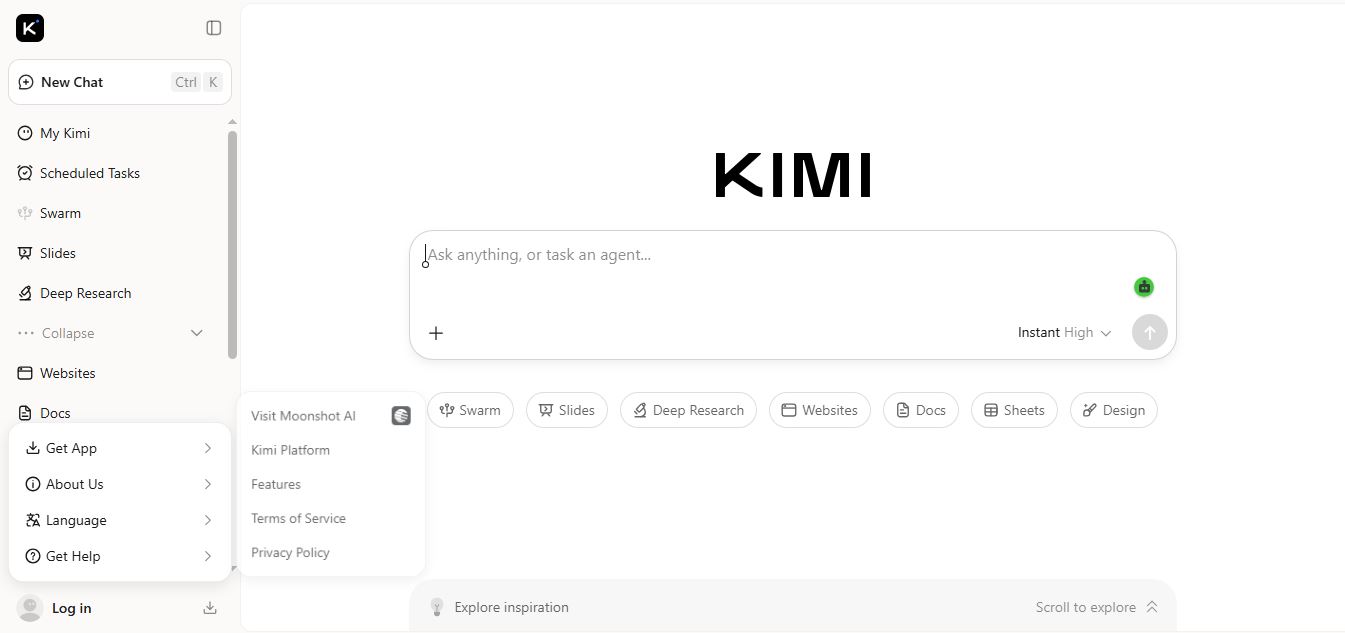
Kimi AI
Kimi AI is an advanced AI assistant developed by Moonshot AI that helps you chat, research, write, code, and automate tasks in one place. It supports web search, file analysis, and multimodal inputs, and can even run autonomous “agent” workflows to complete complex tasks end-to-end.
Freemium
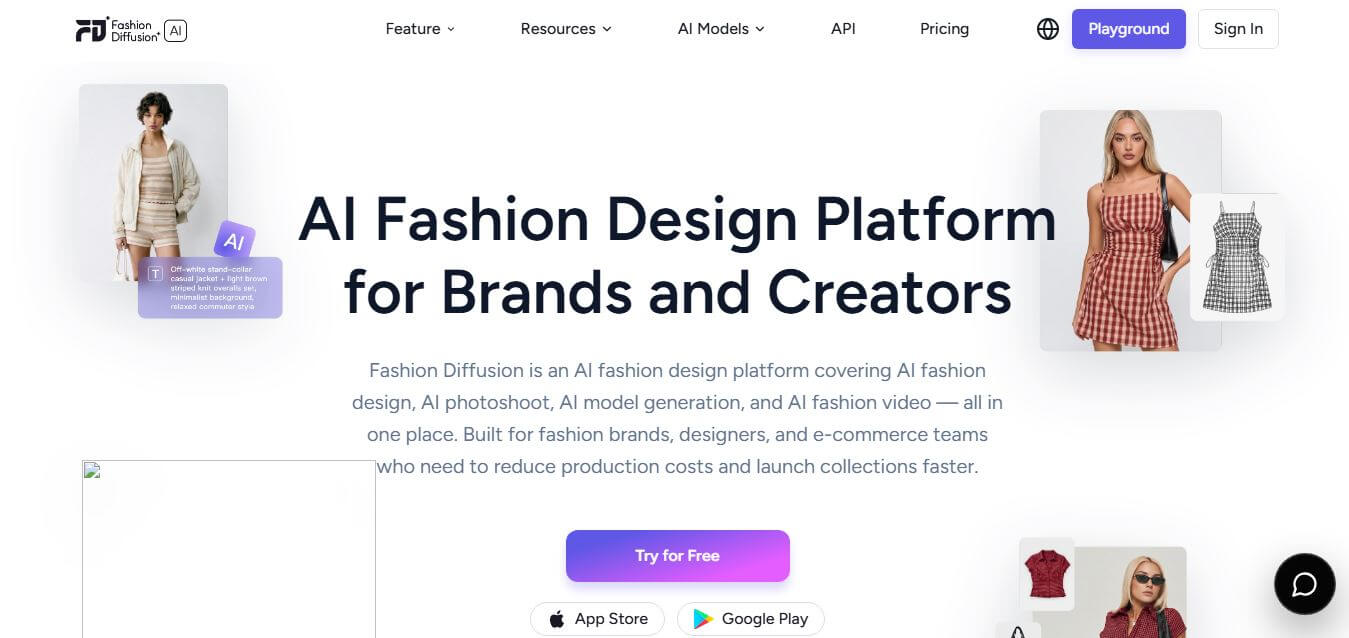
Fashion Diffusion AI
Fashion Diffusion is an AI-powered fashion design platform that helps brands and designers create clothing designs, virtual try-ons, AI models, product photos, and marketing visuals faster and cost-effectively.
Paid
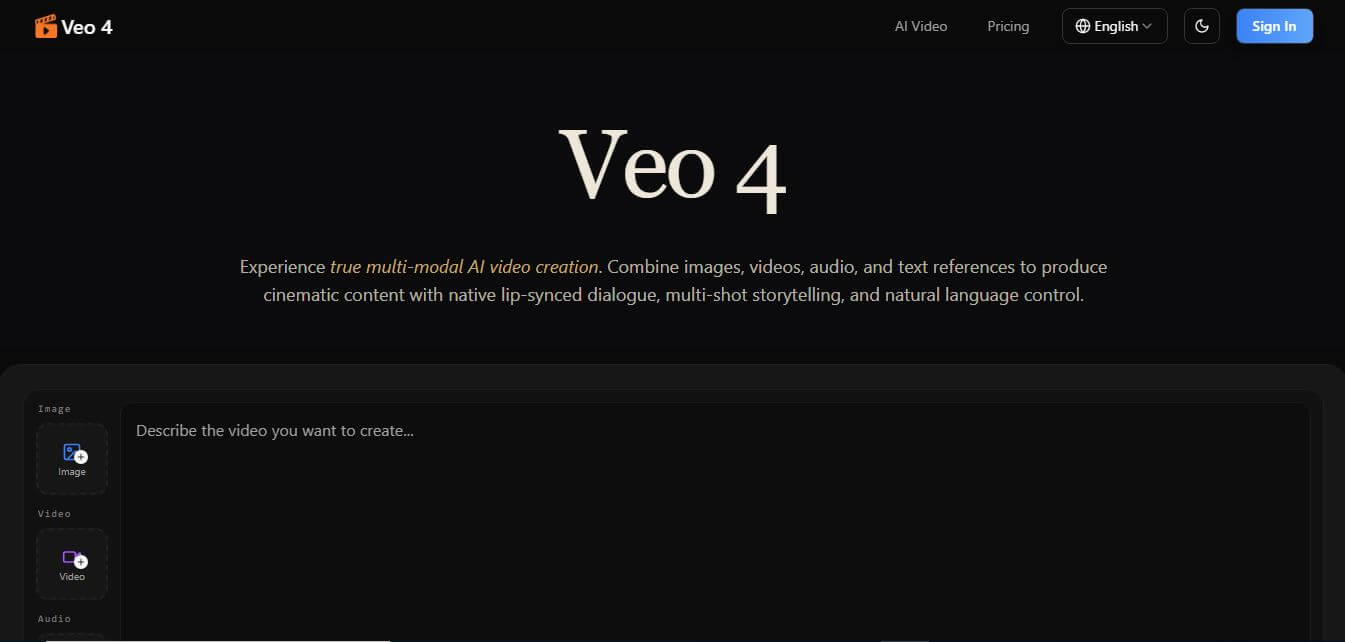
Veo 4
Veo 4 AI is an AI video creation platform that generates dramatic videos from text, images, audio, and video prompts using realistic motion and synchronized sound.
Paid
Alternatives
Alternatives to Databricks
The best Databricks alternatives include Snowflake, Google Cloud BigQuery, Amazon Redshift, Microsoft Fabric, Cloudera Data Platform, and Dremio. These platforms provide enterprise cloud data warehousing, business intelligence, and large-scale analytics. While Databricks specializes in an open lakehouse and Data Intelligence Platform powered by Apache Spark, Delta Lake UniForm (supporting Apache Iceberg), Photon, and Unity Catalog to unify streaming data engineering with generative AI and machine learning across all major clouds, alternatives like Snowflake originated primarily as specialized SQL data warehouses, and BigQuery operates as Google's native serverless query engine.
 4.9
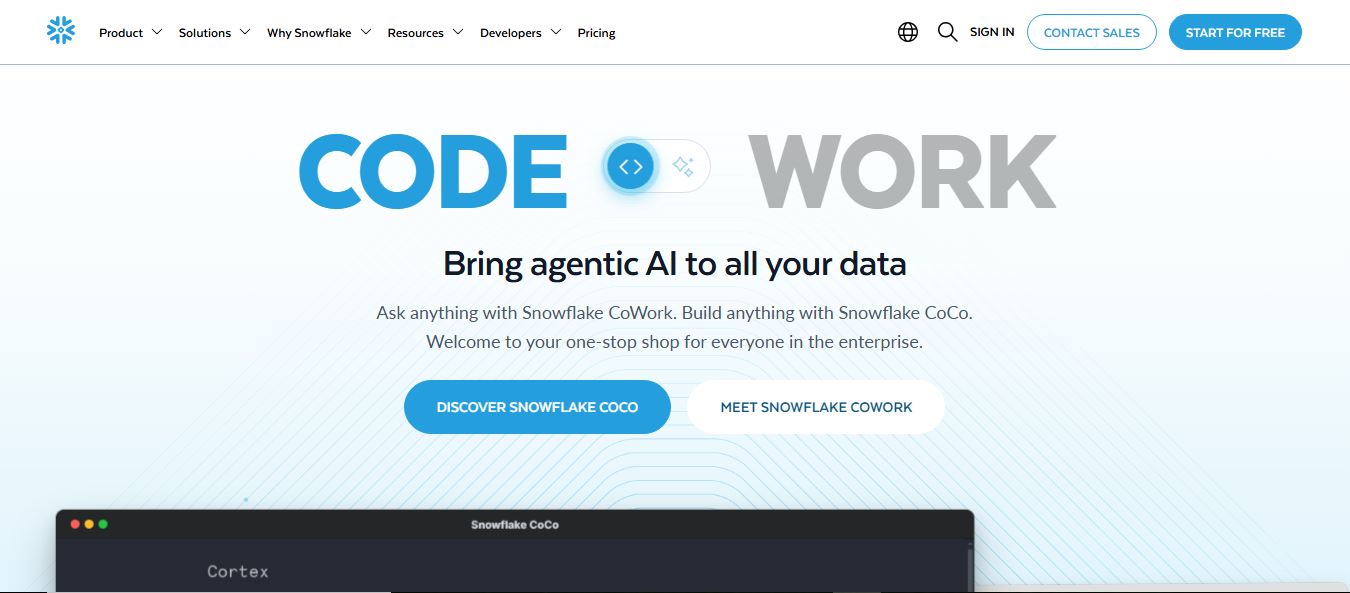
4.9Snowflake
Data Analytics
Snowflake is a cloud data platform that helps businesses store, process, and analyze large amounts of data in one place. It supports data warehousing, data sharing, and real-time analytics, enabling teams to work with data efficiently across multiple cloud environments like AWS, Azure, and Google Cloud.
 4.8
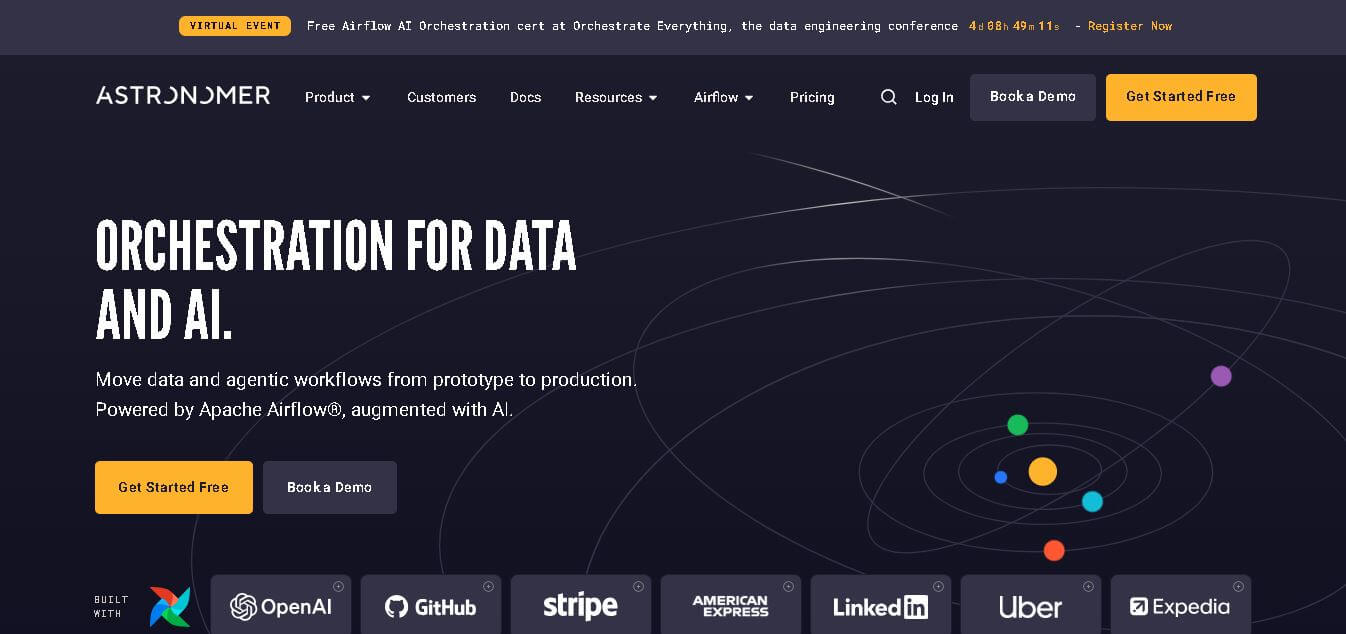
4.8Astronomer
Data Analytics
Astronomer provides Astro, a managed Apache Airflow platform for orchestrating data and AI workflows. It helps data teams develop DAGs, automate deployments, monitor pipelines, scale workloads, manage infrastructure, and troubleshoot failures while reducing operational overhead. Astro supports local and browser-based development, enterprise security, observability, and usage-based infrastructure pricing.
GMPlus
Data Analytics
GMPlus is an AI-powered email assistant that integrates with Gmail to help you write, reply to, and optimize emails faster using ChatGPT. It generates context-aware responses, fixes grammar, and offers ready-made prompts and templates—making email communication quicker, more professional, and efficient.