
Skild AI
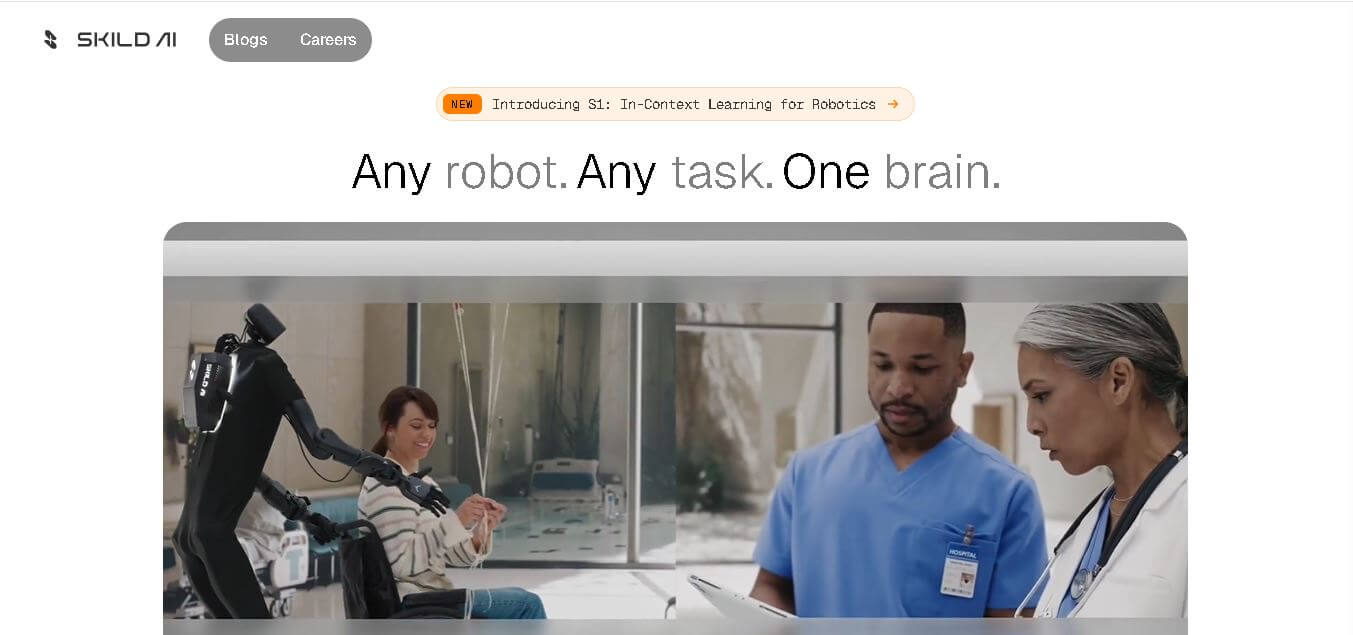
Skild AI develops general-purpose intelligence for robots operating in the physical world. Its Skild Brain is designed to work across different robot bodies and tasks, supporting applications such as inspection, mobile manipulation, autonomous packing, navigation, and dexterous activities. The company aims to make robotic intelligence more adaptable, scalable, and useful.
What is Skild AI?
Skild AI is a robotics intelligence company developing a general-purpose robotic brain designed to control different robot types across diverse physical tasks. Its Skild Brain combines vision, robot data, simulation, and learning techniques to help robots operate in unpredictable environments. The company focuses on omni-bodied intelligence, enabling robots to adapt across hardware and applications.
Skild AI was founded in 2023 and officially emerged from stealth in 2024 with $300 million in Series A funding at a $1.5 billion valuation. In January 2026, the company announced $1.4 billion in Series C funding, taking its valuation above $14 billion. Skild has also expanded into Bengaluru and acquired Zebra Technologies’ robotics division in 2026, strengthening its warehouse robotics capabilities.
- Founders: Deepak Pathak, Abhinav Gupta
- Launch Year: 2023
Use Cases:
- Automating dangerous industrial tasks in manufacturing, machine rooms, and energy facilities
- Deploying resilient quadruped robots for site inspection and environmental monitoring
- Operating vision-based humanoid robots for dexterous picking, packing, and object manipulation
- Powering mobile manipulators across logistics centers, healthcare facilities, and construction sites
Technology:
- Hierarchical foundation model pairing high-level action policies with low-level joint controllers
- Pre-training architecture combining large-scale simulated environments and human video learning
- Omni-bodied hardware abstraction API allowing single-brain deployment across various robot types
Target Users:
- Robotics manufacturers and original equipment manufacturers (OEMs)
- Enterprise industrial teams in manufacturing, logistics, healthcare, and energy
- AI research labs and automated facility operators
Ecosystem: Strategic hardware and technology partnerships with leaders like ABB Robotics, Universal Robots, and NVIDIA.

Key features of Skild AI
Skild AI's key features are
- Omni-Bodied Intelligence: A single general-purpose brain that transfers skills seamlessly across humanoids, quadrupeds, tabletop arms, and mobile platforms.
- Hierarchical Action Policy Architecture: Combines low-frequency high-level decision policies (navigation, task intent) with high-frequency low-level motor controllers (joint torque, force distribution).
- Observational Learning from Human Video: Learns complex physical manipulations directly by analyzing human movement data at scale.
- Breakthrough Data Scaling: Trains across trillions of simulated interactions and internet-scale videos, overcoming real-world hardware data scarcity.
- Low-Level Skill API Abstraction: Wraps low-level skills like grasping, handover, and obstruction avoidance into simple high-level API calls.
- In-Context Adaptation (S1 Model): Allows robots to quickly adapt to new environments, uncalibrated hardware changes, and unexpected physical resistance.
Skild AI Pricing
Skild AI provides custom enterprise pricing tailored to commercial deployments, hardware manufacturer partnerships, and enterprise automation contracts.
Enterprise & OEM Partner Model:
- Custom pricing structured according to deployment scale, hardware fleet integration, and support SLAs
- Includes access to the Skild Brain foundation model, low-level skill APIs, and custom post-training fine-tuning on enterprise datasets
Is Skild AI Worth It?
Skild AI is exceptionally worth it for enterprise organizations, industrial operators, and robot manufacturers aiming to deploy general-purpose physical automation. By removing the need to write custom, hardware-specific motion planning or task code for each deployment scenario, Skild AI significantly speeds up time-to-market and lowers total cost of ownership for commercial robotics.
Real-World Use Cases
- Warehouse Autonomous Packing & Sortation: Mobile manipulators executing precise item grasping, packaging, and sorting in unstructured fulfillment centers.
- Hazardous Site Inspection: Resilient quadrupeds powered by Skild AI navigating rough terrain and machine rooms to inspect critical infrastructure.
- Humanoid Industrial Assembly: Bipedal humanoid robots performing dexterous assembly line operations alongside human workers.
- Automated Facility Security: Mobile security platforms performing dynamic navigation, anomaly detection, and obstacle negotiation across large facilities.
Who is using Skild AI?
Skild AI is designed for key players across the physical automation landscape, including
- Industrial Robotics OEMs: Hardware makers integrating general-purpose AI brains into their robot fleets
- Manufacturing & Automotive Enterprises: Factories seeking adaptable, safe human-robot collaborative workforces
- Supply Chain & Logistics Giants: Fulfillment providers automating picking and packing operations
- Energy & Infrastructure Operators: Facilities deploying autonomous inspection robots in hazardous locations
Best Skild AI Alternatives
Some of the strongest Skild AI alternatives include
- Physical Intelligence (Pi)
- Figure AI
- Covariant
- Boston Dynamics
- Sanctuary AI
Pros and Cons of Skild AI
Pros
- Omni-bodied architecture works across diverse robot hardware without re-engineering
- Solves robotics data scarcity via large-scale simulation and human video pre-training
- Hierarchical controls deliver robust high-level reasoning and millisecond motor precision
- Backed by $1.8B+ in funding and top strategic partners like NVIDIA and SoftBank
- Provides simple skill APIs that abstract away messy physical-world complexity
Cons
- Focused on commercial enterprise and OEM partners rather than individual developers
- Requires specialized hardware platforms capable of executing real-time policy outputs
- Custom fine-tuning may be necessary for ultra-niche industrial environments
Why Choose Skild AI?
Skild AI fundamentally changes how robots are programmed by replacing narrow, single-purpose software with a universal physical AI foundation model. Its omni-bodied approach unlocks unprecedented generalization across hardware form factors and tasks.
- Enables a single AI model to control humanoids, quadrupeds, and robotic arms
- Drastically reduces robotics R&D costs and deployment timelines for enterprise teams
- Prevents hardware lock-in by maintaining software portability across different robot brands
- Leverages world-class research from leaders in self-supervised and reinforcement learning
How Skild AI Works
- Foundation Pre-Training: The Skild Brain pre-trains on massive simulation data and internet-scale human videos to learn physical cause-and-effect.
- Hardware & Task Mapping: The model adapts to specific hardware morphologies using hierarchical policies that bridge high-level vision and joint torques.
- Targeted Post-Training: Post-trains with focused real-world hardware data to hone specific industrial or commercial tasks.
- API Skill Execution: Developers trigger high-level actions (e.g., grasp, navigate, hand over) through clean API calls, while the model handles physical variations.
Skild AI vs. Competitors
The primary distinction between Skild AI, Physical Intelligence (Pi), and Figure AI lies in Skild AI's strictly omni-bodied foundation model philosophy. While Figure AI builds proprietary humanoid hardware integrated with specialized AI, and Covariant focuses on warehouse picking software, Skild AI provides a horizontal, hardware-agnostic "brain" designed to power any physical robot across any domain.
| Feature | Skild AI | Physical Intelligence (Pi) | Figure AI |
|---|---|---|---|
| Primary Focus | Omni-Bodied AI Foundation Model | Universal Physical AI Software | Humanoid Hardware & AI Integration |
| Hardware Agnostic | Yes (Humanoids, Quadrupeds, Arms) | Yes | No (Proprietary Humanoid) |
| Training Data Sources | Simulation + Internet Videos + Robot Data | Multi-task Physical Data Sets | Humanoid Teleoperation + Vision-Language |
| Deployment API | Hierarchical Skill APIs | Custom SDK & Model Weights | Embedded On-Robot Stack |
| Pricing Model | Custom Enterprise / Partner Contracts | Custom Enterprise | Hardware + Software Enterprise Leasing |
How do we rate Skild AI?
| Parameter | Rating (out of 5) |
|---|---|
| Technology & Innovation | 4.9 |
| Hardware Generalization | 4.9 |
| Feature Set & APIs | 4.8 |
| Commercial Potential | 4.8 |
| Industry Backing & Partnerships | 4.9 |
| Overall Score | 4.8 |
Skild AI Review
Skild AI is one of the most promising physical AI companies in the field of robotics. By establishing an omni-bodied foundation model that tackles data scale through simulation and video observation, Skild AI addresses the fundamental barrier that has constrained real-world robotics for decades. Its ability to power different hardware platforms with a unified intelligence core makes it a potential general-purpose operating system for future autonomous labor.
Conclusion
Skild AI represents an ambitious approach to physical AI by developing a general-purpose robotic brain capable of operating across different machines and tasks. Its work spans robotics foundation models, in-context learning, manipulation, navigation, inspection, and warehouse automation. With major funding, industry partnerships, global expansion, and continued research into omni-bodied intelligence, Skild AI is positioning itself as a significant player in next-generation robotics. For organizations exploring adaptable physical automation, Skild AI offers an interesting direction beyond traditional task-specific robotic programming.
FAQ
What is Skild AI used for?
Skild AI is designed to provide intelligence for robots performing physical-world tasks. Its technology supports applications including security and inspection, mobile manipulation, autonomous packing, navigation, grasping, and object handovers. For businesses, the goal is to reduce the need for task-specific robotic programming while helping machines operate more effectively in changing, unstructured environments.
What is the Skild Brain?
The Skild Brain is Skild AI’s general-purpose robotics foundation model. It is designed to control different robot bodies and perform different tasks rather than being restricted to one machine. Skild describes this approach as “omni-bodied intelligence,” where one underlying intelligence can adapt across robot morphologies, environments, and physical applications.
How does Skild AI teach robots new skills?
Skild AI trains its robotics models using large-scale simulation, internet video, human demonstrations, and targeted real-world data. Its systems can learn from demonstrations and observations rather than relying entirely on manually programmed behaviors. This approach is intended to help robots develop transferable skills and adapt when they encounter unfamiliar physical situations.
Can Skild AI work with different types of robots?
Yes. Skild AI’s core approach is specifically designed around different robot embodiments. Its research has explored humanoids, quadrupeds, wheeled robots, mobile manipulators, and other robotic forms. The company aims to create intelligence that is not tightly coupled to one hardware configuration, allowing learned behaviors to generalize across different physical platforms.
What is Skild AI’s S1 model?
S1 is Skild AI’s robotics foundation model introduced in August 2026. It is designed as an in-context learner that can translate a video demonstration of a desired task into robot actions. Skild reports that S1 can handle long-horizon tasks lasting up to 10 minutes, including tasks it did not encounter during pre-training.
What industries can use Skild AI?
Skild AI can potentially support industries where robots need to perform physical work in dynamic environments. Its publicly demonstrated applications include security and inspection, warehouse operations, mobile manipulation, autonomous packing, and industrial robotics. Its partnerships and deployments show that it is also focused on factories, warehouses, and other real-world environments that need adaptable robotic automation.
Does Skild AI offer a consumer chatbot or AI assistant?
No. Skild AI is primarily focused on robotics and physical AI rather than consumer-facing chatbots or productivity assistants. Its technology is intended to provide intelligence for physical machines, allowing robots to perceive environments, execute movements, adapt to situations, and perform practical tasks in the real world.
User Reviews
No reviews yet for Skild AI.
Featured Tools
Featured AI tools from TechShark

Melody Genie
MelodyGenie is an AI-powered music generator that creates original songs from simple text prompts. Users can choose styles, moods, and genres, then instantly generate melodies and full tracks, making it easy for creators, marketers, and hobbyists to produce custom music without musical expertise.
Freemium
Kimi AI
Kimi AI is an advanced AI assistant developed by Moonshot AI that helps you chat, research, write, code, and automate tasks in one place. It supports web search, file analysis, and multimodal inputs, and can even run autonomous “agent” workflows to complete complex tasks end-to-end.
Freemium
Fashion Diffusion AI
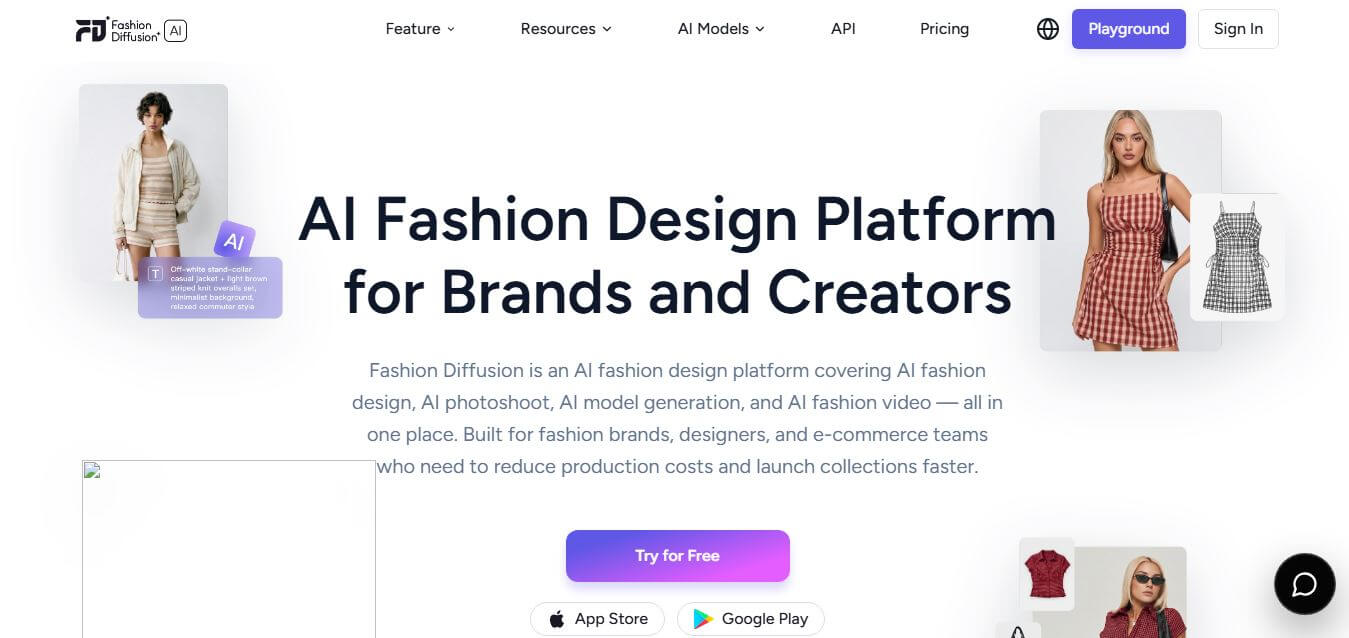
Fashion Diffusion is an AI-powered fashion design platform that helps brands and designers create clothing designs, virtual try-ons, AI models, product photos, and marketing visuals faster and cost-effectively.
Paid
Veo 4
Veo 4 AI is an AI video creation platform that generates dramatic videos from text, images, audio, and video prompts using realistic motion and synchronized sound.
Paid
Alternatives
Alternatives to Skild AI
The best Skild AI alternatives include Physical Intelligence (Pi), Figure AI, Covariant, Boston Dynamics, and Sanctuary AI. Physical Intelligence focuses on universal physical AI foundation models for hardware. Figure AI builds autonomous humanoid robots for manufacturing and logistics. Covariant specializes in AI robotics software for warehouse automation and order fulfillment, while Boston Dynamics leads in advanced mobility and autonomous industrial inspection systems.
 4.7
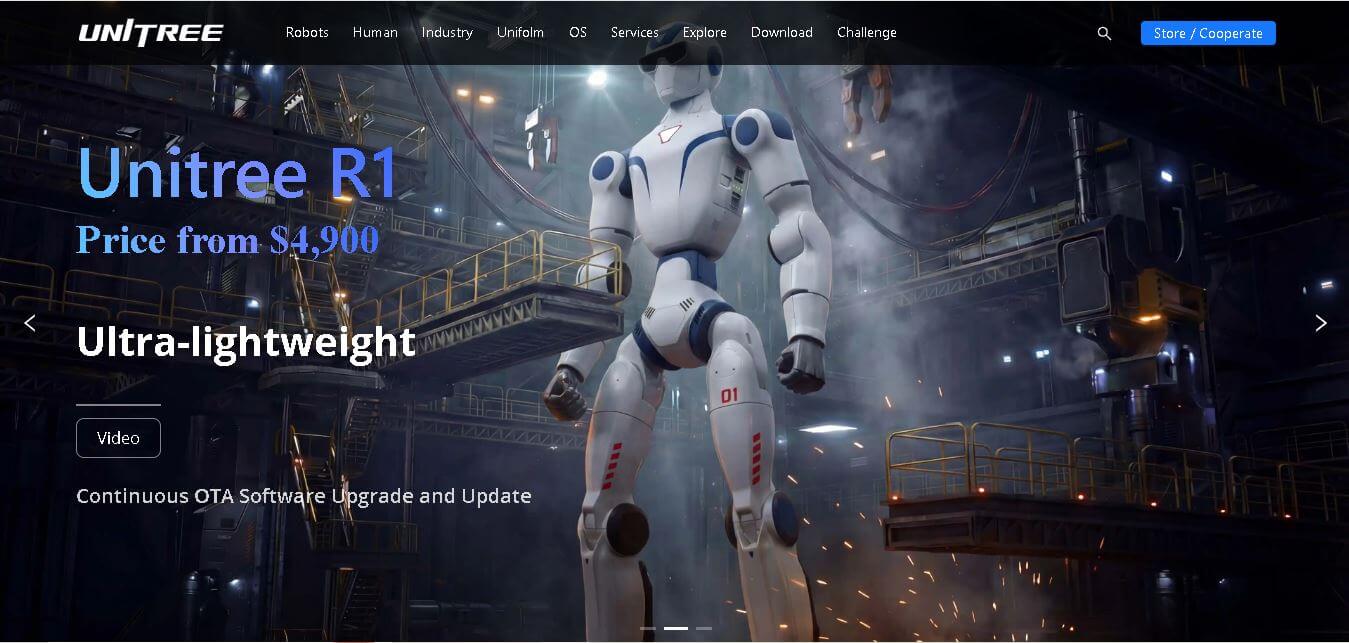
4.7Unitree R1
Robots and Devices
Unitree R1 is a lightweight humanoid robot built for movement, interaction, robotics research, education, and secondary development. With 26 degrees of freedom, binocular vision, voice capabilities, open control interfaces, and an approximately 1-hour battery life, R1 provides a compact platform for exploring humanoid robotics and real-world AI applications.
 4.8
4.8AgXeed (AgBot Autonomous Farming Solutions)
Robots and Devices
AgXeed develops autonomous agricultural technology designed to make field operations more efficient, flexible, and soil-friendly. Its AgBots work with TraXwise software to plan, monitor, and document farming tasks. The ecosystem supports different agricultural applications while helping farmers address labor shortages, reduce soil impact, improve productivity, and gain greater operational control.
 4.7
4.7Synchron (Stentrode BCI Platform)
Robots and Devices
Synchron develops implantable brain-computer interface technology intended to help people with paralysis communicate and interact with digital devices using movement-related brain signals. Its Stentrode™ device is implanted through a blood vessel, avoiding open brain surgery. The technology is currently being evaluated in clinical trials and is not commercially approved.