Dial
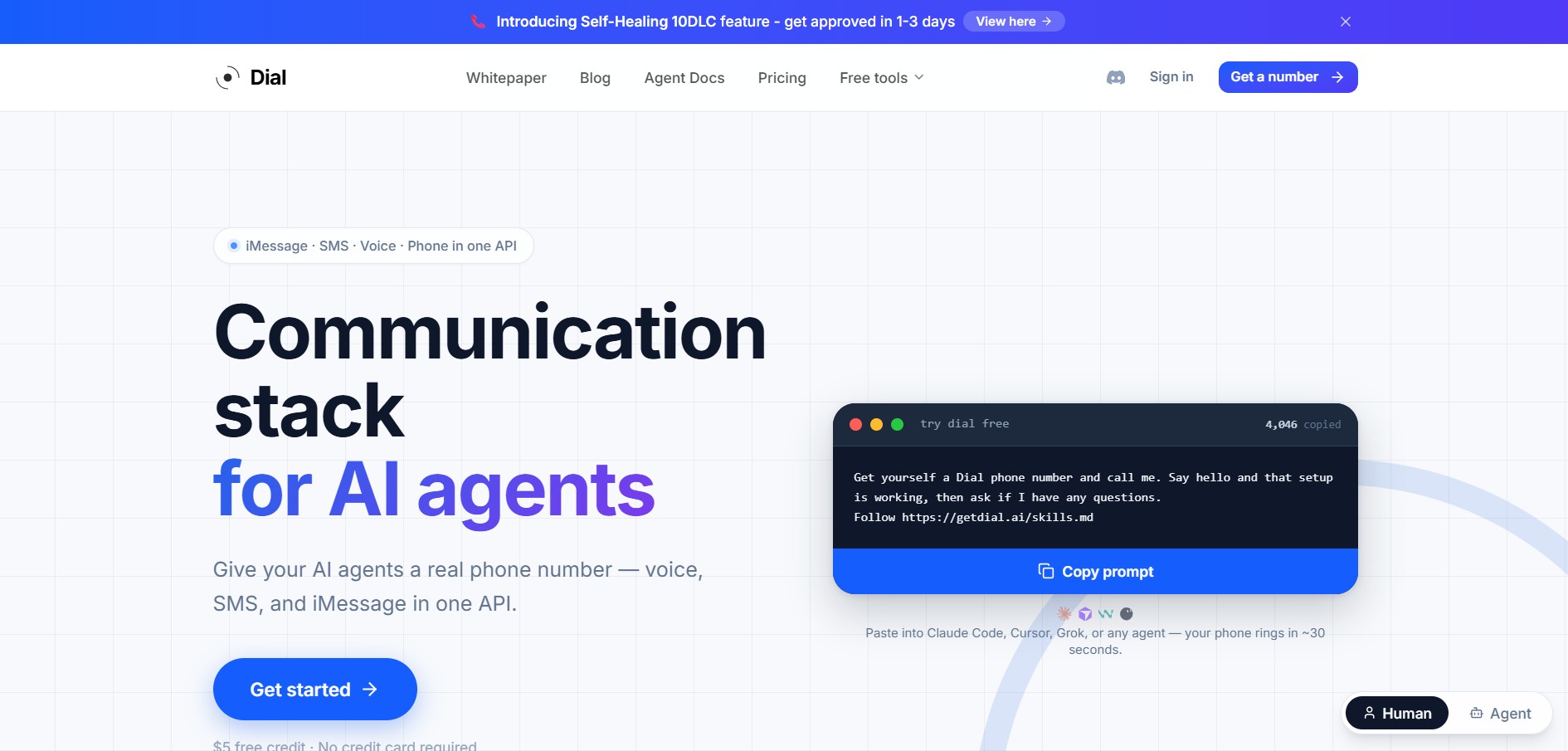
GetDial (Dial) is a communication stack for AI agents that gives them a real phone number to make and receive calls, send SMS/WhatsApp messages, and handle OTPs—all through a single API, CLI, or SDK.
What is Dial?
GetDial (Dial) is an AI communication platform that gives autonomous agents their own real phone identity—a number they can use to make calls, send SMS or WhatsApp messages, and receive responses without human involvement. Instead of relying on traditional telecom systems built for people, Dial provides a single API, CLI, or SDK that lets AI agents handle tasks like booking appointments, verifying accounts via OTP, or acting as a virtual receptionist. It essentially turns communication channels like voice and messaging into programmable tools, enabling AI systems to interact with the real world in a fully automated way.
Launched in 2026, Dial bridges the long-standing gap between terminal-bound AI agents and the real-world telecommunications grid. By packing real phone numbers, AI voice calling, worldwide SMS, and native blue-bubble iMessage into one standardized API, Dial enables coding agents (Claude Code, Cursor, Windsurf) and autonomous bots to complete real-world tasks (like calling a local plumber or handling phone-gated SMS verification signups) with zero human intermediary steps. Dial provides a $5 free credit trial (no credit card required) alongside flexible usage-based pricing.
- Platform Model: Communication Stack & Telephony Infrastructure for AI Agents
- Core Surface: Voice Calls, SMS (200+ countries), and Native iMessage in One Unified API
Use Cases:
- Giving autonomous coding agents (Claude Code, Cursor) a real phone number to call local vendors, schedule appointments, and request service quotes
- Bypassing phone-gated service signups by having an agent provision a number and wait for the inbound 2FA SMS code via automated CLI commands
- Engaging customers through native blue-bubble iMessage from the agent's dedicated phone number with automatic RCS and SMS fallbacks
- Handling inbound and outbound voice customer service with live real-time speech transcription and dynamic conversational turn-taking
- Routing all multimodal telecommunications channels into a single unified webhook format
Technology:
- Unified multi-channel webhook protocol formatting calls, SMS, and iMessage into identical JSON payload structures
- Zero-dashboard autonomous onboarding protocol enabling agents to self-provision numbers using
skills.md - Comprehensive developer surface featuring TypeScript/Python SDKs, REST endpoints, official CLI, and native Model Context Protocol (MCP) server
Target Users:
- Autonomous agent developers building bots that need to interact with human service providers over the phone
- Full-stack engineers building multi-channel customer communications across iMessage, SMS, and voice
- Terminal power users and builders steering Claude Code, Cursor, or Grok who need instant real-world telecommunications
- SaaS founders wanting to give automated AI companies their own dedicated corporate phone identities
Acquisition: Operates as an independent developer tools and AI telephony platform (getdial.ai)

Key features of Dial
Dial's key features are
- 10-Second Self-Provisioning: AI agents can read Dial's skills documentation, register autonomously, and acquire a live US, Canadian, or international phone number in seconds without human dashboard intervention.
- Native Blue-Bubble iMessage: Agents can send and receive real iMessage chats from their own provisioned number, featuring automatic fallback to RCS/SMS.
- Inbound & Outbound Voice Calls: Full conversational voice calling engine with real-time speech transcription, low-latency text-to-speech synthesis, and custom prompt instruction steering.
- Global Two-Way SMS: Send and receive text messages across 200+ countries with incoming messages routed straight to webhooks.
- Blocking Verification Listener: Includes dedicated blocking primitives (e.g.,
dial wait-for message.received) that allow agents to pause and capture incoming 2FA SMS verification codes automatically. - Single Normalized Webhook: Normalizes voice calls, SMS texts, and iMessage threads into an identical event format, saving developers from maintaining separate channel parsers.
- Model Context Protocol (MCP) Server: Plugs directly into Claude Code, Cursor, Windsurf, and custom LLM runtimes out of the box.
- Enterprise Security Standards: Certified GDPR, CCPA, SOC 2, and HIPAA compliant for sensitive healthcare and financial communications.
Dial Pricing
Dial offers a transparent pay-as-you-go developer model backed by a free starting credit allowance.
Free Developer Credit:
- $5 Free Credit: Granted immediately upon signup with no credit card required
- Full access to phone number provisioning, outbound test calls, SMS, and iMessage testing
Usage-Based Developer Tiers:
- Pay-As-You-Go: Billed strictly for active phone numbers, per-minute voice call audio, and per-message SMS/iMessage delivery
- Unrestricted access to TypeScript/Python SDKs, REST API, CLI, and hosted MCP server
Disclaimer: For current per-minute voice rates, per-SMS country pricing indexes, and enterprise volume discounts, please check the official portal at getdial.ai.
Who is using Dial?
Dial is used by AI developers and agent builders globally, including
- Autonomous Agent Developers: Giving bots real-world capability to call local services, verify bookings, and conduct phone inquiries
- Terminal & CLI Power Users: Instructing Claude Code or Cursor to telephone them when a build finishes or a bug is detected
- Customer Service Automation Squads: Managing two-way customer communication over iMessage and voice through a single clean API
- Multi-Agent Startups: Providing newly minted autonomous AI entities with dedicated telephone identities
Best Dial Alternatives
Some of the strongest Dial alternatives include
- Twilio
- Bland AI
- Vapi
- Retell AI
- Plivo
- Sinch
Pros and Cons of Dial
Pros
- Enables AI agents to autonomously provision numbers and sign up without human dashboard clicks
- Native blue-bubble iMessage integration alongside traditional SMS and voice calling
- Single webhook format normalizes all channels, drastically cutting engineering overhead
- First-class MCP server support allows instant setup inside Claude Code, Cursor, and Windsurf
- $5 free trial credit without requiring credit card details
Cons
- A newly launched infrastructure platform compared to legacy telecom providers like Twilio
- Requires developer familiarity with API keys, SDKs, or MCP client configurations
- Certain international number types and local telecommunication carrier regulations apply by jurisdiction
Why Choose Dial?
Setting up telecommunications for an AI agent on legacy platforms like Twilio involves human verification steps, complex console dashboards, and fragmented APIs for voice, SMS, and messaging. Dial redesigns telephony from the ground up for the agent era.
- Lets your agent acquire a phone number in 10 seconds via API and use it immediately
- Solves phone-gated SMS signups with built-in code waiting primitives
- Adds blue-bubble iMessage to your agent's communication capabilities
- Delivers a single webhook format across every communication channel
Dial vs. Competitors
The main difference between Dial, Twilio, Bland AI, and Vapi lies in agentic autonomy and channel consolidation. While Twilio requires extensive manual human setup and separate channel APIs, and Bland AI and Vapi focus primarily on synthetic phone call voice agents, Dial is built specifically for autonomous AI agents—providing numbers, voice, global SMS, and native iMessage through a single API and MCP server.
| Feature / Tool | Dial (getdial.ai) | Twilio | Bland AI | Vapi |
|---|---|---|---|---|
| Core Focus | Communication Stack for AI Agents | Enterprise Telephony & SMS API | AI Phone Calling Platform | Voice AI Developer Platform |
| Agent Autonomous Provisioning | Yes (~10s self-provisioning via API) | No (Manual console setup) | No (Dashboard/API keys) | No (Developer portal) |
| Supported Channels | Voice, SMS & Native iMessage | Voice, SMS, WhatsApp | Voice Calling primarily | Voice Calling primarily |
| Native MCP Server | Yes (Claude Code, Cursor ready) | Third-party community MCPs | No | No |
| Unified Webhook Format | Yes (One shape for all channels) | Separate channel payloads | Call event payloads | Call webhook payloads |
| Best For | AI agents needing full phone identities | Enterprise legacy telecom systems | High-volume automated voice calls | Custom low-latency voice assistants |
How do we rate Dial?
| Parameter | Rating (out of 5) |
|---|---|
| Agent Self-Provisioning & Onboarding | 5.0 |
| Multi-Channel Breadth (Voice, SMS, iMessage) | 4.9 |
| MCP & Developer Tooling Integration | 4.9 |
| Unified Webhook Consistency | 4.9 |
| Value for Money | 4.8 |
| Overall Score | 4.90 |
Dial Review
Dial provides a critical and brilliantly executed missing link in the modern AI agent ecosystem. By treating the AI agent—rather than a human engineer clicking through web consoles—as the primary consumer of telecom services, Dial removes enormous friction. The ability to spin up a working phone number in 10 seconds, place and receive voice calls, send SMS texts across 200+ countries, and converse over native blue-bubble iMessage through one consistent API makes Dial an essential telecommunications stack for any serious agent builder.
Conclusion
Dial is a powerful infrastructure layer that gives AI agents something they’ve never truly had before—a real phone identity. Instead of being limited to chat or APIs, it enables agents to call, text, receive OTPs, and interact with the real world through voice, SMS, and WhatsApp using a single unified API. Its biggest strength lies in turning communication into an actionable capability, allowing agents to book appointments, verify accounts, handle inbound calls, and run entire workflows autonomously without human intervention. With flexible integrations via CLI, SDKs, or MCP, it fits seamlessly into modern AI stacks and agent frameworks. While it still requires thoughtful implementation and oversight for real-world use cases, the potential is massive.
FAQ
What is GetDial AI (Dial)?
Dial is a communication stack built for AI agents that gives them a real phone number. With a single API, agents can make calls, send SMS, receive messages, and even interact on platforms like WhatsApp—just like a human user.
How does Dial work?
Dial lets you provision a phone number for your AI agent and control it through APIs, SDKs, CLI, or MCP integration. Once connected, the agent can send texts, receive OTPs, and handle voice calls programmatically.
What can you do with Dial?
You can automate phone-based workflows like receiving verification codes (OTP), making AI-powered voice calls, sending and receiving SMS, and handling inbound calls with an AI receptionist.
Can AI agents make real phone calls with Dial?
Yes, Dial allows AI agents to place and receive real voice calls. You can define how the agent speaks, what it says, and how it responds during conversations.
Does Dial support SMS and WhatsApp?
Yes, it supports two-way messaging via SMS and WhatsApp globally. Agents can send messages, receive replies, and process them in real time.
Do you need coding skills to use Dial?
Basic technical knowledge helps, but Dial provides multiple ways to integrate—including CLI, SDKs (Node/Python), and no-install MCP connections—so developers and AI builders can choose what fits best.
Is Dial free to use?
Dial offers a free starting credit (around $5) with no credit card required. After that, it follows a pay-as-you-go model with pricing based on phone numbers, calls, and messages.
Who should use GetDial AI?
Dial is ideal for developers, startups, and AI teams building agent-based systems that need real-world communication—like voice assistants, automated support agents, or workflow automation tools.
User Reviews
No reviews yet for Dial.
Featured Tools
Featured AI tools from TechShark
Melody Genie
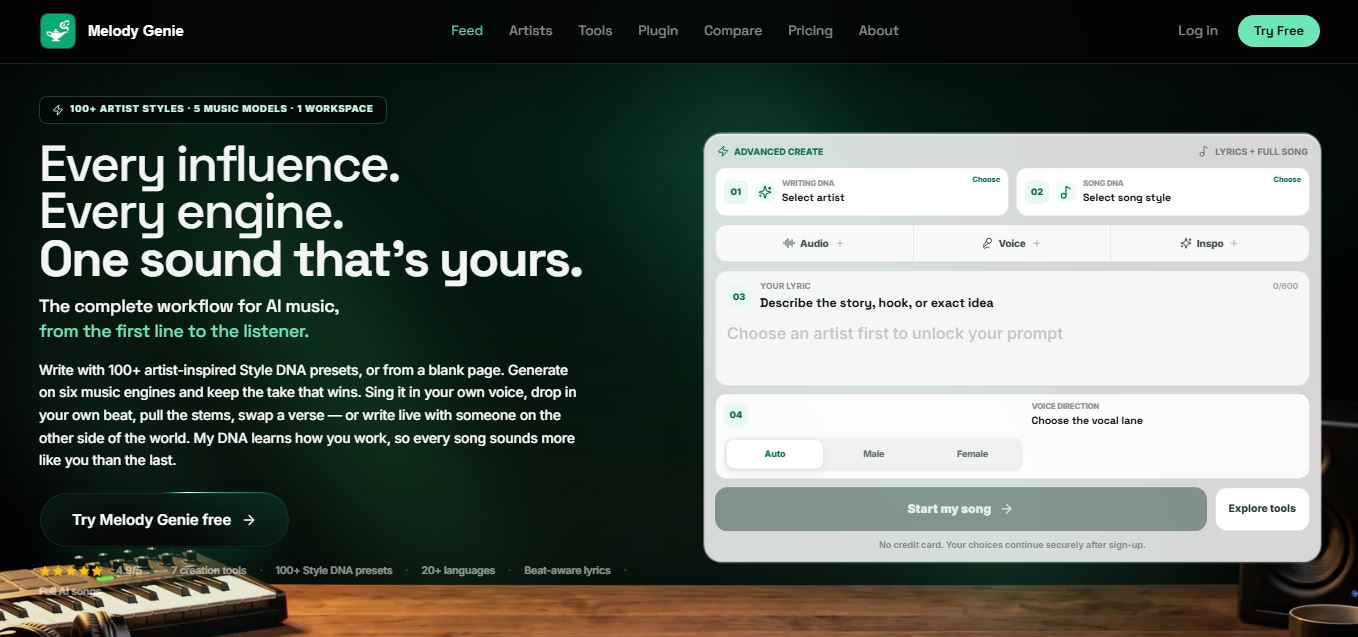
MelodyGenie is an AI-powered music generator that creates original songs from simple text prompts. Users can choose styles, moods, and genres, then instantly generate melodies and full tracks, making it easy for creators, marketers, and hobbyists to produce custom music without musical expertise.
Freemium
Kimi AI
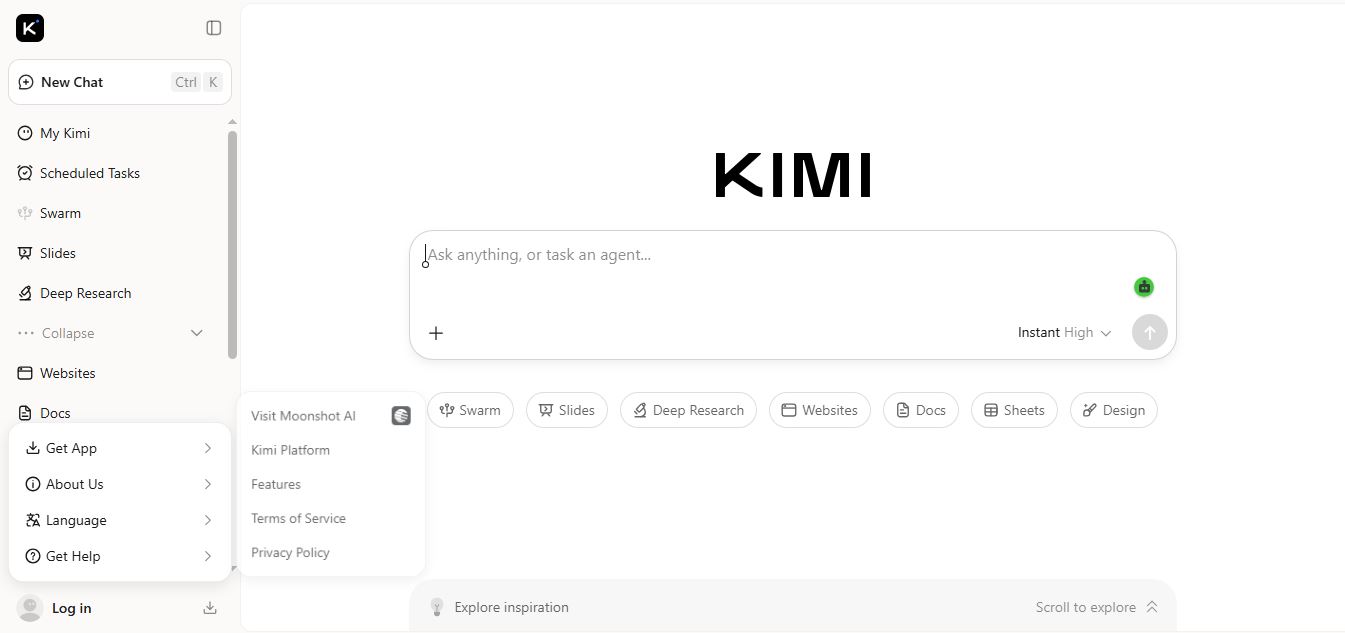
Kimi AI is an advanced AI assistant developed by Moonshot AI that helps you chat, research, write, code, and automate tasks in one place. It supports web search, file analysis, and multimodal inputs, and can even run autonomous “agent” workflows to complete complex tasks end-to-end.
Freemium
Fashion Diffusion AI
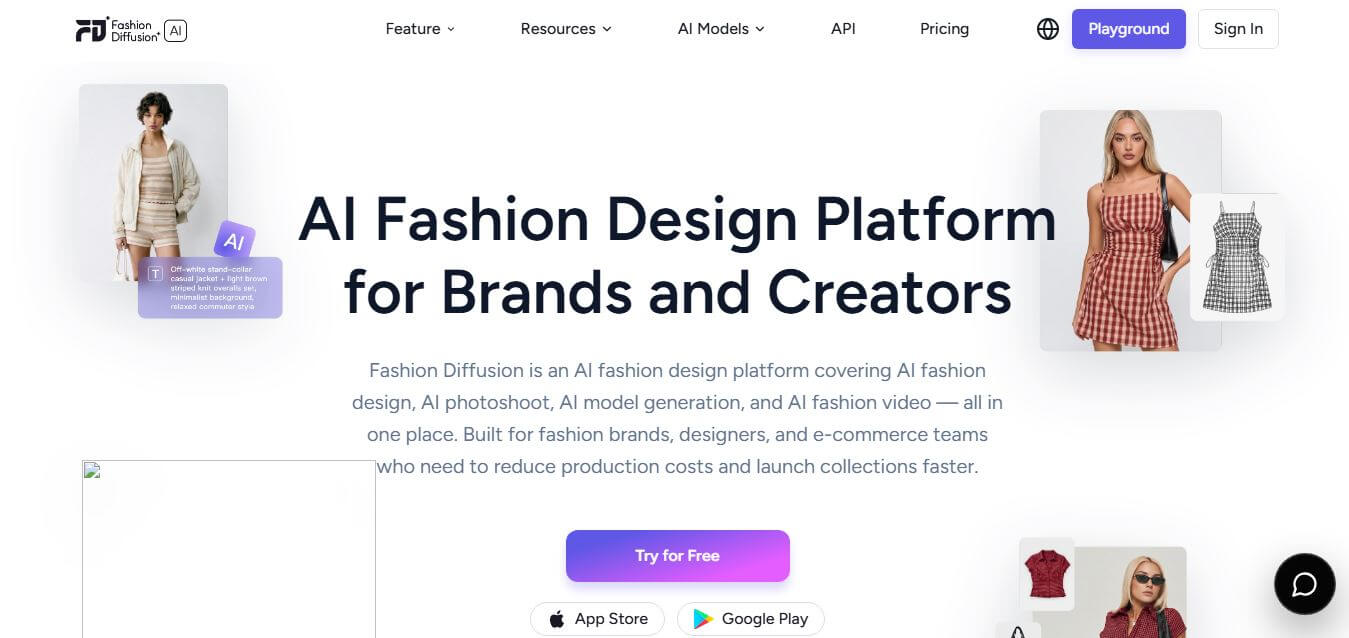
Fashion Diffusion is an AI-powered fashion design platform that helps brands and designers create clothing designs, virtual try-ons, AI models, product photos, and marketing visuals faster and cost-effectively.
Paid
Veo 4
Veo 4 AI is an AI video creation platform that generates dramatic videos from text, images, audio, and video prompts using realistic motion and synchronized sound.
Paid
Alternatives
Alternatives to Dial
The best Dial alternatives include Twilio, Bland AI, Vapi, Retell AI, Plivo, and Sinch. These platforms provide telephony APIs, SMS messaging, and voice call automation. While Dial specializes in an agent-first communication stack that lets AI agents autonomously provision numbers in 10 seconds, manage voice, SMS, and native blue-bubble iMessage through a single normalized webhook, and integrate via native MCP servers, alternatives like Twilio serve broad legacy enterprise telecom, and Bland AI focuses primarily on synthetic phone call workflows.
 4.9
4.9Talkwalker
AI Agent
Talkwalker is a consumer intelligence and social listening solution that helps brands track online mentions, analyze audience sentiment, monitor competitors, and discover emerging trends. It combines social media analytics, media monitoring, customer feedback, and AI-powered insights to support marketing, public relations, reputation management, and data-driven business decisions across global markets.
 5.0
5.0AI4K12
AI Agent
AI4K12 is an educational initiative focused on bringing artificial intelligence into K–12 classrooms. It provides grade-level learning guidelines, curated teaching resources, and the Five Big Ideas framework. Designed for educators and curriculum developers, AI4K12 supports age-appropriate AI instruction and helps students understand how intelligent technologies work and affect society.
Kommunicate
AI Agent
Kommunicate (kommunicate.io) is an AI-powered customer service automation and live chat platform that unites no-code generative AI agents, Kompose chatbot builder, seamless human escalation, voice AI, and omnichannel messaging across WhatsApp, web, and mobile apps.
Text
AI Agent
Text is an AI-powered customer service platform that combines live chat, help desk ticketing, AI agents, and workflow automation. It helps businesses manage customer conversations, automate repetitive support tasks, answer questions, engage website visitors, and turn customer interactions into sales opportunities through a unified communication workspace.
DocsBot AI
AI Agent
DocsBot AI is an AI chatbot and agent platform that turns websites, documents, knowledge bases, and support tickets into conversational assistants. Businesses can use it to automate customer support, answer questions, share internal knowledge, connect workflows, and provide information through website widgets and supported integrations.
SiteGPT AI
AI Agent
SiteGPT is an AI chatbot platform that helps businesses automate customer support using their website content, documents, and knowledge sources. It answers visitor questions, supports lead generation, and integrates into websites, allowing teams to handle repetitive inquiries, improve customer experiences, and provide assistance around the clock.
 4.7
4.7Halcyon
AI Agent
Halcyon is an AI energy intelligence platform that helps professionals search regulatory filings, analyze energy-market information, monitor developments, and access structured datasets. It combines document search, natural-language queries, AI-powered alerts, and specialized data subscriptions to turn fragmented energy information into actionable intelligence for research, monitoring, planning, and faster decision-making.
 4.5
4.5Enhancv
AI Agent
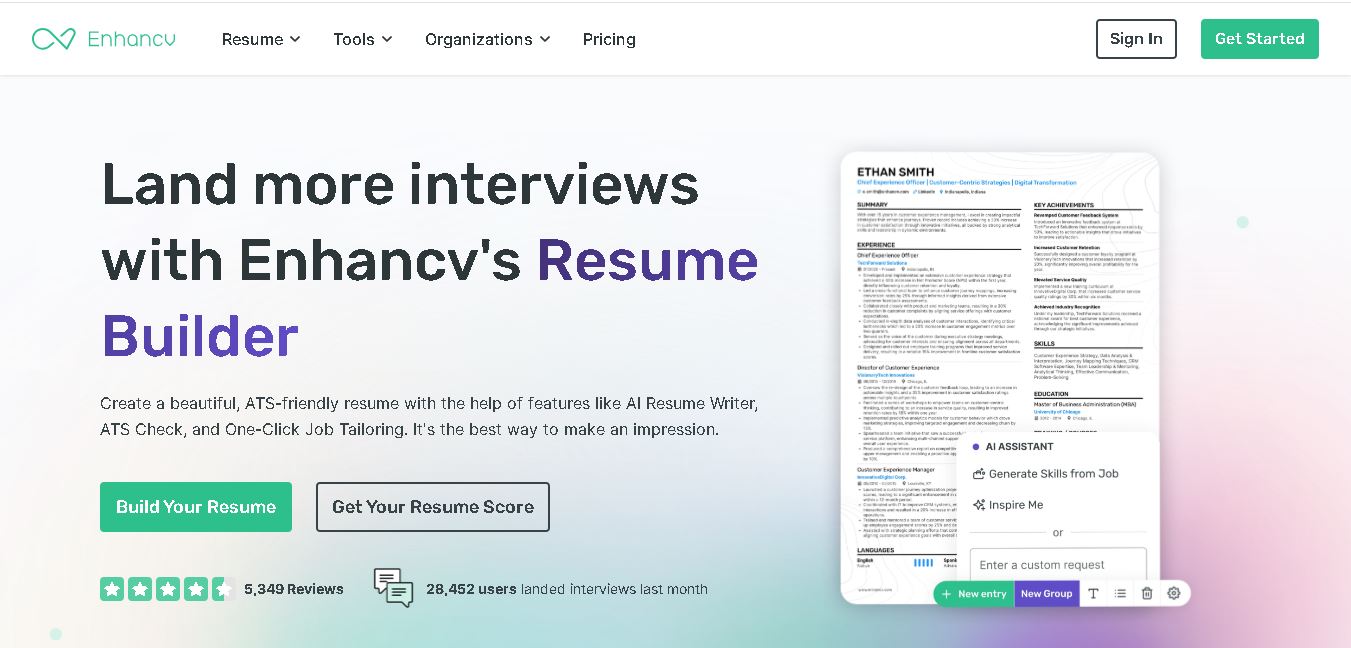
Enhancv helps job seekers build ATS-friendly resumes using customizable templates, AI writing assistance, resume checking, and job-specific tailoring. It also supports cover letters, application tracking, interview preparation, and resume translation. The platform is designed for candidates who want a polished application while keeping control over their experience, wording, and presentation.
 4.9
4.9Domo
AI Agent
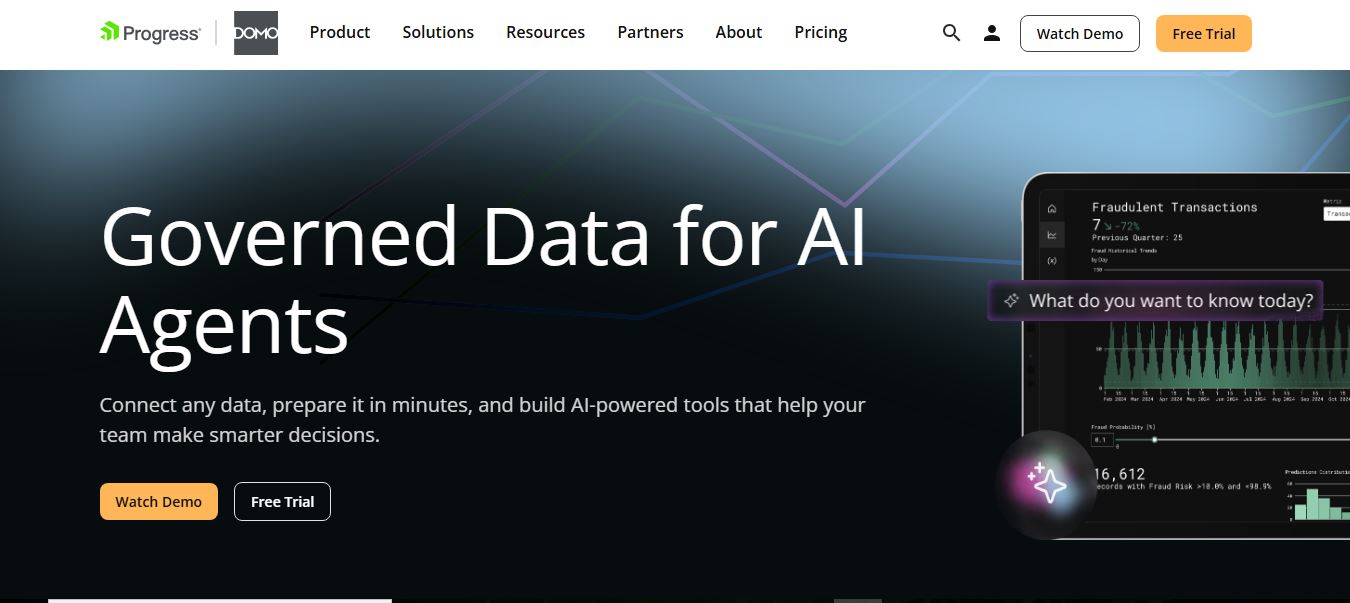
Domo is an AI-powered data and analytics platform that helps businesses connect, visualize, and act on data from multiple sources in one place. It combines dashboards, automation, and AI insights to turn raw data into decisions, enabling teams to monitor performance and drive better outcomes in real time.