
Fortinet
Fortinet is an AI-powered cybersecurity platform that helps businesses protect networks, cloud systems, endpoints, and data through a unified security approach. Its Security Fabric integrates threat detection, response, and automation, giving organizations real-time visibility and protection while simplifying security operations across complex digital environments.
What is Fortinet?
Fortinet is a global cybersecurity company that provides AI-powered security and networking solutions to protect organizations across networks, clouds, endpoints, and data. Founded in 2000, it offers a broad portfolio of enterprise security products like firewalls, endpoint protection, and threat intelligence systems. Its core platform, the Fortinet Security Fabric, integrates multiple security tools into one unified system for real-time protection, detection, and response across environments. Used by enterprises and governments worldwide, Fortinet helps secure digital infrastructure, reduce cyber risks, and manage complex security operations efficiently.
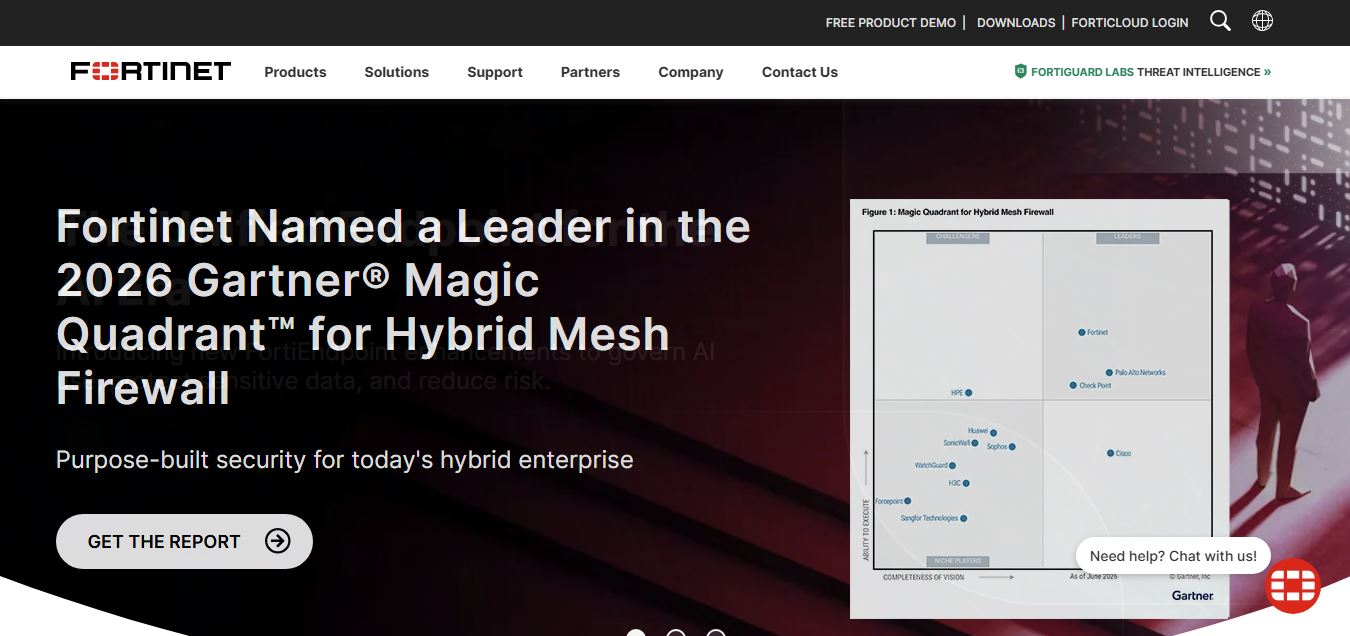
Founded in 2000 by brothers Ken Xie (former founder and CEO of NetScreen) and Michael Xie in Sunnyvale, California, Fortinet is a publicly traded cybersecurity titan (NASDAQ: FTNT) generating over $6.8 billion in annual revenue with a market capitalization exceeding $60 billion. Named a continuous Leader in the Gartner Magic Quadrant for Network Firewalls and Single-Vendor SASE, Fortinet secures over 700,000 customers worldwide—accounting for more than half of all firewall units shipped globally. Backed by FortiGuard Labs artificial intelligence threat intelligence, Fortinet processes over 1 trillion security events daily.
- Founder / Leadership: Ken Xie (Founder, Chairman of the Board & CEO) and Michael Xie (Founder, President & CTO)
- Launch Year: 2000 (Completed NASDAQ IPO in 2009)
Use Cases:
- Consolidating SD-WAN, SSL/TLS deep packet inspection, and perimeter network defense inside FortiGate firewalls
- Connecting hybrid and remote workforces securely via Fortinet Unified SASE and Universal ZTNA policies
- Protecting critical operational technology (OT), SCADA networks, and manufacturing plants with ruggedized appliances
- Automating host containment and lateral movement defense using FortiEDR, FortiAnalyzer, and FortiSOAR
Technology:
- Proprietary FortiASIC Security Processing Units (SPUs) delivering up to 10x faster firewall throughput and energy efficiency
- FortiOS universal operating system unifying networking, switching, wireless, zero-trust, and endpoint controls
- FortiGuard Labs global threat intelligence network evaluating billions of live telemetry events with FortiAI
Target Users:
- Enterprise network architects, CISOs, and sysadmins seeking high-throughput, consolidated secure networking
- Telecom service providers, ISPs, and hyperscale data centers running high-density packet routing and carrier-grade NAT
- Industrial manufacturing, energy, and utility plant engineers defending critical OT/ICS control networks
- Content creators using writing tools to draft network architecture blueprints, compliance audit checklists, and security whitepapers
Corporate Entity: Operates as Fortinet, Inc. (NASDAQ: FTNT, Sunnyvale, CA & Global)

Key features of Fortinet
Fortinet's key features are
- FortiGate Next-Generation Firewalls (NGFW): Industry benchmark in network firewalls, integrating intrusion prevention (IPS), anti-malware, DNS security, and SSL inspection at wire speeds.
- Custom FortiASIC Hardware Acceleration: Dedicated custom-silicon processors (Network Processors and Content Processors) that handle cryptographic decryption and packet routing without choking CPU performance.
- FortiOS Unified Operating System: A single, universal operating system deployed across physical appliances, virtual machines, cloud instances, and SASE perimeters.
- Secure SD-WAN & Universal ZTNA: Built-in SD-WAN capabilities prioritizing business-critical SaaS traffic and granular Zero Trust Network Access application verification without added licensing costs.
- Fortinet Security Fabric: Interoperable architecture dynamically sharing telemetry, indicators of compromise, and policy enforcement across firewalls, switches, access points, and endpoints.
- Unified SASE (Single-Vendor SASE): Delivers cloud-based Secure Web Gateway (SWG), Cloud Access Security Broker (CASB), and Firewall-as-a-Service (FWaaS) for distributed workforces.
- FortiEDR & Endpoint Protection: Real-time behavioral endpoint detection, pre-execution kernel protection, and automated post-infection defusion to neutralize fileless attacks.
- Operational Technology (OT) Security: Industrial-grade ruggedized hardware and specialized protocol decoding for SCADA, Modbus, and smart infrastructure operations.
Fortinet Pricing
Fortinet operates on a hardware-plus-subscription model for physical appliances, alongside subscription and consumption licensing for virtual machines, software, and cloud SASE instances.
Entry-Level / Branch Appliances (FortiGate 40F – 70F):
- Hardware purchase typically ranges from approximately $400 to $900 for desktop branch units
- FortiGuard Unified Threat Protection (UTP) bundle subscriptions range from ~$250 to $600/year (including IPS, AV, Web Filtering, and 24/7 FortiCare support)
Mid-Market & Campus Models (FortiGate 100F – 200F):
- Hardware purchase typically ranges from $1,800 to $4,500
- Enterprise Protection Bundles range from $1,200 to $3,000/year depending on advanced AI security subscriptions, SD-WAN orchestration, and FortiAnalyzer logging
FortiEDR & Cloud SASE User Subscriptions:
- FortiEDR typically ranges from $35 to $65 per endpoint/year based on volume
- FortiSASE cloud licensing priced per user/year (ranges from ~$60 to $120/user/year) for remote workforce security
Disclaimer: Fortinet products are sold through global authorized distributor and reseller networks. Pricing varies by hardware model, support tier, and multi-year licensing terms. Visit fortinet.com for official partner quotes.
Who is using Fortinet?
Fortinet is designed for network administrators and enterprise security architects across all sectors, including
- Global Enterprises & Retail Chains: Deploying Secure SD-WAN across thousands of retail stores, branches, and regional distribution centers
- Telecommunications & Cloud Providers: Delivering high-throughput carrier-grade NAT and DDoS defense in mission-critical data centers
- Manufacturing & Critical Infrastructure: Protecting industrial control systems (ICS) and SCADA environments against operational disruptions
- Financial Institutions & Banks: Enforcing strict zero-trust boundary segmentation and SSL decryption across trading floors and branches
- Content Creators: Using writing tools to draft network architecture blueprints, compliance audit checklists, and security whitepapers
- Educational Campuses & Municipalities: Managing high-density student Wi-Fi and content filtering via integrated FortiSwitch and FortiAP arrays
Best Fortinet Alternatives
Some of the strongest Fortinet alternatives include
- Palo Alto Networks (Strata & Prisma)
- Check Point Quantum
- Cisco (Secure Firewall & Meraki)
- Sophos (XGS Series)
- CrowdStrike Falcon (for Endpoint EDR)
- Zscaler (for Cloud SASE)
Pros and Cons of Fortinet
Pros
- Unmatched price-to-performance ratio powered by custom FortiASIC silicon that outpaces standard CPU-bound firewalls
- Natively converges Secure SD-WAN, routing, switching, and firewalling inside FortiOS without requiring extra software licenses
- The Fortinet Security Fabric allows automated cross-domain threat telemetry sharing across all network and endpoint tools
- Market leader in OT and industrial security with dedicated ruggedized hardware and deep industrial protocol support
- Ships more than half of the world's commercial firewall units, ensuring an immense global community and training ecosystem
Cons
- Configuring granular CLI commands and advanced routing in FortiOS presents a steep learning curve for junior technicians
- High-volume firmware release cadence requires disciplined patch management by IT teams to stay ahead of known vulnerabilities
- Extensive multi-module catalog can lead to licensing confusion without guidance from experienced channel engineers
- Standalone EDR capability (FortiEDR) has lower standalone brand adoption compared to pure-play endpoint titans like CrowdStrike
Why Choose Fortinet?
Fortinet is the premier choice for organizations that want high-speed, cost-effective networking and enterprise-grade security unified under a single operating system.
- Delivers industry-leading firewall throughput per dollar thanks to custom FortiASIC acceleration
- Includes enterprise Secure SD-WAN natively inside the firewall with zero additional subscription surcharges
- Unifies branch routing, switches, Wi-Fi, and firewalls under the intuitive FortiOS interface
- Protects physical, virtual, cloud, and operational technology (OT) environments seamlessly
- Trusted by over 700,000 organizations and recognized as an undisputed global networking security leader
Fortinet vs. Competitors
The main difference between Fortinet, Palo Alto Networks, Cisco, and Sophos is that Fortinet emphasizes custom FortiASIC hardware acceleration to deliver industry-leading price-performance and builds Secure SD-WAN directly into its base FortiOS operating system, whereas Palo Alto Networks focuses on premium enterprise application layer inspection, Cisco offers deep networking heritage with modular Meraki cloud management, and Sophos specializes in mid-market synchronized security between endpoints and firewalls. Fortinet stands out for its hardware throughput, converged SD-WAN economics, and broad Security Fabric.
| Feature / Tool | Fortinet (fortinet.com) | Palo Alto Networks | Cisco Secure | Sophos |
|---|---|---|---|---|
| Core Focus | ASIC-Accelerated Secure Networking | Enterprise App-ID & Cloud Security | Enterprise Networking & Meraki | Synchronized Mid-Market Security |
| Hardware Acceleration | Custom FortiASIC (SPUs) | Custom Hardware FPGA / CPUs | Standard Multi-Core x86 | Xstream Dual-Processor Architecture |
| Built-in SD-WAN | Yes (Included in FortiOS Base) | Add-on License (Prisma SD-WAN) | Catalyst SD-WAN / Meraki | Yes (Xstream SD-WAN in SFOS) |
| OT / Industrial Security | Extensive (Ruggedized Hardware) | Supported (Industrial NGFW) | Supported (Industrial IoT) | Limited OT Specialization |
| Starting Price Range | Hardware from ~$400 (Branch) | Hardware from ~$1,000+ (Branch) | Hardware from ~$600+ (Branch) | Hardware from ~$500+ (Branch) |
| Best For | High-Throughput Branch SD-WAN & OT | Global Enterprise Campus & Data Centers | Cisco-Centric Enterprise Ecosystems | Mid-Market Teams & MSPs |
How do we rate Fortinet?
| Parameter | Rating (out of 5) |
|---|---|
| Firewall Performance & ASIC Throughput | 5.0 |
| Built-in Secure SD-WAN & Networking | 5.0 |
| Security Fabric & Multi-Domain Breadth | 4.9 |
| OT & Industrial Protection Capabilities | 4.9 |
| Value for Money | 5.0 |
| Overall Score | 4.96 |
Fortinet Review
Fortinet is an undisputed titan in the networking and cybersecurity domain. The foundational brilliance of Fortinet has always been its custom FortiASIC architecture: while competing vendors relied on generic off-the-shelf CPUs that slowed down during heavy SSL/TLS inspection, Fortinet engineered specialized silicon to accelerate packet processing and encryption at physical wire speed. By embedding enterprise Secure SD-WAN directly into FortiOS without charging extra subscription fees, Fortinet disrupted branch networking economics worldwide. When combined with ruggedized OT appliances, comprehensive SASE cloud solutions, and the overarching Fortinet Security Fabric, it provides an unbeatable blend of performance, scale, and value. For enterprises and service providers building modern network infrastructure, Fortinet is an essential platform.
Conclusion
Fortinet is a premier secure networking and cybersecurity platform that redefines how organizations protect hybrid networks, branch perimeters, data centers, and industrial facilities. By uniting FortiGate next-gen firewalls, custom FortiASIC silicon, built-in SD-WAN, and the Fortinet Security Fabric into an interoperable architecture, it delivers exceptional throughput and robust threat prevention. While complex deployments require certified network engineering expertise, Fortinet’s unbeatable price-performance, market-leading firewall adoption, and architectural breadth make it an indispensable cybersecurity platform.
FAQ
What is Fortinet and how does it work?
Fortinet is a global cybersecurity and networking platform that helps organizations protect their networks, users, devices, and data. It works through its integrated architecture called the Security Fabric, which connects multiple security tools into one system. This platform uses a combination of AI-driven threat intelligence, centralized management, and high-performance hardware to detect, prevent, and respond to cyber threats across on-premise, cloud, and hybrid environments.
What problems does Fortinet solve?
Fortinet helps businesses solve challenges like fragmented security tools, increasing cyber threats, and complex network environments. Many organizations struggle to secure remote users, cloud workloads, and on-prem systems together, and Fortinet addresses this by providing a unified platform that combines networking and security. This allows companies to reduce risk, simplify operations, and improve visibility across their entire infrastructure.
What features does Fortinet offer?
Fortinet offers a broad range of cybersecurity features including next-generation firewalls, secure SD-WAN, zero trust network access (ZTNA), endpoint protection, SIEM, SOAR, and cloud security. It also provides email security, web application firewalls, identity management, and AI-powered threat intelligence services through FortiGuard Labs. These capabilities are delivered as part of a unified platform that covers network, cloud, and endpoint security.
How is Fortinet different from other cybersecurity platforms?
Fortinet stands out because it combines networking and security into a single platform, rather than offering separate tools. Its Security Fabric integrates over 50 enterprise-grade products into one ecosystem, allowing seamless communication between systems and faster threat response. This approach reduces complexity and improves performance compared to managing multiple standalone security solutions.
How does Fortinet use AI in cybersecurity?
Fortinet uses AI and machine learning through its FortiGuard Labs, which processes billions of events daily to detect threats and deliver real-time intelligence. AI helps identify patterns, detect zero-day attacks, and automate responses, allowing organizations to respond faster and reduce false positives. This AI-driven approach enhances both prevention and response capabilities across the entire security infrastructure.
How much does Fortinet cost?
Fortinet pricing depends on the products and deployment size, as it offers both hardware (like FortiGate firewalls) and software subscriptions. Costs typically include device pricing plus annual subscriptions for security services such as threat intelligence, support, and updates. Because of its wide product range, pricing is usually customized based on business needs, network size, and security requirements, rather than fixed public pricing tiers.
Is Fortinet suitable for small and mid-sized businesses?
Yes, Fortinet is suitable for SMBs as well as large enterprises because it offers scalable solutions designed for different business sizes. Smaller businesses can use entry-level firewall and security bundles, while larger organizations can deploy full-scale enterprise security platforms with advanced features like XDR, SASE, and cloud security.
Who should use Fortinet?
Fortinet is ideal for enterprises, service providers, government organizations, and growing businesses that need end-to-end cybersecurity and network protection. It is especially useful for organizations managing hybrid environments, remote workforces, or complex IT infrastructures, as it provides unified visibility, high performance, and AI-driven threat protection across all environments.
User Reviews
No reviews yet for Fortinet.
Featured Tools
Featured AI tools from TechShark

Melody Genie
MelodyGenie is an AI-powered music generator that creates original songs from simple text prompts. Users can choose styles, moods, and genres, then instantly generate melodies and full tracks, making it easy for creators, marketers, and hobbyists to produce custom music without musical expertise.
Freemium
Kimi AI
Kimi AI is an advanced AI assistant developed by Moonshot AI that helps you chat, research, write, code, and automate tasks in one place. It supports web search, file analysis, and multimodal inputs, and can even run autonomous “agent” workflows to complete complex tasks end-to-end.
Freemium
Fashion Diffusion AI
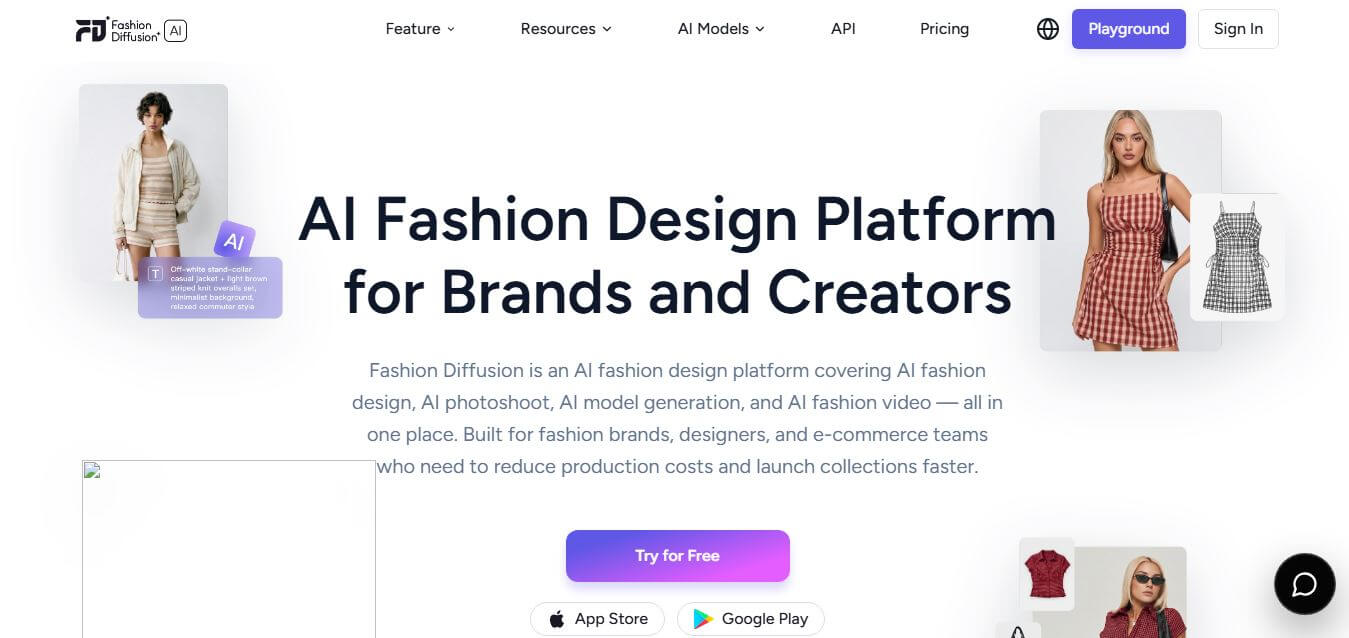
Fashion Diffusion is an AI-powered fashion design platform that helps brands and designers create clothing designs, virtual try-ons, AI models, product photos, and marketing visuals faster and cost-effectively.
Paid
Veo 4
Veo 4 AI is an AI video creation platform that generates dramatic videos from text, images, audio, and video prompts using realistic motion and synchronized sound.
Paid
Alternatives
Alternatives to Fortinet
The best Fortinet alternatives include Palo Alto Networks, Check Point Quantum, Cisco (Secure Firewall & Meraki), Sophos, CrowdStrike Falcon, and Zscaler. These platforms provide next-generation firewalls (NGFW), secure SD-WAN, cloud SASE, and endpoint defense. While Fortinet specializes in custom FortiASIC-accelerated firewalls, built-in SD-WAN in FortiOS, and an expansive Security Fabric spanning IT and OT, alternatives like Palo Alto Networks focus on deep Layer-7 application security, and Cisco provides broad enterprise networking infrastructure. Choosing the right tool depends on whether you require high-throughput ASIC-accelerated firewalls, native SD-WAN consolidation, or specialized cloud SASE perimeters.
 4.8
4.8Varonis Systems
Cybersecurity
Varonis is a data security platform built to help organizations protect sensitive information across cloud, SaaS, and on-premises environments. It discovers and classifies data, analyzes permissions and activity, detects threats, and automates remediation. Security teams can use Varonis to reduce data exposure, strengthen compliance, investigate incidents, and improve security posture.
 4.9
4.9GitGuardian
Cybersecurity
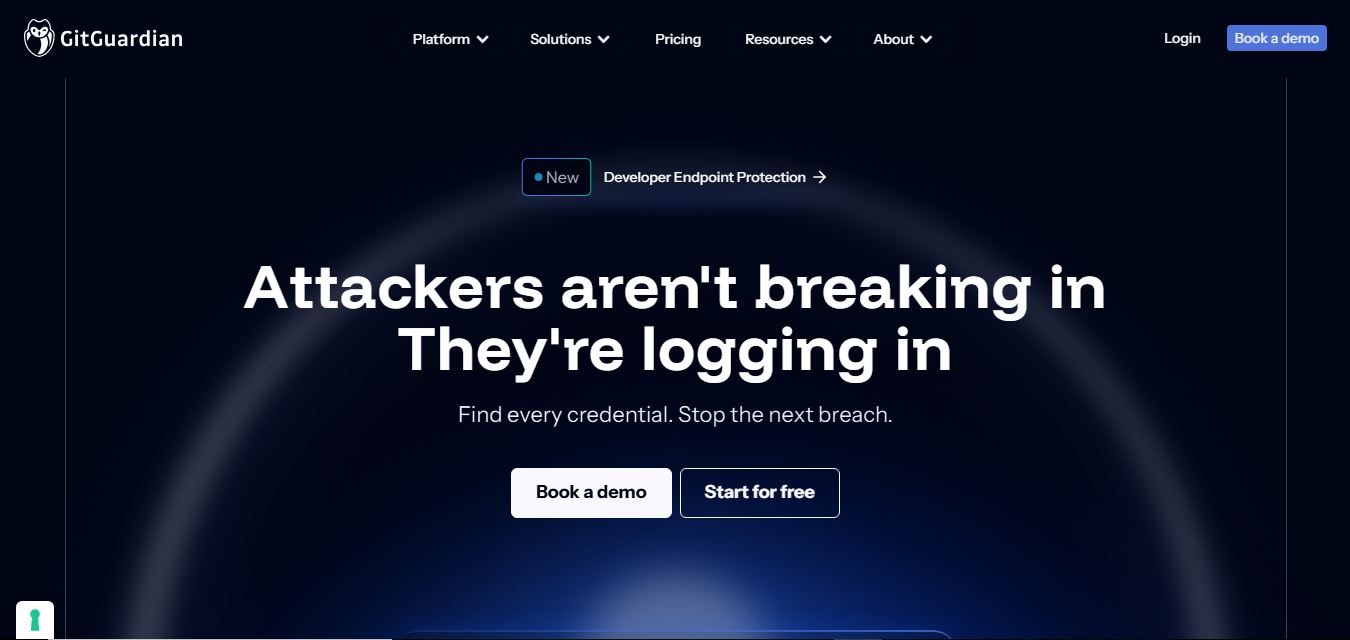
GitGuardian is an AI-powered code security platform that helps developers and security teams detect, prevent, and fix exposed secrets like API keys and credentials across code, CI/CD, and collaboration tools. It provides real-time alerts, automated remediation, and full visibility to reduce breach risks
 4.9
4.9Vectra AI
Cybersecurity
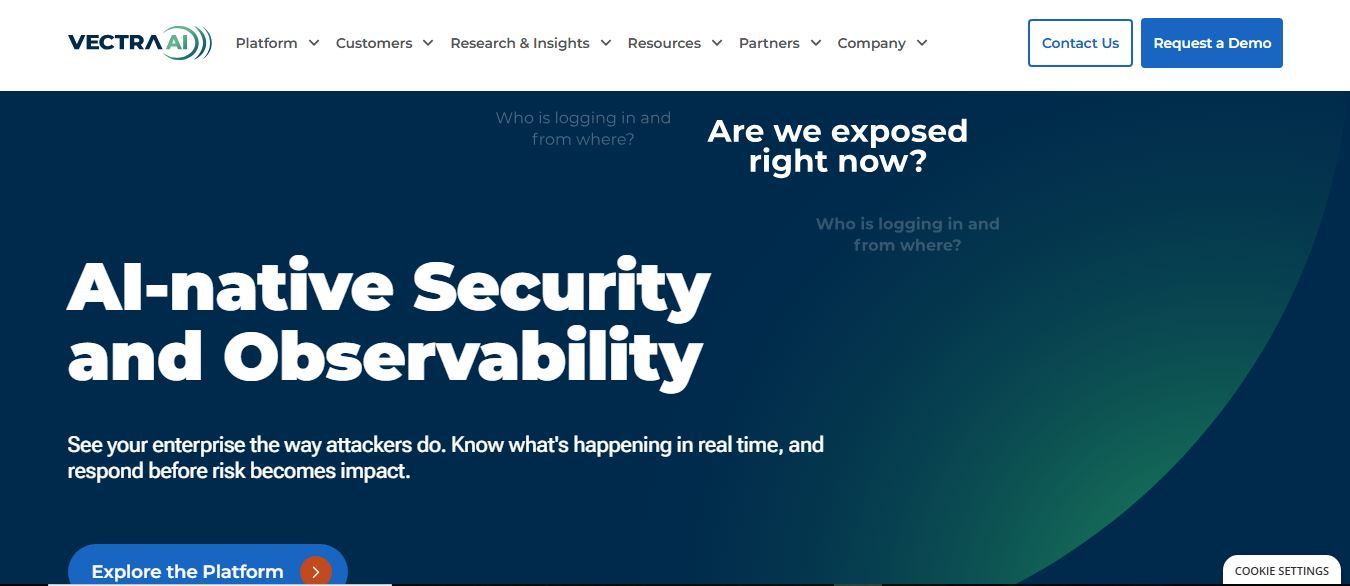
Vectra AI is an AI-powered cybersecurity platform that helps businesses detect, investigate, and stop attacks across network, identity, and cloud environments. It uses behavioral analytics to identify real attacker activity, reduce alert noise, and provide clear, real-time insights so security teams can respond faster and prevent breaches.
 4.9
4.9Darktrace
Cybersecurity
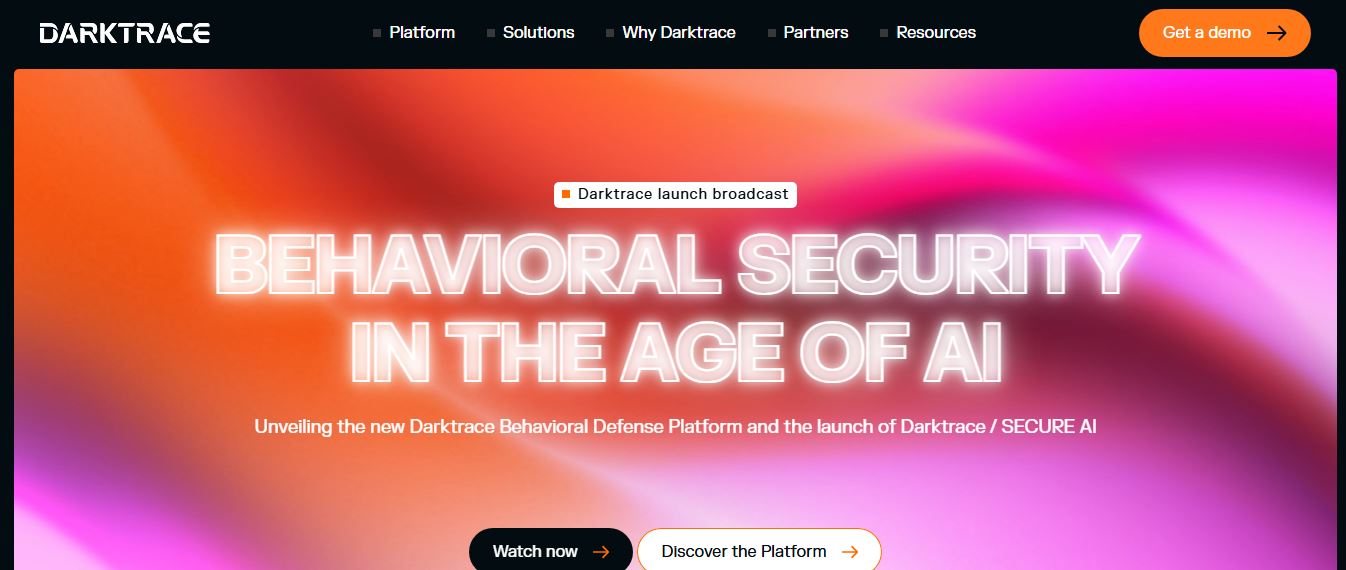
Darktrace is an AI-powered cybersecurity platform that helps businesses detect, investigate, and respond to cyber threats in real time. It uses self-learning AI to understand normal behavior across networks, cloud, and users, identifying anomalies and stopping advanced attacks before they cause damage.
 4.9
4.9Cisco
Cybersecurity
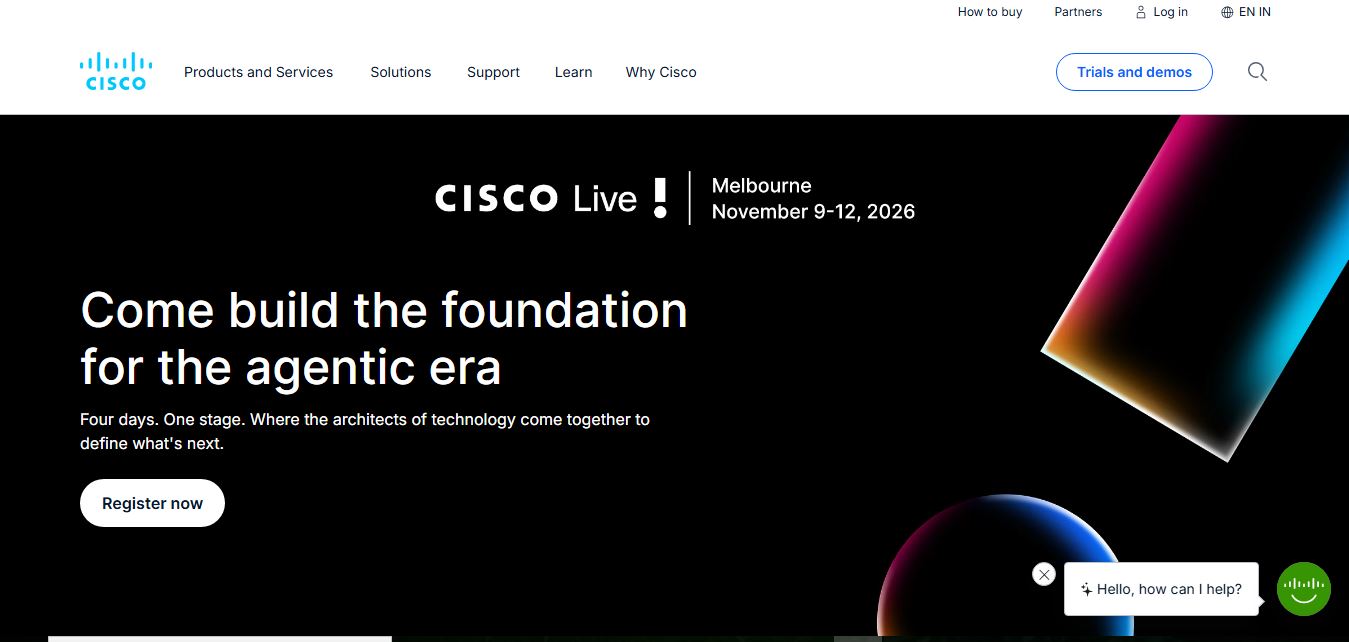
Cisco is a global networking and cybersecurity platform that helps businesses connect, secure, and manage applications, users, and data across cloud and on-prem environments. It combines networking, security, and observability solutions to deliver reliable infrastructure, improve performance, and protect modern digital operations at scale.
 4.9
4.9IRONSCALES
Cybersecurity
IRONSCALES is an AI-powered email security platform that helps businesses detect, prevent, and respond to phishing, business email compromise, and account takeover attacks. It combines adaptive AI with human insights to automatically analyze, remediate threats, and protect inboxes in real time across Microsoft 365 and Google Workspace.
 4.9
4.9Abnormal Security
Cybersecurity
Abnormal AI is an AI-powered behavioral cybersecurity platform that helps businesses detect and stop advanced threats like phishing, account takeovers, and social engineering. It learns normal user behavior across email, identity, and cloud systems, then automatically identifies anomalies and responds in real time to prevent attacks.
 4.9
4.9Proofpoint
Cybersecurity
Proofpoint is an AI-powered cybersecurity and compliance platform that helps businesses protect people, data, and communications from threats like phishing, email attacks, and data breaches. It uses advanced threat intelligence and automation to detect risks, prevent data loss, and secure interactions across email, cloud, and collaboration tools.
 4.9
4.9Zscaler
Cybersecurity
Zscaler is an AI-powered cloud security platform that uses zero trust architecture to protect users, applications, and data across the internet and cloud. It replaces traditional VPNs and firewalls, enabling secure access, real-time threat protection, and simplified security operations for modern, distributed businesses.