
Elasticsearch
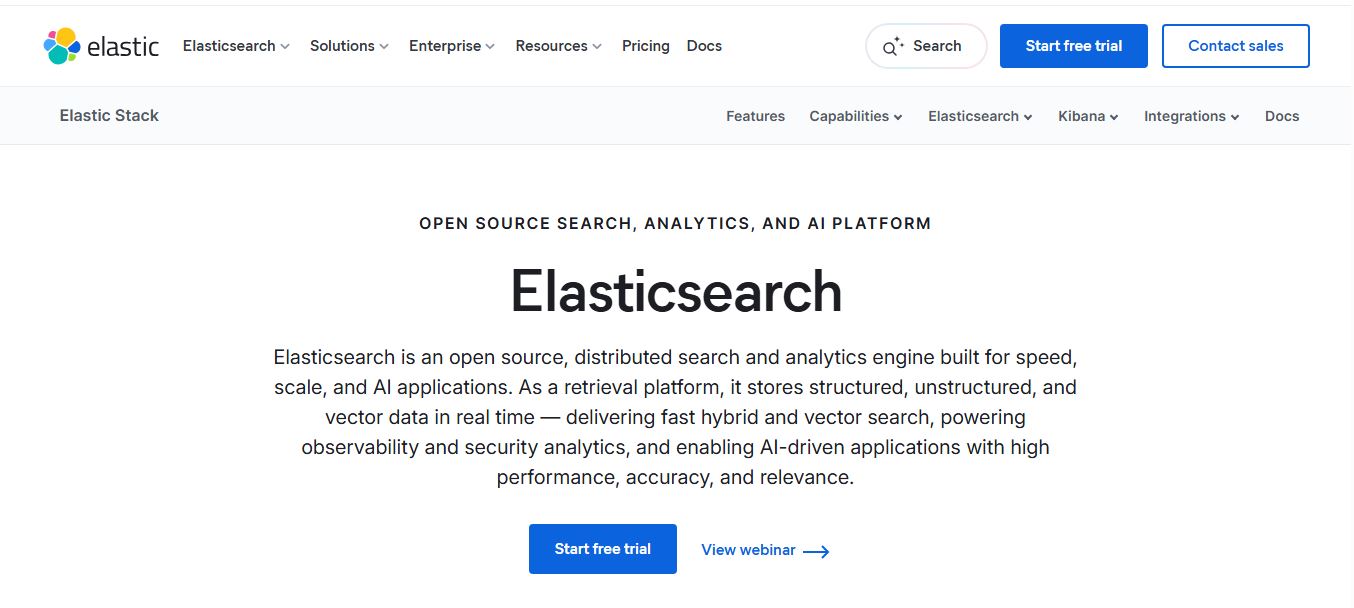
Elasticsearch is an open-source, distributed search and analytics engine that helps teams store, search, and analyze structured, unstructured, and vector data in real time. It powers full-text search, AI-driven applications, and large-scale analytics with high speed, relevance, and scalability across cloud or on-prem environments.
What is Elasticsearch?
Elasticsearch is a distributed, open-source search and analytics engine built for fast, scalable data retrieval and real-time insights. It allows users to index, search, and analyze large volumes of structured and unstructured data quickly, making it ideal for use cases like site search, log analysis, security monitoring, and business analytics. Part of the Elastic Stack, it integrates with tools like Kibana and Logstash for visualization and data processing. Designed for developers and enterprises, Elasticsearch powers high-performance search experiences and data-driven applications at scale.
Created in 2010 by Shay Banon and headquartered in Mountain View, California, Elastic N.V. trades publicly on the New York Stock Exchange (NYSE: ESTC). As the core engine of the Elastic Stack (ELK Stack: Elasticsearch, Logstash, Kibana, and Beats), Elasticsearch is trusted by thousands of global enterprises and millions of engineers worldwide (including Netflix, Uber, GitHub, Slack, and Cisco). Re-established under permissive dual open-source licensing (AGPLv3 / Apache 2.0) alongside the Elastic License, Elasticsearch combines lexical BM25 search, dense vector similarity retrieval (HNSW), hybrid search with Reciprocal Rank Fusion (RRF), native learned sparse retrieval (ELSER), and full RAG grounding support for Generative AI applications.
- Founders / Leadership: Shay Banon (Founder & CTO) and Ash Kulkarni (CEO); Elastic N.V. (Mountain View, CA, USA & Global; founded in 2010)
- Evolution / Launch: Evolved from an open-source text engine into an enterprise AI search and analytics foundation with integrated vector database capabilities, native semantic rerankers, inference APIs, and cloud-hosted managed services (Elastic Cloud on AWS, GCP, and Azure) through 2024–2026
Use Cases:
- Building high-speed full-text and faceted search experiences across ecommerce catalogs, SaaS applications, and knowledge bases
- Executing vector search, semantic embeddings matching, and hybrid RRF retrieval for AI agents and RAG pipelines
- Centralizing system logs, infrastructure metrics, and APM traces for real-time DevOps observability and cluster monitoring
- Powering Security Information and Event Management (SIEM) and extended detection and response (XDR) threat hunting
Technology:
- Inverted index structure combined with Hierarchical Navigable Small World (HNSW) vector graphs for hybrid query execution
- Distributed shard architecture supporting horizontal scaling, automatic node failover, and index lifecycle management (ILM)
- Elastic Learned Sparse EncodeR (ELSER) providing out-of-the-box semantic search without requiring third-party embedding models
Target Users:
- Backend engineers and full-stack developers implementing search bars, faceted filters, and vector search in applications
- Site Reliability Engineers (SREs) and DevOps leads aggregating distributed logs, container metrics, and application performance data
- AI engineers and data scientists building RAG architectures, LLM grounding indexes, and semantic search agents
- Content creators using writing tools to draft system documentation, architectural guides, and DevOps runbooks
Corporate Entity: Operates as Elastic N.V. (Mountain View, CA, USA; NYSE: ESTC)

Key features of Elasticsearch
Elasticsearch's key features are
- Distributed Full-Text & Lexical Search: Industry-standard BM25 keyword matching with language analyzers, stemming, fuzzy matching, and autocomplete.
- Native Vector Database (kNN & HNSW): Store, index, and query high-dimensional dense vector embeddings with millisecond retrieval performance.
- Hybrid Search with Reciprocal Rank Fusion (RRF): Intelligently blends BM25 text relevance and vector similarity scores into a unified ranking without manual score normalization.
- Out-of-the-Box Semantic Search (ELSER): Elastic's proprietary learned sparse retrieval model delivers domain-agnostic semantic relevance without fine-tuning.
- Real-Time Analytics & Aggregations: Execute complex multi-bucket metric aggregations, histograms, and statistical calculations across billions of documents.
- Index Lifecycle Management (ILM): Automatically migrate indices across hot, warm, cold, and frozen data tiers to optimize storage infrastructure costs.
- Extensive Language SDKs & REST APIs: Comprehensive official client libraries for Python, JavaScript/TypeScript, Java, Go, .NET, Rust, and Ruby.
- Enterprise Security & Compliance: Native role-based access control (RBAC), field- and document-level security, SSL/TLS encryption, and SOC 2 / HIPAA compliance.
Elasticsearch Pricing
Elasticsearch operates under a flexible open-source self-managed model alongside managed cloud subscription tiers on Elastic Cloud (AWS, GCP, Azure) with a 14-day free trial.
Open Source (Self-Managed):
- $0 / Free and open-source (under AGPLv3 / Apache 2.0 dual-licensing and Elastic License)
- Download and run Elasticsearch and Kibana freely on self-hosted servers or private cloud instances with community support
Elastic Cloud Standard:
- Starts from ~$95.00 / month (billed consumption-based on compute, RAM, and storage)
- Includes fully managed deployment on AWS, GCP, or Azure, Kibana visualization, automated snapshots, and standard support
Elastic Cloud Gold & Platinum:
- Gold: Starts from ~$109.00 / month; includes 24/7 technical support, alerting, and reporting
- Platinum: Starts from ~$125.00 / month; includes ELSER semantic search, native vector search, index lifecycle automation, cross-cluster replication, and ML anomaly detection
Elastic Cloud Enterprise:
- Starts from ~$175.00 / month (or custom annual enterprise contracts)
- Includes enterprise security (SAML/SSO), field/document-level security, dedicated technical account management, and multi-region deployment orchestration
Disclaimer: Prices are listed in USD and adjust according to resource usage (RAM, CPU, and disk storage). Self-managed deployments are free under open-source terms. Visit elastic.co/pricing for active cloud consumption calculators.
Who is using Elasticsearch?
Elasticsearch is designed for engineering teams, enterprise developers, and IT organizations, including
- Software Engineers & Product Teams: Implementing fast application search bars, typo-tolerant lookups, and faceted filters for web and mobile apps
- AI Engineers & RAG Architects: Indexing vector embeddings and hybrid knowledge bases to ground large language model pipelines
- Site Reliability Engineers (SREs): Ingesting terabytes of operational logs, container metrics, and distributed traces to detect system outages
- Cybersecurity Operations (SecOps): Correlating enterprise network events, access logs, and endpoint telemetry to detect threats and vulnerabilities
- Content Creators: Using writing tools to draft system documentation, architectural guides, and DevOps runbooks
- Data Engineers & Analysts: Running aggregations and geospatial queries across high-velocity time-series datasets
Best Elasticsearch Alternatives
Some of the strongest Elasticsearch alternatives include
- OpenSearch
- Algolia
- Coveo
- Meilisearch
- Typesense
- Qdrant / Milvus
Pros and Cons of Elasticsearch
Pros
- Proven, enterprise-grade scalability capable of querying petabytes of distributed data with sub-second response times
- Unified search engine supporting full-text BM25, dense vector kNN, sparse ELSER, and hybrid RRF retrieval
- Versatile architecture powers search, DevOps observability, and security operations within a single stack
- Comprehensive open-source ecosystem with extensive documentation, language SDKs, and active community adoption
- Index Lifecycle Management (ILM) enables cost-effective data tiering from hot SSD storage to cold object storage
Cons
- Cluster management, memory sizing (JVM garbage collection), and shard distribution require operational expertise
- Running self-hosted multi-node clusters at scale requires dedicated engineering overhead and infrastructure costs
- Advanced machine learning features (ELSER, anomaly detection) require Platinum or Enterprise licensing tiers
- Can be resource-heavy for lightweight applications that only need basic keyword matching or simple search bars
Why Choose Elasticsearch?
Elasticsearch is the premier choice for organizations and software developers who need a battle-tested, distributed search and analytics engine that unifies lexical text matching, dense vector retrieval, and real-time observability at scale.
- Query petabytes of structured and unstructured data with near-real-time latency
- Combine lexical search and vector similarity effortlessly using Reciprocal Rank Fusion
- Deploy semantic search out of the box with Elastic's native ELSER model
- Consolidate search, log analytics, and security telemetry into one platform
- Run freely on self-hosted hardware or deploy instantly via managed Elastic Cloud
Elasticsearch vs. Competitors
The main difference between Elasticsearch, OpenSearch, Algolia, and Meilisearch is that Elasticsearch is a mature, distributed enterprise search and analytics engine supporting hybrid BM25 and vector search across search, observability, and security, whereas OpenSearch is the AWS-backed open-source fork focused on AWS infrastructure, Algolia is a hosted developer-first search SaaS API for frontends, and Meilisearch is a lightweight, easy-to-configure search engine for smaller web applications. Elasticsearch stands out for its enterprise scalability, hybrid RRF search, and unified analytics ecosystem.
| Feature / Tool | Elasticsearch (elastic.co) | OpenSearch | Algolia | Meilisearch |
|---|---|---|---|---|
| Core Focus | Distributed Search, Vector AI & Analytics Engine | Community Fork for Search & Log Analytics | Hosted Developer-First Search & Discovery SaaS | Lightweight, Fast Typo-Tolerant Search Engine |
| Vector & Hybrid Search | Yes (HNSW, BM25, RRF & Native ELSER) | Yes (k-NN plugin & Neural Search) | Yes (NeuralSearch & Vectors) | Yes (Integrated Embedders) |
| Deployment Options | Self-Managed Open Source & Elastic Cloud | Self-Managed Open Source & AWS OpenSearch | Fully Managed Cloud SaaS Only | Self-Hosted Open Source & Meilisearch Cloud |
| Multi-Domain Workloads | Search, Observability (APM/Logs), SIEM | Search, Log Analytics & Security | Application & Ecommerce Search | Application & Website Search |
| Starting Price | Free Open Source / Cloud from ~$95/mo | Free Open Source / AWS instance rates | Free tier / Pay-as-you-go ($0.50/1k queries) | Free Open Source / Cloud from $30/mo |
| Best For | Petabyte-Scale Search, Vector AI & Observability | AWS-Centric Open-Source Deployments | Instant Frontend App & Ecommerce Search | Simple, Fast Search for SMB Developers |
How do we rate Elasticsearch?
| Parameter | Rating (out of 5) |
|---|---|
| Search Performance & Scalability | 5.0 |
| Vector Retrieval & Hybrid RRF Capabilities | 4.9 |
| Observability & Analytics Depth | 5.0 |
| Ecosystem, SDKs & Documentation | 5.0 |
| Value for Money | 4.8 |
| Overall Score | 4.94 |
Elasticsearch Review
Elasticsearch remains one of the most foundational infrastructure technologies in software engineering. What began as a distributed Lucene wrapper has developed into a versatile data engine capable of handling search, vector similarity, log aggregation, and real-time security analytics. Its implementation of hybrid search—combining traditional BM25 lexical relevance with vector embeddings via Reciprocal Rank Fusion (RRF)—provides developers with an effective approach to building RAG architectures and AI search systems. While managing large distributed clusters requires operational diligence in memory allocation and index lifecycle policies, managed Elastic Cloud significantly mitigates administrative complexity. For engineering teams operating at scale, Elasticsearch provides a reliable, high-performance foundation.
Conclusion
Elasticsearch is an established distributed search and analytics engine that powers modern search experiences, generative AI grounding, and enterprise observability worldwide. By combining Lucene-powered text search, native vector embeddings, hybrid RRF retrieval, and out-of-the-box semantic models with permissive open-source licensing and scalable cloud hosting, it meets the requirements of complex data architectures. While small projects requiring simple setup may opt for lightweight tools like Meilisearch, Elasticsearch’s horizontal scale, versatility, and mature ecosystem make it an essential technology.
FAQ
What is Elasticsearch and how does Elasticsearch work?
Elasticsearch is a distributed search and analytics engine developed by Elastic that allows users to store, search, and analyze large volumes of data in near real time. It works by indexing data into documents and organizing them into shards across clusters, enabling fast full-text search, filtering, and aggregations. Queries are executed using a RESTful API, making it highly flexible for different applications.
What problem does Elasticsearch solve for users?
Elasticsearch solves the problem of slow and inefficient data retrieval from large datasets. Traditional databases are not optimized for search-heavy workloads, but Elasticsearch is designed for fast querying, log analysis, and real-time insights, making it ideal for applications that require quick data access and scalability.
What are the key features of Elasticsearch?
Elasticsearch offers features like full-text search, real-time analytics, distributed architecture, horizontal scalability, and RESTful APIs. It also supports aggregations, filtering, geospatial queries, and integrations with tools like Kibana for visualization and Logstash for data ingestion.
How does Elasticsearch handle large-scale data?
Elasticsearch handles large-scale data using a distributed architecture where data is split into shards and replicated across nodes in a cluster. This allows it to scale horizontally, handle high query loads, and ensure fault tolerance even when working with massive datasets.
Is Elasticsearch open-source?
Elasticsearch is available as part of the Elastic Stack, which includes both open-source and commercial features. While the core engine is open, some advanced capabilities and enterprise features are available under paid licenses.
What are common use cases of Elasticsearch?
Elasticsearch is widely used for website search, log and event data analysis, application monitoring, security analytics, and business intelligence. It is also used in eCommerce platforms for product search and recommendation systems.
Who should use Elasticsearch?
Elasticsearch is ideal for developers, data engineers, enterprises, and organizations that need scalable search and analytics capabilities. It is especially useful for businesses dealing with large volumes of structured or unstructured data.
User Reviews
No reviews yet for Elasticsearch.
Featured Tools
Featured AI tools from TechShark

Melody Genie
MelodyGenie is an AI-powered music generator that creates original songs from simple text prompts. Users can choose styles, moods, and genres, then instantly generate melodies and full tracks, making it easy for creators, marketers, and hobbyists to produce custom music without musical expertise.
Freemium
Kimi AI
Kimi AI is an advanced AI assistant developed by Moonshot AI that helps you chat, research, write, code, and automate tasks in one place. It supports web search, file analysis, and multimodal inputs, and can even run autonomous “agent” workflows to complete complex tasks end-to-end.
Freemium

Fashion Diffusion AI
Fashion Diffusion is an AI-powered fashion design platform that helps brands and designers create clothing designs, virtual try-ons, AI models, product photos, and marketing visuals faster and cost-effectively.
Paid

Veo 4
Veo 4 AI is an AI video creation platform that generates dramatic videos from text, images, audio, and video prompts using realistic motion and synchronized sound.
Paid
Alternatives
Alternatives to Elasticsearch
The best Elasticsearch alternatives include OpenSearch (AWS Open-Source Fork), Algolia (Algolia AI Search & NeuralSearch), Coveo (Relevance Cloud), Meilisearch, Typesense, and Qdrant. These platforms provide full-text search, vector database retrieval, and enterprise analytics. While Elasticsearch specializes in a distributed search and analytics engine unifying BM25 keyword matching, dense vector similarity, and native ELSER semantic retrieval under open-source and managed cloud options starting from ~$95/month, alternatives like OpenSearch provide the AWS-backed fork, Algolia is a hosted developer-first search SaaS API for web frontends, and Meilisearch is an easy-to-deploy lightweight engine for smaller applications. Choosing the right tool depends on whether you require distributed petabyte-scale search and observability, a managed SaaS search API, or a lightweight embedded search engine.
 4.9
4.9Bloomreach
E-commerce
Bloomreach is an AI-powered ecommerce experience platform that helps businesses deliver personalized marketing, search, and shopping experiences across channels. It unifies customer and product data, uses Loomi AI for real-time decisioning, and automates campaigns, enabling brands to increase conversions, engagement, and revenue.
 4.9
4.9Coveo
E-commerce
Coveo is an AI-powered relevance and search platform that helps enterprises deliver personalized search, recommendations, and generative answers across websites, ecommerce, service, and workplace apps. It unifies data into a single index and uses machine learning to match user intent with the most relevant content and experiences.
 4.9
4.9Salesforce AI Shopping Assistants
E-commerce
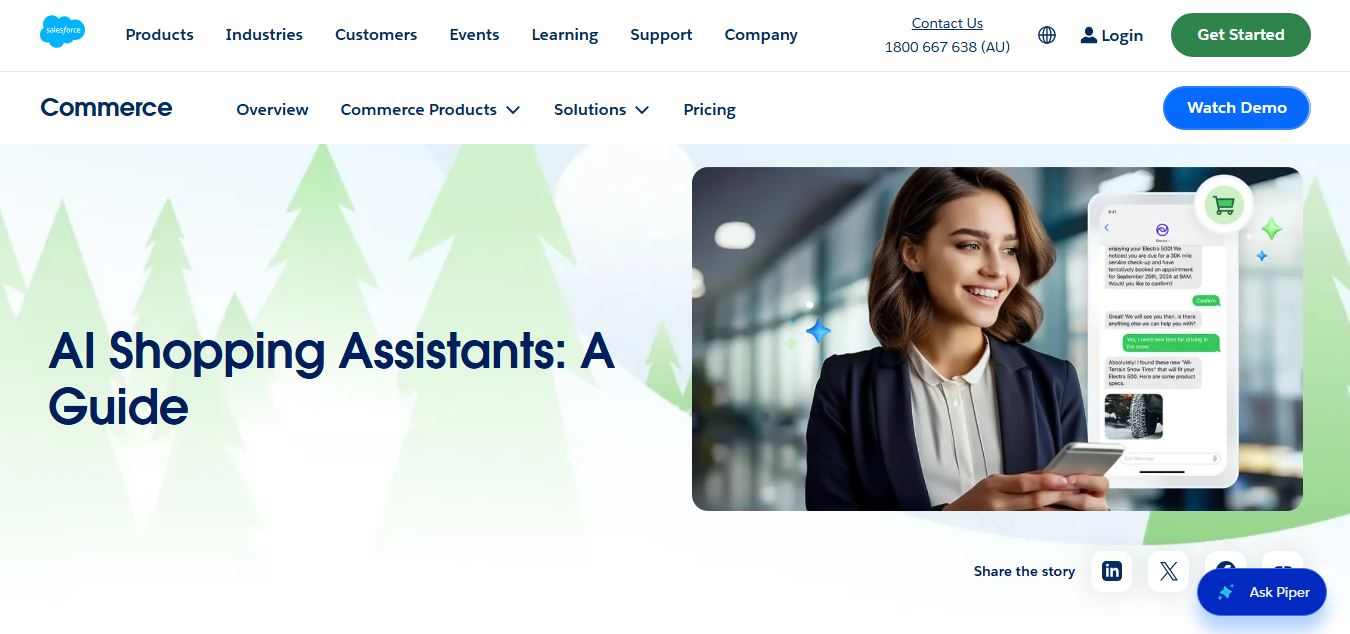
Salesforce AI Shopping Assistants are AI-powered conversational agents that help customers discover, compare, and purchase products using natural language. They use real-time product, customer, and inventory data to deliver personalized recommendations, automate checkout tasks, and improve conversions through guided, end-to-end shopping experiences.
 4.9
4.9Zoovu
E-commerce
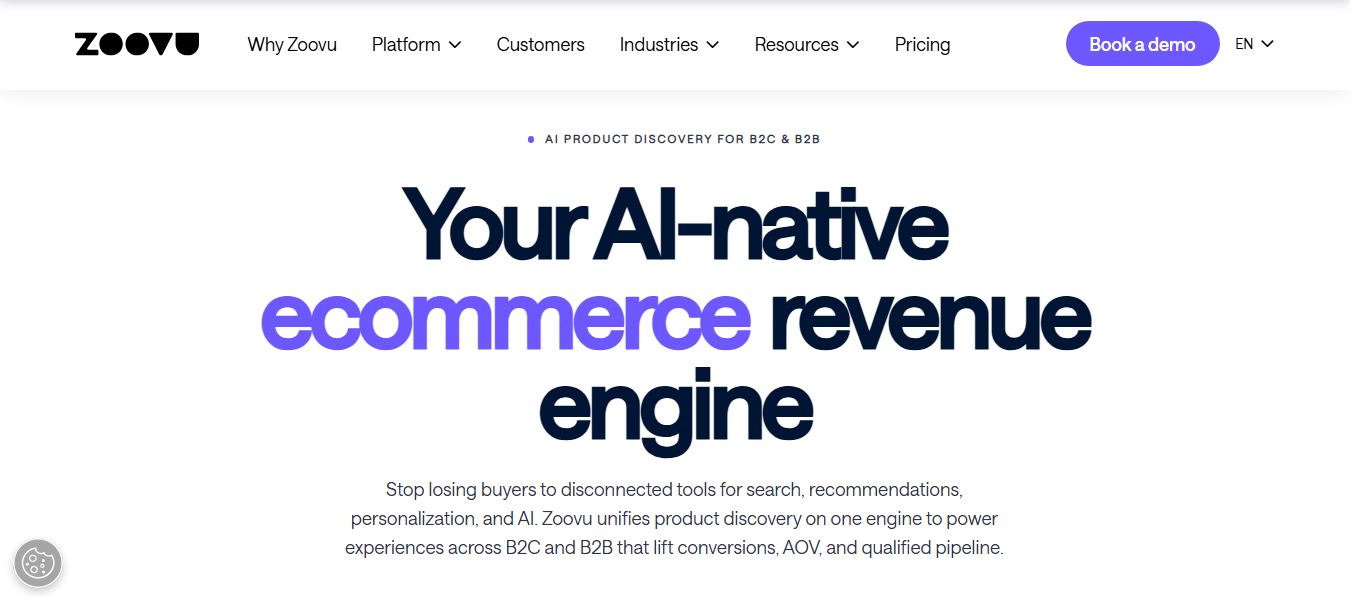
Zoovu is an AI-powered product discovery platform that helps ecommerce and B2B companies guide customers to the right products using AI search, personalization, and recommendations. It unifies data, conversational assistants, and guided selling to increase conversions, average order value, and overall customer experience.
 4.8
4.8Minicart
E-commerce
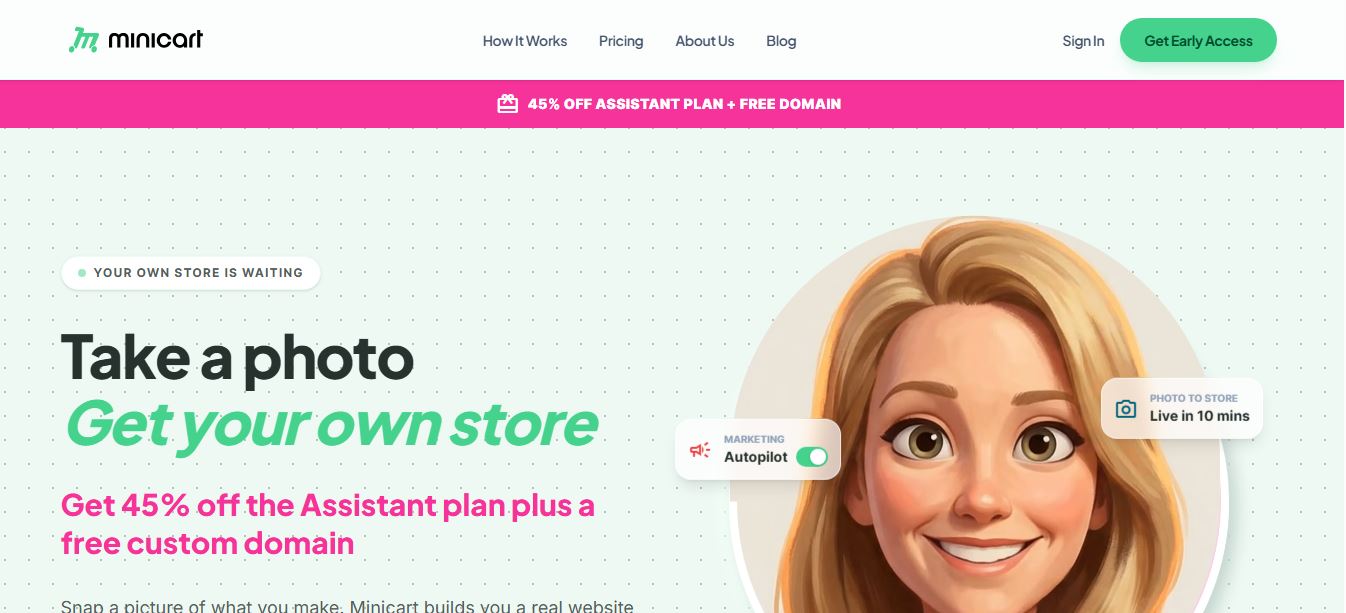
Minicart is an AI-native ecommerce platform and conversational store builder co-founded by Chris Nguyen that allows makers, creators, and merchants to launch, manage, and scale online storefronts purely by chatting with autonomous AI teammates—Sloane (Storefront), Milo (Marketing), and Logan (Logistics).
 4.8
4.8Oxolo
E-commerce
Oxolo helps construction teams document site activity without relying on extensive manual paperwork. Users can record what happens during walkthroughs, then use AI-generated transcripts, tasks, reports, translations, and template-based documents to organize the information. Offline recording, project collaboration, evidence capture, and WhatsApp or email delivery make it practical for busy field teams.
Richpanel
Customer Support
Richpanel is an AI-native customer support helpdesk and self-service platform designed specifically for e-commerce and DTC brands that combines an omnichannel shared inbox with autonomous AI agents, automated return/exchange portals, and round-the-clock comment moderation.
 4.8
4.8Gorgias
Customer Support
Gorgias is an e-commerce-specialized customer support helpdesk and AI customer service platform that centralizes omnichannel conversations across email, live chat, social comments, SMS, and WhatsApp with deep native Shopify, BigCommerce, and Magento integrations.
 4.9
4.9Neonjelly
Marketing
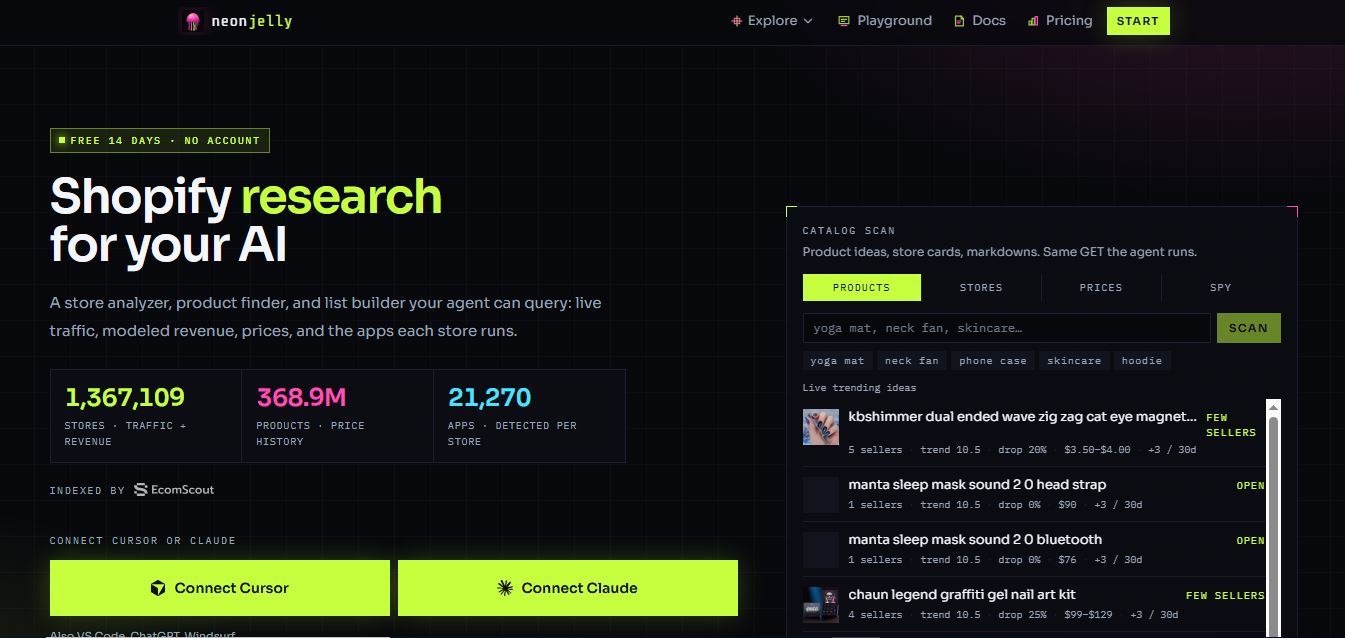
Neonjelly is an AI-powered Shopify competitor research, store tracking, and e-commerce intelligence platform that provides access to data across 1.37 million Shopify stores—including estimated traffic, revenue, catalog price shifts, saturation verdicts, and contact emails—via 59 native Model Context Protocol (MCP) tools for Cursor, Claude, and ChatGPT.