Agentic Video in Gemini
Google Gemini’s agentic video update introduces a smarter way to analyze videos. Instead of processing everything at once, it dynamically scans relevant parts, improving accuracy while reducing token usage and costs. It cuts token consumption by up to 88% and costs by up to 66%, making long-video analysis faster, cheaper, and more efficient.
What is Agentic Video in Gemini?
Agentic Video in Gemini is an advanced capability that allows AI to understand, generate, and interact with video in a more dynamic way. Built by Google, it enables the model to follow instructions, reason across visual scenes, and create meaningful video outputs. This approach goes beyond simple generation by adding decision-making and context awareness, making it useful for creators, developers, and businesses looking to build smarter, more interactive video experiences.
Designed to move beyond uniform frame extraction, agentic video understanding empowers Gemini to take an active, goal-directed role in determining what to watch, at what speed, and through which modality. By leveraging native video tools within an iterative loop, the model can inspect specific timestamps on demand, zoom into interesting time windows at adaptive frame rates, and bypass uniform parts of a video that are irrelevant to a user prompt. Across standard video analysis evaluations, agentic processing delivers significant operational advantages, including up to 88% lower token consumption, up to 66% lower video analysis costs, and up to 7% higher accuracy.
- Platform Role: Multimodal Video AI Processing & Dynamic Timeline Navigation Engine
- Core Mechanism: Iterative Think-Act-Observe Loop for Visual Frames, Audio, and Transcripts
- Supported Models: Gemini 3.8 Flash, 3.7 Flash, 3.6 Flash, and 3.5 Flash-Lite
Use Cases:
- Retrieving split-second state changes and tight cut boundaries using sub-second moment retrieval
- Executing long-form needle-in-a-haystack searches across multi-hour lecture or meeting recordings
- Performing anomaly detection by resampling interesting time windows at higher frames per second
- Accurately counting repeated actions or objects through dynamic rewatching
- Powering consumer application features like YouTube's “Ask YouTube” on watch pages
Technology:
- Server-side tool loop replacing static decoding with active, on-demand timeline inspection
- Adaptive frame-rate adjustment and multi-modality evaluation targeting visual frames, audio tracks, and transcripts
- Stateless integration supporting uploaded files, YouTube URLs, and multi-turn interaction traces
Target Users:
- Software engineers and developers building automated video editing, indexing, and media search applications
- Enterprise teams analyzing long-form meetings, surveillance feeds, or operational monitoring videos
- Consumer product users accessing enhanced video intelligence via the Gemini app and YouTube
Acquisition: Advanced AI feature developed by Google DeepMind
What are the key features of Agentic Video in Gemini?
Agentic Video's key platform features are
- Dynamic Timeline Navigation: Intelligently chooses which parts of a video to watch instead of relying on static 1 FPS ingestion.
- Multi-Modality Inspection: Dynamically switches between visual frames, audio signals, and textual transcripts based on query needs.
- Adaptive Frame Rates: Automatically increases or decreases frame sampling rates to inspect rapid motion or skip static scenes.
- Sub-Second Moment Retrieval: Pinpoints split-second events and cut boundaries critical for automated editing.
- API Configuration Control: Easily enabled in developer requests by setting the processing parameter to “agentic”.
- Ecosystem Integration: Available via the Gemini API, Google AI Studio, Gemini Enterprise Agent Platform, and the Gemini app.
How much does Agentic Video in Gemini cost?
Agentic video understanding is integrated directly into standard Gemini API pricing models.
Pricing Structure:
- Standard API Pricing: Billed according to standard base-model token usage rates
- No Additional Feature Fee: Zero extra feature-specific charges for enabling agentic mode
- Consumer Access: Included natively for users accessing supported Flash and Flash-Lite models in the Gemini app
Disclaimer: Navigation reasoning steps are billed as thought tokens within standard request payloads. For complete developer documentation, visit aistudio.google.com.
Who should use Agentic Video in Gemini?
Agentic video understanding is designed for developers and enterprises, including
- Developers integrating advanced video search, clipping, and indexing into custom applications
- Media organizations analyzing large archives of multi-hour video and audio recordings
- Quality control teams monitoring industrial workflows and operational video feeds
What are the best alternatives to Agentic Video in Gemini?
Some of the strongest alternatives for video understanding include
- Twelve Labs Video Understanding APIs
- OpenAI GPT-4o Vision
- Amazon Rekognition Video
- Google Cloud Video Intelligence API
- Microsoft Azure Video Indexer
What are the pros and cons of Agentic Video in Gemini?
What are the pros of Agentic Video in Gemini?
- Delivers up to 88% lower token consumption compared to static frame sampling
- Reduces long-form video analysis costs by up to 66%
- Improves fine-grained visual reasoning accuracy by up to 7%
- Eliminates manual pre-chunking and frame extraction overhead for developers
What are the cons of Agentic Video in Gemini?
- Static processing remains better suited for very short clips under 5 minutes or strict frame-by-frame analysis
- Requires managing state return steps properly in stateless multi-turn API implementations
Why should you choose Agentic Video in Gemini?
Traditional video analysis forces developers to choose between exorbitant token costs from static frame sampling or pre-chunking techniques that drop critical details. Agentic video understanding solves this by letting Gemini actively navigate video timelines on demand.
- Analyze multi-hour recordings without exhausting token limits
- Drastically lower operational video processing costs
- Achieve higher accuracy on complex visual reasoning and action-counting tasks
- Leverage seamless API integration across Google AI Studio and the Gemini Enterprise Agent Platform
How does Agentic Video in Gemini compare to competitors?
The main difference between Gemini's agentic video understanding and traditional cloud vision tools lies in its active, goal-directed loop. While legacy platforms like Amazon Rekognition, Azure Video Indexer, and Google Cloud Video Intelligence rely primarily on static object labeling and speech transcript matching, and standard multimodal models process entire timelines at a fixed 1 FPS rate, Gemini's agentic feature dynamically navigates visual frames, audio, and transcripts on demand to optimize cost, token usage, and accuracy.
| Feature / Platform | Agentic Video in Gemini | Twelve Labs | Amazon Rekognition | OpenAI GPT-4o Vision |
|---|---|---|---|---|
| Core Architecture | Dynamic Agentic Timeline Loop | Multimodal Embeddings & Semantic Search | Computer Vision & Deep Learning Labels | Frame-by-Frame VLM Processing |
| Token / Cost Optimization | Up to 88% fewer tokens & 66% lower cost | Usage-based indexing tiers | Pay-per-minute cloud pricing | Standard token consumption |
| Modality Navigation | Frames, Audio, and Transcripts dynamically | Multimodal video search index | Visual objects & text detection | Static frame injection |
| Supported Models | Gemini 3.8 / 3.7 / 3.6 Flash & 3.5 Flash-Lite | Marengo & Pegasus Models | Proprietary AWS models | GPT-4o / GPT-4.5 |
| Best For | Cost-effective long-form video reasoning & search | Building custom video search engines | Standard facial & object tracking | General visual Q&A |
How do we rate Agentic Video in Gemini?
| Parameter | Rating (out of 5) |
|---|---|
| Token & Cost Efficiency (88% reduction) | 5.0 |
| Visual Reasoning & Accuracy Gains | 4.9 |
| Dynamic Timeline Navigation & Modality Selection | 4.9 |
| Developer API Integration & Ease of Use | 4.8 |
| Value for Money (Standard Pricing) | 5.0 |
| Overall Score | 4.92 |
What is our review and verdict on Agentic Video in Gemini?
Agentic video understanding solves one of the most persistent bottlenecks in multimodal AI: the extreme token cost and inefficiency of analyzing long-form video. By allowing Gemini models to dynamically search, scan, and inspect timelines through an iterative loop, Google has redefined how AI interacts with video data. With up to 88% lower token consumption, 66% lower costs, and higher accuracy across Flash models without any extra fee, agentic video understanding sets a new industry benchmark.
Conclusion
Agentic video understanding transforms video from an expensive, passive data stream into an actively queryable resource. This capability, which is backed by impressive cost savings, precise moment retrieval, and seamless API integration, gives developers and enterprises a very powerful tool for video intelligence.
FAQ
What is “Agentic Video” in Gemini and why is it important?
Agentic Video in Gemini refers to a new capability where AI doesn’t just generate video clips but can plan, create, edit, and refine videos autonomously based on a goal. It’s important because it moves from simple text-to-video generation to full end-to-end video production, where the AI acts like a creative agent handling multiple steps automatically.
How is Agentic Video different from traditional AI video tools?
Traditional AI video tools usually generate short clips from prompts, but Agentic Video in Gemini focuses on multi-step execution and reasoning. The AI can understand context, break a task into scenes, iterate on outputs, and combine inputs like text, images, and existing videos into a cohesive final result instead of isolated clips.
What kind of inputs can Gemini use to create videos?
Gemini’s video capabilities are fully multimodal, meaning they can take text, images, audio, and even existing video references as input. The model then combines these inputs into a unified output, enabling more flexible and creative workflows such as editing existing footage or generating entirely new scenes from mixed media.
What does “agentic” mean in the context of video creation?
In this context, “agentic” means the AI can take initiative, plan steps, and execute tasks autonomously rather than waiting for step-by-step instructions. Gemini models are specifically designed for the “agentic era,” where AI systems can perform multi-step workflows, use tools, and complete complex tasks like video production on their own.
Can Agentic Video in Gemini edit and improve videos automatically?
Yes, Gemini’s agentic capabilities allow it to edit, refine, and iterate on videos by understanding the content and goal. It can adjust scenes, improve visuals, and align outputs with the intended narrative, making it more like a creative collaborator than a one-time generator.
What are the main use cases of Agentic Video in Gemini?
Agentic Video is useful for creating marketing videos, educational content, product demos, social media clips, and storytelling projects. Because it can handle planning and execution, it’s especially valuable for businesses and creators who want to produce high-quality videos quickly without traditional editing tools or large production teams.
User Reviews
No reviews yet for Agentic Video in Gemini.
Featured Tools
Featured AI tools from TechShark
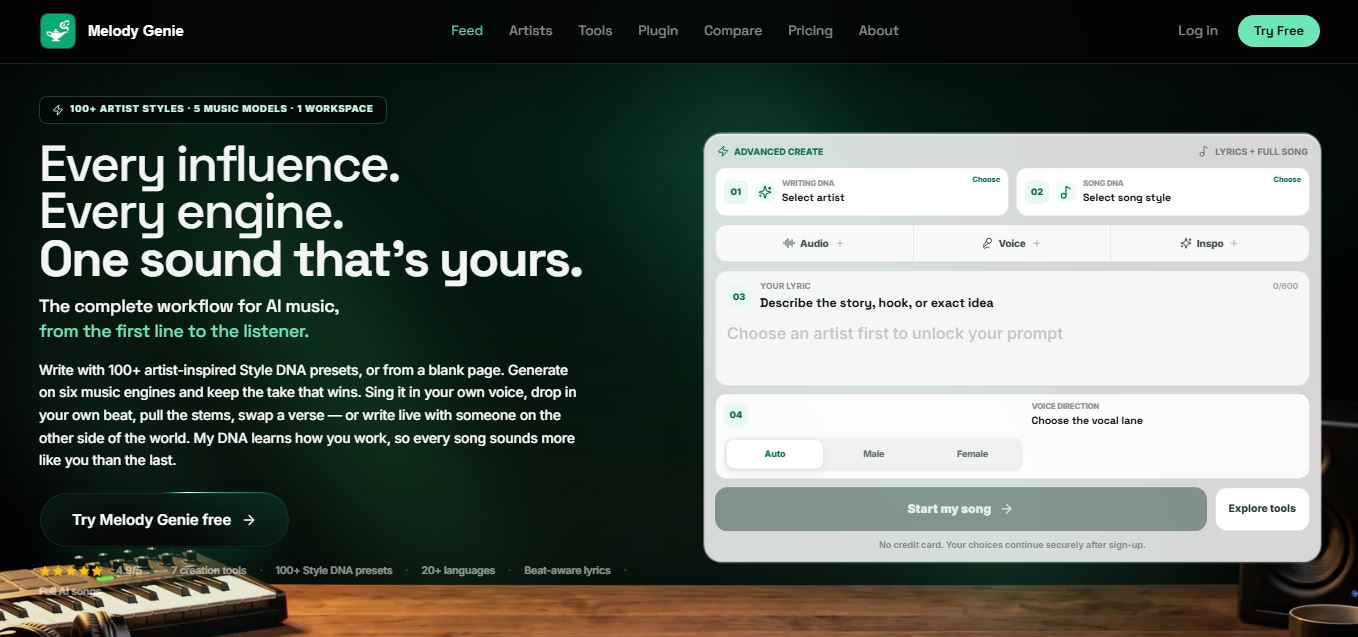
Melody Genie
MelodyGenie is an AI-powered music generator that creates original songs from simple text prompts. Users can choose styles, moods, and genres, then instantly generate melodies and full tracks, making it easy for creators, marketers, and hobbyists to produce custom music without musical expertise.
Freemium
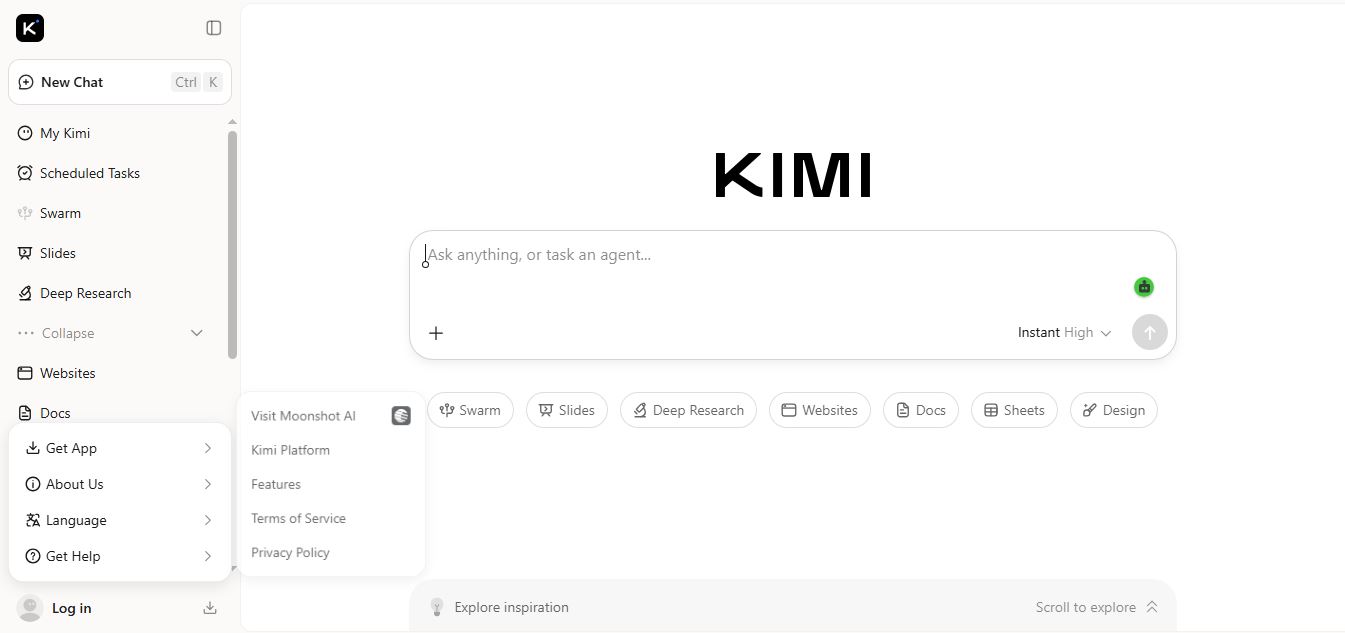
Kimi AI
Kimi AI is an advanced AI assistant developed by Moonshot AI that helps you chat, research, write, code, and automate tasks in one place. It supports web search, file analysis, and multimodal inputs, and can even run autonomous “agent” workflows to complete complex tasks end-to-end.
Freemium
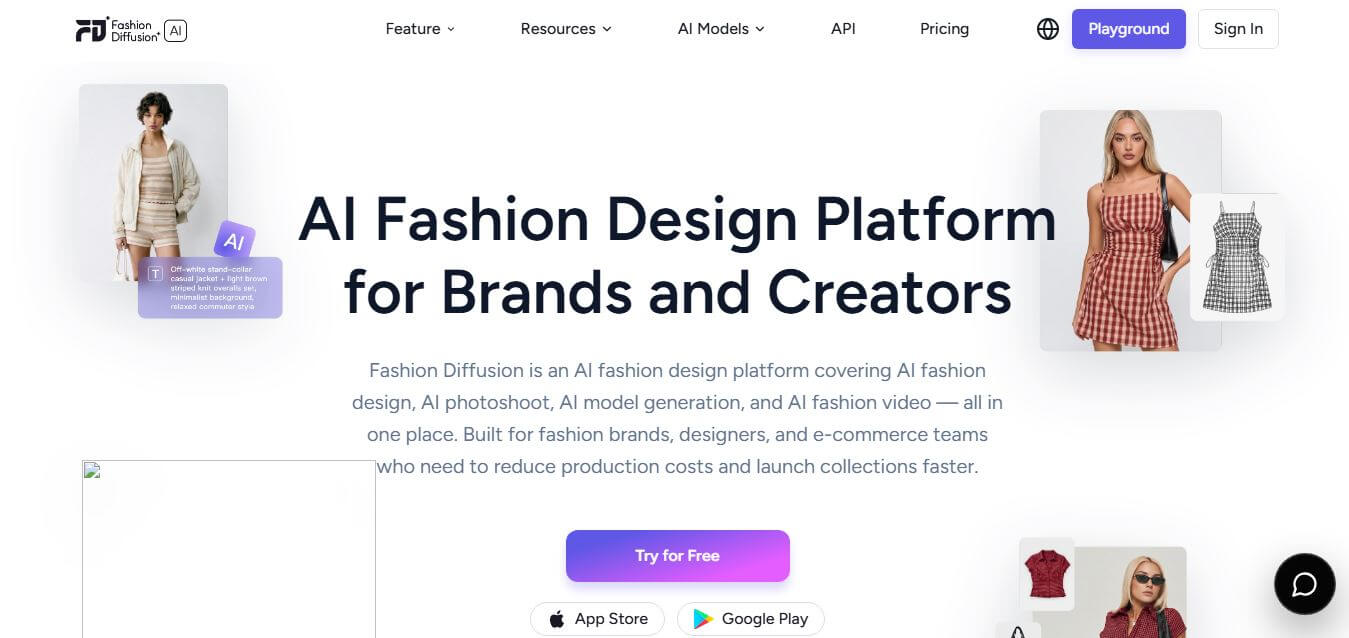
Fashion Diffusion AI
Fashion Diffusion is an AI-powered fashion design platform that helps brands and designers create clothing designs, virtual try-ons, AI models, product photos, and marketing visuals faster and cost-effectively.
Paid
Veo 4
Veo 4 AI is an AI video creation platform that generates dramatic videos from text, images, audio, and video prompts using realistic motion and synchronized sound.
Paid
Alternatives
Alternatives to Agentic Video in Gemini
The best alternatives to agentic video understanding in Gemini include Twelve Labs, OpenAI GPT-4o Vision, Amazon Rekognition Video, and Google Cloud Video Intelligence API. These platforms provide video analysis and search capabilities. While Gemini's agentic feature dynamically navigates video timelines on demand to reduce token usage by up to 88% and costs by up to 66%, alternatives rely primarily on static frame extraction, standard bounding-box object labeling, or managed search indices.
 4.9
4.9Talkwalker
AI Agent
Talkwalker is a consumer intelligence and social listening solution that helps brands track online mentions, analyze audience sentiment, monitor competitors, and discover emerging trends. It combines social media analytics, media monitoring, customer feedback, and AI-powered insights to support marketing, public relations, reputation management, and data-driven business decisions across global markets.
 5.0
5.0AI4K12
AI Agent
AI4K12 is an educational initiative focused on bringing artificial intelligence into K–12 classrooms. It provides grade-level learning guidelines, curated teaching resources, and the Five Big Ideas framework. Designed for educators and curriculum developers, AI4K12 supports age-appropriate AI instruction and helps students understand how intelligent technologies work and affect society.
Kommunicate
AI Agent
Kommunicate (kommunicate.io) is an AI-powered customer service automation and live chat platform that unites no-code generative AI agents, Kompose chatbot builder, seamless human escalation, voice AI, and omnichannel messaging across WhatsApp, web, and mobile apps.
Text
AI Agent
Text is an AI-powered customer service platform that combines live chat, help desk ticketing, AI agents, and workflow automation. It helps businesses manage customer conversations, automate repetitive support tasks, answer questions, engage website visitors, and turn customer interactions into sales opportunities through a unified communication workspace.
DocsBot AI
AI Agent
DocsBot AI is an AI chatbot and agent platform that turns websites, documents, knowledge bases, and support tickets into conversational assistants. Businesses can use it to automate customer support, answer questions, share internal knowledge, connect workflows, and provide information through website widgets and supported integrations.
SiteGPT AI
AI Agent
SiteGPT is an AI chatbot platform that helps businesses automate customer support using their website content, documents, and knowledge sources. It answers visitor questions, supports lead generation, and integrates into websites, allowing teams to handle repetitive inquiries, improve customer experiences, and provide assistance around the clock.
 4.7
4.7Halcyon
AI Agent
Halcyon is an AI energy intelligence platform that helps professionals search regulatory filings, analyze energy-market information, monitor developments, and access structured datasets. It combines document search, natural-language queries, AI-powered alerts, and specialized data subscriptions to turn fragmented energy information into actionable intelligence for research, monitoring, planning, and faster decision-making.
 4.5
4.5Enhancv
AI Agent
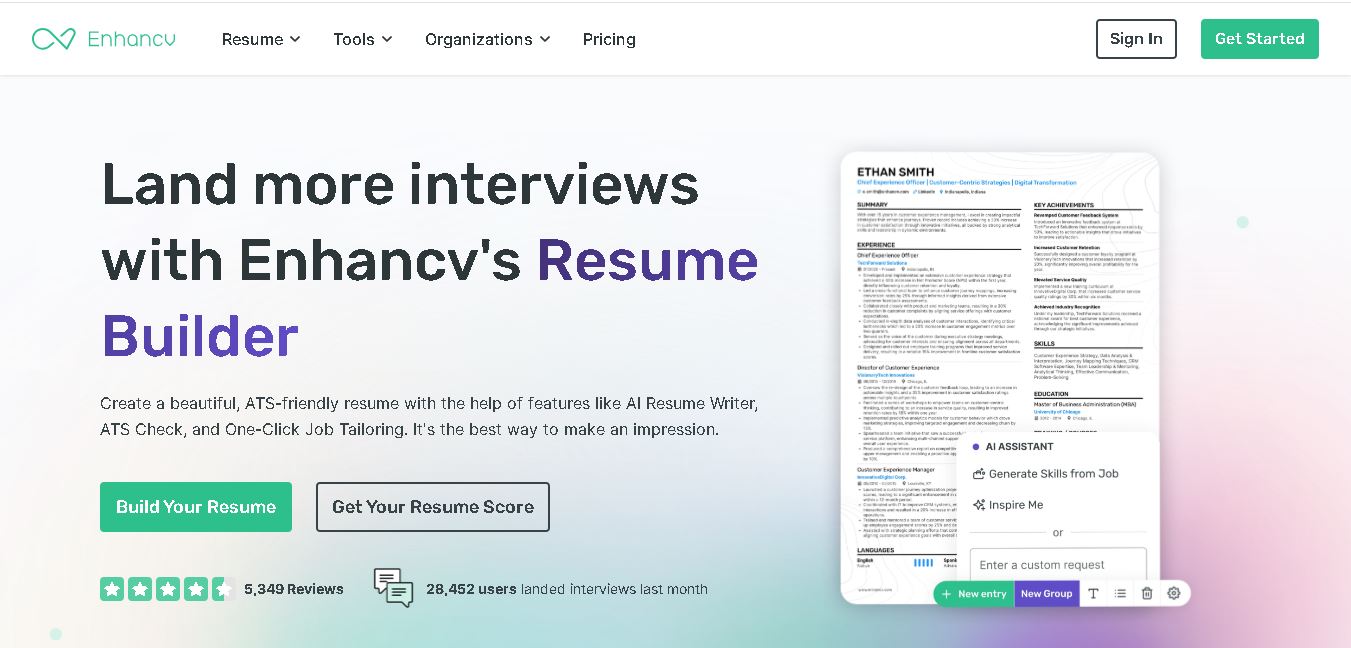
Enhancv helps job seekers build ATS-friendly resumes using customizable templates, AI writing assistance, resume checking, and job-specific tailoring. It also supports cover letters, application tracking, interview preparation, and resume translation. The platform is designed for candidates who want a polished application while keeping control over their experience, wording, and presentation.
 4.9
4.9Domo
AI Agent
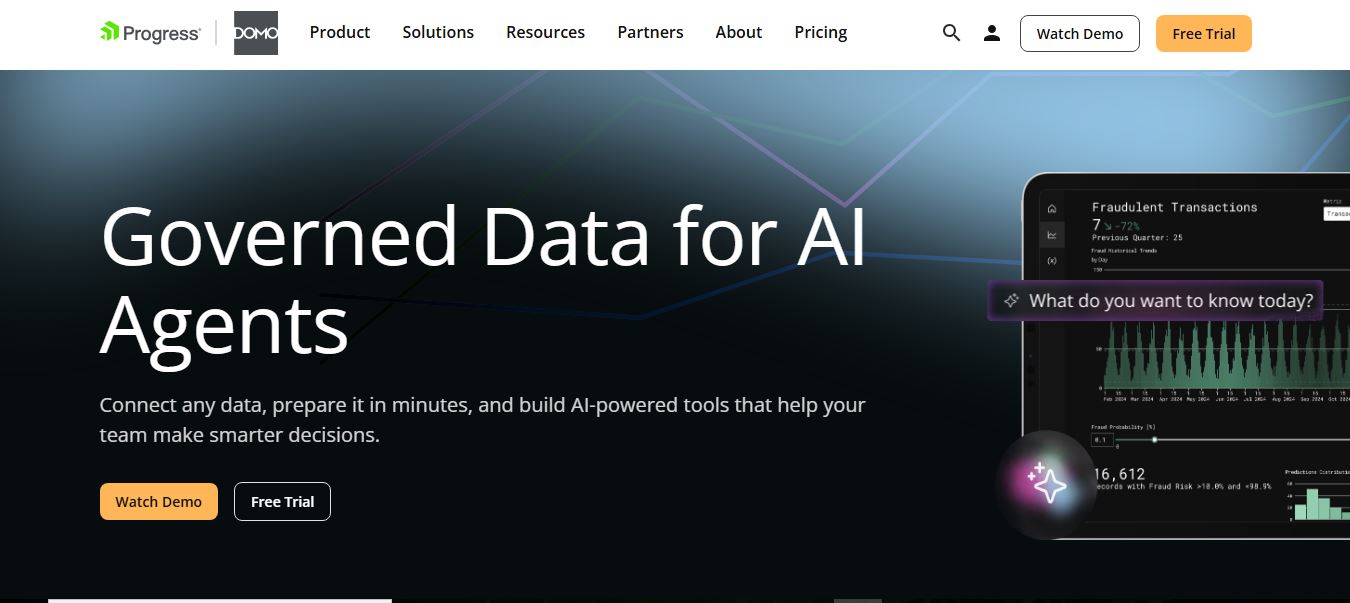
Domo is an AI-powered data and analytics platform that helps businesses connect, visualize, and act on data from multiple sources in one place. It combines dashboards, automation, and AI insights to turn raw data into decisions, enabling teams to monitor performance and drive better outcomes in real time.