Adobe Content Authenticity
Adobe Content Authenticity is a free web application that enables creators to attach, customize, and inspect Content Credentials—cryptographically secure digital nutrition labels that protect attribution, verify provenance, and signal AI training preferences.
What is Adobe Content Authenticity?
Adobe Content Authenticity is a simple tool that helps creators protect their work and prove it’s truly theirs. It adds secure “Content Credentials” to your images, videos, or audio, showing who made them and how they were edited. In a time when AI and deepfakes are everywhere, it brings transparency and trust. Whether you’re a designer, photographer, or brand, it helps your content stay authentic and credited.
Adobe Content Authenticity is a free web app that helps creators “sign” digital work using secure Content Credentials—like a digital nutrition label showing origin, edits, and ownership. Launched from Adobe’s initiative founded in 2019, it now supports a global ecosystem of 3,700+ members. Around 91% of creators want reliable attribution, and this tool uses encrypted metadata, watermarking, and AI usage controls to improve trust and transparency online.
- Platform Role: Digital Content Provenance, Creator Attribution & AI Training Preference Protection
- Governing Frameworks: Coalition for Content Provenance and Authenticity (C2PA) & Content Authenticity Initiative (CAI)
- Core Deliverables: In-browser credential attachment, public inspect tool, tamper-proof cloud recovery, and AI training opt-out tagging
Use Cases:
- Attaching verifiable digital signatures and social attribution links to digital photographs, illustrations, and videos
- Declaring explicit generative AI training opt-outs to prevent scraping by third-party model developers
- Verifying the authenticity and edit lineage of digital assets using the built-in Content Credentials Inspect tool
- Distinguishing human-made original photography from AI-generated or synthetically altered media assets
- Recovering provenance metadata via the Content Credentials Cloud even if metadata is stripped by social networks
Technology:
- Cryptographic digital signing standard based on C2PA open specifications ensuring tamper-evident provenance
- Content Credentials Cloud registry providing visual hashing to recover credentials if EXIF data is stripped
- Integrated digital fingerprinting connecting creators' social profiles and public keys directly to media files
- Cross-platform metadata schema interoperable across photo editing, social media, and digital asset management tools
Target Users:
- Photographers and digital artists protecting their copyright, creative recognition, and portfolio attribution
- Journalists, photojournalists, and newsrooms needing proof of authentic image origin and chain of custody
- Creative agencies and brands securing intellectual property against uncredited reuse or AI model ingestion
- Content consumers and researchers seeking to verify whether a digital asset was created or altered using AI
Acquisition: Dedicated creator web application developed by Adobe Inc.
What are the key features of Adobe Content Authenticity?
Adobe Content Authenticity's key platform features are
- Apply Content Credentials: Attach tamper-evident metadata directly to images, audio, and video files in seconds from any web browser.
- AI Training & Scraping Opt-Out: Embed standardized signals requesting that third-party AI developers refrain from training models on your work.
- Inspect Tool: Upload or paste any media asset to view its complete creation history, ingredients, edits made, and connected creator profiles.
- Social & Web Account Verification: Link social channels (such as Behance, Instagram, or personal websites) directly into the cryptographic credential certificate.
- Cloud Recovery & Visual Matching: Even if social platforms strip file metadata, Adobe's visual fingerprinting can match and recover the original credentials.
- Multi-Format Compatibility: Built to support standard creative file types across digital photography, raster graphics, audio, and video formats.
How much does Adobe Content Authenticity cost?
Adobe Content Authenticity is offered as a free web application to empower the global creator community and accelerate adoption of open provenance standards.
Pricing Overview:
- Free to Use ($0): Full access to the web app to apply credentials, configure AI training preferences, connect social profiles, and inspect existing digital assets without an active paid Creative Cloud subscription.
Disclaimer: Adobe Content Authenticity web application is free to access with an Adobe account. Access to advanced desktop authoring tools like Photoshop, Lightroom, and Premiere Pro requires separate Creative Cloud subscriptions. Check adobe.com for full ecosystem details.
Who should use Adobe Content Authenticity?
Adobe Content Authenticity is designed for creators, publishers, and media professionals, including
- Digital Artists & Illustrators: Protecting their personal style from uncredited web circulation and unauthorized AI training datasets.
- Commercial & Editorial Photographers: Attaching indisputable proof of authorship and client deliverables verification.
- Fact-Checkers & News Organizations: Validating media integrity and detecting synthetic alterations before broadcasting images or video clips.
- Everyday Content Creators: Ensuring credit travels with their assets across social platforms and repost pages.
What are the best alternatives to Adobe Content Authenticity?
Some of the strongest alternatives to Adobe Content Authenticity include
- C2PA Verify (verify.contentauthenticity.org)
- Truepic (Lens & Vision)
- Numbers Protocol (Capture App)
- Starling Lab Framework
- Digimarc
What are the pros and cons of Adobe Content Authenticity?
What are the pros of Adobe Content Authenticity?
- Completely free web-based tool accessible without requiring high-end desktop creative software
- Built on open, industry-recognized C2PA specifications backed by major tech and media alliances
- Includes standardized generative AI training opt-out tags to protect creator intellectual property
- Content Credentials Cloud allows attribution retrieval even when third-party platforms strip metadata
- User-friendly interface that turns complex cryptographic verification into an intuitive process
What are the cons of Adobe Content Authenticity?
- AI training opt-outs depend on external model companies honoring the embedded C2PA signal
- Not all major social networks currently display Content Credentials natively in their consumer feeds
- Requires an Adobe ID account to sign and attach credentials to files
Why should you choose Adobe Content Authenticity?
With generative AI and rapid online sharing, creative work is frequently detached from its original creator or repurposed without permission. Adobe Content Authenticity solves this challenge by giving creators a straightforward, cryptographically backed way to seal their work. By permanently binding identity, edit history, and AI usage preferences to your files, you retain recognition and establish verifiable transparency across the digital ecosystem.
- Protect your ownership and credit across digital channels with C2PA-grade cryptographic credentials
- Embed explicit Do-Not-Train signals to defend your original artwork from automated AI scrapers
- Inspect incoming digital media to verify genuine capture origin versus synthetic generation
- Take advantage of a free, open-standard solution supported by global technology leaders
How does Adobe Content Authenticity compare to competitors?
While proprietary watermarking solutions like Digimarc focus on hidden visual identification, and Web3 solutions like Numbers Protocol utilize blockchain networks, Adobe Content Authenticity leverages open C2PA cryptographic standards and cloud-based visual matching to make media provenance accessible without gas fees or proprietary lock-in.
| Feature / Platform | Adobe Content Authenticity | Truepic | Numbers Protocol | Digimarc |
|---|---|---|---|---|
| Core Focus | Creator attribution, C2PA signing & AI opt-out | Enterprise hardware-certified photo provenance | Decentralized blockchain digital media integrity | Digital watermarking & automated detection |
| Standard | C2PA / CAI Open Specification | C2PA Certified Camera Pipeline | Blockchain Ledger / IPFS | Proprietary Digital Watermark |
| AI Training Opt-Out | Yes (Standardized C2PA tag) | Limited / Enterprise-focused | Yes (Decentralized metadata) | No (Copyright focus) |
| Pricing Structure | Free Web App | Enterprise custom quoting | Freemium / Token-based | Custom enterprise licensing |
| Best For | Individual creators, photographers & designers | Insurance, news, and enterprise capture validation | Web3 media tracking and crypto ecosystems | Commercial brand packaging and barcode protection |
How do we rate Adobe Content Authenticity?
| Parameter | Rating (out of 5) |
|---|---|
| Provenance Security & C2PA Adherence | 4.9 |
| Ease of Use & Web Studio Experience | 4.8 |
| AI Protection & Opt-Out Capabilities | 4.7 |
| Cloud Recovery & Asset Matching | 4.8 |
| Value for Money | 5.0 |
| Overall Score | 4.84 |
What is our review and verdict on Adobe Content Authenticity?
Adobe Content Authenticity is a vital step forward in preserving digital truth and creator attribution. By democratizing C2PA cryptographic signing through a free, accessible web interface, it provides creators with practical tools to establish authenticity and protect their work from uncredited distribution and unauthorized AI training. It serves as an essential utility for modern digital creatives.
Conclusion
Adobe’s Content Authenticity Initiative addresses a growing need for trust in digital content by helping users verify where media comes from and how it was created. Instead of leaving authenticity unclear, it adds transparent metadata that builds confidence in images and videos. This is especially important in an era of AI-generated content. Overall, it promotes accountability, protects creators, and helps audiences better understand and trust the media they consume online.
FAQ
What is Adobe Content Authenticity and what does it actually do?
Adobe Content Authenticity is a free web app that lets you attach “Content Credentials” to your digital work, acting like a secure digital signature. These credentials show who created the content, how it was made, and whether AI tools were used—helping build trust and transparency online.
What are Content Credentials and why do they matter?
Content Credentials are tamper-evident metadata attached to images, videos, or audio, similar to a “nutrition label” for content. They record key details like creator identity, edits, and AI usage, allowing anyone to verify the origin and history of a file.
How is this different from watermarks or metadata?
Unlike basic metadata or visible watermarks, Content Credentials are cryptographically signed and harder to remove or fake. They persist across edits and can reveal if content has been modified, making them far more reliable for verifying authenticity.
Can Adobe Content Authenticity help protect against AI misuse?
Yes, one of its core use cases is helping creators control how their work is used in generative AI. You can attach preferences indicating whether your content can be used for AI training, adding a layer of control in the AI ecosystem.
How does the verification process work?
Each file with Content Credentials includes a secure, traceable record of its lifecycle—from creation to edits. Anyone can upload a file into inspection tools to view its history, verify authenticity, and check for AI involvement.
Who is behind this and is it an industry standard?
Adobe co-founded the Content Authenticity Initiative (CAI) with partners like The New York Times and Twitter to create an open standard for digital provenance. Today, it’s supported by thousands of organizations and built on the widely adopted C2PA standard.
Who should use Adobe Content Authenticity?
It’s ideal for photographers, designers, journalists, creators, brands, and agencies—especially anyone publishing content online who wants attribution, protection, and trust in the age of AI-generated media.
User Reviews
No reviews yet for Adobe Content Authenticity.
Featured Tools
Featured AI tools from TechShark

Melody Genie
MelodyGenie is an AI-powered music generator that creates original songs from simple text prompts. Users can choose styles, moods, and genres, then instantly generate melodies and full tracks, making it easy for creators, marketers, and hobbyists to produce custom music without musical expertise.
Freemium
Kimi AI
Kimi AI is an advanced AI assistant developed by Moonshot AI that helps you chat, research, write, code, and automate tasks in one place. It supports web search, file analysis, and multimodal inputs, and can even run autonomous “agent” workflows to complete complex tasks end-to-end.
Freemium
Fashion Diffusion AI
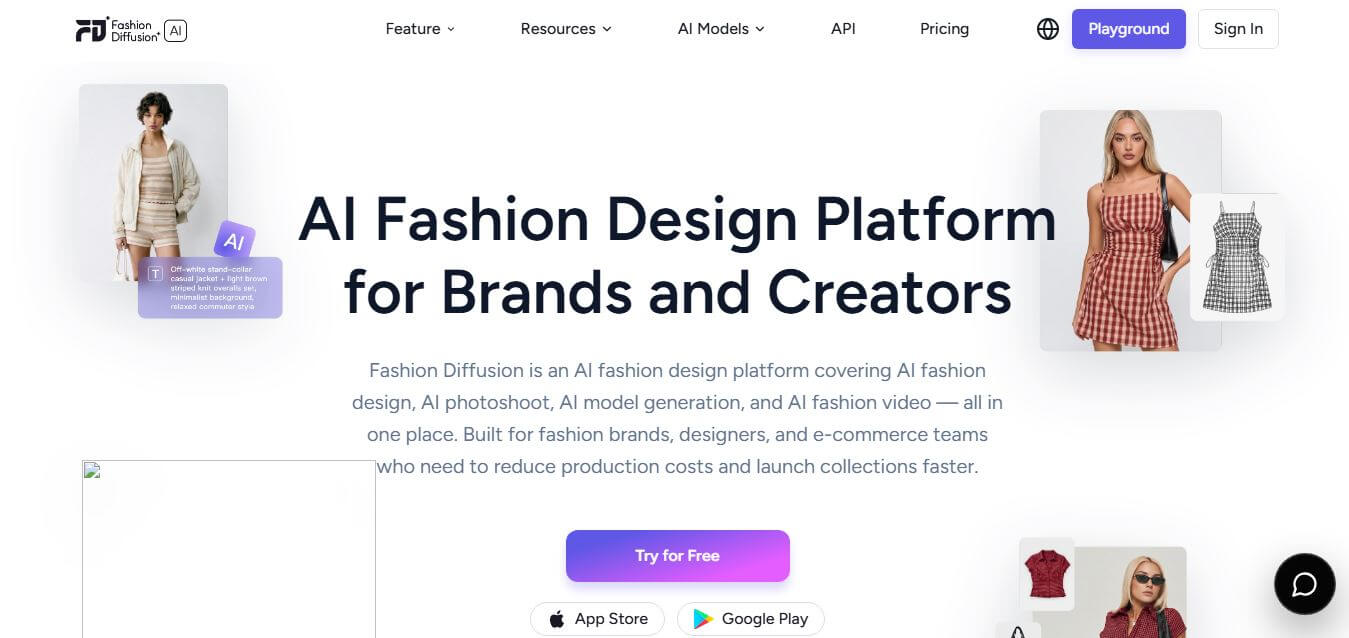
Fashion Diffusion is an AI-powered fashion design platform that helps brands and designers create clothing designs, virtual try-ons, AI models, product photos, and marketing visuals faster and cost-effectively.
Paid
Veo 4
Veo 4 AI is an AI video creation platform that generates dramatic videos from text, images, audio, and video prompts using realistic motion and synchronized sound.
Paid
Alternatives
Alternatives to Adobe Content Authenticity
The best Adobe Content Authenticity alternatives include C2PA Verify, Truepic, Numbers Protocol, and Digimarc. While Adobe Content Authenticity delivers a free, web-based C2PA credentialing and AI training opt-out tool for individual creators, Truepic focuses on enterprise-level certified capture and Digimarc specializes in proprietary digital watermarking.
 4.8
4.8Venice AI
Legal
Venice AI is a private generative AI platform that lets you chat, write, code, create images, generate videos, produce audio, and build AI agents. It combines models from leading providers with privacy controls, including Private, TEE, and E2EE modes. A free plan is available, with paid options for advanced capabilities.
 4.6
4.6Legalese Decoder
Legal
Legalese Decoder helps you understand difficult legal language by converting documents into clearer, plain-English explanations. You can use it for contracts, agreements, leases, loans, insurance policies, and other paperwork. Free tools are available, while paid plans add higher limits, contract analysis, and legal non-advisor features for deeper review and understanding.
 4.8
4.8PatentPal
Legal
PatentPal helps patent professionals automate repetitive drafting tasks by transforming claims into specification content, abstracts, summaries, flowcharts, block diagrams, and figure descriptions. Users can customize generated language, review outputs, and export drafts for continued editing. It is designed to support patent workflows, not replace professional legal judgment or final review.
 4.7
4.7Legal Robot
Legal
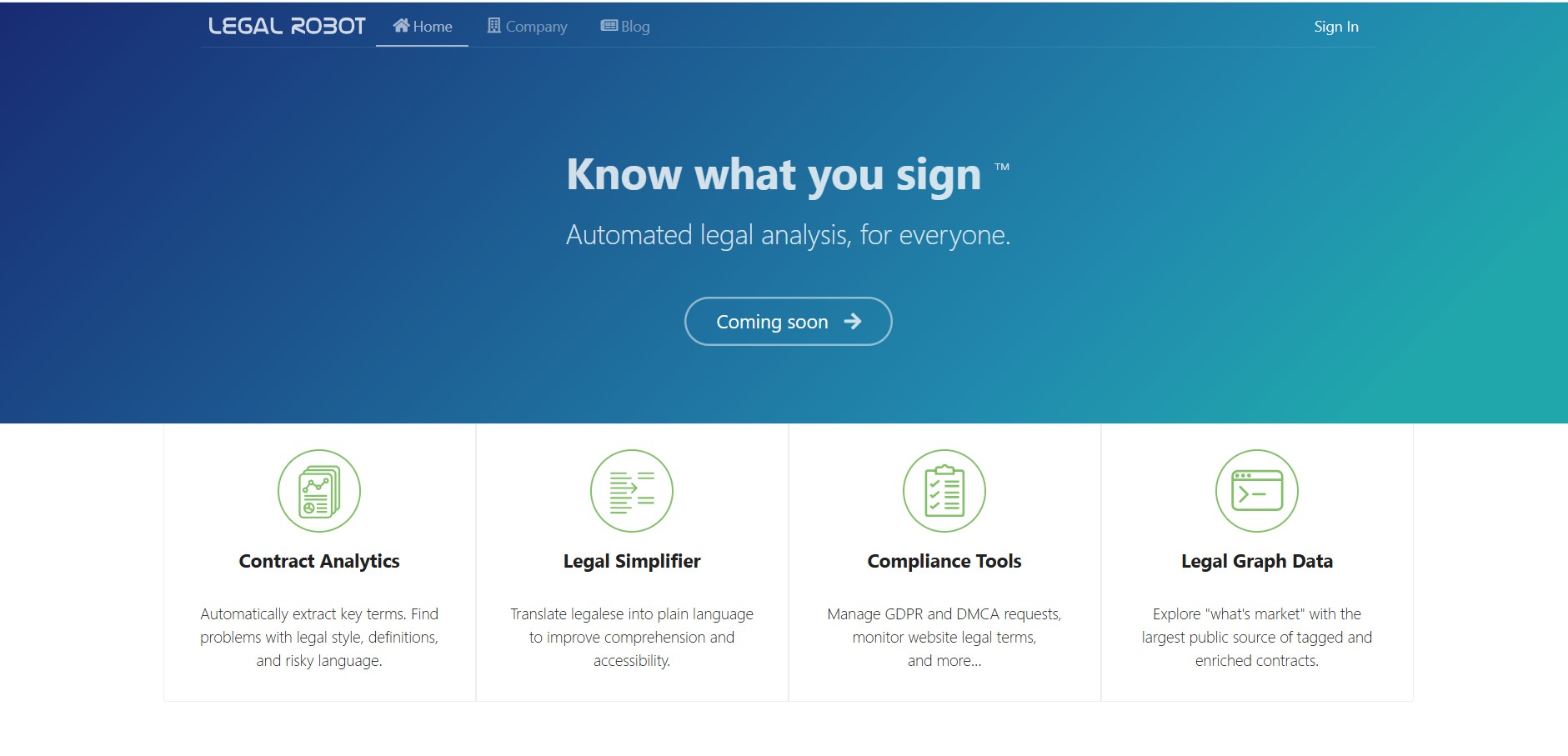
Legal Robot is an AI-powered contract analysis, readability enhancement, and legal compliance platform that uses machine learning and linguistic analysis to detect risky clauses, simplify legalese into plain language, and benchmark agreements against industry standards.
 4.8
4.8Legora
Legal
Legora (legora.com) is an AI-powered legal technology platform engineered to streamline contract analysis, clause extraction, legal research, and compliance workflows for law firms, legal ops, and corporate legal departments.
 4.7
4.7Thomson Reuters
Legal
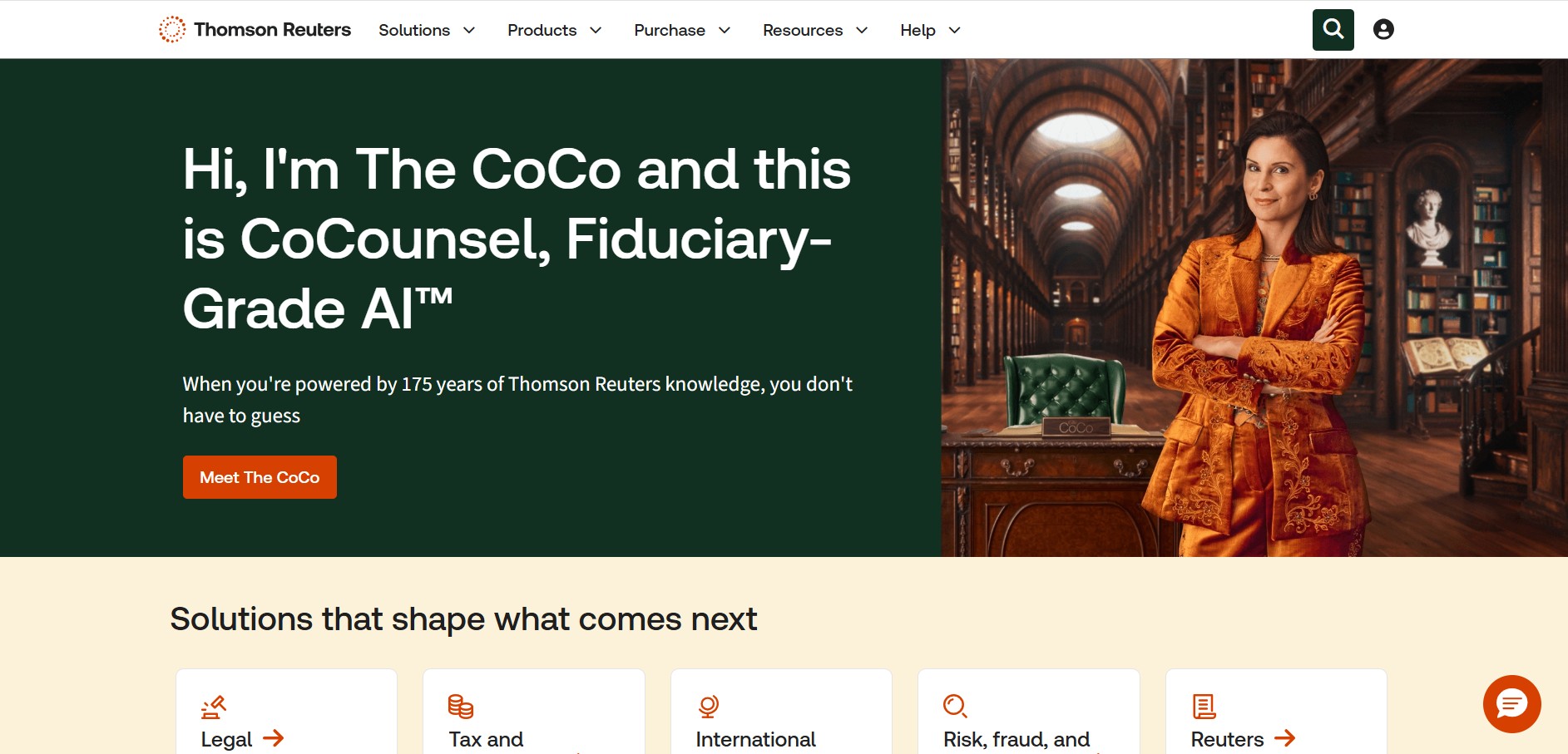
Thomson Reuters is a global leader in professional information, legal tech, tax, and compliance solutions powered by professional-grade AI, featuring CoCounsel, Westlaw Advantage, Practical Law, and ONESOURCE.
 4.8
4.8Darrow
Legal
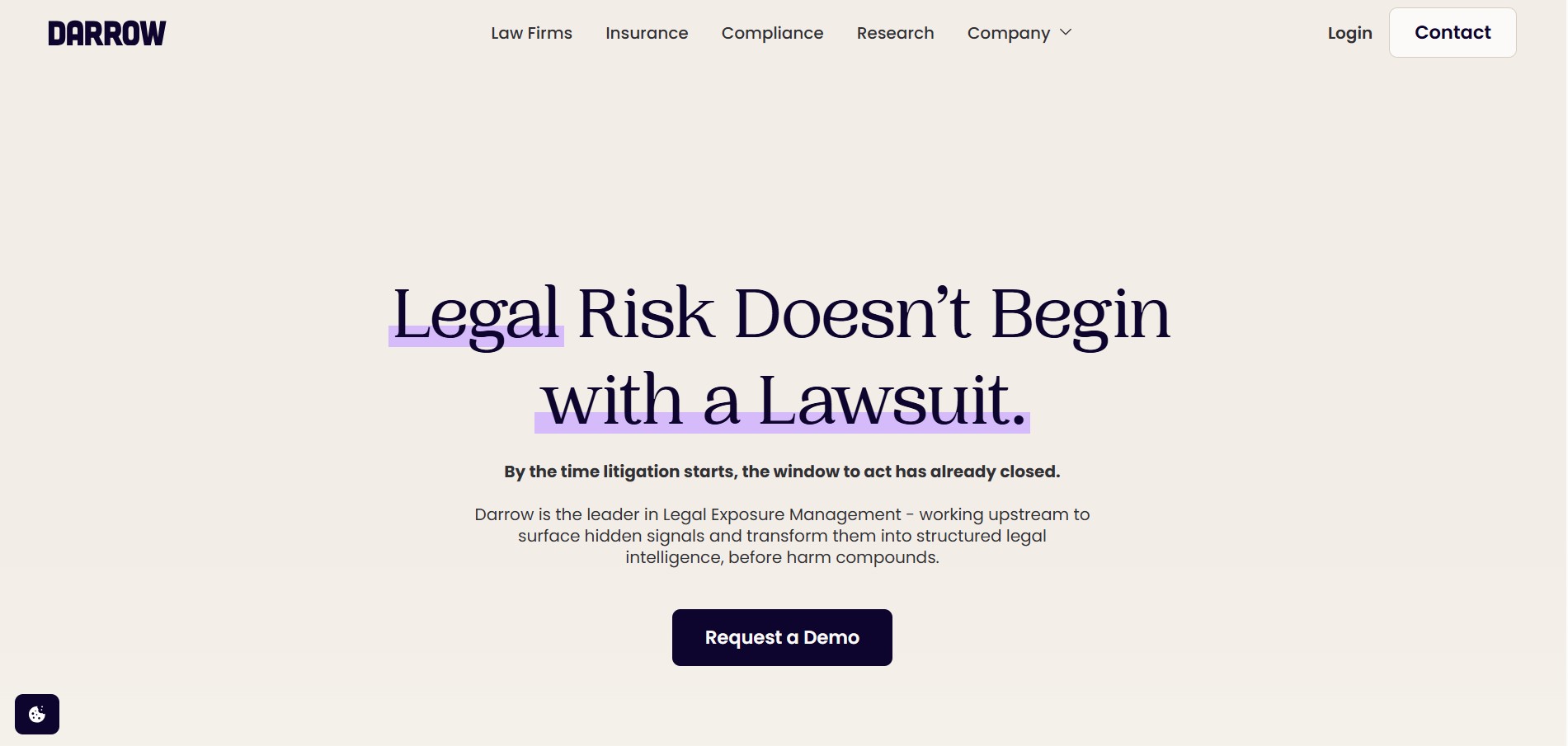
Darrow is an AI-powered legal intelligence and case discovery platform that scans real-world public data to detect legal violations, evaluate litigation exposure, predict financial damages, and match high-impact class-action and mass-arbitration cases with top law firms.
Traverse Legal
Legal
Traverse Legal is a technology-focused boutique law firm specializing in intellectual property, artificial intelligence, internet law, SaaS contracts, cybersquatting disputes, and complex commercial litigation with value-based and flat-fee billing models.
Legaliser
Legal
Legaliser is an AI-powered contract analysis, drafting, and risk detection platform designed for businesses, legal professionals, and individuals to instantly scan legal agreements, identify unfair clauses, score contractual risks, and redline contracts without costly legal overhead.