RHVoice
RHVoice (rhvoice.org) is an open-source, multilingual speech synthesizer and text-to-speech engine designed to provide high-quality, lightweight voice output for screen readers, mobile devices, and accessibility tools.
What is RHVoice?
RHVoice (rhvoice.org) is a free and open-source multilingual speech synthesizer and text-to-speech (TTS) engine. Engineered primarily by Olga Yakovleva, it was developed to empower visually impaired and blind users with fast, natural-sounding, and lightweight synthesized voices across operating systems. Unlike heavy neural text-to-speech models that require constant cloud connectivity and massive computational power, RHVoice utilizes statistical parametric synthesis based on HTS technology to deliver low-latency local voice generation on desktop computers, single-board devices, and mobile smartphones.
Maintained by an international community of open-source contributors and accessibility advocates, RHVoice supports over 15 languages—including Russian, English, Esperanto, Georgian, Ukrainian, Polish, Brazilian Portuguese, and Albanian—with multiple natural voice packages. Compatible with major assistive technologies like NVDA, Orca, and Android TalkBack, it provides a crucial bridge for digital access across resource-constrained environments globally.
- Founder / Creator: Olga Yakovleva
- License: Open Source (GPL / LGPL / AGPL depending on language modules)
Use Cases:
- Providing primary text-to-speech voice synthesis for blind and print-disabled software users via screen readers
- Serving as a low-latency, fully offline local TTS engine on Android smartphones, Linux desktops, and Windows machines
- Integrating customizable multilingual speech output into open-source applications, robotics, and embedded IoT systems
- Reading long e-books and web pages using lightweight voices that preserve CPU and battery life
Technology:
- Statistical parametric speech synthesis using HTS (HMM-based Speech Synthesis System) architecture
- C++ core runtime optimized for ultra-low latency, low RAM consumption, and offline operation
- Cross-platform abstraction layer supporting Android TTS API, Speech Dispatcher (Linux), SAPI5 (Windows), and NVDA drivers
Target Users:
- Blind, visually impaired, and print-disabled individuals requiring responsive daily screen reader audio output
- Accessibility software developers building offline-capable tools for low-resource or low-connectivity environments
- Linux, Android, and open-source enthusiasts seeking private, local speech synthesis alternatives to cloud AI models
- Content creators using writing tools to proofread drafts aloud and check pronunciation for multilingual documentation
Corporate / Community Entity: Managed as an Open-Source Community Project (rhvoice.org & GitHub: RHVoice)

Key features of RHVoice
RHVoice's key features are
- Multilingual Speech Synthesis: Supports Russian, English, Esperanto, Georgian, Ukrainian, Polish, Kyrgyz, Tatar, Croatian, Albanian, Macedonian, and Brazilian Portuguese among others.
- Ultra-Fast & Responsive Output: Built on statistical parametric synthesis to offer instant speech feedback without the latency associated with large neural networks.
- 100% Offline & Private Operation: Synthesizes speech entirely on-device, safeguarding user privacy and requiring zero internet connectivity.
- Screen Reader Integration: Seamlessly hooks into NVDA (Windows), Orca (Linux), and Android TalkBack via standard OS text-to-speech APIs.
- Lightweight Resource Footprint: Runs smoothly on entry-level Android devices, low-cost laptops, and embedded single-board computers like the Raspberry Pi.
- Open-Source & Community Voices: Allows developers and voice sponsors to build, customize, and publish new language packages via open-source tools.
- Multiple Voice Personalities: Features distinct built-in voice models (such as Elena, Aleksandr, Anna, Alan, and Clora) across supported languages.
- Cross-Platform Compatibility: Available as a standalone Android app (F-Droid & Google Play), Windows SAPI5 driver, and Linux Speech Dispatcher module.
RHVoice Pricing
RHVoice is 100% free and open-source software, funded and maintained through community contributions, non-profit sponsorships, and developer volunteers.
Free / Open Source:
- $0 / Free forever
- Includes full access to all voice models, language packages, cross-platform drivers, source code repositories, and Android/Windows installers without commercial restriction.
Disclaimer: RHVoice is free software distributed under open-source licenses. Organizations or individuals looking to sponsor new language packages or custom voice builds can consult rhvoice.org or community development channels.
Who is using RHVoice?
RHVoice is designed for accessibility advocates, visually impaired computer users, and developers, including
- Visually Impaired Computer Users: Relying on responsive, non-fatiguing speech output for high-speed screen reading
- Android & Mobile Phone Users: Replacing battery-draining cloud TTS engines with lightweight, offline voice synthesis
- Linux Accessibility Communities: Powering Orca and Speech Dispatcher setups on open-source Linux distributions
- Assistive Technology Non-Profits: Sponsoring and distributing localized voice builds for underserved language populations
- Content Creators: Using writing tools to audit draft audio formatting, verify phonetic clarity, and proofread written transcripts
Best RHVoice Alternatives
Some of the strongest RHVoice alternatives include
- eSpeak NG
- Festival Speech Synthesis System
- Piper TTS
- Sherpa-onnx
- Google Text-to-Speech
- eSpeak
Pros and Cons of RHVoice
Pros
- 100% free, open-source, and offline with zero telemetry or data collection
- Significantly more natural-sounding than legacy robotic synthesizers like eSpeak while remaining fast
- Broad ecosystem integration with NVDA, Orca, and Android TalkBack out of the box
- Extremely low RAM and CPU consumption, making it ideal for older hardware and mobile devices
- Strong support for Eastern European, Central Asian, and underserved regional languages
Cons
- Parametric synthesis sounds slightly less realistic compared to modern cloud neural AI models like ElevenLabs
- Adding new languages or custom voices requires technical compilation and training expertise
- Fewer commercial studio features like emotion tuning or dynamic inflection editing
- Voice availability varies across supported languages
Why Choose RHVoice?
RHVoice offers the optimal balance between natural vocal quality, rapid execution speed, and lightweight resource utilization for screen reader users and open-source software deployments.
- Provides a natural, non-fatiguing alternative to harsh robotic speech synthesizers
- Operates completely offline, protecting user privacy and ensuring reliability without internet access
- Integrates seamlessly with leading screen readers across Windows, Linux, and Android
- Fosters inclusive accessibility for languages often neglected by commercial TTS vendors
- Maintained as a transparent, free community project with no licensing costs
RHVoice vs. Competitors
The primary difference between RHVoice, eSpeak NG, Piper TTS, and Google Text-to-Speech is that RHVoice focuses on delivering lightweight, natural parametric speech synthesis specifically designed for fast screen reader feedback and multilingual accessibility across platforms, whereas eSpeak NG prioritizes maximum speed and minimal memory over vocal naturalness, Piper TTS uses neural models requiring more hardware power, and Google TTS relies heavily on proprietary cloud infrastructure. RHVoice bridges the gap between robotic speed and modern neural fidelity while remaining fully open-source and offline.
| Feature / Tool | RHVoice (rhvoice.org) | eSpeak NG | Piper TTS | Google Text-to-Speech |
|---|---|---|---|---|
| Synthesis Engine | Statistical Parametric (HTS) | Formant Synthesis | Neural VITS Network | Proprietary Cloud / On-Device Neural |
| Speech Quality | Natural / Parametric | Robotic / Formant | High Natural Neural | High Natural Neural |
| Offline Capability | 100% Offline | 100% Offline | 100% Offline | Hybrid / Cloud Dependent |
| Resource Footprint | Very Low (Fast Execution) | Ultra Low (Instant) | Moderate (Requires CPU/GPU) | Moderate to High |
| Licensing / Price | Free / Open Source (GPL/LGPL) | Free / Open Source (GPLv3) | Free / Open Source (MIT) | Proprietary / Free tier + Usage fees |
| Best For | Responsive screen reading & lightweight multilingual TTS | Maximum speed & ultra-low resource devices | High-quality offline neural local voice assistants | General Android consumers & cloud app services |
How do we rate RHVoice?
| Parameter | Rating (out of 5) |
|---|---|
| Speech Naturalness & Clarity (Parametric class) | 4.6 |
| Execution Speed & Ultra-Low Latency | 4.9 |
| Screen Reader Compatibility & Accessibility | 4.9 |
| Resource Efficiency & Offline Performance | 5.0 |
| Value for Money (Open Source) | 5.0 |
| Overall Score | 4.88 |
RHVoice Review
RHVoice plays an essential role in the open-source assistive technology landscape. By providing a clean, responsive, statistical parametric speech synthesis engine, it gives visually impaired users an efficient voice interface that avoids the high latency and resource overhead of heavy neural models. Its cross-platform support for Android, Windows SAPI5, and Linux Speech Dispatcher ensures consistent accessibility across devices. Combined with strong community support for regional and under-represented languages, RHVoice remains a premier open-source speech synthesizer in 2026.
Conclusion
RHVoice is a reliable open-source multilingual speech synthesis engine that delivers accessible, privacy-respecting, and offline text-to-speech capabilities. Supported by open-source community developers, extensive language coverage, and deep screen reader integrations, RHVoice continues to serve as an indispensable accessibility platform for users worldwide.
User Reviews
No reviews yet for RHVoice.
Featured Tools
Featured AI tools from TechShark
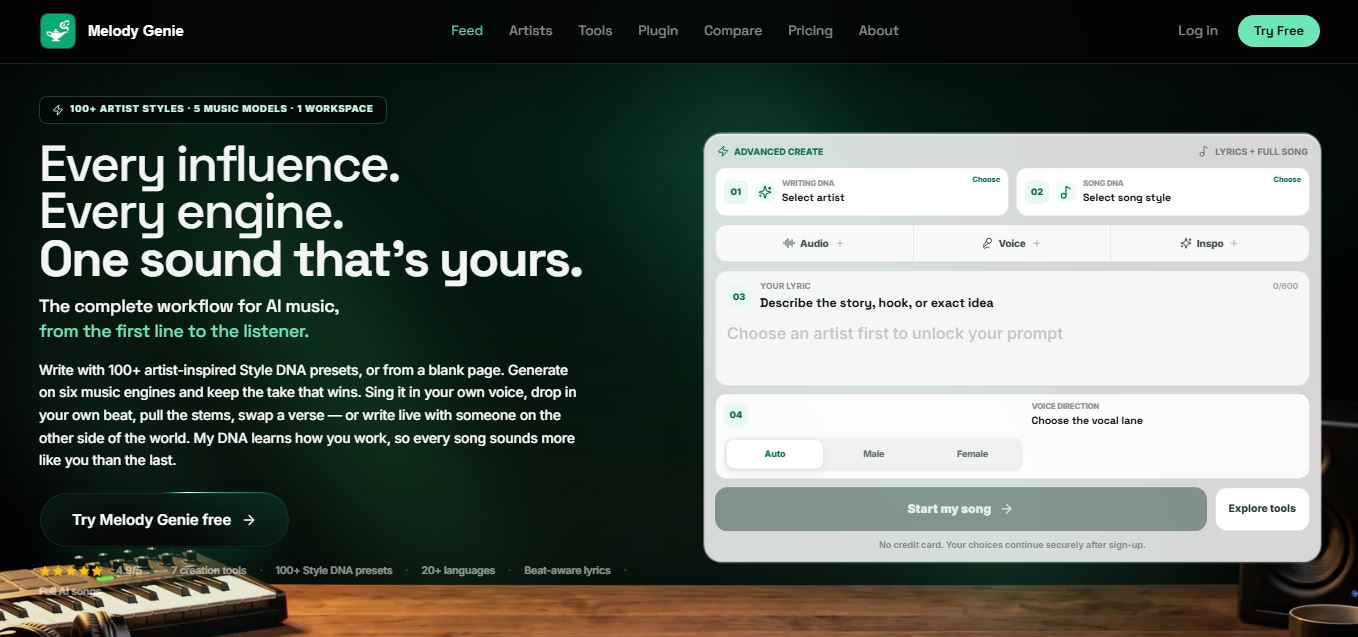
Melody Genie
MelodyGenie is an AI-powered music generator that creates original songs from simple text prompts. Users can choose styles, moods, and genres, then instantly generate melodies and full tracks, making it easy for creators, marketers, and hobbyists to produce custom music without musical expertise.
Freemium
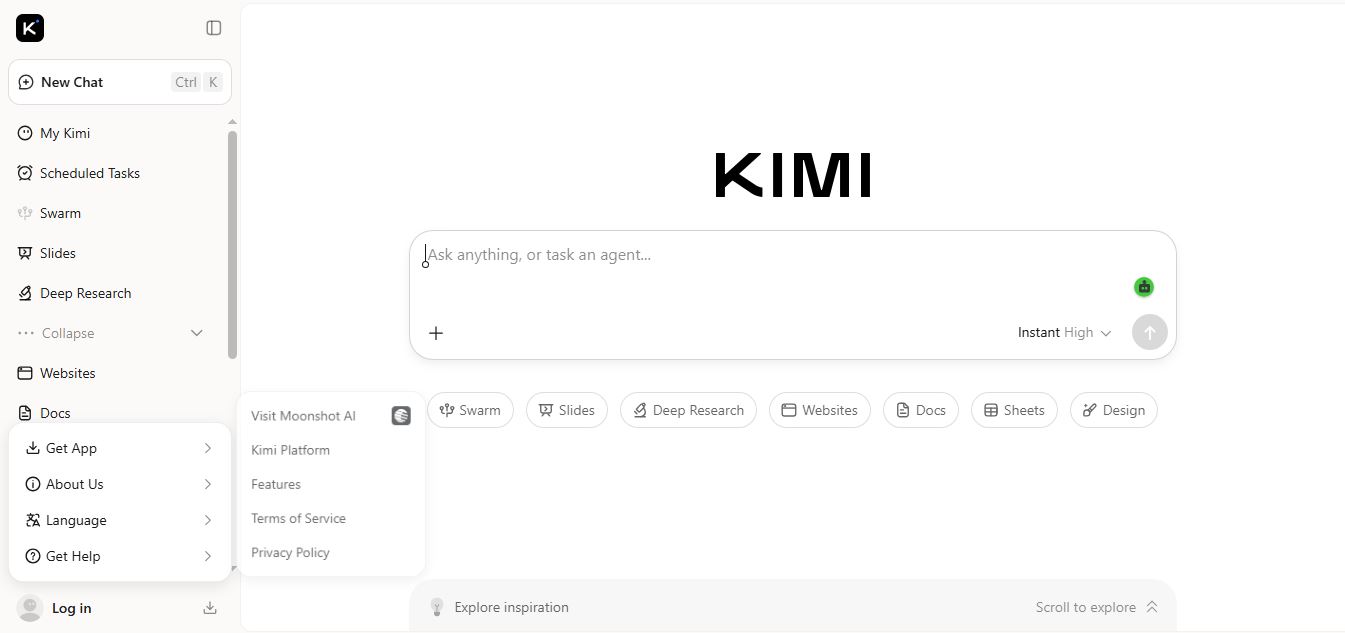
Kimi AI
Kimi AI is an advanced AI assistant developed by Moonshot AI that helps you chat, research, write, code, and automate tasks in one place. It supports web search, file analysis, and multimodal inputs, and can even run autonomous “agent” workflows to complete complex tasks end-to-end.
Freemium

Fashion Diffusion AI
Fashion Diffusion is an AI-powered fashion design platform that helps brands and designers create clothing designs, virtual try-ons, AI models, product photos, and marketing visuals faster and cost-effectively.
Paid
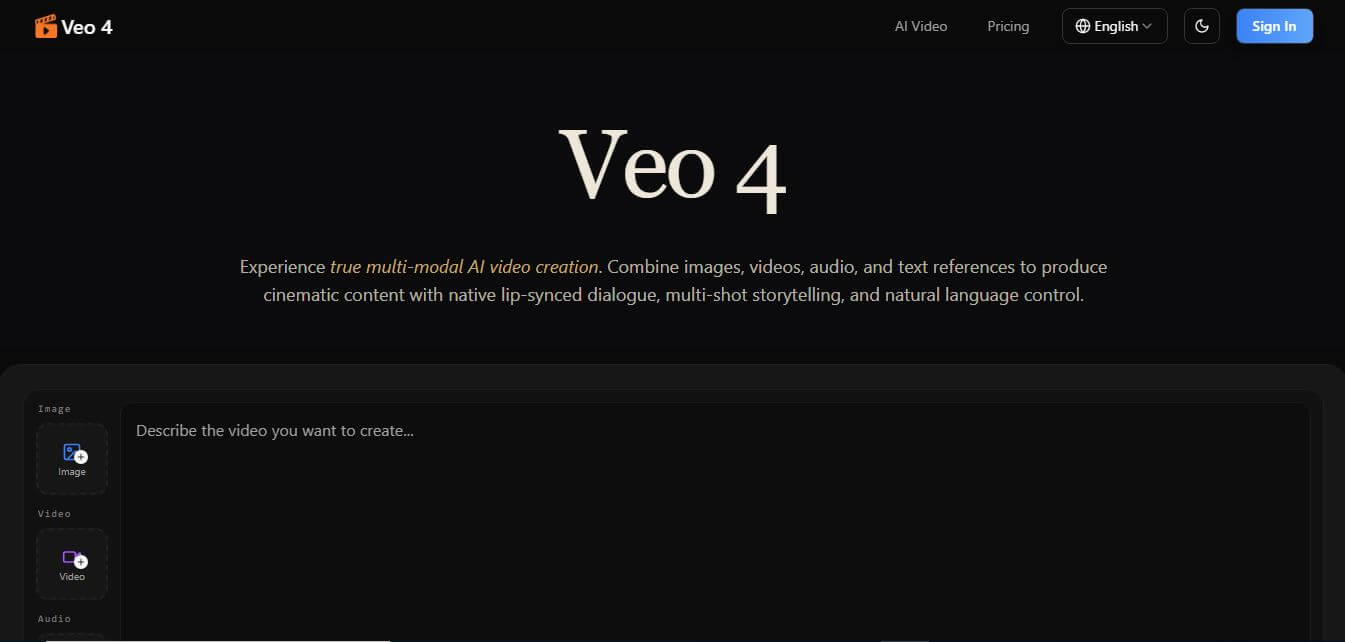
Veo 4
Veo 4 AI is an AI video creation platform that generates dramatic videos from text, images, audio, and video prompts using realistic motion and synchronized sound.
Paid
Alternatives
Alternatives to RHVoice
The best RHVoice alternatives include eSpeak NG, Festival Speech Synthesis System, Piper TTS, Sherpa-onnx, Google Text-to-Speech, and eSpeak. These engines offer speech synthesis across various architectures, from lightweight formant synthesizers to heavy neural models. While RHVoice specializes in an open-source, statistical parametric TTS engine designed for screen readers and offline accessibility, alternatives like eSpeak NG focus on maximum speed and minimal memory, Piper TTS offers local neural voice generation, and Google Text-to-Speech provides cloud-backed Android voice services.
 4.9
4.9Talkwalker
AI Agent
Talkwalker is a consumer intelligence and social listening solution that helps brands track online mentions, analyze audience sentiment, monitor competitors, and discover emerging trends. It combines social media analytics, media monitoring, customer feedback, and AI-powered insights to support marketing, public relations, reputation management, and data-driven business decisions across global markets.
 5.0
5.0AI4K12
AI Agent
AI4K12 is an educational initiative focused on bringing artificial intelligence into K–12 classrooms. It provides grade-level learning guidelines, curated teaching resources, and the Five Big Ideas framework. Designed for educators and curriculum developers, AI4K12 supports age-appropriate AI instruction and helps students understand how intelligent technologies work and affect society.
Kommunicate
AI Agent
Kommunicate (kommunicate.io) is an AI-powered customer service automation and live chat platform that unites no-code generative AI agents, Kompose chatbot builder, seamless human escalation, voice AI, and omnichannel messaging across WhatsApp, web, and mobile apps.
Text
AI Agent
Text is an AI-powered customer service platform that combines live chat, help desk ticketing, AI agents, and workflow automation. It helps businesses manage customer conversations, automate repetitive support tasks, answer questions, engage website visitors, and turn customer interactions into sales opportunities through a unified communication workspace.
DocsBot AI
AI Agent
DocsBot AI is an AI chatbot and agent platform that turns websites, documents, knowledge bases, and support tickets into conversational assistants. Businesses can use it to automate customer support, answer questions, share internal knowledge, connect workflows, and provide information through website widgets and supported integrations.
SiteGPT AI
AI Agent
SiteGPT is an AI chatbot platform that helps businesses automate customer support using their website content, documents, and knowledge sources. It answers visitor questions, supports lead generation, and integrates into websites, allowing teams to handle repetitive inquiries, improve customer experiences, and provide assistance around the clock.
 4.7
4.7Halcyon
AI Agent
Halcyon is an AI energy intelligence platform that helps professionals search regulatory filings, analyze energy-market information, monitor developments, and access structured datasets. It combines document search, natural-language queries, AI-powered alerts, and specialized data subscriptions to turn fragmented energy information into actionable intelligence for research, monitoring, planning, and faster decision-making.
 4.5
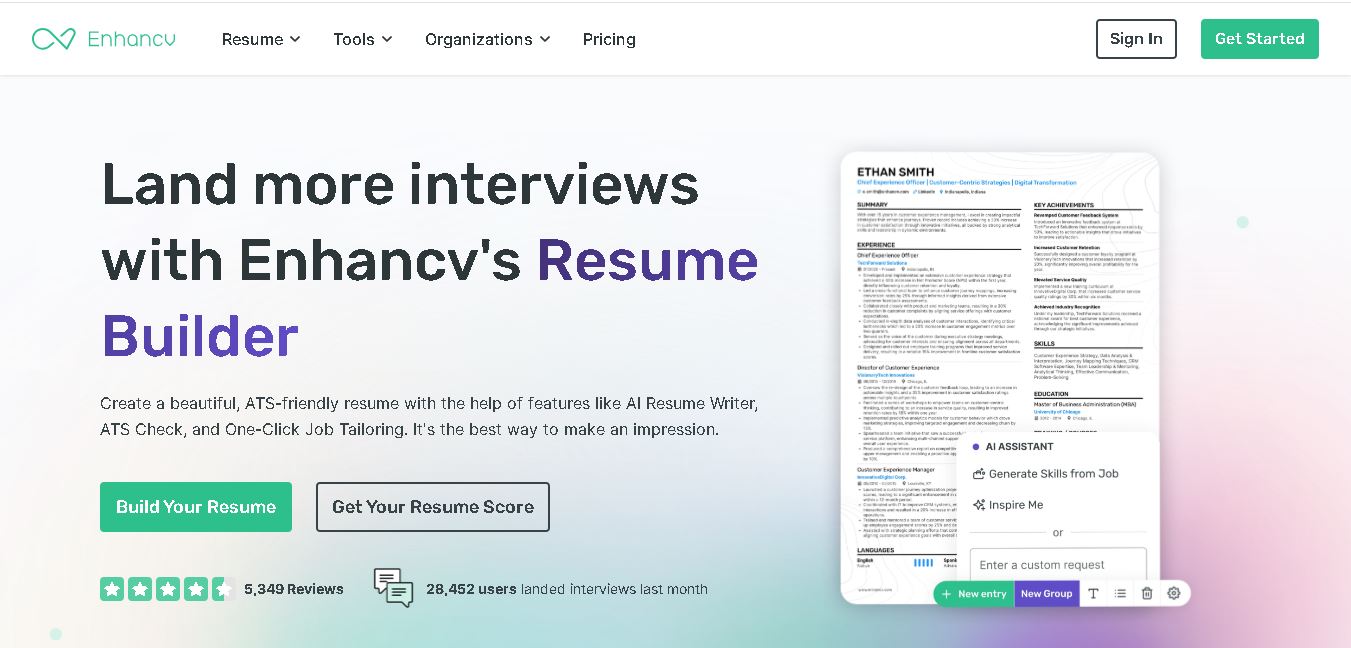
4.5Enhancv
AI Agent
Enhancv helps job seekers build ATS-friendly resumes using customizable templates, AI writing assistance, resume checking, and job-specific tailoring. It also supports cover letters, application tracking, interview preparation, and resume translation. The platform is designed for candidates who want a polished application while keeping control over their experience, wording, and presentation.
 4.9
4.9Domo
AI Agent
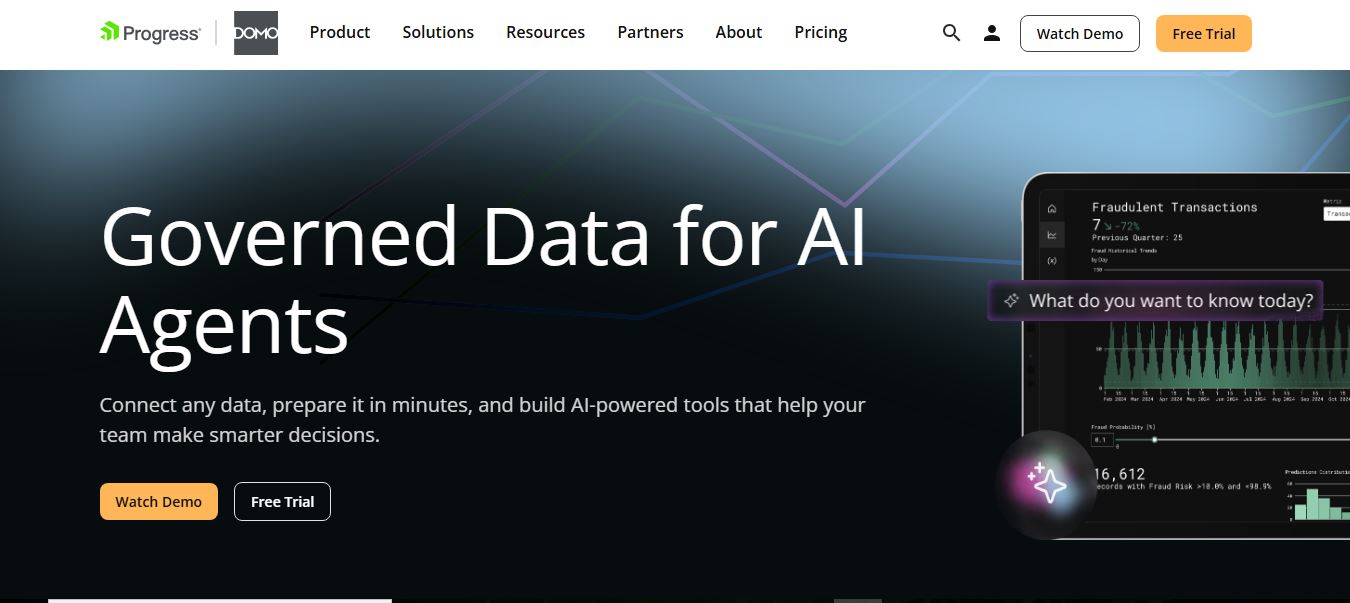
Domo is an AI-powered data and analytics platform that helps businesses connect, visualize, and act on data from multiple sources in one place. It combines dashboards, automation, and AI insights to turn raw data into decisions, enabling teams to monitor performance and drive better outcomes in real time.