Memmy
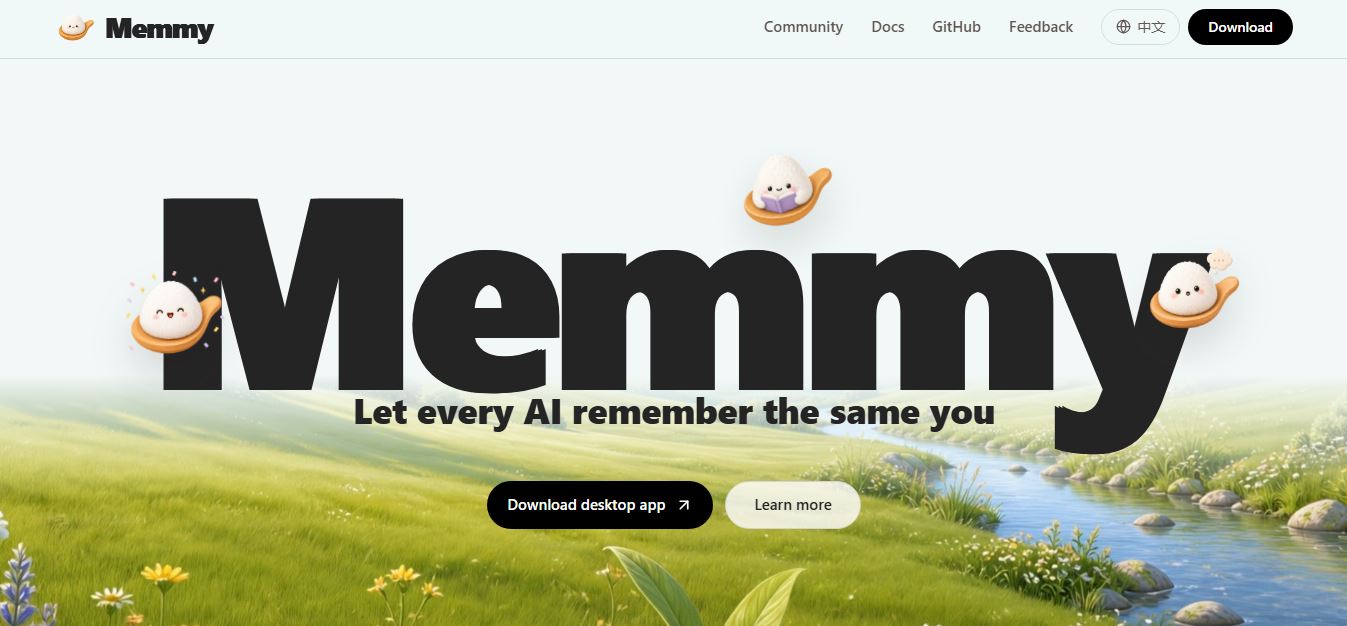
Memmy is a local-first AI memory hub and agent that lets multiple AI tools share the same long-term memory, so you don’t have to repeat context every time. It organizes your conversations, preferences, and project history into searchable data and injects relevant context into future tasks.
What is Memmy?
Memmy is a local-first AI memory platform that acts as a shared “brain” for all your AI tools. Instead of starting from scratch every time you switch between tools like Cursor, Claude, or Codex, Memmy stores your past conversations, preferences, and project context in one place—and lets every AI access it when needed. It works by scanning your authorized AI history, organizing it into structured, searchable memory, and then injecting the most relevant context into future tasks. Beyond memory, it also acts as its own AI agent—able to continue tasks, merge ideas, and manage workflows across tools. With a desktop app, CLI, and API, Memmy is designed for developers and heavy AI users who want consistent context, faster workflows, and a more personalized AI experience across every tool they use.
Launched in 2026 by Zhiqi Xu and the MemTensor team, Memmy solves the fragmented context problem in multi-agent workflows. Operating with a 100% on-device, local-first architecture where conversational data is never uploaded to remote servers without explicit consent, Memmy functions both as a shared memory layer and as an autonomous agent runtime. It is free and open-source (FOSS) with free starter trial tokens and Bring-Your-Own-Key (BYOK) API support.
- Founder / Creator: Zhiqi Xu (MemTensor)
- Launch Year: 2026
Use Cases:
- Relaying active project context, design constraints, and decisions when switching from Cursor to Claude Code or Codex
- Remembering coding preferences, stylistic rules (e.g., “use Tauri instead of Electron”), and repository conventions permanently
- Capturing “failure memory” when an approach dead-ends, preventing other AI agents from repeating the same debugging rabbit holes
- Executing direct background tasks via the Memmy agent runtime (synthesizing weekly technical decisions, merging plans, drafting docs)
- Searching, managing, and curating your personal on-device knowledge vault across CLI, TUI, and desktop interfaces
Technology:
- Four-layer cognitive memory architecture: L1 Trace (raw turns), L2 Policy (distilled preferences/avoidance), L3 World Model (project state), and Crystallized Skills (reusable SOPs)
- Local-first background system services (
memmy-memoryandmemmy-gateway) running over local RPC and OpenAI-compatible API endpoints (:18990) - Cross-agent skill integration hooks supporting Claude Code, Cursor, Codex, OpenClaw, and Hermes Agent
Target Users:
- Software engineers and full-stack developers switching between multiple AI coding assistants and CLI agents
- AI power users and prompt engineers seeking cross-platform memory continuity without manual copy-pasting
- Privacy-conscious developers who require 100% on-device data sovereignty and local encrypted storage
- Open-source contributors and agentic workflow builders experimenting with multi-agent orchestration
Acquisition: Operates as an open-source project and independent developer platform (MemTensor)

Key features of Memmy
Memmy's key features are
- Four-Layer Cognitive Memory Hierarchy: Automatically structures raw conversations into L1 Traces, distills experiences into L2 Policies, abstracts project constraints into L3 World Models, and crystallizes proven workflows into reusable Skills.
- Cross-Agent Context Relay: Seamlessly injects relevant preferences, architectural rules, and project milestones into whichever agent you are actively using (Cursor, Claude Code, Codex, OpenClaw).
- Failure Memory & Avoidance Guidance: Logs dead-end debugging approaches and technical failures so future agents avoid repeating the same mistaken pathways.
- 100% Local-First Storage & Privacy: All memory graphs and vector indices reside strictly on your local machine, ensuring private API keys and confidential proprietary code never leave your device.
- Dual Role (Memory Hub + Autonomous Agent): Beyond passive memory indexing, Memmy acts as a capable agent that can execute multi-turn terminal commands, summarize meeting notes, and merge project plans.
- CLI, TUI, and Desktop App Workspaces: Interact via an intuitive desktop GUI, an interactive terminal user interface (TUI), or headless scriptable CLI commands (
memmy-memory). - OpenAI-Compatible Local Gateway: Exposes a standardized local API server (
:18990) enabling any custom tool, plugin, or script to query and append to your memory graph. - Granular Granular Access Controls: View, search, edit, or delete specific memories at any time, and configure exact permission boundaries per agent.
Memmy Pricing
Memmy is free and open source, offering trial tokens for new users alongside a flexible Bring-Your-Own-Key (BYOK) model.
Open Source / BYOK (100% Free Core):
- $0 / Free Forever: Full access to desktop app (macOS, Windows, Linux), CLI, TUI, local memory daemon, and multi-agent plugins
- Free trial tokens included upon signup to test cloud agent runtime tasks
- Unlimited local memory indexing and retrieval using your own provider API keys (OpenAI, Anthropic, DeepSeek, Ollama)
Disclaimer: For the latest desktop builds, community roadmap milestones, and GitHub repository updates, please visit the official Memmy portal at memmy.bot or github.com/MemTensor/memmy-agent.
Who is using Memmy?
Memmy is used by developers and AI power users globally, including
- Multi-Tool Software Engineers: Eliminating repetitive onboarding when moving code tasks between Cursor and Claude Code
- Autonomous Agent Builders: Equipping terminal agents (Codex, OpenClaw, Hermes) with persistent, self-evolving memory
- Technical Leads & Architects: Preserving persistent project constraints, tech-stack decisions, and coding standards
- Privacy-Conscious Programmers: Maintaining a completely on-device personal knowledge base without third-party data tracking
Best Memmy Alternatives
Some of the strongest Memmy alternatives include
- Mem0 (formerly Embedchain)
- Pieces for Developers
- Zep (Memory for AI Assistants)
- Letta (MemGPT)
- TypingMind (Memory Plugins)
- Rewind AI / Limitless
Pros and Cons of Memmy
Pros
- Solves context loss across multiple AI tools by serving as a unified, shared memory hub
- Local-first architecture guarantees your proprietary codebase and prompts never leak to remote memory servers
- Four-layer cognitive structure (Trace → Policy → World Model → Skill) organizes knowledge intelligently rather than dumping raw chats
- Shared failure memory prevents AI agents from getting trapped in identical debugging loops
- Completely open-source with desktop, TUI, and scriptable CLI options
Cons
- Requires connecting personal LLM API keys (BYOK) once initial trial tokens are consumed
- Initial setup of CLI hooks and systemd services requires comfort with developer terminal commands
- Ecosystem integrations are actively expanding; non-coding apps (e.g., Notion, Obsidian) are still in development
Why Choose Memmy?
Every AI coding assistant today operates in a total vacuum—forgetting what you discussed the moment a chat window closes. Memmy gives you a permanent, sovereign memory layer that unites all your AI tools.
- Stops you from typing the same background explanations, preferences, and tech rules over and over
- Ensures your context moves with you whether you code in Cursor, Claude Code, or terminal CLIs
- Keeps all your personal intelligence safely on your own computer under your direct control
- Acts as an active agent coworker that turns past discussions into structured project documentation
Memmy vs. Competitors
The main difference between Memmy, Mem0, Pieces for Developers, and Letta (MemGPT) lies in its developer-first multi-agent focus and local-first execution. While Mem0 is primarily a cloud API for developer apps, and Pieces is an on-device snippet manager, Memmy focuses specifically on bridging coding assistants (Cursor, Claude Code, Codex) via a 4-layer cognitive memory pipeline and local daemon services.
| Feature / Tool | Memmy (memmy.bot) | Mem0 | Pieces for Developers | Letta (MemGPT) |
|---|---|---|---|---|
| Core Focus | Local-First Multi-Agent Memory Hub | Universal Memory Layer API | On-Device Developer Snippet Assistant | Stateful Agent Memory Framework |
| Local-First Privacy | Yes (100% on-device by default) | Cloud API / Self-host option | Yes (On-device ML models) | Self-hosted / Cloud server |
| Multi-Agent Tool Hooks | Yes (Cursor, Claude Code, Codex, OpenClaw) | SDK integrations | IDE plugins (VS Code, JetBrains) | Letta agent runtime |
| Shared Failure Memory | Yes (Avoidance policy distillation) | No | No | No |
| Pricing | Free & Open Source (BYOK) | Free tier / Paid Cloud API | Free / Pro tiers | Open Source / Paid Cloud |
| Best For | Developers using multiple AI coding agents | App builders adding memory to LLMs | Context capture across IDEs & browsers | Building stateful autonomous agents |
How do we rate Memmy?
| Parameter | Rating (out of 5) |
|---|---|
| Cross-Agent Memory & Context Relay | 4.9 |
| Local-First Privacy & Data Sovereignty | 5.0 |
| 4-Layer Cognitive Architecture Quality | 4.8 |
| CLI, TUI & Desktop Usability | 4.7 |
| Value for Money (Open Source / Free) | 5.0 |
| Overall Score | 4.88 |
Memmy Review
Memmy delivers an elegant and long-overdue solution to one of the biggest headaches in modern AI development: context fragmentation across tools. By creating an intelligent, local-first memory layer that abstracts past conversations into structured preferences, world models, and failure avoidance policies, Memmy ensures that switching between Cursor, Claude Code, and terminal agents feels continuous and cohesive. For developers and AI practitioners tired of starting from scratch with every new prompt, Memmy is an essential productivity upgrade.
Conclusion
Memmy is a powerful and forward-thinking platform that solves one of the biggest problems in modern AI workflows—context loss across tools. Instead of treating each AI interaction as a fresh start, it creates a shared memory layer that allows multiple AI agents (like Claude, Codex, and Cursor) to remember your preferences, decisions, and ongoing projects. Its biggest strength lies in its local-first memory system. All data is stored on your device, giving you full control while still enabling advanced features like memory retrieval, cross-agent context sharing, and task continuation. This makes it especially valuable for developers and power users who rely on multiple AI tools daily. While it requires setup and is still evolving, the concept is highly impactful. Memmy represents the future of AI workflows—where tools don’t just respond, but remember, adapt, and collaborate over time.
FAQ
What is Memmy AI?
Memmy is a personal AI memory hub that lets multiple AI tools share the same memory about you. It stores your preferences, past conversations, and project context so you don’t have to repeat yourself every time you switch between tools.
How does Memmy work?
Memmy scans your AI conversation history (with permission), organizes it into structured memory, and then injects relevant context into future tasks. This means your AI tools always “remember” what you’ve done before.
What can you do with Memmy?
You can store long-term AI memory, sync context across tools like Cursor or Claude Code, resume unfinished work, and even assign tasks directly to Memmy as an AI agent.
What makes Memmy different from regular AI chat tools?
Regular AI tools forget past conversations once the session ends. Memmy keeps a persistent, local memory that evolves over time, making your AI experience more consistent and personalized.
Does Memmy store data locally?
Yes, Memmy is designed as a local-first platform. Your memory data is stored on your device (typically in a local database), and nothing is accessed without your permission.
Which AI tools does Memmy support?
Memmy works with multiple AI agents and tools like Cursor, Claude Code, Codex, OpenClaw, and more, allowing all of them to share the same memory layer.
Who should use Memmy AI?
Memmy is best for developers, AI power users, and teams who use multiple AI tools and want a consistent memory across them without repeating instructions or losing context.
Is Memmy free to use?
Memmy offers free access (including open-source components and trial tokens), with the option to use your own API keys for extended usage.
User Reviews
No reviews yet for Memmy.
Featured Tools
Featured AI tools from TechShark
Melody Genie
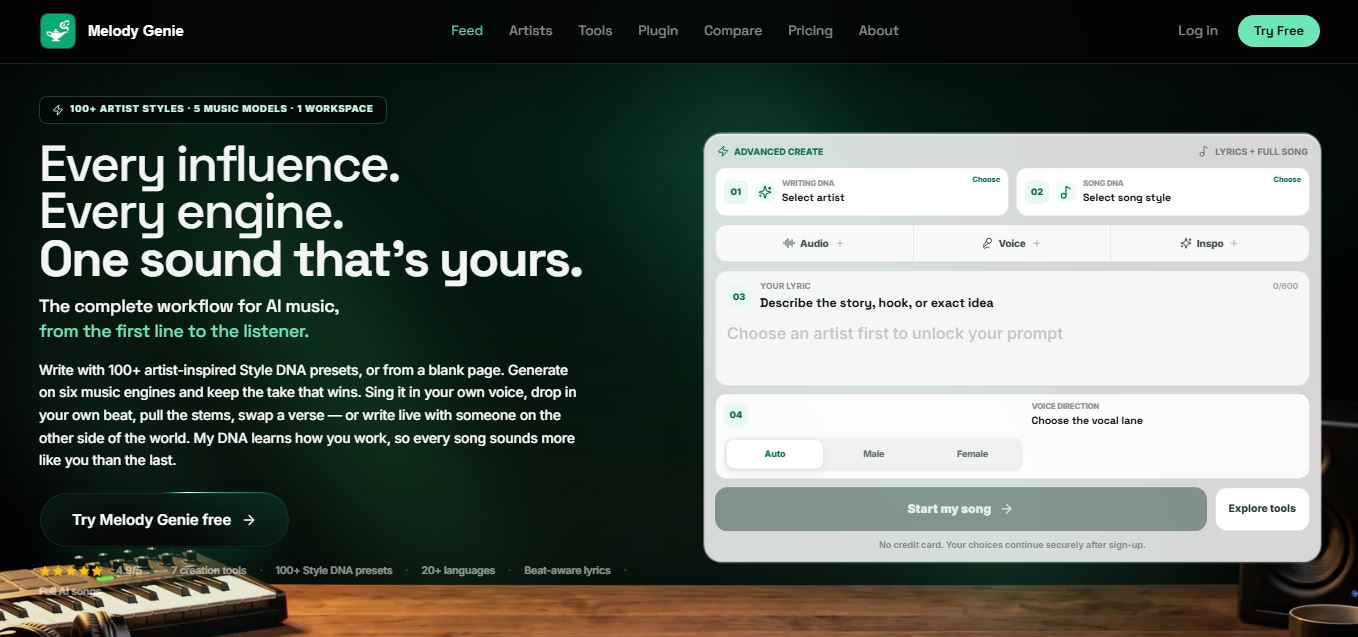
MelodyGenie is an AI-powered music generator that creates original songs from simple text prompts. Users can choose styles, moods, and genres, then instantly generate melodies and full tracks, making it easy for creators, marketers, and hobbyists to produce custom music without musical expertise.
Freemium
Kimi AI
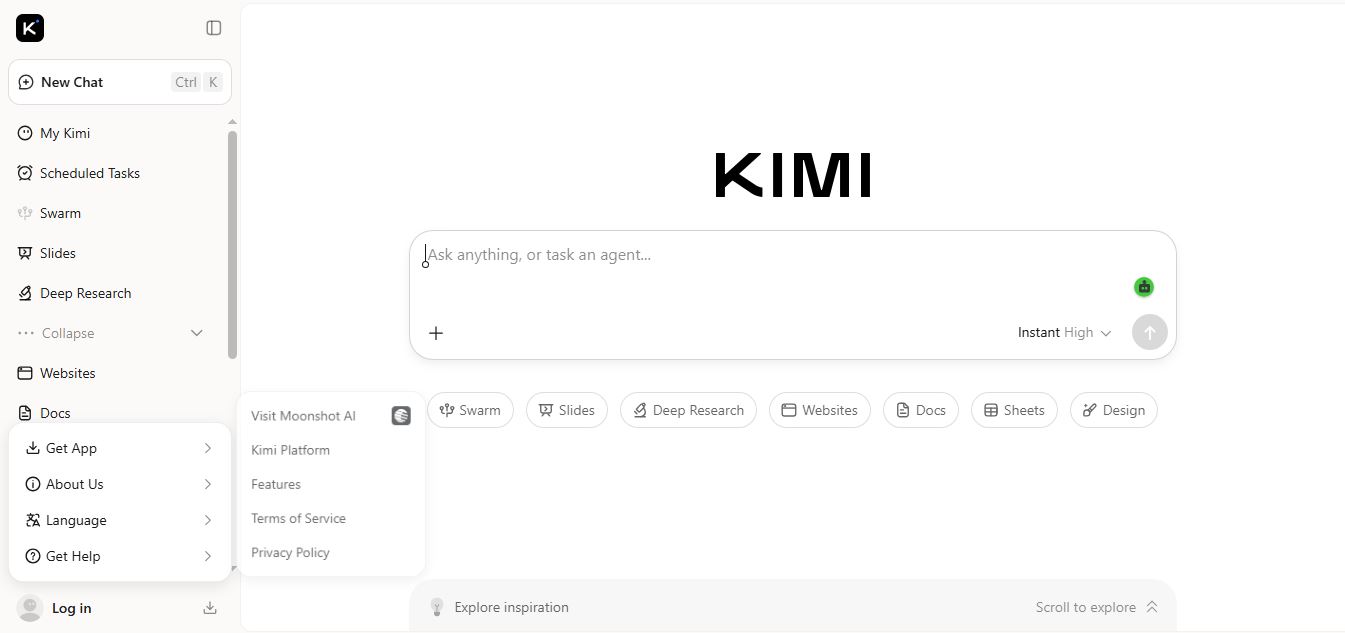
Kimi AI is an advanced AI assistant developed by Moonshot AI that helps you chat, research, write, code, and automate tasks in one place. It supports web search, file analysis, and multimodal inputs, and can even run autonomous “agent” workflows to complete complex tasks end-to-end.
Freemium
Fashion Diffusion AI
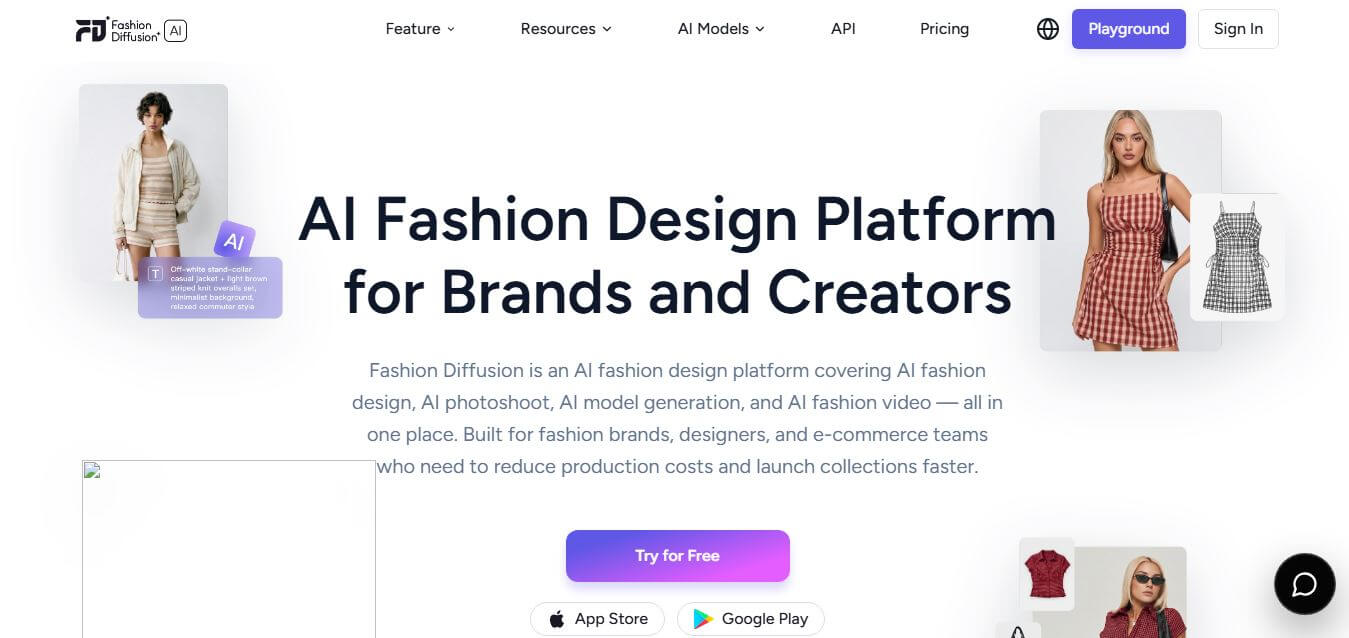
Fashion Diffusion is an AI-powered fashion design platform that helps brands and designers create clothing designs, virtual try-ons, AI models, product photos, and marketing visuals faster and cost-effectively.
Paid
Veo 4
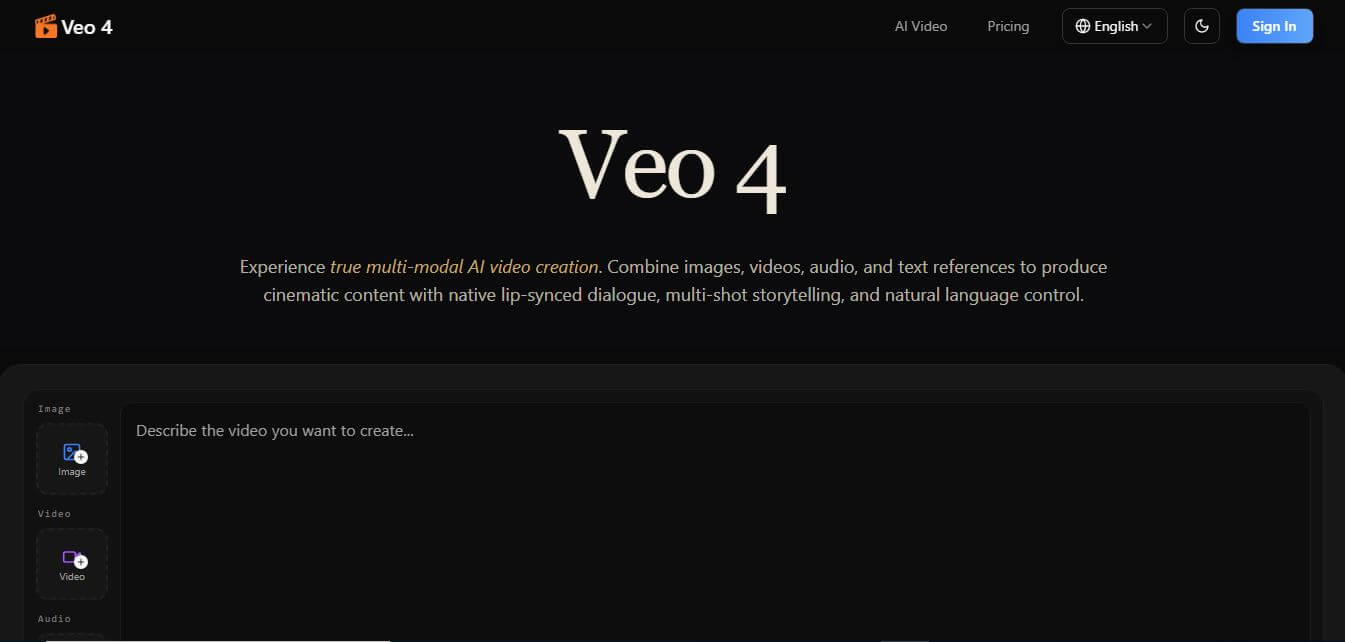
Veo 4 AI is an AI video creation platform that generates dramatic videos from text, images, audio, and video prompts using realistic motion and synchronized sound.
Paid
Alternatives
Alternatives to Memmy
The best Memmy alternatives include Mem0 (formerly Embedchain), Pieces for Developers, Zep, Letta (MemGPT), TypingMind, and Rewind AI. These platforms provide persistent memory layers, context management, and developer assistance. While Memmy specializes in a 100% local-first, 4-layer cognitive memory hub built specifically to bridge coding agents (Cursor, Claude Code, Codex, OpenClaw) with shared failure avoidance policies, alternatives like Mem0 offer cloud memory APIs for LLM applications, and Pieces for Developers focuses on on-device code snippet capture.
 4.9
4.9Talkwalker
AI Agent
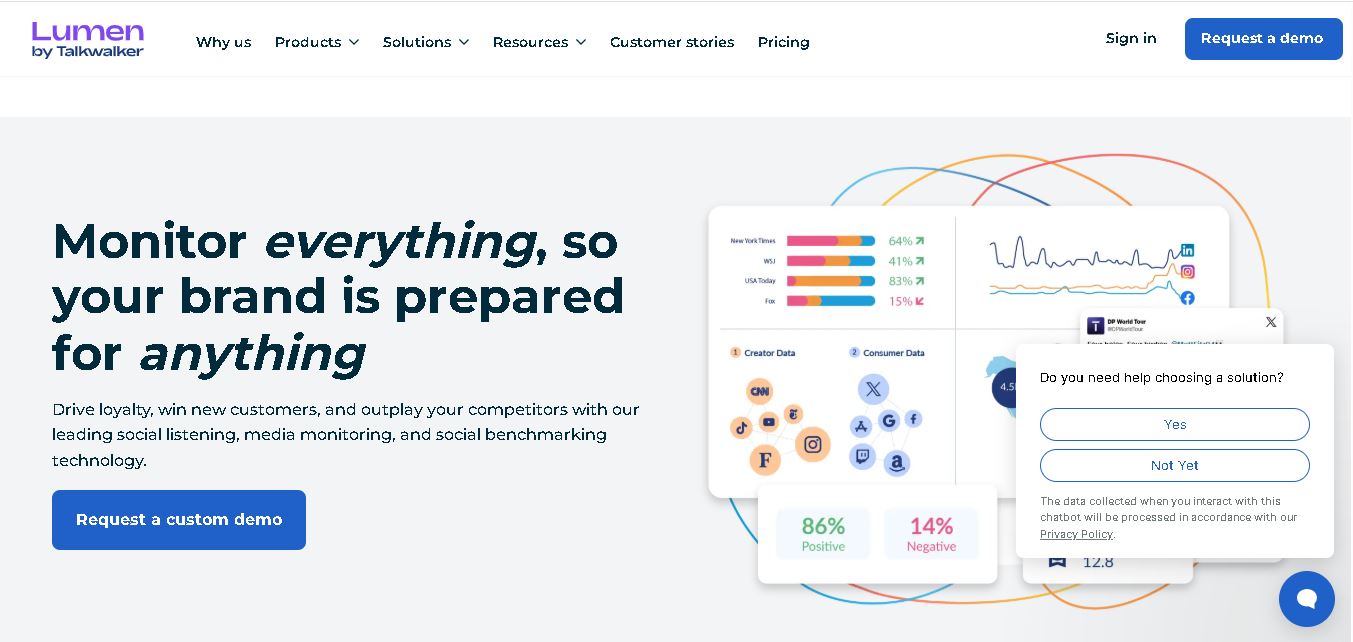
Talkwalker is a consumer intelligence and social listening solution that helps brands track online mentions, analyze audience sentiment, monitor competitors, and discover emerging trends. It combines social media analytics, media monitoring, customer feedback, and AI-powered insights to support marketing, public relations, reputation management, and data-driven business decisions across global markets.
 5.0
5.0AI4K12
AI Agent
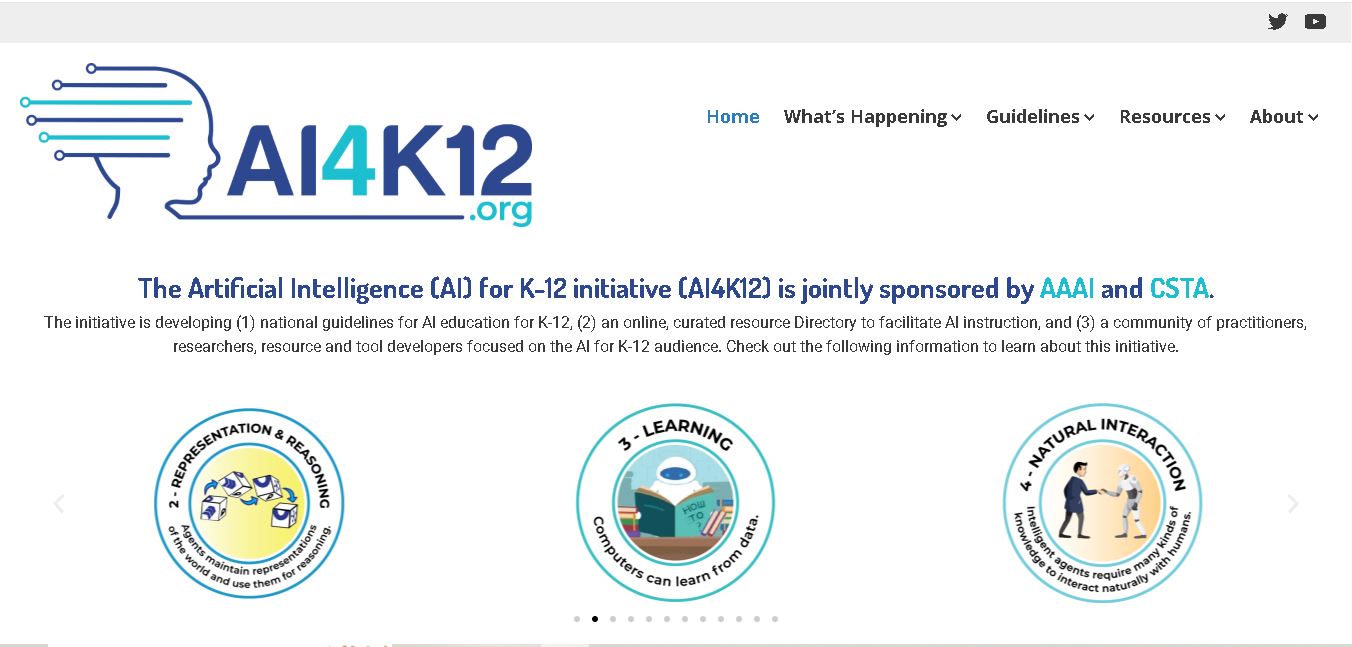
AI4K12 is an educational initiative focused on bringing artificial intelligence into K–12 classrooms. It provides grade-level learning guidelines, curated teaching resources, and the Five Big Ideas framework. Designed for educators and curriculum developers, AI4K12 supports age-appropriate AI instruction and helps students understand how intelligent technologies work and affect society.
Kommunicate
AI Agent
Kommunicate (kommunicate.io) is an AI-powered customer service automation and live chat platform that unites no-code generative AI agents, Kompose chatbot builder, seamless human escalation, voice AI, and omnichannel messaging across WhatsApp, web, and mobile apps.
Text
AI Agent
Text is an AI-powered customer service platform that combines live chat, help desk ticketing, AI agents, and workflow automation. It helps businesses manage customer conversations, automate repetitive support tasks, answer questions, engage website visitors, and turn customer interactions into sales opportunities through a unified communication workspace.
DocsBot AI
AI Agent
DocsBot AI is an AI chatbot and agent platform that turns websites, documents, knowledge bases, and support tickets into conversational assistants. Businesses can use it to automate customer support, answer questions, share internal knowledge, connect workflows, and provide information through website widgets and supported integrations.
SiteGPT AI
AI Agent
SiteGPT is an AI chatbot platform that helps businesses automate customer support using their website content, documents, and knowledge sources. It answers visitor questions, supports lead generation, and integrates into websites, allowing teams to handle repetitive inquiries, improve customer experiences, and provide assistance around the clock.
 4.7
4.7Halcyon
AI Agent
Halcyon is an AI energy intelligence platform that helps professionals search regulatory filings, analyze energy-market information, monitor developments, and access structured datasets. It combines document search, natural-language queries, AI-powered alerts, and specialized data subscriptions to turn fragmented energy information into actionable intelligence for research, monitoring, planning, and faster decision-making.
 4.5
4.5Enhancv
AI Agent
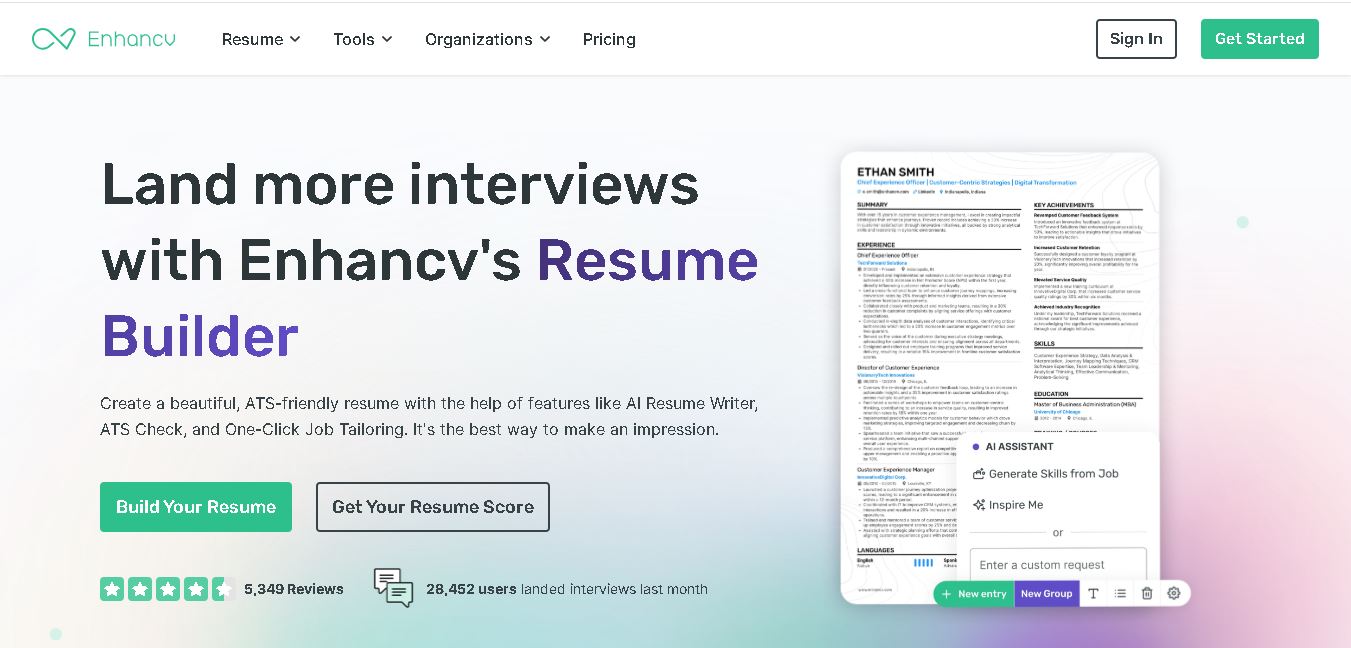
Enhancv helps job seekers build ATS-friendly resumes using customizable templates, AI writing assistance, resume checking, and job-specific tailoring. It also supports cover letters, application tracking, interview preparation, and resume translation. The platform is designed for candidates who want a polished application while keeping control over their experience, wording, and presentation.
 4.9
4.9Domo
AI Agent
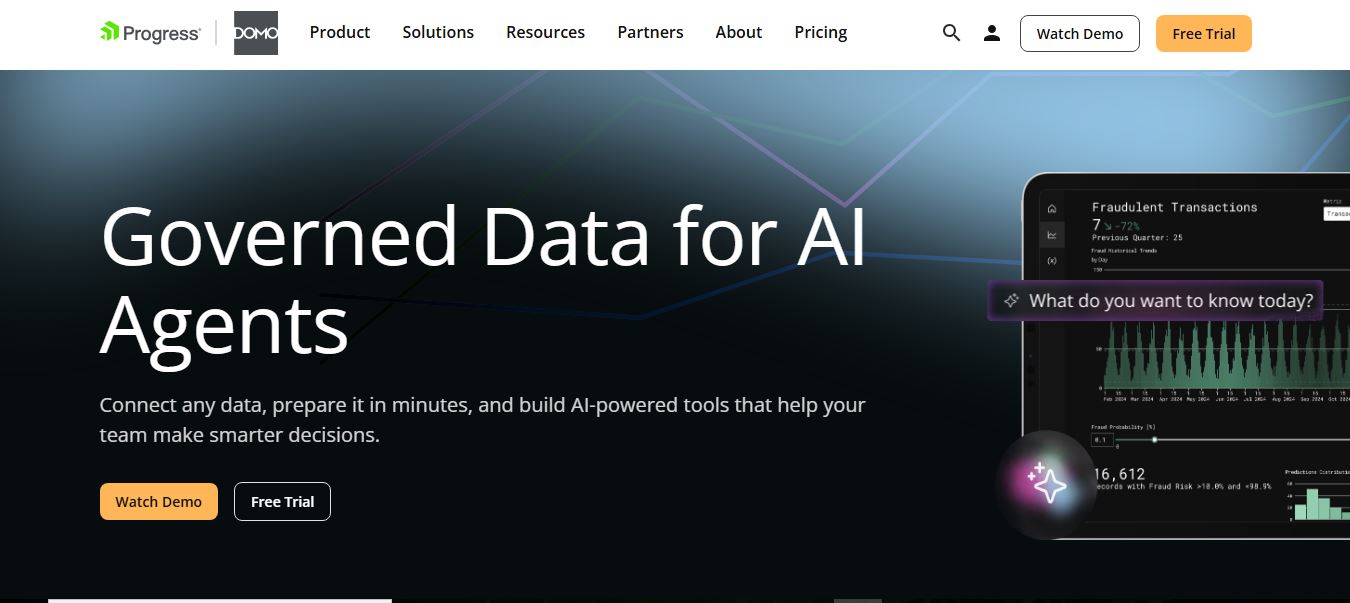
Domo is an AI-powered data and analytics platform that helps businesses connect, visualize, and act on data from multiple sources in one place. It combines dashboards, automation, and AI insights to turn raw data into decisions, enabling teams to monitor performance and drive better outcomes in real time.