
Fileread
Fileread is an AI-powered legal document intelligence platform that helps litigation teams analyze large document collections, find facts and prepare cases faster.
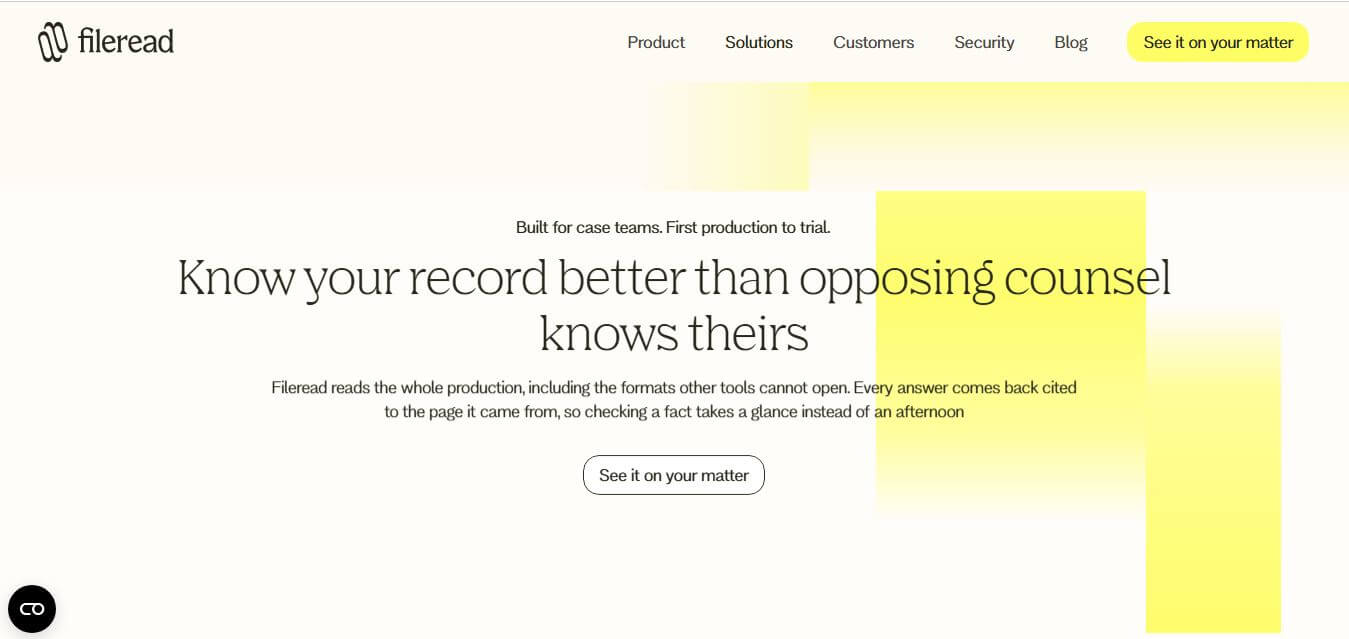
What Is Fileread?
Fileread is an AI-powered legal document intelligence platform designed for litigation teams, law firms, attorneys, legal departments, investigators, and other legal professionals. The platform helps users search, analyze, and extract information from large collections of case documents using natural-language queries, semantic search, metadata search, keyword search, and AI-powered document analysis. Unlike general-purpose AI assistants, Fileread is built specifically around legal workflows. It can analyze different types of information, including text, images, charts, diagrams, and other unstructured content. It can also generate useful case materials such as case summaries, chronologies, fact memos, character lists, and organizational charts, with citations that link findings back to the underlying source documents.
Fileread is available as a standalone platform and also integrates with Relativity, allowing legal teams to incorporate AI-powered analysis into existing discovery workflows.
Fileread launched its standalone platform on May 28, 2025, after initially developing its technology around legal document analysis and Relativity workflows. The company has raised $6 million in seed funding and was founded by Chan Koh, Daniel Hu, and Freya Zhou. The platform supports large and potentially unlimited document collections and includes multimodal analysis capabilities. Its security program includes support for SOC 2 Type II, ISO 27001, HIPAA, and GDPR requirements. Fileread also introduced features such as Deep Search and Matter Intelligence in 2025.
- Founder: Fileread was founded by Chan Koh, Daniel Hu and Freya Zhou. Chan Koh is CEO, Daniel Hu is CTO, and Freya Zhou is COO.
- Launch: Fileread launched its standalone platform on May 28, 2025.
- Use Cases: Legal document review, discovery, case analysis, deposition preparation, trial support, fact-finding, investigations, and document extraction.
- Technology: AI-powered document intelligence, semantic search, metadata search, keyword search, multimodal analysis, agentic extraction, and private LLM processing.
- Target User: Litigation teams, attorneys, law firms, legal departments, investigators, and legal service providers.
- Acquisition: There is no reliable public information indicating that Fileread has been acquired.
What Does Fileread Do?
Fileread helps legal professionals understand large volumes of case information without relying exclusively on manual document review.
Its main use cases include:
- Legal document review
- eDiscovery and discovery workflows
- Case analysis
- Investigations
- Fact-finding
- Deposition preparation
- Trial preparation
- Document extraction
- Identifying relationships and contradictions across documents
- Creating case summaries and chronologies
The platform combines AI-powered document intelligence with search and extraction capabilities to help legal teams move from raw documents to actionable case information more efficiently.

Fileread Key Features
Fileread key features are
- AI Document Analysis: Quickly analyze large document collections to uncover key facts, connections, contradictions, and patterns across case materials.
- Natural-Language Search: Search case documents using everyday language instead of relying solely on complex Boolean searches.
- Deep Search: Combines metadata, keyword, and semantic search to surface relevant information across large document databases.
- Matter Intelligence: Understands the context of a case and turns broad questions into more focused, case-specific searches—without requiring users to be prompt-engineering experts.
- Agentic Extraction: Automatically finds and extracts specific information from large document collections based on simple, natural-language instructions.
- Multimodal Analysis: Goes beyond text to analyze images, charts, diagrams, handwritten notes, and other visual content within case materials.
- Case Summaries: Creates clear, useful summaries that help legal teams quickly understand key facts, developments, and storylines.
- Fact Memos: Helps legal teams create fact-based work products with direct links to the documents supporting each finding.
- Chronologies: Automatically organizes important events and case information into easy-to-follow timelines.
- Character Lists: Identifies people mentioned across documents and gathers relevant information about them.
- Organizational Charts: Helps map relationships between people, companies, and other entities to build organizational structures from case documents.
- Citation Support: Connects AI-generated findings back to the original documents, making it easier for legal teams to verify information and review the source.
- Relativity Integration: Works directly alongside Relativity, allowing legal teams to use Fileread’s AI capabilities within their existing discovery workflows.
- Enterprise Security: Uses Azure encryption and private LLM processing, with support for enterprise requirements including SOC 2 Type II, ISO 27001, HIPAA, and GDPR.
- Real-Time Collaboration: With the newer Relativity integration, teams can work between Fileread and Relativity more seamlessly without constantly switching between separate workflows.
Fileread Pricing
Fileread does not publicly list standard pricing on its main website. The platform is positioned as an enterprise legal technology product, meaning organizations generally need to contact Fileread to discuss pricing. Microsoft Azure Marketplace currently lists Fileread with a free trial, although the duration and usage limits can vary depending on the offer. Third-party sources also indicate that standard public pricing is not currently available.
Is Fileread Free?
Fileread does not appear to offer a standard permanently free plan based on the provided information. However, a free trial is currently listed through Microsoft Azure Marketplace. For organizations considering Fileread, the most reliable approach is to contact the company directly for current enterprise pricing and available plans.
Disclaimer: For the latest and most accurate pricing information, please visit the official Fileread website.
Who Should Use Fileread?
Fileread is primarily designed for professionals who work with large volumes of legal and case-related documents.
- Litigation attorneys.
- Law firms.
- Legal departments.
- Litigation support teams.
- eDiscovery professionals.
- Investigators.
- Alternative legal service providers.
- Legal technology teams.
- Enterprise organizations handling large document productions.
- Teams using Relativity for discovery.
The source also identifies organizations including Kellogg, Hansen, Todd, Figel & Frederick, Fields Han & Cunniff, JND Legal Administration, and Nutter McClennen & Fish among Fileread's customers and users.
What Are the Best Fileread Alternatives?
- RelativityOne
- Everlaw
- DISCO
- Logikcull
- LexisNexis
The right alternative depends on what a legal team needs. RelativityOne is positioned as a broader enterprise eDiscovery platform, Everlaw emphasizes collaborative litigation workflows, DISCO focuses on AI-powered eDiscovery, Logikcull is designed to simplify eDiscovery, and LexisNexis provides broader legal research and intelligence capabilities.
Pros and Cons
Pros
- Built specifically for litigation teams.
- AI-powered document analysis.
- Natural-language document queries.
- Deep Search functionality.
- Multimodal document analysis.
- AI-powered extraction.
- Generates case summaries and chronologies.
- Direct citations to source documents.
- Relativity integration.
- Enterprise-grade security.
- Supports large document collections.
- Helps reduce manual review work.
- Continuously adds new AI capabilities.
Cons
- Pricing is not publicly transparent.
- Primarily designed for legal professionals.
- May be too specialized for general document analysis.
- Enterprise implementation may require onboarding.
- AI-generated findings still require professional verification.
- Some advanced capabilities may be more useful to large litigation teams than individual lawyers.
Why Choose Fileread?
Fileread is a strong choice for legal teams dealing with large amounts of evidence and case documents.
- Search thousands or millions of documents using natural language.
- Find important facts faster.
- Identify connections across documents.
- Analyze text and visual information.
- Generate case summaries.
- Build chronologies and fact memos.
- Extract structured information automatically.
- Verify findings through source citations.
- Reduce repetitive document-review work.
- Integrate with Relativity.
- Keep sensitive legal data protected.
- Adapt AI analysis as a case develops.
One of Fileread's strongest differentiators is Matter Intelligence, which uses case context to improve searches instead of requiring attorneys to repeatedly rewrite prompts.
Fileread vs Competitors
The main difference between Fileread, RelativityOne, Everlaw and DISCO is that Fileread focuses heavily on AI-powered fact-finding and document intelligence, while RelativityOne is a broader eDiscovery platform, Everlaw emphasizes collaborative legal review and DISCO combines discovery with AI-powered legal workflows. Fileread is particularly useful for teams that want AI to analyze massive document collections and produce verifiable insights with direct citations to source documents.
| Tool | Best For | AI Analysis | Document Search | Case Preparation |
|---|---|---|---|---|
| Fileread | AI legal document intelligence | Yes | Yes | Yes |
| RelativityOne | Enterprise eDiscovery | Yes | Yes | Yes |
| Everlaw | Collaborative discovery | Yes | Yes | Yes |
| DISCO | AI-powered eDiscovery | Yes | Yes | Yes |
| Logikcull | Simplified eDiscovery | Yes | Yes | Yes |
Fileread differentiates itself through its combination of AI search, contextual understanding, multimodal analysis and citation-backed work-product generation. Its Deep Search and Matter Intelligence features are designed to help attorneys find relevant information without having to become experts in search syntax or prompt engineering.
How Do We Rate Fileread?
Based on its features, legal focus, search capabilities, security, and workflow integrations, our overall Fileread rating is 4.7 out of 5.
| Category | Rating out of 5 |
|---|---|
| Ease of Use | 4.5 |
| AI Document Analysis | 4.8 |
| Search | 4.8 |
| Case Preparation | 4.8 |
| Multimodal Analysis | 4.7 |
| AI Extraction | 4.7 |
| Citations | 4.9 |
| Relativity Integration | 4.8 |
| Security | 4.9 |
| Pricing Transparency | 3.8 |
| Overall Rating | 4.7 |
Fileread Review
Fileread is a specialized AI platform rather than a general-purpose AI assistant. Its biggest strength is its focus on helping litigation teams understand large and complex document collections. The platform's AI document analysis can identify facts, patterns, relationships, and contradictions across case materials. Its ability to analyze text alongside images, charts, diagrams, and other visual information makes it particularly relevant for matters involving diverse types of evidence.
Deep search is another major strength. By combining metadata, keywords, and semantic search, Fileread can help users locate relevant information even when they do not know the exact wording contained in the evidence. Matter Intelligence adds another layer of contextual understanding. Rather than requiring attorneys to construct increasingly complex prompts, the system uses case context to make searches more relevant and can adapt as additional documents become available.
The platform's citation-backed approach is particularly important in legal applications. AI-generated findings connect to the underlying documents, giving professionals a way to verify information before relying on it in their work. Security is also a significant consideration. Fileread says it uses Azure encryption and private LLM processing and meets the requirements of SOC 2 Type II, ISO 27001, HIPAA, and GDPR.
The biggest weakness is pricing transparency. Fileread does not provide a straightforward public pricing structure, which can make it harder for smaller teams to evaluate the product before contacting the company.
Conclusion
Fileread is a strong option for litigation teams, law firms, and legal departments that need AI-powered analysis across large document collections. Its combination of Deep Search, Matter Intelligence, agentic extraction, multimodal analysis, case summaries, and citation-backed findings makes it especially useful for discovery, investigations, case analysis, deposition preparation, and trial support. However, teams should keep two things in mind: pricing is not publicly transparent, and AI-generated findings still require professional verification. For organizations that already use Relativity or routinely handle large-scale document productions, Fileread is particularly worth evaluating.
People are also reading:
FAQ
What is Fileread?
Fileread is an AI-powered document intelligence platform designed primarily for litigation teams and legal professionals.
What does Fileread do?
Fileread helps legal teams search, analyze and extract information from large document collections and create case-related work products.
Who founded Fileread?
Fileread was founded by Chan Koh, Daniel Hu and Freya Zhou.
How much does Fileread cost?
Fileread does not publicly list standard pricing. Organizations generally need to contact Fileread for pricing. A free trial is currently listed through Microsoft Azure Marketplace.
Is Fileread free?
Fileread is primarily a paid enterprise platform. Microsoft Azure Marketplace currently lists a free trial, but the exact limits can vary.
How much does Fileread cost?
Fileread does not currently publish standard pricing on its website. Organizations generally need to contact Fileread for pricing.
User Reviews
No reviews yet for Fileread.
Featured Tools
Featured AI tools from TechShark
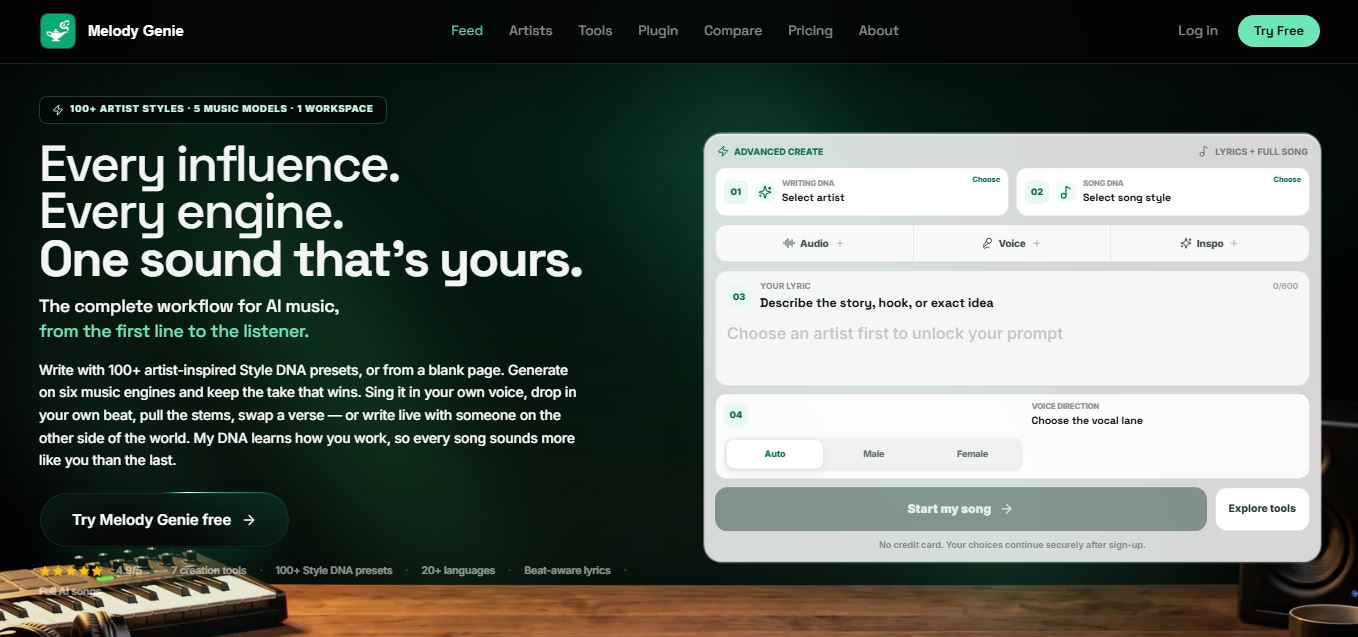
Melody Genie
MelodyGenie is an AI-powered music generator that creates original songs from simple text prompts. Users can choose styles, moods, and genres, then instantly generate melodies and full tracks, making it easy for creators, marketers, and hobbyists to produce custom music without musical expertise.
Freemium
Kimi AI
Kimi AI is an advanced AI assistant developed by Moonshot AI that helps you chat, research, write, code, and automate tasks in one place. It supports web search, file analysis, and multimodal inputs, and can even run autonomous “agent” workflows to complete complex tasks end-to-end.
Freemium

Fashion Diffusion AI
Fashion Diffusion is an AI-powered fashion design platform that helps brands and designers create clothing designs, virtual try-ons, AI models, product photos, and marketing visuals faster and cost-effectively.
Paid
Veo 4
Veo 4 AI is an AI video creation platform that generates dramatic videos from text, images, audio, and video prompts using realistic motion and synchronized sound.
Paid
Alternatives
Alternatives to Fileread
The best Fileread alternatives include RelativityOne, Everlaw, DISCO, Logikcull and LexisNexis. RelativityOne is suitable for enterprise eDiscovery, Everlaw provides collaborative litigation workflows, DISCO combines legal discovery with AI, Logikcull focuses on easier eDiscovery management, and LexisNexis provides broader legal research capabilities. Fileread is best for teams that specifically need AI-powered document analysis, contextual search, automated extraction and citation-backed insights for litigation and investigations.
 4.8
4.8Venice AI
Legal
Venice AI is a private generative AI platform that lets you chat, write, code, create images, generate videos, produce audio, and build AI agents. It combines models from leading providers with privacy controls, including Private, TEE, and E2EE modes. A free plan is available, with paid options for advanced capabilities.
 4.6
4.6Legalese Decoder
Legal
Legalese Decoder helps you understand difficult legal language by converting documents into clearer, plain-English explanations. You can use it for contracts, agreements, leases, loans, insurance policies, and other paperwork. Free tools are available, while paid plans add higher limits, contract analysis, and legal non-advisor features for deeper review and understanding.
 4.8
4.8PatentPal
Legal
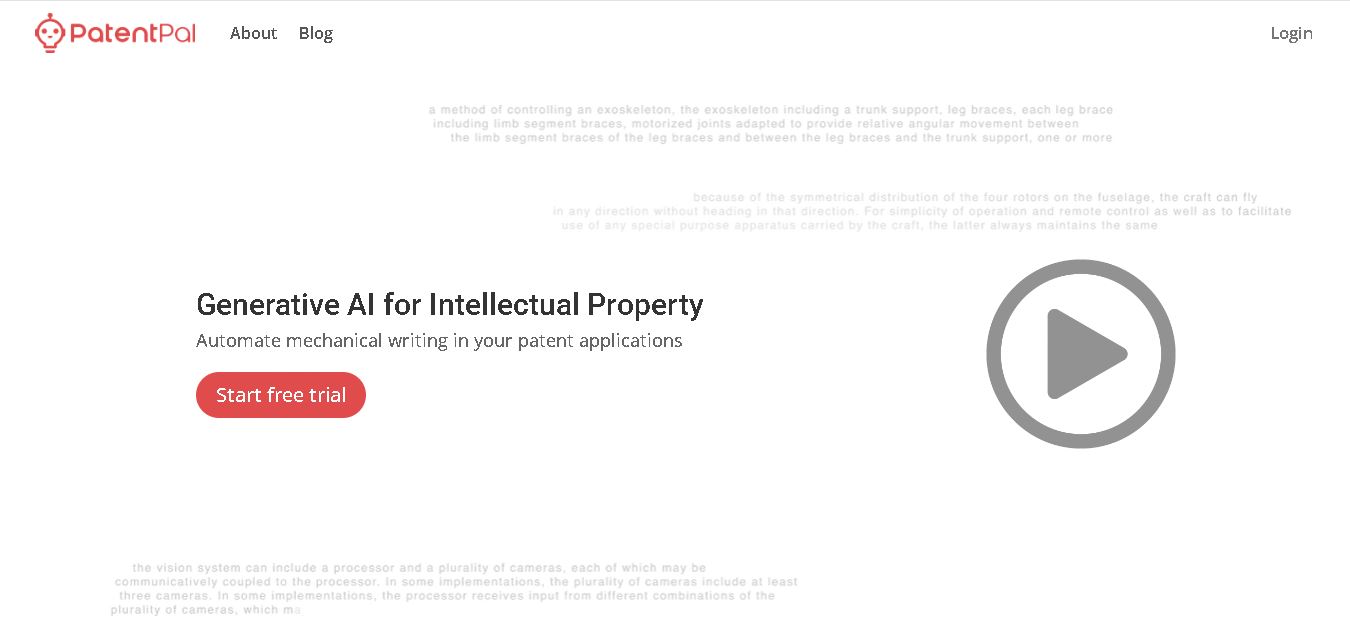
PatentPal helps patent professionals automate repetitive drafting tasks by transforming claims into specification content, abstracts, summaries, flowcharts, block diagrams, and figure descriptions. Users can customize generated language, review outputs, and export drafts for continued editing. It is designed to support patent workflows, not replace professional legal judgment or final review.
 4.7
4.7Legal Robot
Legal
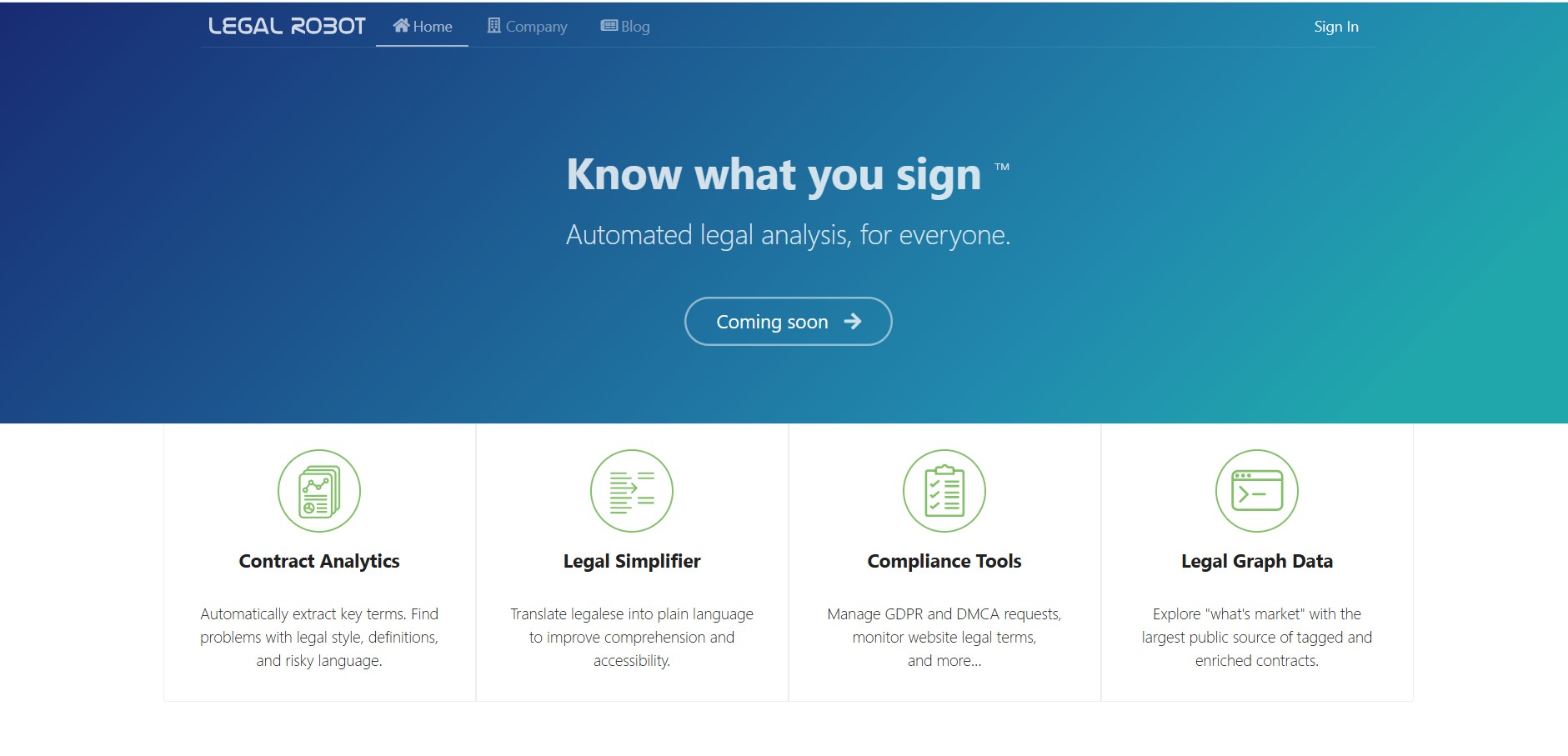
Legal Robot is an AI-powered contract analysis, readability enhancement, and legal compliance platform that uses machine learning and linguistic analysis to detect risky clauses, simplify legalese into plain language, and benchmark agreements against industry standards.
 4.8
4.8Legora
Legal
Legora (legora.com) is an AI-powered legal technology platform engineered to streamline contract analysis, clause extraction, legal research, and compliance workflows for law firms, legal ops, and corporate legal departments.
 4.7
4.7Thomson Reuters
Legal
Thomson Reuters is a global leader in professional information, legal tech, tax, and compliance solutions powered by professional-grade AI, featuring CoCounsel, Westlaw Advantage, Practical Law, and ONESOURCE.
Adobe Content Authenticity
Legal
Adobe Content Authenticity is a free web application that enables creators to attach, customize, and inspect Content Credentials—cryptographically secure digital nutrition labels that protect attribution, verify provenance, and signal AI training preferences.
 4.8
4.8Darrow
Legal
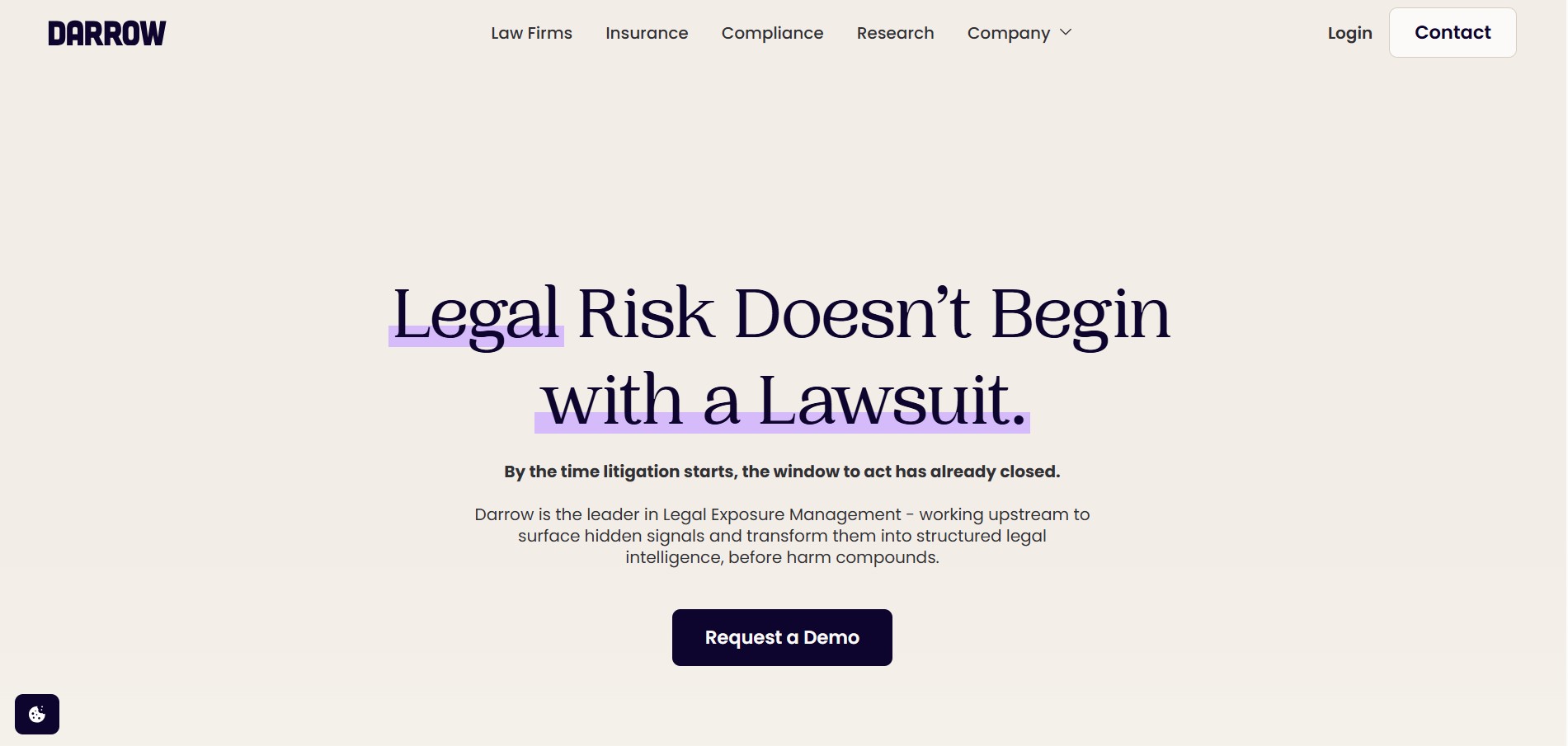
Darrow is an AI-powered legal intelligence and case discovery platform that scans real-world public data to detect legal violations, evaluate litigation exposure, predict financial damages, and match high-impact class-action and mass-arbitration cases with top law firms.
Traverse Legal
Legal
Traverse Legal is a technology-focused boutique law firm specializing in intellectual property, artificial intelligence, internet law, SaaS contracts, cybersquatting disputes, and complex commercial litigation with value-based and flat-fee billing models.