Cartesia AI
Cartesia AI is a pioneer in real-time generative audio and voice AI, powered by State Space Model (SSM) architecture. Its flagship text-to-speech engine, Sonic, provides ultra-low sub-90ms latency, lifelike voice cloning, and multilingual support for real-time voice agents, customer support, and media creation.
What is Cartesia AI?
Cartesia AI is a cutting-edge generative voice platform designed for ultra-low latency real-time speech synthesis, voice cloning, and automated speech recognition. Built on proprietary State Space Model (SSM) architectures rather than traditional Transformers, Cartesia powers interactive voice agents that can converse naturally in real-time without awkward delays. Its suite features Sonic (text-to-speech), Ink (speech-to-text), and Managed Agents, giving developers a complete platform for building production-grade voice interactions across cloud, on-premise, and on-device environments.
Cartesia's Sonic engine achieves industry-leading sub-90ms latency with native support for over 44 languages and accents. Ranked #1 in naturalness and speed on voice performance leaderboards, Cartesia enables instant voice cloning from as little as 3 to 10 seconds of sample audio while maintaining SOC 2 Type 2, HIPAA, and GDPR compliance.
- Core Focus: Real-Time AI Speech Synthesis, Voice Agents, and Speech-to-Text
- Launch Year: 2023
Use Cases:
- Powering sub-second latency customer support, sales, and outreach voice agents
- Real-time multilingual video dubbing and content localization
- Interactive voice characters for gaming, entertainment, and digital companions
- Instant voice cloning for brand consistency across global automated touchpoints
Technology:
- State Space Model (SSM) research architecture
- Sonic Text-to-Speech (TTS) engine optimized for streaming audio synthesis
- Ink Speech-to-Text (STT) low-latency streaming transcription engine
Target Users:
- Voice agent developers and AI engineers building interactive telephony products
- Enterprise customer service and contact center tech leads
- Game studios and media creators requiring real-time localized voiceovers
Ecosystem: Features an integrated playground, cloud REST and WebSocket streaming APIs, SDKs for Python and JavaScript, and flexible hybrid/on-premise deployment options.
Key features of Cartesia AI
Cartesia AI's key features are
- Sonic Real-Time TTS: Delivers sub-90ms latency speech generation with contextual emotional subtext, natural intonation, and realistic prosodic rhythm.
- State Space Model Architecture: Replaces heavy Transformers with State Space Models (SSMs) to maximize inference efficiency, scalability, and streaming speed.
- Instant Voice Cloning: Creates a high-fidelity voice replica using just 3 to 10 seconds of clear target audio.
- Global Multilingual Localisation: Supports 44 languages and regional accents (including American English, Mexican Spanish, Mandarin Chinese, and Hindi) while preserving speaker identity.
- Ink Streaming STT: Provides high-speed, accurate streaming speech-to-text transcription to form an end-to-end conversational voice loop.
- Deployment Flexibility & Security: Enterprise options allow API access via regional cloud endpoints, on-premise servers, or edge devices with HIPAA, SOC 2, and GDPR compliance.
Cartesia AI Pricing
Cartesia AI offers flexible usage-based plans with monthly tier options designed for prototyping up to large-scale enterprise deployments.
Free Plan:
- $0/month
- Includes 20,000 model credits/month and $1 prepaid voice agent usage to test text-to-speech, speech-to-text, and API capabilities
Paid Subscription Tiers:
- Pro: $5/month (100K model credits/month, instant voice cloning, commercial usage license)
- Startup: $49/month (1.25M model credits/month, pro voice cloning, organization workspace keys)
- Scale: $299/month (8M model credits/month, priority support, high concurrency limits)
- Enterprise: Custom pricing for dedicated infrastructure, custom concurrency, BAAs, and SLA commitments
Is Cartesia AI Worth It?
Cartesia AI is highly worth it for teams building real-time conversational AI applications and telephony agents where latency is critical. Unlike traditional TTS models that add multi-second delays, Cartesia's sub-90ms response time enables natural turn-taking that feels human, making it the top choice for developer-first voice products.
Real-World Use Cases
- Customer Service Voice Bots: AI telephony agents handle caller authentication, billing questions, and order updates without hold delays or awkward pauses.
- Outbound Sales Qualification: Conversational bots initiate phone calls with warm leads, answer questions contextually, and book calendar meetings in real time.
- Interactive Game Characters: Game developers stream dynamic NPC dialogue generated live in response to player choices.
- Instant Audio Localization: Enterprise brands clone executive or narrator voices and translate training modules into 44+ native languages.
Who is using Cartesia AI?
Cartesia AI is designed for software developers and enterprise teams, including
- Voice AI Developers: Software engineers building conversational voice agents with low latency requirements
- Customer Support & Call Center Teams: Enterprises deploying automated inbound/outbound telephony workflows
- Game Developers & Storytellers: Studios crafting dynamic, responsive voice lines for virtual characters
- Healthcare & Financial Institutions: Organizations needing HIPAA-compliant, secure real-time speech models
Best Cartesia AI Alternatives
Some of the strongest Cartesia AI alternatives include
- ElevenLabs
- Deepgram
- Murf AI
- Retell AI
- Vapi
Pros and Cons of Cartesia AI
Pros
- Ultra-fast sub-90ms latency powered by state-space model (SSM) architecture
- Native support for 44+ languages with rich emotional calibration and natural pacing
- Instant, highly realistic voice cloning from 3 to 10 seconds of sample audio
- Flexible deployment options including cloud, on-premise, and on-device environments
- Enterprise security compliance (SOC 2 Type 2, HIPAA, GDPR)
Cons
- Credit and usage tiers require planning for high-volume continuous streaming applications
- Requires developer integration compared to beginner-focused no-code studio tools
- Full on-premise deployment requires custom enterprise contracts
Why Choose Cartesia AI?
Cartesia AI stands out because of its fundamental architectural innovation. By leveraging State Space Models (SSMs) instead of standard Transformer models, Cartesia delivers unprecedented speed without sacrificing human-like expressiveness or speech accuracy.
- Eliminates speech generation delay with sub-90ms response times
- Delivers human-like emotional context and speech pacing automatically
- Protects enterprise data privacy with regional, cloud, or on-prem deployment
- Offers a complete suite (TTS, STT, Managed Agents) through a unified developer API
How Cartesia AI Works
- 1. Sign Up & Get API Keys: Access the Cartesia platform and configure your developer workspace.
- 2. Select or Clone a Voice: Choose from pre-made voice library models or upload a 3-10 second audio clip for instant voice cloning.
- 3. Connect the Streaming API: Send text or audio chunks over WebSocket/REST endpoints to stream response audio in sub-90ms.
- 4. Deploy to Agents & Apps: Embed real-time speech into phone bots, web platforms, or edge applications.
Cartesia AI vs. Competitors
The main difference between Cartesia AI, ElevenLabs, and Deepgram lies in Cartesia's focus on State Space Model architecture designed specifically for ultra-low latency real-time interactions. While ElevenLabs offers unmatched studio voice controls, Deepgram focuses heavily on ultra-fast speech-to-text. Cartesia bridges text-to-speech speed and emotional voice quality better than competitors for streaming voice agents.
| Feature | Cartesia AI | ElevenLabs | Deepgram |
|---|---|---|---|
| Primary Focus | Ultra-Low Latency TTS & Agents | High-Fidelity Studio Voice & Dubbing | Streaming STT & TTS APIs |
| TTS Latency | Sub-90ms | ~250-400ms | ~150-250ms |
| Model Architecture | State Space Models (SSM) | Transformer / Diffusion | End-to-End Neural Net |
| Voice Cloning Sample | 3-10 Seconds | 1-3+ Minutes | Instant / Sample based |
| On-Premise Deployment | Yes (Enterprise) | Limited / Enterprise | Yes |
How do we rate Cartesia AI?
| Parameter | Rating (out of 5) |
|---|---|
| Ease of Use | 4.6 |
| Voice Naturalness | 4.9 |
| Latency & Speed | 5.0 |
| Value for Money | 4.7 |
| Developer API & SDKs | 4.8 |
| Overall Score | 4.8 |
Cartesia AI Review
Cartesia AI is a pioneer in real-time voice synthesis. Its SSM-based Sonic model solves the core bottleneck of AI voice agents: latency. Delivering speech output in sub-90ms while preserving human warmth, natural rhythm, and 44+ language nuances, Cartesia provides developers with a robust foundation for building modern conversational systems.
Conclusion
Cartesia AI is an essential platform for developers and enterprises building next-generation AI voice applications. With its ultra-fast Sonic TTS engine, state-space architecture, instant voice cloning, and flexible deployment options, Cartesia delivers unmatched speech performance. Whether you are creating automated customer support systems or real-time gaming NPCs, Cartesia AI provides the speed and quality required for true conversational intelligence.
Frequently Asked Questions (FAQs)
What makes Cartesia AI faster than other text-to-speech tools?
Cartesia uses State Space Models (SSMs) rather than standard Transformers, reducing inference complexity and enabling sub-90ms audio streaming latency.
How much audio is needed for voice cloning on Cartesia?
Cartesia can clone voices with high similarity using as little as 3 to 10 seconds of clear audio recording.
Is Cartesia AI HIPAA and SOC 2 compliant?
Yes, Cartesia offers enterprise-grade security compliance including SOC 2 Type 2, HIPAA, and GDPR standards.
Does Cartesia support on-premise deployment?
Yes, Cartesia supports cloud endpoints, on-premise servers, and edge/on-device deployments for enterprise customers.
User Reviews
No reviews yet for Cartesia AI.
Featured Tools
Featured AI tools from TechShark
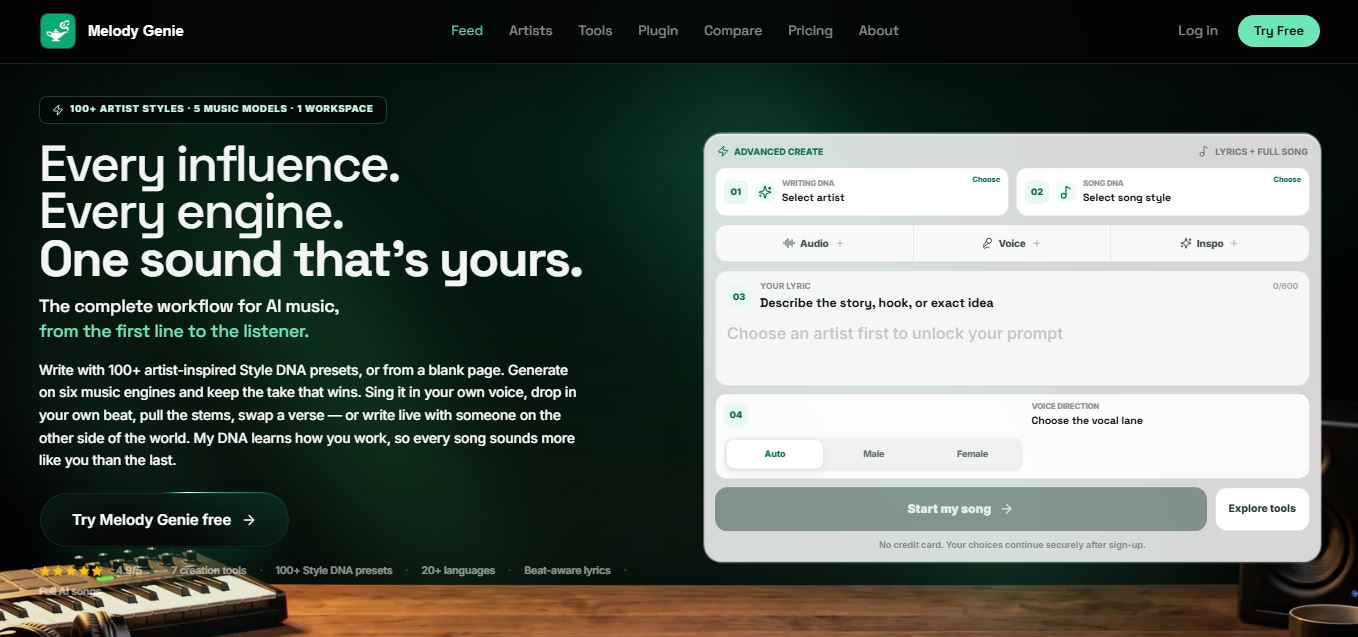
Melody Genie
MelodyGenie is an AI-powered music generator that creates original songs from simple text prompts. Users can choose styles, moods, and genres, then instantly generate melodies and full tracks, making it easy for creators, marketers, and hobbyists to produce custom music without musical expertise.
Freemium
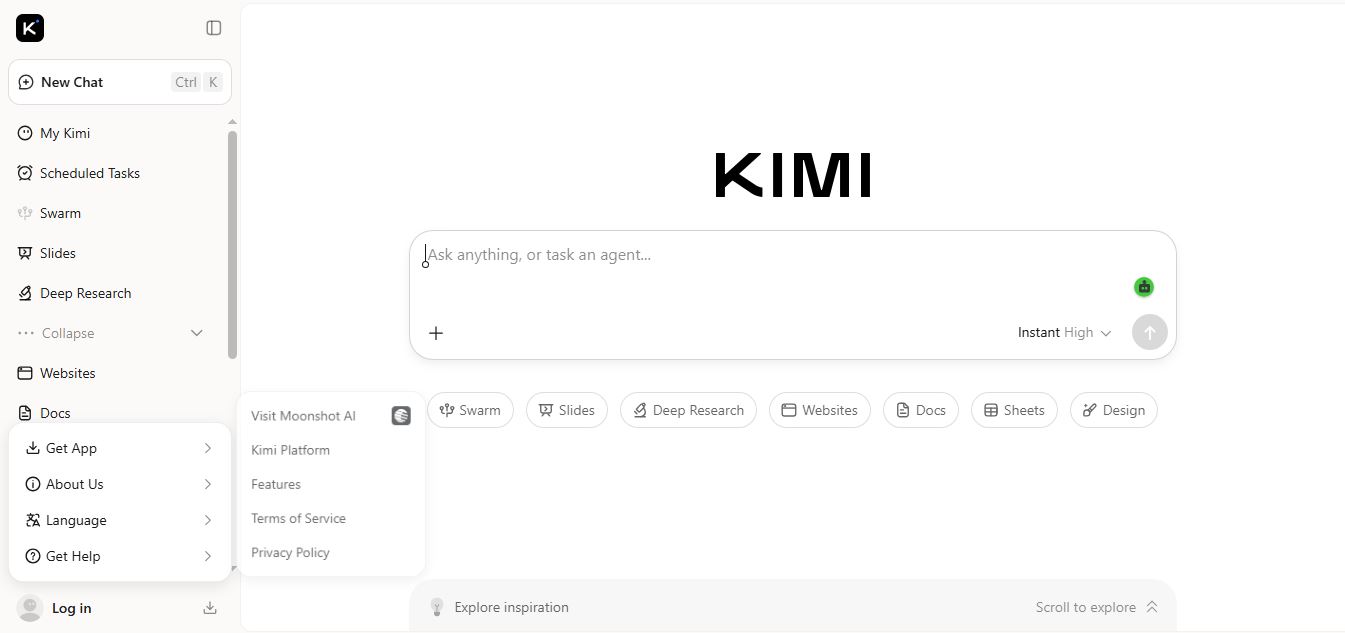
Kimi AI
Kimi AI is an advanced AI assistant developed by Moonshot AI that helps you chat, research, write, code, and automate tasks in one place. It supports web search, file analysis, and multimodal inputs, and can even run autonomous “agent” workflows to complete complex tasks end-to-end.
Freemium
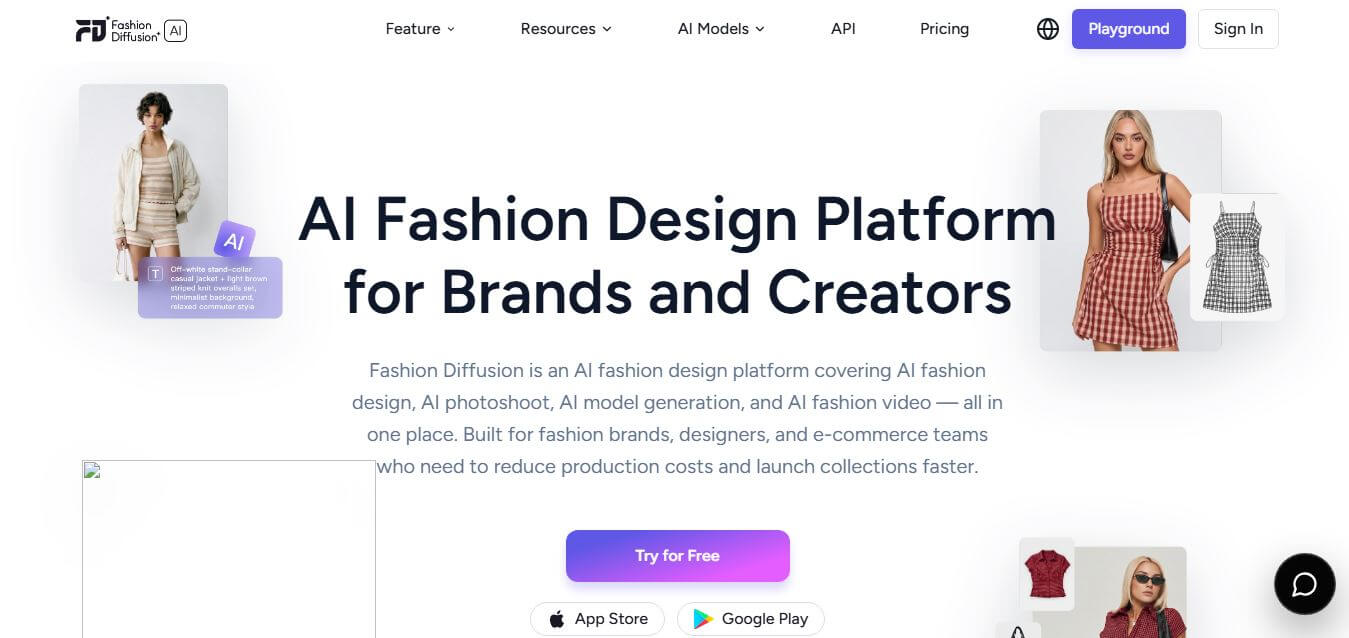
Fashion Diffusion AI
Fashion Diffusion is an AI-powered fashion design platform that helps brands and designers create clothing designs, virtual try-ons, AI models, product photos, and marketing visuals faster and cost-effectively.
Paid
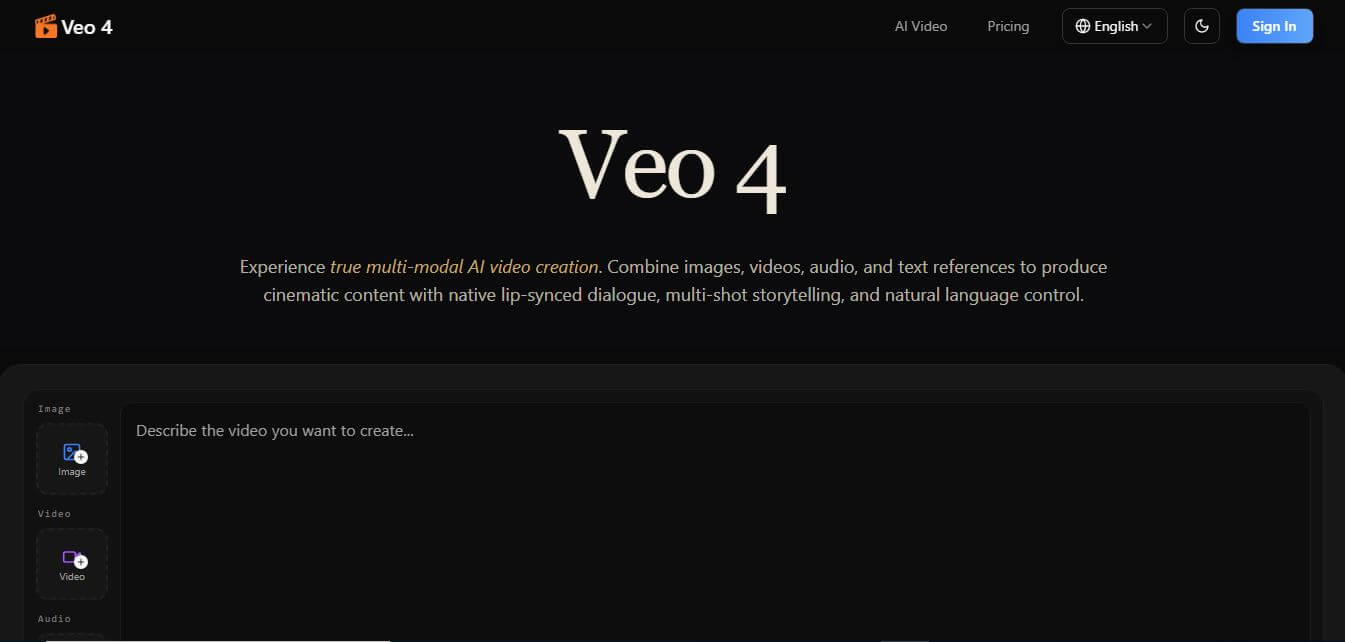
Veo 4
Veo 4 AI is an AI video creation platform that generates dramatic videos from text, images, audio, and video prompts using realistic motion and synchronized sound.
Paid
Alternatives
Alternatives to Cartesia AI
The best Cartesia AI alternatives include ElevenLabs, Deepgram, Murf AI, Retell AI, and Vapi. ElevenLabs excels at high-fidelity voice cloning and emotional range. Deepgram provides ultra-fast speech-to-text and text-to-speech APIs. Retell AI and Vapi focus on building end-to-end real-time conversational voice agents, while Murf AI specializes in studio-grade voiceovers for media content.
Taplink
AI Agent
Taplink (taplink.at) is a versatile micro-landing page and link-in-bio builder designed for social media creators, influencers, small business owners, and digital marketers to convert Instagram, TikTok, and social traffic into sales, leads, and website visits.
Sprinklr
AI Agent
Sprinklr (sprinklr.com) is an enterprise-grade Unified Customer Experience Management (Unified-CXM) platform powered by AI that enables global enterprises to manage social media publishing, AI customer service, social listening, audience insights, and digital marketing across 30+ digital and social channels.
Grin
AI Agent
Grin (grin.co) is a premier enterprise creator management and e-commerce influencer platform designed for direct-to-consumer (DTC) brands and marketing teams to discover creators, automate product seeding, track affiliate revenue, manage content rights, and scale creator-led growth.
 4.9
4.9Talkwalker
AI Agent
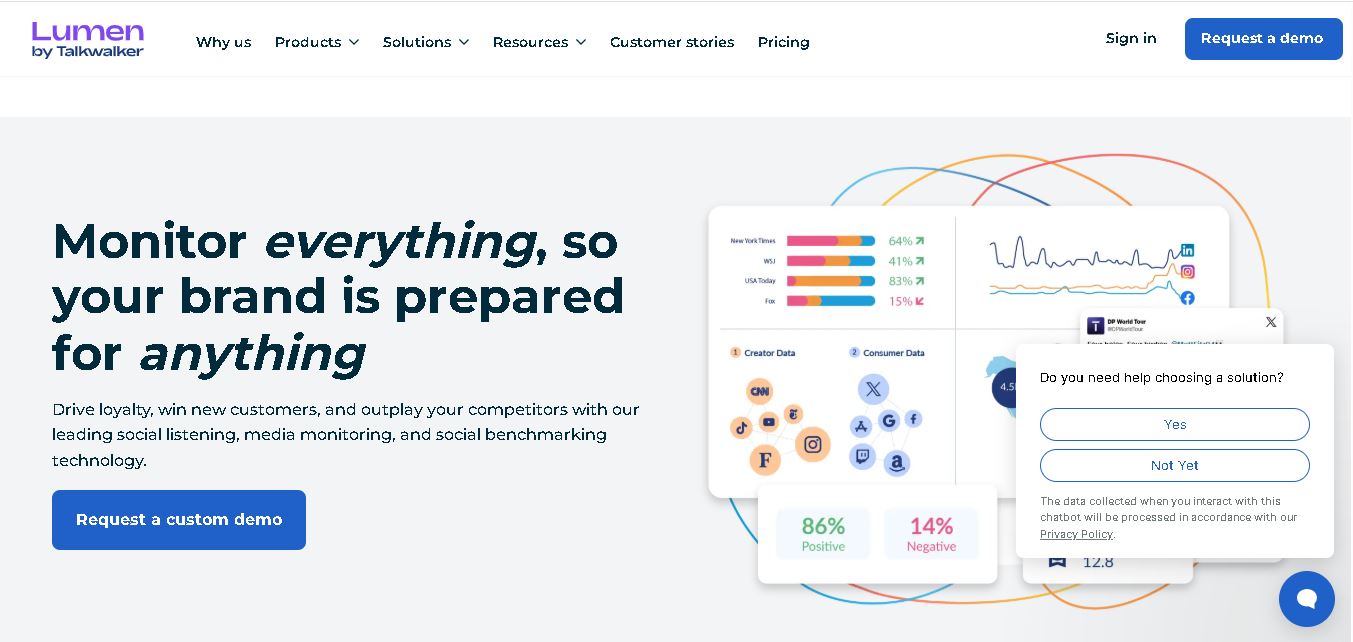
Talkwalker is a consumer intelligence and social listening solution that helps brands track online mentions, analyze audience sentiment, monitor competitors, and discover emerging trends. It combines social media analytics, media monitoring, customer feedback, and AI-powered insights to support marketing, public relations, reputation management, and data-driven business decisions across global markets.
 5.0
5.0AI4K12
AI Agent
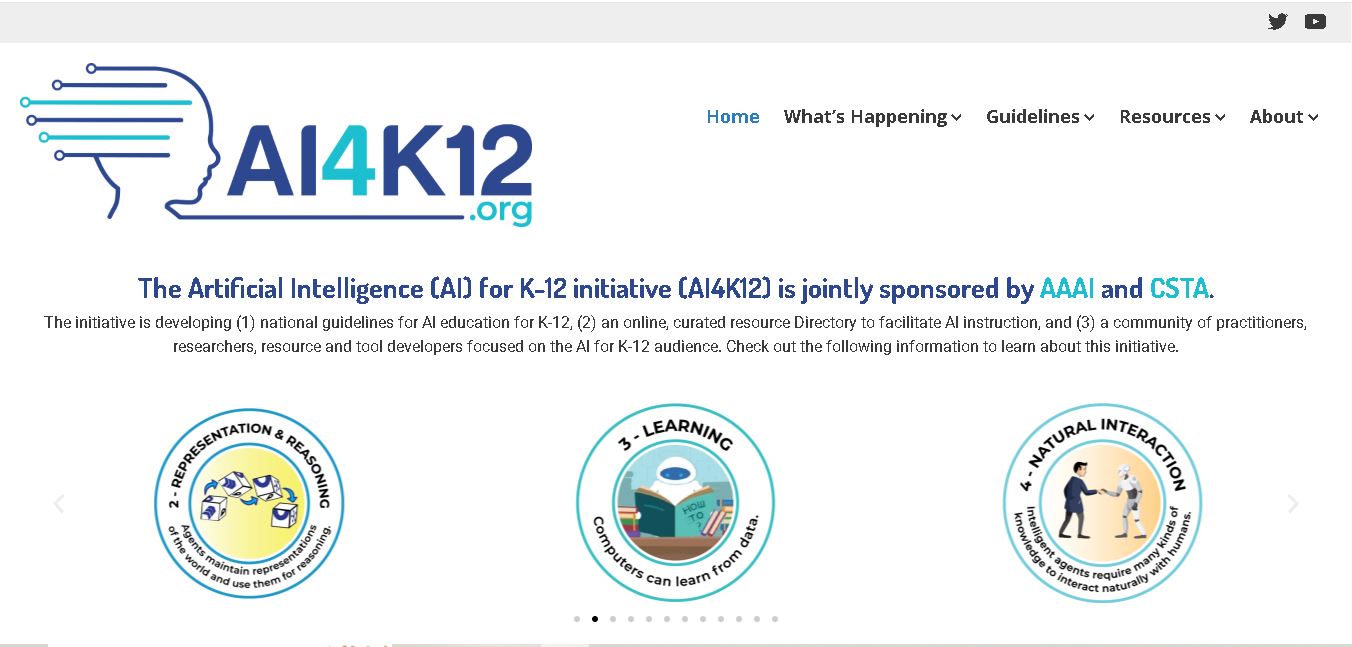
AI4K12 is an educational initiative focused on bringing artificial intelligence into K–12 classrooms. It provides grade-level learning guidelines, curated teaching resources, and the Five Big Ideas framework. Designed for educators and curriculum developers, AI4K12 supports age-appropriate AI instruction and helps students understand how intelligent technologies work and affect society.
Kommunicate
AI Agent
Kommunicate (kommunicate.io) is an AI-powered customer service automation and live chat platform that unites no-code generative AI agents, Kompose chatbot builder, seamless human escalation, voice AI, and omnichannel messaging across WhatsApp, web, and mobile apps.
Text
AI Agent
Text is an AI-powered customer service platform that combines live chat, help desk ticketing, AI agents, and workflow automation. It helps businesses manage customer conversations, automate repetitive support tasks, answer questions, engage website visitors, and turn customer interactions into sales opportunities through a unified communication workspace.
DocsBot AI
AI Agent
DocsBot AI is an AI chatbot and agent platform that turns websites, documents, knowledge bases, and support tickets into conversational assistants. Businesses can use it to automate customer support, answer questions, share internal knowledge, connect workflows, and provide information through website widgets and supported integrations.
SiteGPT AI
AI Agent
SiteGPT is an AI chatbot platform that helps businesses automate customer support using their website content, documents, and knowledge sources. It answers visitor questions, supports lead generation, and integrates into websites, allowing teams to handle repetitive inquiries, improve customer experiences, and provide assistance around the clock.