
Camel AI
CAMEL AI is a multi-agent framework that enables autonomous AI agents to collaborate, simulate conversations, and solve complex tasks across various domains.
What is CAMEL AI?
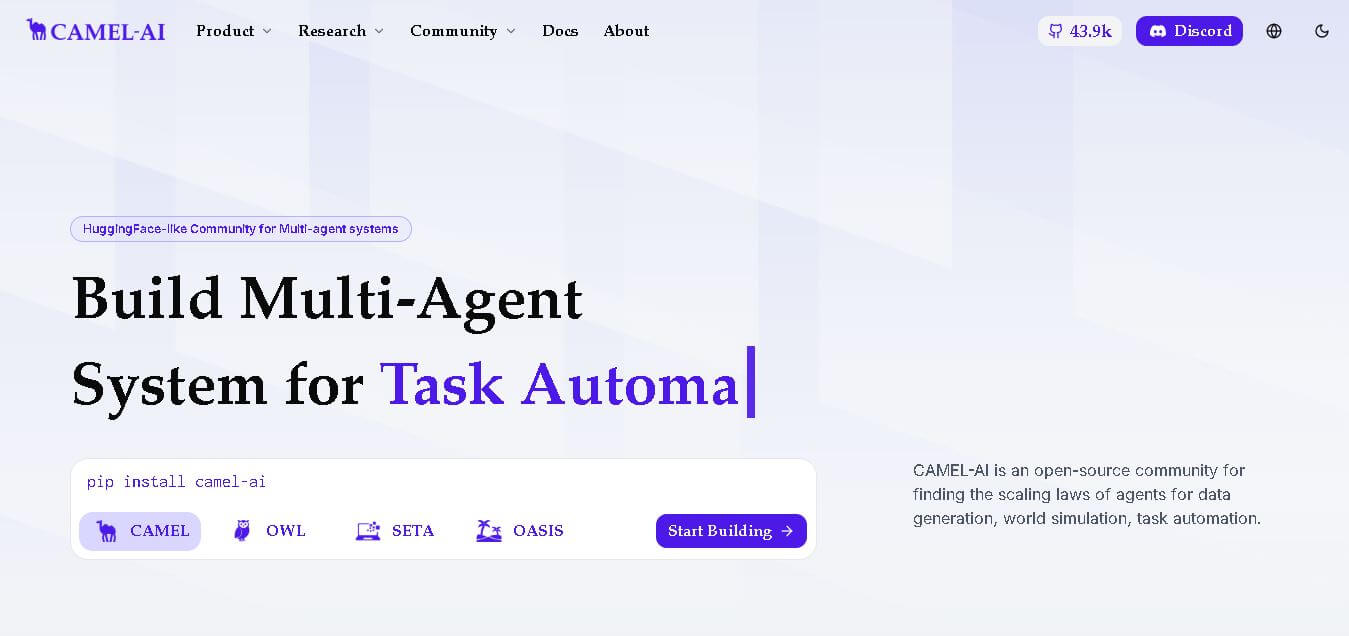
CAMEL AI is a multi-agent system framework designed to simulate collaboration between autonomous AI agents. It focuses on enabling agents to communicate, cooperate, and perform tasks through structured role-playing scenarios. By leveraging conversational interactions, CAMEL AI allows multiple agents to work together to solve complex problems that typically require human-like coordination. The framework is open-source, making it accessible for developers and researchers to build and experiment with agent-based systems. It is especially useful for studying agent behaviors, task automation, and collaborative intelligence, and it also helps advance scalable and interactive AI systems.
CAMEL AI is an open-source framework that supports multi-agent collaboration, allowing two or more agents to work together in structured environments. It enables the simulation of role-based interactions across multiple domains, such as research, coding, and automation. The framework is widely used by developers and researchers globally, with growing adoption in AI experimentation. It supports integration with large language models, allowing scalable agent communication. With continuous updates and community contributions, CAMEL AI is becoming a key framework for developing collaborative AI systems.
- Founder: Developed by a group of AI researchers and contributors (open-source project)
- Launch: Around 2023 as a research-driven framework
Use Cases:
- Multi-agent collaboration and simulation
- Task automation and workflow execution
- Research and experimentation in AI systems
- Conversational agent development
Technology:
- Multi-agent architecture
- Role-playing frameworks
- Large language model integration
Target Users:
- AI researchers
- Developers and engineers
- Tech startups
- Academic institutions
Acquisition: Not available / not publicly disclosed
Key features of CAMEL AI
CAMEL AI's key features are
- Multi-Agent Collaboration Framework: Enables multiple AI agents to communicate, collaborate, and solve tasks together through structured interactions and role-based conversations
- Role-Playing Architecture: Allows agents to take on predefined roles, simulating real-world scenarios for problem-solving and decision-making
- Open-Source Flexibility: Provides full access to developers and researchers to customize, extend, and experiment with multi-agent systems
- LLM Integration: Supports integration with large language models to power intelligent conversations and agent reasoning
- Autonomous Task Execution: Allows agents to independently perform tasks and coordinate with each other without constant human input
- Scalable System Design: Designed to handle multiple agents and complex workflows, making it suitable for large-scale AI experiments
- Research & Experimentation Focus: Ideal for studying agent behavior, collaboration patterns, and AI coordination strategies
- Cross-Domain Applications: Can be applied in coding, research, automation, simulations, and conversational AI use cases
CAMEL AI Pricing
CAMEL AI follows a flexible freemium + subscription + usage-based pricing model, allowing users to start for free and scale according to their needs.
Free Plan:
- $0/month
- Access to basic features and the Camel Free model
- Up to 3 deployed apps and 1 workspace
- No credit card required
Starter Plan:
- $10/month
- Includes $10 monthly model credits
- Supports up to 30 deployed apps and 50 GB storage
- Designed for solo builders
Pro Plan:
- $40/month
- Includes $40 model credits per month
- Unlimited apps and advanced automation features
- Ideal for power users
Team Plan:
- $50/seat/month (minimum 3 users)
- Includes $50 credits per user
- Role-based access and team collaboration features
Enterprise Plan:
- Custom pricing
- Advanced security (SSO, SOC 2, HIPAA)
- Dedicated support and custom infrastructure
Disclaimer: For the latest and most accurate pricing information, please visit the official CAMEL AI website.
Who is using CAMEL AI?
CAMEL AI is designed for a broad range of presentation-heavy users, including
- AI Researchers: Studying multi-agent collaboration, communication patterns, and autonomous decision-making systems
- Developers & Engineers: Building and testing agent-based applications and automation workflows
- Startups & Tech Teams: Creating scalable AI solutions using multi-agent architectures
- Academic Institutions: Using it for research, simulations, and experimentation in AI systems
- AI Enthusiasts: Exploring advanced concepts like agent collaboration and role-based AI interactions
Best CAMEL AI Alternatives
Some of the strongest CAMEL AI alternatives include
- AutoGen (Microsoft)
- LangGraph (LangChain)
- CrewAI
- MetaGPT
- AgentVerse
- SuperAGI
Why Choose CAMEL AI?
CAMEL AI is a strong choice for building advanced multi-agent systems where autonomous agents collaborate, communicate, and solve complex tasks together. It focuses on structured role-playing and interaction between agents, making it ideal for research, experimentation, and scalable AI workflows. As an open-source framework, it gives developers full control to customize and extend agent behavior based on specific use cases.
- Multi-Agent Collaboration: Enables multiple AI agents to work together and solve problems through coordinated communication
- Role-Based Simulation: Supports structured role-playing scenarios for realistic task execution
- Open-Source Flexibility: Fully customizable framework for developers and researchers
- Advanced Automation: Allows autonomous task execution with minimal human intervention
- LLM Integration: Works with large language models for intelligent reasoning and conversations
- Scalable Architecture: Designed for handling complex workflows and multiple agents efficiently
- Research-Oriented Design: Ideal for experimenting with AI behavior, collaboration, and decision-making
CAMEL AI vs Competitors
The main difference between CAMEL AI, AutoGen, LangGraph, CrewAI, and MetaGPT is that CAMEL AI focuses on role-based multi-agent collaboration using structured conversations. While AutoGen emphasizes conversational automation and LangGraph handles workflow orchestration, CAMEL AI is more research-oriented for simulating agent behavior. CrewAI simplifies task execution, and MetaGPT mimics software teams. CAMEL AI stands out for experimentation and studying how agents interact and collaborate in complex environments.
| Feature / Tool | CAMEL AI | AutoGen (Microsoft) | LangGraph | CrewAI | MetaGPT |
|---|---|---|---|---|---|
| Core Focus | Multi-agent collaboration | Multi-agent conversations | Workflow orchestration | Role-based agents | AI software team simulation |
| Architecture | Role-playing agents | Conversational agents | Graph-based workflows | Task-driven agents | Structured agent roles |
| Open Source | Yes | Yes | Yes | Yes | Yes |
| Ease of Use | Moderate | Moderate | Moderate | Easy | Moderate |
| Customization | High | High | High | Medium | High |
| Use Case | Research, simulation | Automation, chat systems | Complex workflows | Task execution | Software development simulation |
| LLM Integration | Yes | Yes | Yes | Yes | Yes |
How do we rate CAMEL AI?
| Parameter | Rating (out of 5) |
|---|---|
| Features & Capabilities | 5 |
| Customization | 5 |
| Ease of Use | 3 |
| Scalability | 5 |
| Accessibility | 3 |
| Innovation | 5 |
| Overall Score | 4.3 |
CAMEL AI Review
CAMEL AI is a powerful framework for building and experimenting with multi-agent systems where autonomous agents collaborate through structured role-based interactions. It stands out for its research-driven design, enabling developers to simulate complex conversations and workflows between agents. The open-source nature allows deep customization and flexibility, making it ideal for advanced use cases. However, it requires technical expertise and lacks a beginner-friendly interface. Overall, CAMEL AI is best suited for developers and researchers exploring next-generation collaborative AI systems.
Conclusion
CAMEL AI represents a significant step forward in multi-agent AI development, focusing on collaboration, communication, and role-based task execution. It provides a flexible and scalable framework for building complex AI systems, making it highly valuable for research and experimentation. While it may not be suitable for beginners due to its technical nature, it offers powerful capabilities for developers and teams. As multi-agent systems continue to evolve, CAMEL AI is positioned as an important tool for advancing collaborative artificial intelligence.
FAQ
What is CAMEL AI used for?
CAMEL AI is used to build and simulate multi-agent systems where AI agents collaborate, communicate, and solve complex tasks.
Is CAMEL AI open source?
Yes, CAMEL AI is an open-source framework that allows developers to customize and extend its functionality.
Who should use CAMEL AI?
Developers, AI researchers, startups, and academic institutions can benefit from using CAMEL AI.
Does CAMEL AI require coding knowledge?
Yes, it is primarily designed for users with programming and AI development experience.
What makes CAMEL AI unique?
Its role-based multi-agent collaboration approach and focus on structured agent communication set it apart from other frameworks.
User Reviews
No reviews yet for Camel AI.
Featured Tools
Featured AI tools from TechShark
Klap
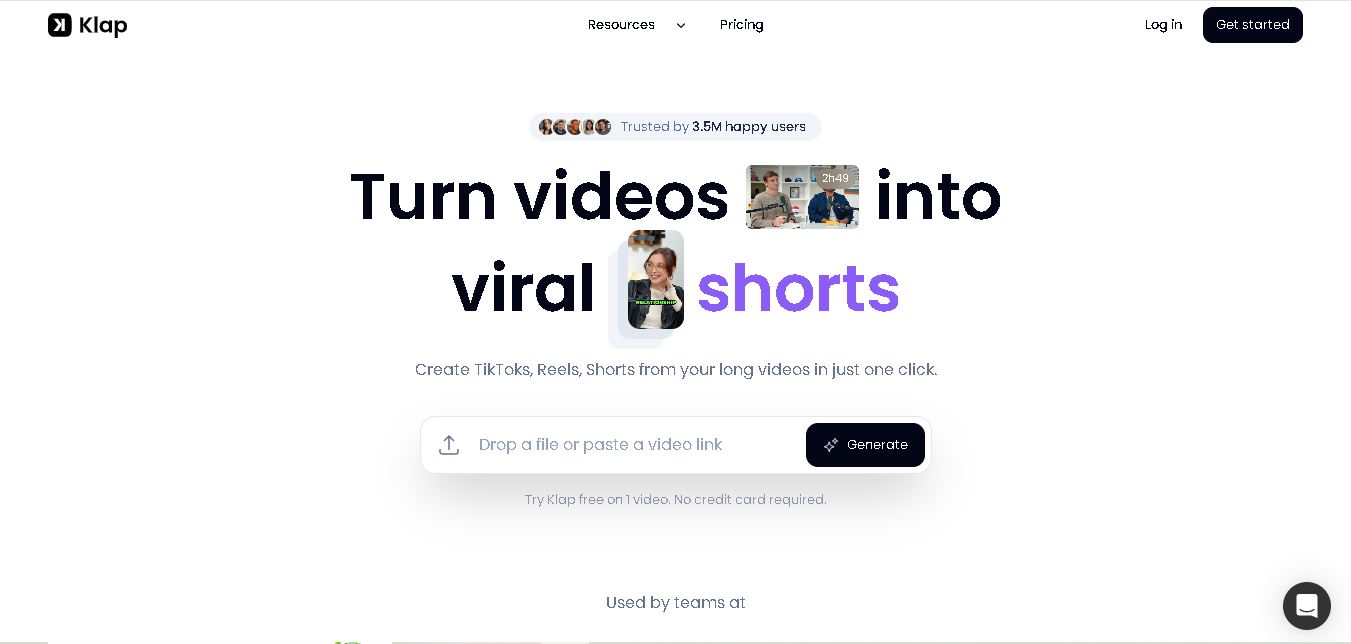
Klap is an AI video clipping platform that transforms long videos into short-form social media content. It automatically identifies highlights, creates captions, reframes speakers, and schedules clips, helping creators, podcasters, and marketing teams repurpose existing videos with less manual editing.
Free
Melody Genie
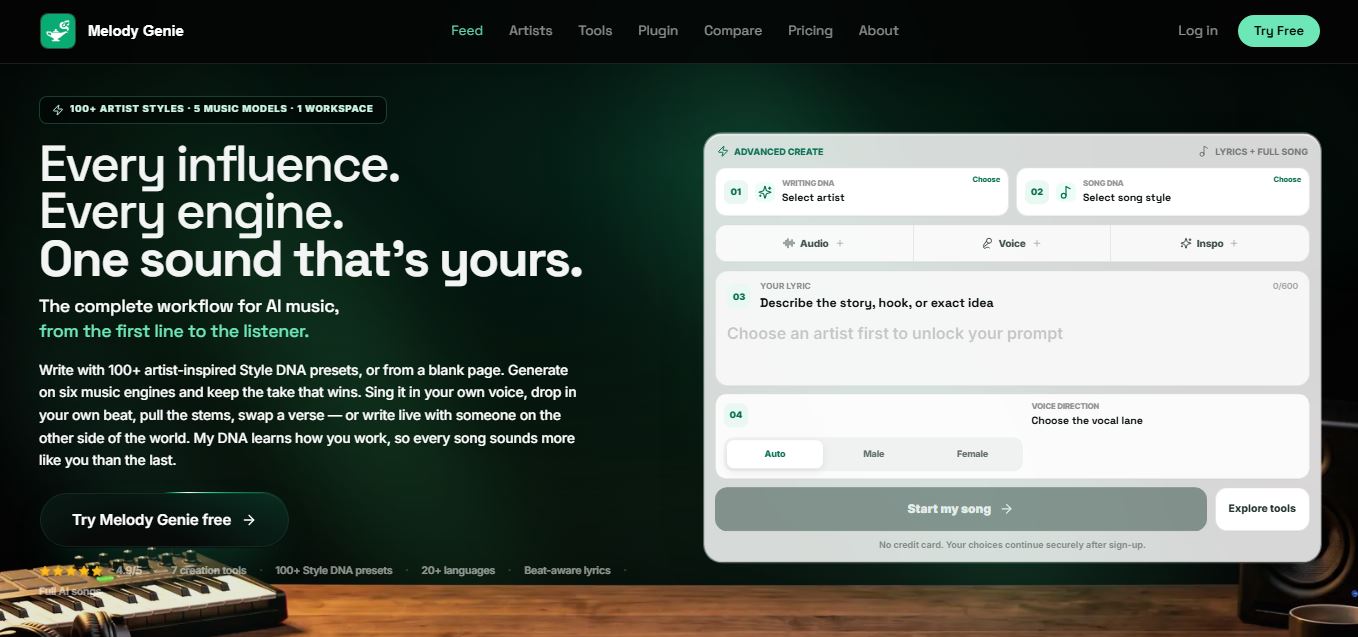
MelodyGenie is an AI-powered music generator that creates original songs from simple text prompts. Users can choose styles, moods, and genres, then instantly generate melodies and full tracks, making it easy for creators, marketers, and hobbyists to produce custom music without musical expertise.
Freemium
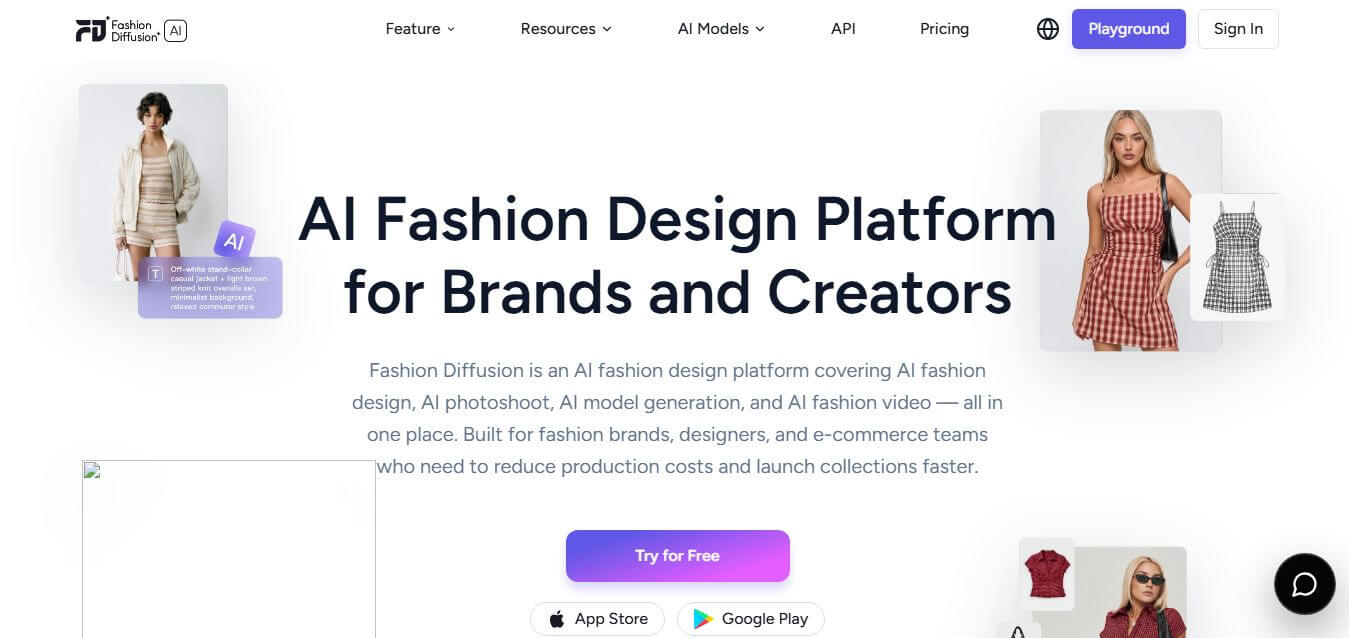
Fashion Diffusion AI
Fashion Diffusion is an AI-powered fashion design platform that helps brands and designers create clothing designs, virtual try-ons, AI models, product photos, and marketing visuals faster and cost-effectively.
Paid
Veo 4
Veo 4 AI is an AI video creation platform that generates dramatic videos from text, images, audio, and video prompts using realistic motion and synchronized sound.
Paid
Alternatives
Alternatives to Camel AI
The best CAMEL AI alternatives includes AutoGen, LangGraph, CrewAI, MetaGPT, AgentVerse, and SuperAGI. These tools provide different approaches to building multi-agent systems, from conversational automation to workflow orchestration. While CAMEL AI focuses on research and role-based agent collaboration, alternatives often prioritize usability, task automation, or production-ready deployments. Depending on the use case, these platforms can offer better interfaces, easier setup, or more specialized capabilities for developing AI-driven systems.
Zed
AI Agent
Zed (zed.dev) is a high-performance, open-source code editor written in Rust by the creators of Atom and Tree-sitter, featuring native real-time multiplayer collaboration, fast GPU-accelerated rendering, inline edit predictions, and flexible cloud or local AI model integrations.
TheInterviews.ai
AI Agent
TheInterviews.ai (theinterviews.ai) is an AI-powered mock interview and career credentialing platform that conducts real-time, voice-based AI interviews, grades performance against published rubrics, and issues a verified recruiter-ready Profile Card.
Equip
AI Agent
Equip (equip.co) is a pay-per-use pre-employment skills assessment and AI-native Applicant Tracking System (ATS) platform offering multi-skill quizzes, proctored coding challenges, CEFR communication tests, psychometric profiling, and one-way or conversational AI video interviews.
 4.7
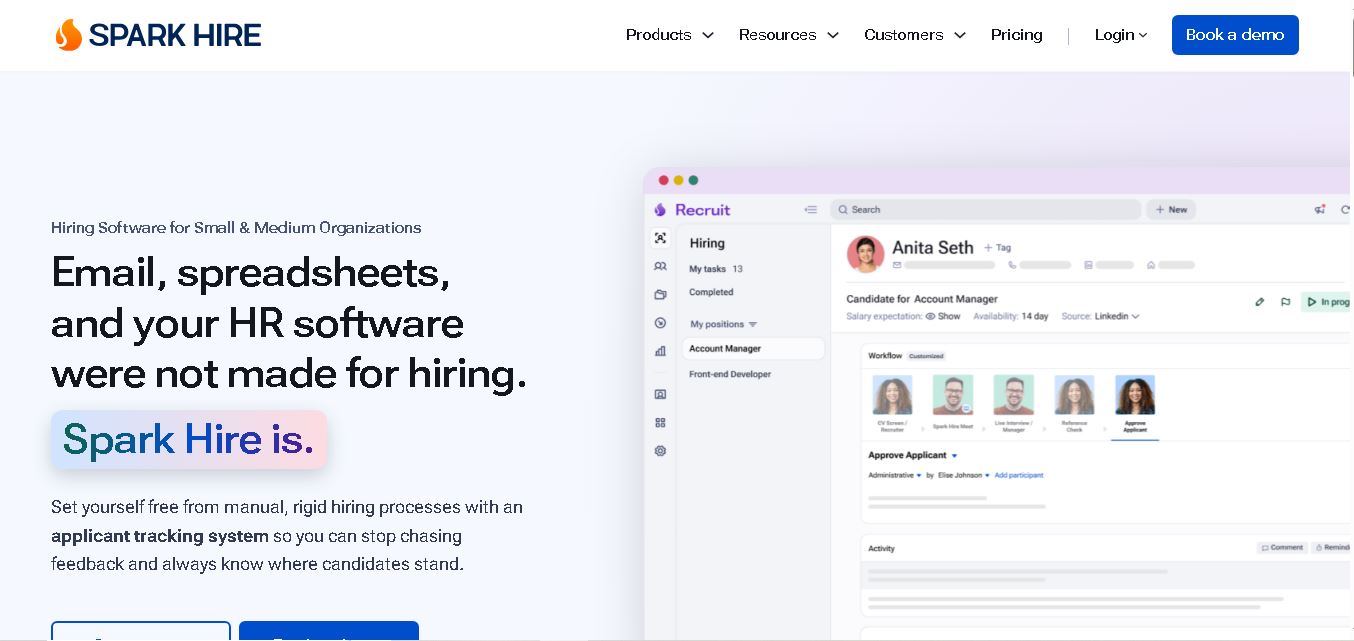
Spark Hire
AI Agent
Spark Hire helps recruitment teams simplify hiring through one-way video interviews, live interviews, applicant tracking, and candidate evaluations. It enables employers to screen applicants remotely, collaborate with hiring managers, and organize recruitment workflows. Its AI-assisted features support interview transcription, summaries, and candidate review while maintaining human involvement in hiring decisions.
 4.9
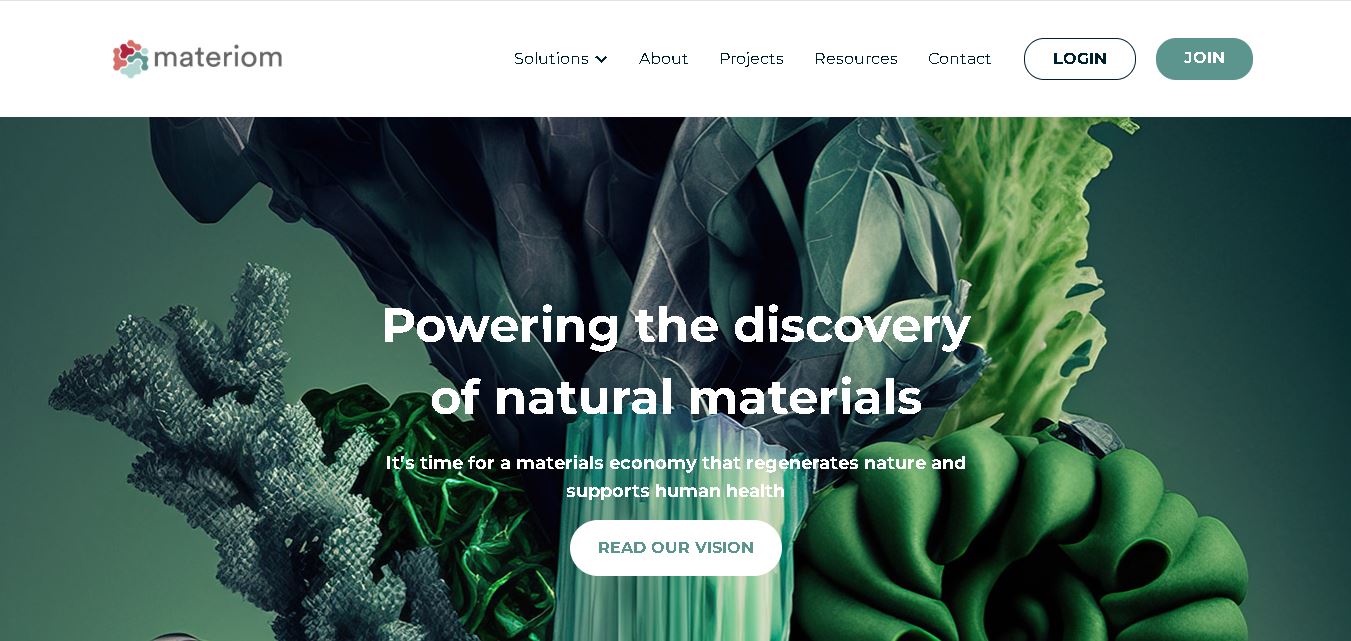
Materiom
AI Agent
Materiom helps researchers, designers, and businesses discover and develop sustainable materials using renewable ingredients. Its resources include biomaterial recipes, material datasets, ingredient information, and AI-assisted research. By supporting experimentation and knowledge sharing, Materiom encourages innovation in bio-based packaging, textiles, and other products while helping users explore alternatives to conventional plastic materials.
 4.9
Talkwalker
AI Agent
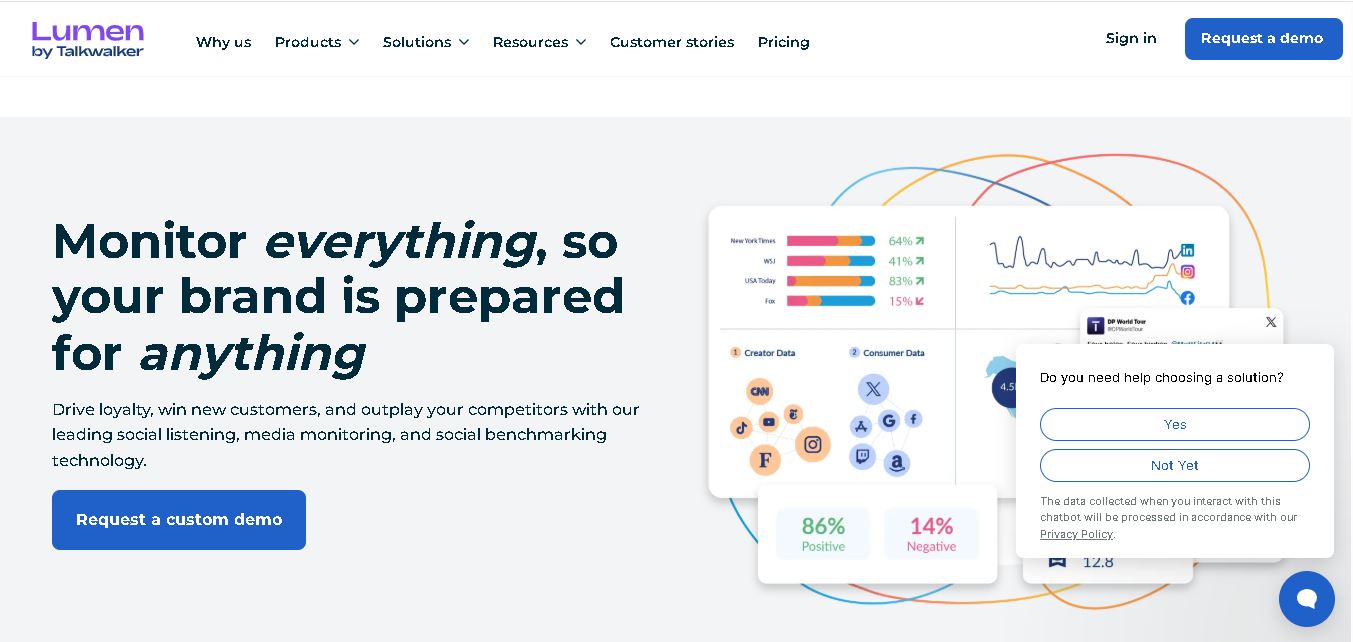
Talkwalker is a consumer intelligence and social listening solution that helps brands track online mentions, analyze audience sentiment, monitor competitors, and discover emerging trends. It combines social media analytics, media monitoring, customer feedback, and AI-powered insights to support marketing, public relations, reputation management, and data-driven business decisions across global markets.
 5.0
AI4K12
AI Agent
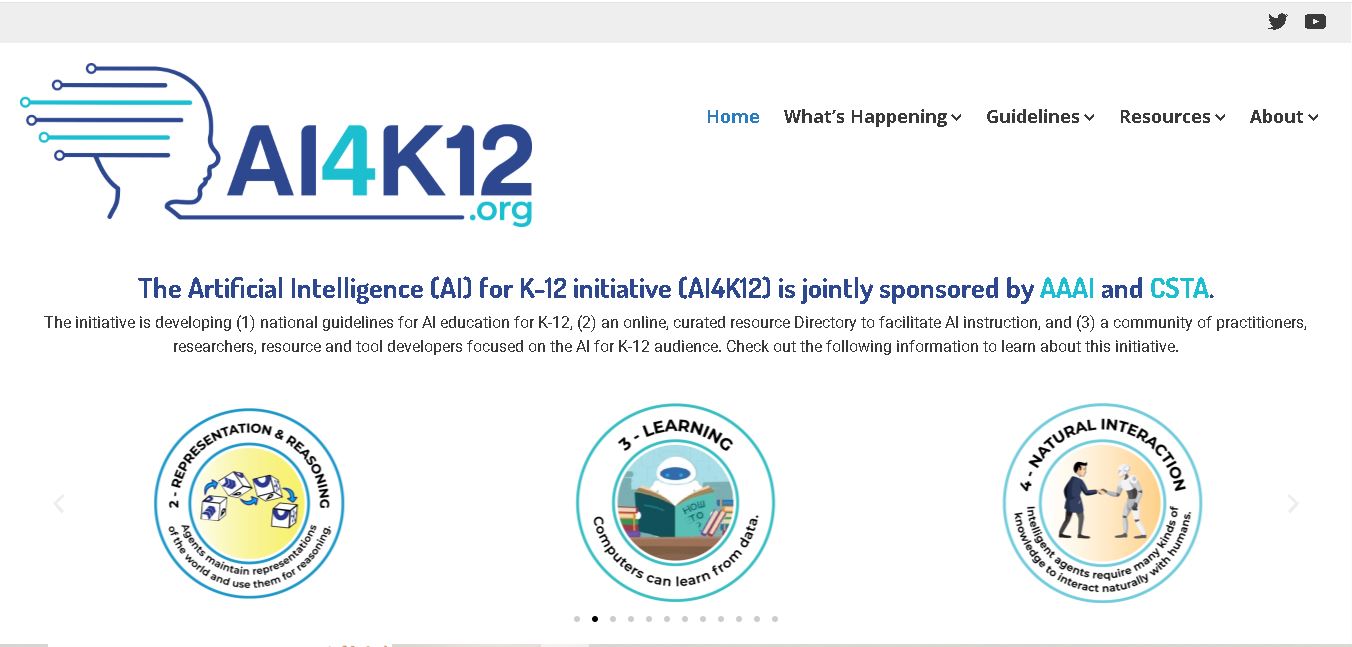
AI4K12 is an educational initiative focused on bringing artificial intelligence into K–12 classrooms. It provides grade-level learning guidelines, curated teaching resources, and the Five Big Ideas framework. Designed for educators and curriculum developers, AI4K12 supports age-appropriate AI instruction and helps students understand how intelligent technologies work and affect society.
Kommunicate
AI Agent
Kommunicate (kommunicate.io) is an AI-powered customer service automation and live chat platform that unites no-code generative AI agents, Kompose chatbot builder, seamless human escalation, voice AI, and omnichannel messaging across WhatsApp, web, and mobile apps.
Text
AI Agent
Text is an AI-powered customer service platform that combines live chat, help desk ticketing, AI agents, and workflow automation. It helps businesses manage customer conversations, automate repetitive support tasks, answer questions, engage website visitors, and turn customer interactions into sales opportunities through a unified communication workspace.