
AgentGPT
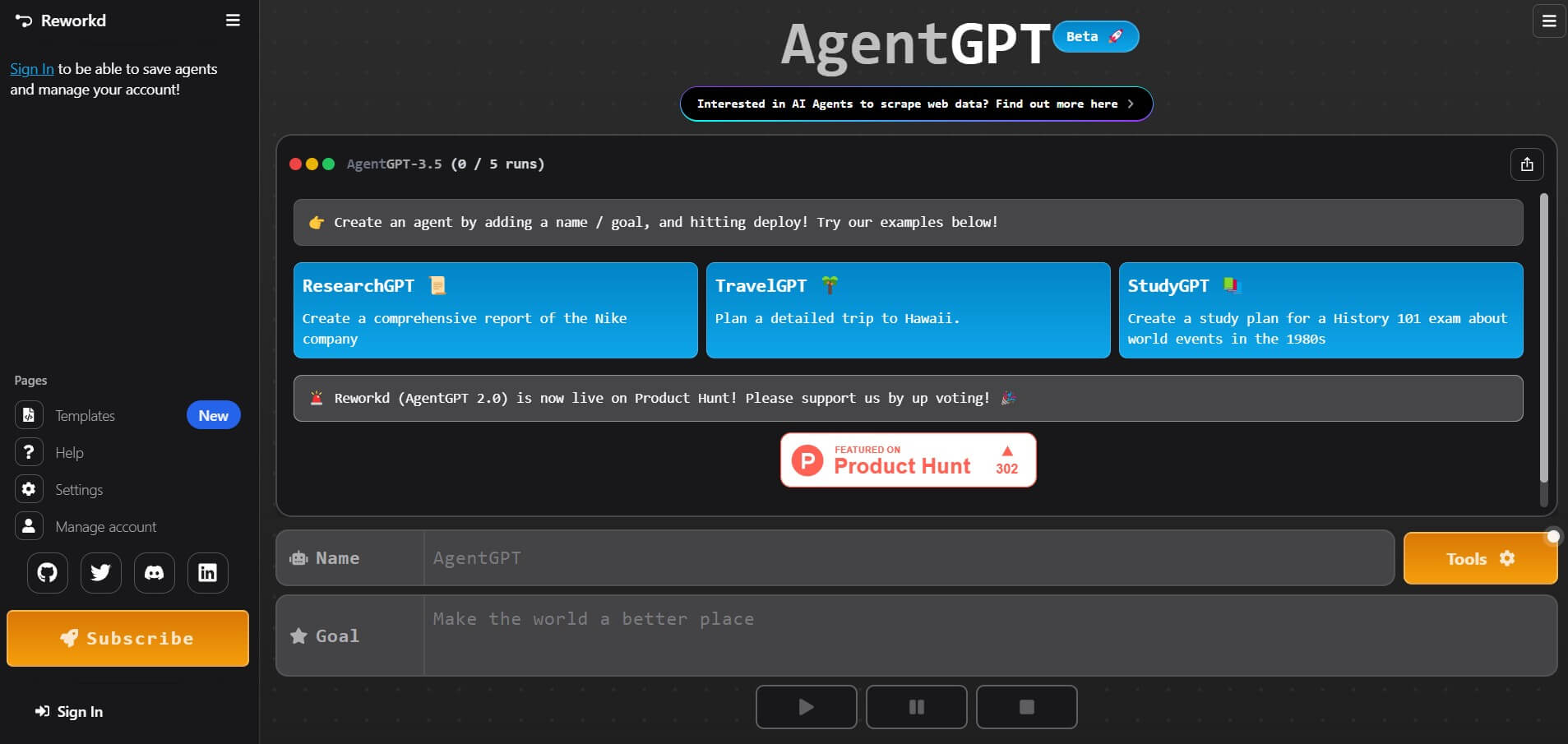
AgentGPT is a browser-based AI tool that allows you to create autonomous agents to complete tasks based on goals. It breaks objectives into steps, executes them automatically, and iterates to improve results, making it useful for workflow automation and experimentation.
What is AgentGPT?
AgentGPT is a web-based AI agent tool that lets you create and run autonomous agents to achieve specific goals. You define an objective, and the agent breaks it into smaller tasks, executes them, and refines results over time. It works directly in your browser, so there’s no complex setup required. It’s mainly used for experimentation, research, and simple automation tasks, giving users a practical way to explore how AI agents can plan, act, and complete tasks independently without constant human input.
- Founders: Asim Shrestha, Adam Watkins, Srijan Subedi
- CEO: Asim Shrestha
- Launch Year: 2023
- Headquarters: San Francisco, California, USA
- Company Type: Open-source AI agent platform
- Use Cases: Task automation, research, content generation, workflow execution
- Technology: Autonomous AI agents, LLMs, LangChain, browser-based execution
- Target Users: Developers, AI enthusiasts, researchers, automation-focused users
- Launch / Growth: 500K+ users early growth, 25K+ GitHub stars, rapid viral adoption
AgentGPT gained rapid popularity soon after launch, reaching 750,000+ users within the first few weeks and executing over 1.5 million tasks daily during early growth. The project also saw strong open-source traction with 36K+ GitHub stars and 9.3K+ forks, making it one of the most popular AI agent repositories. In terms of adoption, it crossed 10K stars within the first month of release (April 2023), showing viral growth in the AI community.
AgentGPT Key Features
AgentGPT is built to demonstrate how autonomous AI agents can plan and execute tasks based on goals. Here are its main features:
- Autonomous AI Agents: Create agents that work independently to complete assigned goals
- Goal-Based Execution: Input a goal, and the agent breaks it into smaller tasks
- Step-by-Step Planning: Automatically plans and executes tasks in sequence
- Browser-Based Access: No installation needed—runs directly in your browser
- Continuous Iteration: Improves results by analyzing previous steps and refining output
- Multiple Agent Runs: Launch multiple agents for different tasks simultaneously
- LLM Integration: Uses advanced language models like GPT-3.5 / GPT-4
- Open-Source Support: Backed by a strong GitHub community for customization
- Experiment-Friendly: Ideal for testing AI automation ideas and workflows
AgentGPT Pricing
AgentGPT follows a freemium pricing model, meaning you can start for free and upgrade if needed.
Main Plans
- Free Plan: $0/month
Limited usage (around 5 agents per day) with basic features - Pro Plan: $40/month
Includes 30 agents/day, GPT-4 access, more loops, and advanced capabilities - Enterprise Plan: Custom pricing
Includes advanced features, SSO, and dedicated support
Disclaimer: For the latest and most accurate pricing information, please visit the official AgentGPT website.
Who Is Using AgentGPT?
AgentGPT is used by a wide range of users—from individuals experimenting with AI to businesses automating tasks.
- Digital Marketers: Use it for market research, competitor analysis, and data collection
- Content Creators & Freelancers: Generate ideas and outlines and automate content workflows
- Startup Founders & Entrepreneurs: Automate tasks like emails, reports, and business processes
- Researchers & Analysts: Gather and analyze large amounts of data for insights
- Developers & AI Enthusiasts: Experiment with autonomous agents and automation systems
- E-commerce Businesses: Automate product data updates and catalog management
AgentGPT Alternatives
Some AgentGPT alternatives are:
- AutoGPT: Advanced autonomous agent tool with deeper automation and task execution
- CrewAI: Focuses on multi-agent collaboration with defined roles and workflows
- LangGraph (LangChain): Ideal for developers building complex, stateful AI systems
- SuperAGI: Open-source platform for building and managing AI agents at scale
- Microsoft Copilot Studio: Enterprise-level tool for creating AI agents and automation
- BabyAGI: Lightweight experimental framework for autonomous task management
How Does AgentGPT Work?
AgentGPT works on a goal-based autonomous system, where you give it a task, and it figures out how to complete it step by step.
- Step 1: Set a Goal
You enter an objective (e.g., “Research AI tools” or “Create a content plan"). - Step 2: Task Breakdown
The AI agent divides the goal into smaller, manageable tasks. - Step 3: Execution
It starts completing tasks one by one using AI models and available data. - Step 4: Iteration & Learning
The agent reviews results and adjusts its next steps for better output. - Step 5: Continuous Loop
It keeps running in loops until the goal is achieved or stopped. - Step 6: Output Delivery
Final results are generated based on all completed steps

AgentGPT Pros and Cons
AgentGPT is a powerful experimental tool for autonomous AI agents, but it has both strengths and limitations depending on how you use it.
Pros
- Autonomous Execution: Can break goals into steps and complete tasks automatically
- Easy to Use: Simple browser-based interface, no setup required
- Fast Experimentation: Great for testing AI workflows and ideas quickly
- Open-Source: Customizable and backed by a strong developer community
- Goal-Oriented: Works based on objectives rather than manual prompts
- Multiple Use Cases: Useful for research, content, and automation tasks
Cons
- Not Fully Reliable: Results can be inconsistent or incomplete
- Limited Control: Less customization compared to developer frameworks
- High Token Usage: Can become expensive with advanced usage
- Experimental Nature: Not ideal for production-level workflows
- Dependency on APIs: Requires external models like OpenAI for performance
AgentGPT Use Cases
AgentGPT is mainly used where tasks can be broken into steps and automated through goals. Here are some practical use cases:
- Market Research: Collect and summarize information about trends, competitors, or industries
- Content Planning: Generate blog ideas, outlines, and structured content strategies
- Data Collection: Gather and organize data from different sources automatically
- Business Automation: Handle repetitive tasks like reports, emails, and basic workflows
- Learning & Experimentation: Test how AI agents think, plan, and execute tasks
- Product Research: Analyze tools, features, and comparisons for decision-making
- SEO Tasks: Generate keyword ideas, content briefs, and topic clusters
- Personal Productivity: Automate daily tasks like planning, note-taking, or research
Why Choose AgentGPT?
AgentGPT is a good choice if you want to explore how AI can independently plan and complete tasks instead of just responding to prompts.
- Goal-Based Automation: You give a goal, and it figures out the steps on its own
- No Setup Required: Runs directly in your browser, very easy to start
- Autonomous Agents: Works without constant input, saving time on repetitive tasks
- Great for Experimentation: Perfect for testing AI workflows and ideas
- Open-Source Flexibility: Can be customized and extended by developers
- Simple Interface: Beginner-friendly compared to complex AI frameworks
AgentGPT vs Competitors
| Feature / Tool | AgentGPT | AutoGPT | CrewAI | LangGraph |
|---|---|---|---|---|
| Core Focus | Goal-based autonomous agents | Fully autonomous agents | Multi-agent collaboration | Stateful workflow control |
| Best For | Experimentation & simple tasks | Open-ended automation | Team-based workflows | Complex production systems |
| Approach | Single agent with loops | Self-directed AI execution | Role-based agent teams | Graph-based workflows |
| Ease of Use | Very Easy | Easy–Moderate | Moderate | Hard |
| Control Level | Low | Medium | Medium | Very High |
| Reliability | Experimental | Experimental | Stable for workflows | Production-ready |
| Use Case Level | Basic–Intermediate | Intermediate | Intermediate–Advanced | Advanced |
How We Rate AgentGPT?
When I rate AgentGPT, I focus on how well it handles autonomous task execution and real-world usability, not just how interesting the concept is. It’s powerful for experimentation but still evolving.
| Parameter | Rating (Out of 5) |
|---|---|
| Ease of Use | 4.6 |
| Automation Capability | 4.2 |
| Flexibility | 4.0 |
| Performance & Reliability | 3.8 |
| Innovation | 4.8 |
| Use Case Practicality | 3.9 |
| Pricing Value | 4.1 |
| Overall Rating | 4.2 |
AgentGPT Review
If I had to describe AgentGPT in a real-world way, it would feel like one of the easiest ways to experience autonomous AI agents—but also one that shows both the potential and the limitations of this technology. What stands out immediately is its simplicity. You don’t need coding, setup, or technical knowledge. You just enter a goal, and the agent starts breaking it into steps and working on it. That makes it a great entry point for beginners or anyone curious about how AI agents actually think and operate. Many users also highlight how it helps turn vague ideas into structured tasks and plans.
However, once you go deeper, the limitations become clear. It works well for short, well-defined tasks like research or content outlines but struggles with complex or long-running goals. The most significant issue is reliability—sometimes it loops, gives incomplete results, or claims tasks are done when they’re not. Another important thing to know is that the project is no longer actively maintained and has been archived in 2026, which means no major updates or long-term support.
Conclusion
AgentGPT is a simple and accessible way to explore how autonomous AI agents work. It makes it easy to turn goals into step-by-step actions without needing technical setup, which is great for beginners and experimentation. However, it’s not the most reliable option for complex or real-world automation. It works best for smaller tasks like research, content planning, and testing ideas. In the end, if you want to learn and experiment with AI agents, AgentGPT is a good starting point. But for serious, large-scale automation, more advanced and stable tools are a better choice.
People are also reading:
FAQ
What is AgentGPT used for?
AgentGPT is used to create AI agents that can complete tasks automatically based on a goal. It’s mainly used for research, content planning, and experimenting with AI automation.
Is AgentGPT free to use?
Yes, it offers a free plan with limited usage. There’s also a paid plan for higher limits and access to more advanced features.
Do I need coding skills to use AgentGPT?
No, you don’t need coding skills. It runs in your browser, and you just need to enter a goal to get started.
How is AgentGPT different from ChatGPT?
ChatGPT responds to prompts, while AgentGPT takes a goal and tries to complete it step by step on its own without constant input.
Can AgentGPT handle complex tasks?
It can try, but it works best with simple or well-defined tasks. Complex workflows may not always give accurate results.
User Reviews
No reviews yet for AgentGPT.
Featured Tools
Featured AI tools from TechShark
Melody Genie
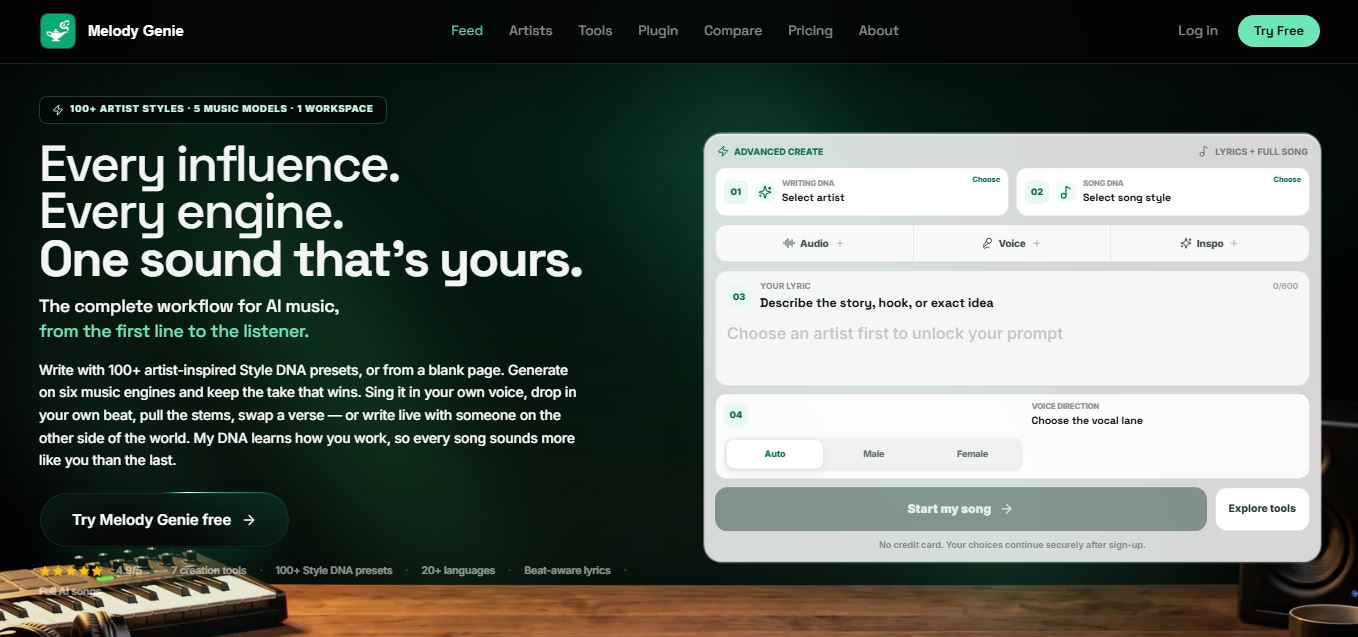
MelodyGenie is an AI-powered music generator that creates original songs from simple text prompts. Users can choose styles, moods, and genres, then instantly generate melodies and full tracks, making it easy for creators, marketers, and hobbyists to produce custom music without musical expertise.
Freemium
Kimi AI
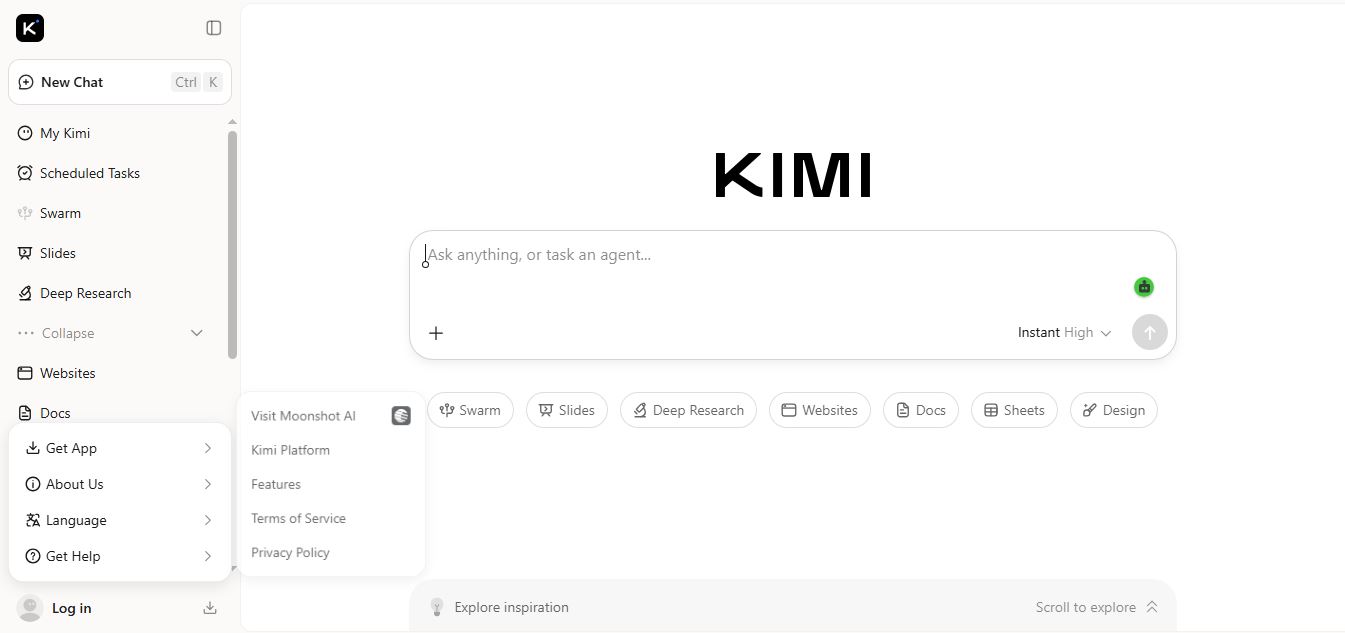
Kimi AI is an advanced AI assistant developed by Moonshot AI that helps you chat, research, write, code, and automate tasks in one place. It supports web search, file analysis, and multimodal inputs, and can even run autonomous “agent” workflows to complete complex tasks end-to-end.
Freemium

Fashion Diffusion AI
Fashion Diffusion is an AI-powered fashion design platform that helps brands and designers create clothing designs, virtual try-ons, AI models, product photos, and marketing visuals faster and cost-effectively.
Paid
Veo 4
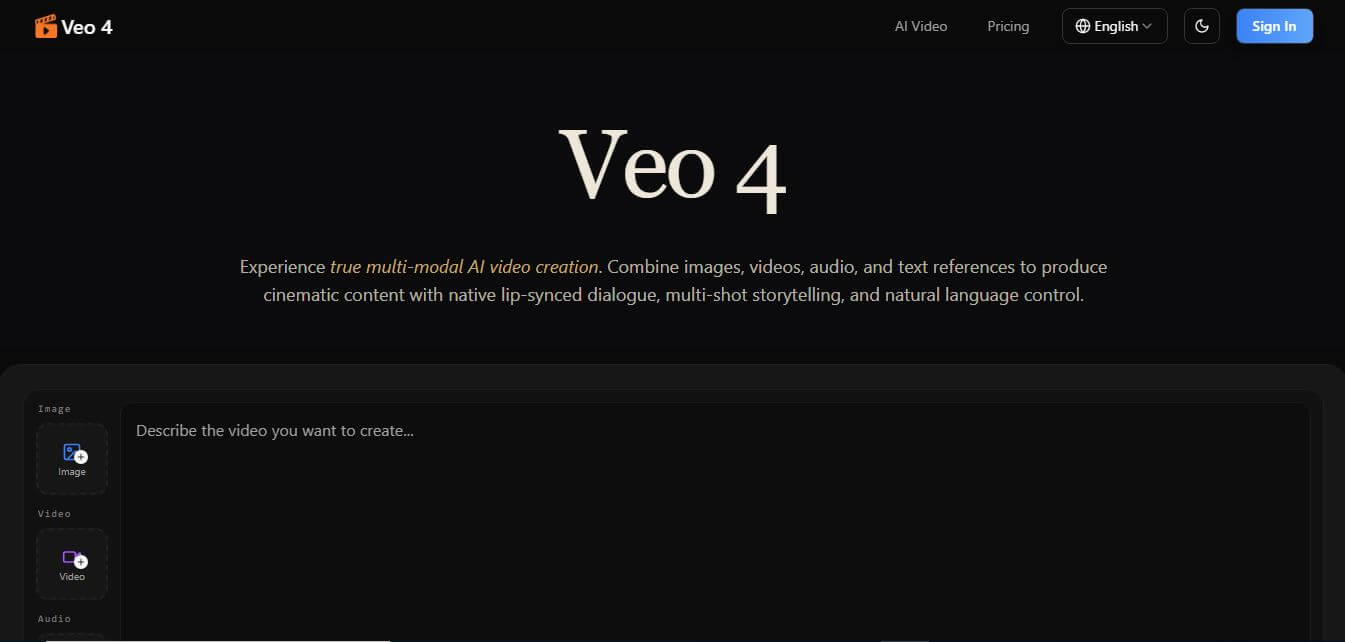
Veo 4 AI is an AI video creation platform that generates dramatic videos from text, images, audio, and video prompts using realistic motion and synchronized sound.
Paid
Alternatives
Alternatives to AgentGPT
AgentGPT alternatives include AutoGPT, CrewAI, LangGraph (LangChain), SuperAGI, and Microsoft Copilot Studio. These tools offer better control, multi-agent systems, and production-ready workflows. Some focus on developers with deep customization, while others provide no-code automation and enterprise-level AI agent deployment.
 4.9
4.9Talkwalker
AI Agent
Talkwalker is a consumer intelligence and social listening solution that helps brands track online mentions, analyze audience sentiment, monitor competitors, and discover emerging trends. It combines social media analytics, media monitoring, customer feedback, and AI-powered insights to support marketing, public relations, reputation management, and data-driven business decisions across global markets.
 5.0
5.0AI4K12
AI Agent
AI4K12 is an educational initiative focused on bringing artificial intelligence into K–12 classrooms. It provides grade-level learning guidelines, curated teaching resources, and the Five Big Ideas framework. Designed for educators and curriculum developers, AI4K12 supports age-appropriate AI instruction and helps students understand how intelligent technologies work and affect society.
Kommunicate
AI Agent
Kommunicate (kommunicate.io) is an AI-powered customer service automation and live chat platform that unites no-code generative AI agents, Kompose chatbot builder, seamless human escalation, voice AI, and omnichannel messaging across WhatsApp, web, and mobile apps.
Text
AI Agent
Text is an AI-powered customer service platform that combines live chat, help desk ticketing, AI agents, and workflow automation. It helps businesses manage customer conversations, automate repetitive support tasks, answer questions, engage website visitors, and turn customer interactions into sales opportunities through a unified communication workspace.
DocsBot AI
AI Agent
DocsBot AI is an AI chatbot and agent platform that turns websites, documents, knowledge bases, and support tickets into conversational assistants. Businesses can use it to automate customer support, answer questions, share internal knowledge, connect workflows, and provide information through website widgets and supported integrations.
SiteGPT AI
AI Agent
SiteGPT is an AI chatbot platform that helps businesses automate customer support using their website content, documents, and knowledge sources. It answers visitor questions, supports lead generation, and integrates into websites, allowing teams to handle repetitive inquiries, improve customer experiences, and provide assistance around the clock.
 4.7
4.7Halcyon
AI Agent
Halcyon is an AI energy intelligence platform that helps professionals search regulatory filings, analyze energy-market information, monitor developments, and access structured datasets. It combines document search, natural-language queries, AI-powered alerts, and specialized data subscriptions to turn fragmented energy information into actionable intelligence for research, monitoring, planning, and faster decision-making.
 4.5
4.5Enhancv
AI Agent
Enhancv helps job seekers build ATS-friendly resumes using customizable templates, AI writing assistance, resume checking, and job-specific tailoring. It also supports cover letters, application tracking, interview preparation, and resume translation. The platform is designed for candidates who want a polished application while keeping control over their experience, wording, and presentation.
 4.9
4.9Domo
AI Agent
Domo is an AI-powered data and analytics platform that helps businesses connect, visualize, and act on data from multiple sources in one place. It combines dashboards, automation, and AI insights to turn raw data into decisions, enabling teams to monitor performance and drive better outcomes in real time.